Blockchain & Cryptocurrency: Understand the Tech Behind Digital Money
When you hold cryptocurrency, you’re not just owning a number—you’re holding access to a blockchain, a public, tamper-proof digital ledger that records every transaction across a network of computers. Also known as distributed ledger technology, it’s what makes crypto different from bank money: no middleman, no central control, just code and consensus. Without this system, your Bitcoin, Ethereum, or any other coin would be nothing more than a digital note with no real backing.
What keeps that ledger secure? That’s where proof of work, a consensus method that forces miners to solve hard math problems to add new blocks. Also known as PoW, it’s the original security engine behind Bitcoin and has held up for over 15 years—despite its high energy use. But it’s not the only way. Other blockchains use different rules, like proof of stake, but proof of work still matters because it’s proven. And when you trade or store crypto, you’re relying on another critical piece: private keys, the secret codes that prove you own your coins. Also known as crypto ownership keys, they’re the only thing standing between you and losing everything—if you lose them, your crypto is gone forever. That’s why self-custody isn’t optional; it’s the foundation of real ownership.
But crypto isn’t just about tech—it’s about people. Prices swing not just from news or code updates, but from how traders feel. That’s where crypto market sentiment, the collective mood of traders measured through social chatter, news, and on-chain behavior. Also known as market psychology, it often moves prices faster than fundamentals. Fear and greed aren’t just emotions—they’re data points traders use to time buys and sells. Combine that with technical analysis—reading price charts, spotting support levels, tracking RSI—and you start to see how real trading works. It’s not magic. It’s patterns, data, and human behavior all tied together on a blockchain.
You’ll find posts here that cut through the noise. No fluff, no hype. Just clear answers: How KYC works on exchanges, why some exchanges like GemSwap are dead, how to read candlestick charts, and why your private keys are more important than your password. Whether you’re new or have been trading for a while, these guides give you what you actually need to know—not what someone thinks you should believe.
Liquidity Mining Token Emissions: How DeFi Incentives Really Work
Discover how liquidity mining token emissions work in DeFi. Learn about emission schedules, veTokenomics, and the risks of impermanent loss.
learn more
Cross-Chain NFT Standards: How Interoperability is Reshaping Digital Ownership
Discover how cross-chain NFT standards like CCIP and ERC-7683 are solving fragmentation. Learn why native transfers beat wrapped tokens and what drives 2026 adoption.
learn more
DePIN Token Economics: How Real Revenue Beats Speculation
Discover how DePIN token economics works. Learn why real revenue beats speculation, key tokenomics structures, and risks to watch in 2026.
learn more
Content Ownership in Web3 Social Media: How Creators Control Their Digital Assets
Discover how Web3 social media shifts content ownership from platforms to creators using NFTs and decentralized identity. Learn the technical mechanics, economic benefits, and practical steps to start.
learn more
Merkle Trees in Bitcoin and Ethereum: How Hash Trees Secure Blockchains
Explore how Merkle Trees secure Bitcoin and Ethereum. Learn the technical differences between binary hash trees and Merkle Patricia Tries, and see real-world applications in blockchain verification.
learn more
How Blockchain Transforms Food Safety Traceability: From Farm to Fork
Discover how blockchain technology revolutionizes food safety by enabling instant traceability from farm to fork. Learn about Walmart's success, IBM Food Trust, and GS1 standards.
learn more
Why Consensus Mechanisms Matter for Cryptocurrency: The Backbone of Trust
Discover why consensus mechanisms are the backbone of cryptocurrency, preventing fraud and enabling trustless transactions through Proof of Work and Proof of Stake.
learn more
ASPO World Airdrop Guide: How to Claim 'The Rise To Fame' $ASPO Tokens
Discover how to claim the ASPO World 'Rise To Fame' airdrop. Get step-by-step instructions on earning $ASPO tokens and NFTs safely.
learn more
How to Detect North Korean Crypto Transactions on Blockchain: A Practical Guide
Learn how experts detect North Korean crypto thefts using blockchain forensics. Explore tools from TRM Labs and Chainalysis, analyze the Bybit hack, and understand the 'flood the zone' laundering tactic.
learn more
What Is the Ethereum Difficulty Bomb? (And Why It No Longer Matters)
The Ethereum Difficulty Bomb was a mechanism designed to force a transition from Proof of Work to Proof of Stake. Learn how it worked, why it was created, and how The Merge neutralized it.
learn more
How NFTs Work on Blockchain: A Simple Guide to Digital Ownership
Discover how NFTs work on the blockchain, from ERC-721 standards to decentralized storage. Learn the differences between Ethereum and Solana, avoid common scams, and understand the real utility behind digital ownership.
learn more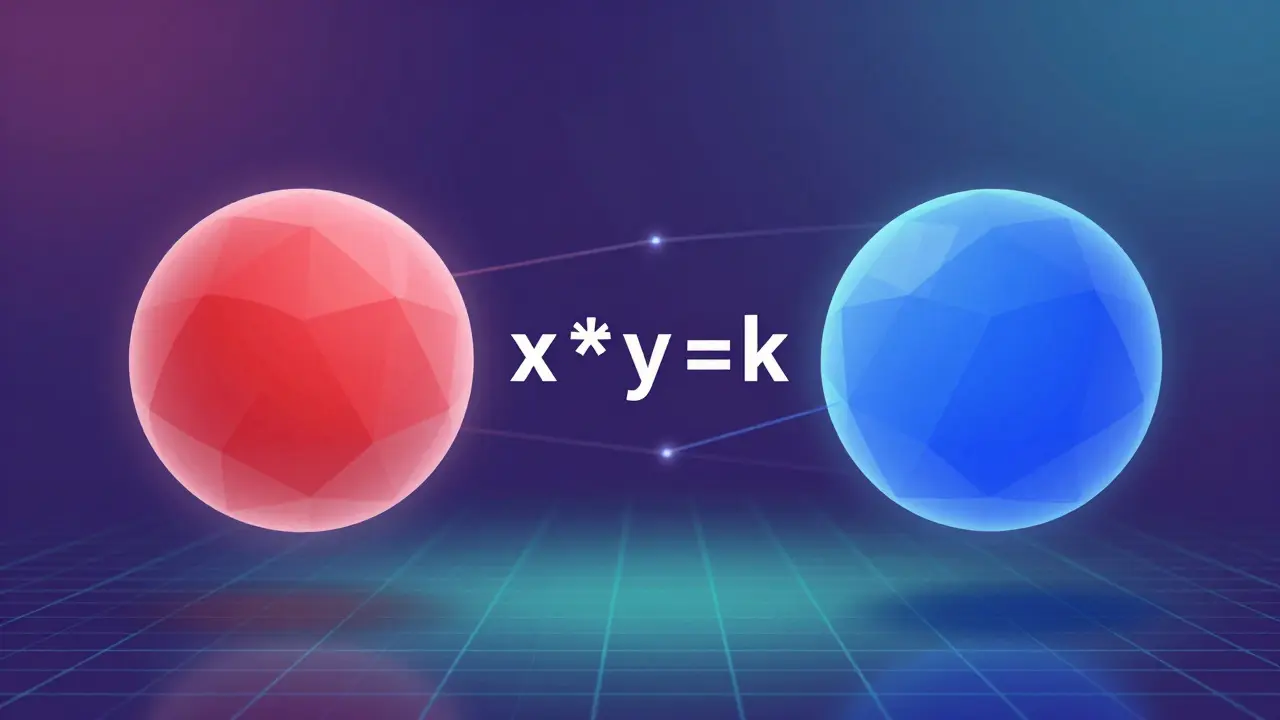
Liquidity Pool Token Ratios Explained: A Guide to DeFi Balances
Understand liquidity pool token ratios in DeFi. Learn how 50/50 splits, weighted pools, and impermanent loss affect your returns on Uniswap and Curve.
learn more