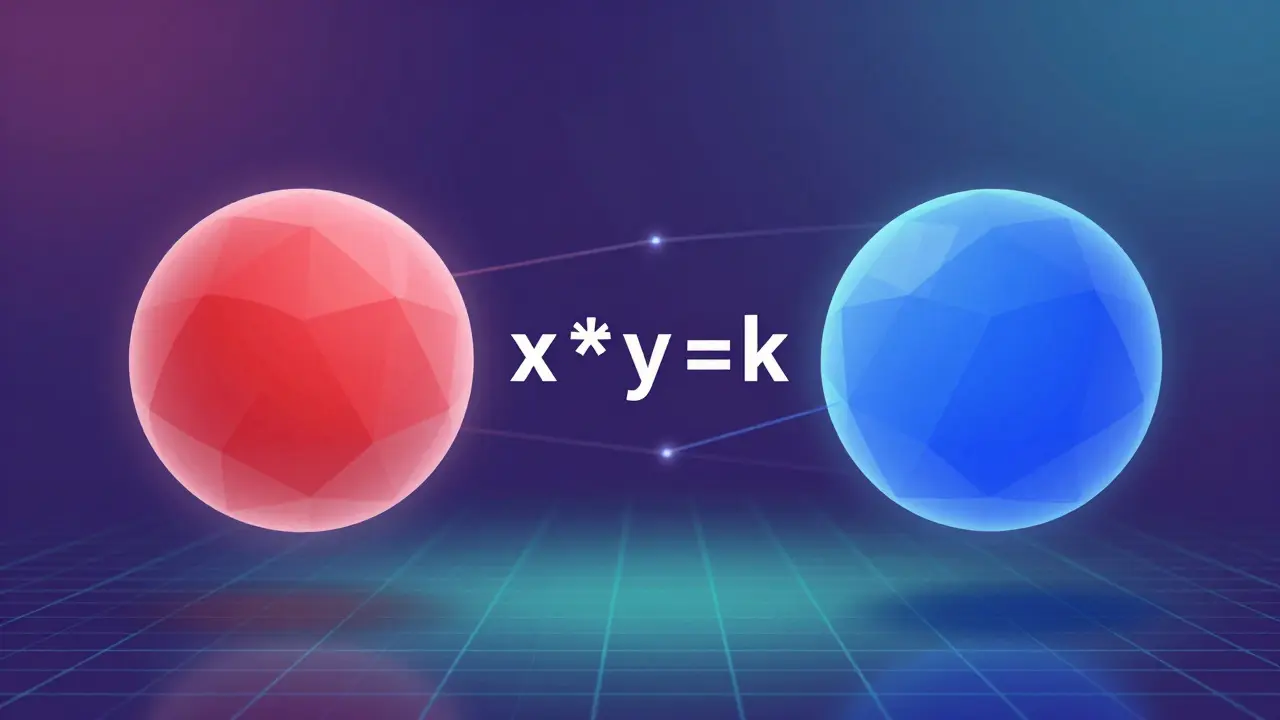
Imagine you walk into a shop and swap a red ball for a blue one. The price isn't set by a manager; it’s set by how many balls are left on the shelf. If there are plenty of red balls and few blue ones, the blue ball gets expensive. That is exactly how Liquidity Pool Token Ratios work in decentralized finance (DeFi). They are the mathematical heartbeat of every trade you make on platforms like Uniswap, PancakeSwap, or Curve.
If you want to provide liquidity-essentially lending your crypto so others can trade-you need to understand these ratios. Getting them wrong doesn't just mean lower profits; it can lead to significant losses through a phenomenon called impermanent loss. Let's break down what these ratios actually are, why they matter, and how different pools handle them, and how you can protect your capital in 2026.
The Basic Rule: x * y = k
At its core, most liquidity pools rely on a simple formula known as the constant product formula: x * y = k. Here, x is the amount of Token A in the pool, y is the amount of Token B, and k is a constant number that must never change.
This formula forces the ratio between the two tokens to adjust automatically whenever a trade happens. If someone buys Token A from the pool, the amount of Token A decreases (x goes down). To keep k the same, the amount of Token B must increase (y goes up). This shift in quantity changes the relative scarcity, which effectively raises the price of Token A.
In traditional exchanges, this is handled by an order book where buyers and sellers post prices. In DeFi, the math does the work. The ratio ensures that large trades have a higher impact on price than small trades, protecting the pool from being drained instantly by a single whale trader.
Standard 50/50 Pools vs. Weighted Pools
Not all pools treat their tokens equally. Understanding the difference between standard and weighted pools is crucial for deciding where to put your money.
| Pool Type | Ratio Structure | Best Use Case | Risk Profile |
|---|---|---|---|
| Standard AMM | 50% / 50% | Highly volatile pairs (e.g., ETH/USDC) | Higher impermanent loss risk |
| Weighted Pool | Custom (e.g., 80/20, 60/40) | Treasury diversification, index funds | Moderate risk, depends on weight |
| Stableswap | Near 1:1 Peg | Stablecoins (e.g., USDT/DAI) | Very low slippage, minimal IL |
| Concentrated Liquidity | User-defined range | Active traders wanting high APR | High risk if price exits range |
Standard 50/50 Pools: This is the default for most users. When you deposit into a pool on Uniswap V2 or PancakeSwap, you must provide equal value in both assets. If Bitcoin is worth $60,000, you deposit $60,000 worth of BTC and $60,000 worth of the paired asset (like ETH). The pool maintains a balanced dollar value ratio.
Weighted Pools: Platforms like Balancer allow you to create pools with uneven ratios. You might create a pool that is 80% Stablecoin and 20% Ethereum. This is useful if you believe Ethereum will grow but want to keep most of your capital safe in stablecoins. The algorithm adjusts the pricing curve based on these weights, making it more efficient for specific strategies but more complex to manage.
How Ratios Drive Pricing and Slippage
The token ratio directly determines the price you see when you click "Swap." It also dictates slippage-the difference between the expected price of a trade and the price at which the trade executes.
When a pool has a healthy, deep ratio (lots of liquidity), a large trade moves the ratio only slightly. The price impact is low, and slippage is minimal. However, if the pool is shallow, a large buy order drastically shifts the ratio. The token you are buying becomes scarce in the pool, causing its price to spike within that specific pool.
This creates an arbitrage opportunity. Traders monitor these ratio shifts across different platforms. If Pool A has a skewed ratio making Token X cheaper than on Pool B, arbitrage bots will buy from Pool A and sell on Pool B. This activity helps rebalance the ratios across the ecosystem, keeping prices aligned with the broader market. For you as a liquidity provider, this means your pool is constantly being traded against, generating fees, but also constantly shifting its internal composition.
Impermanent Loss: The Cost of Changing Ratios
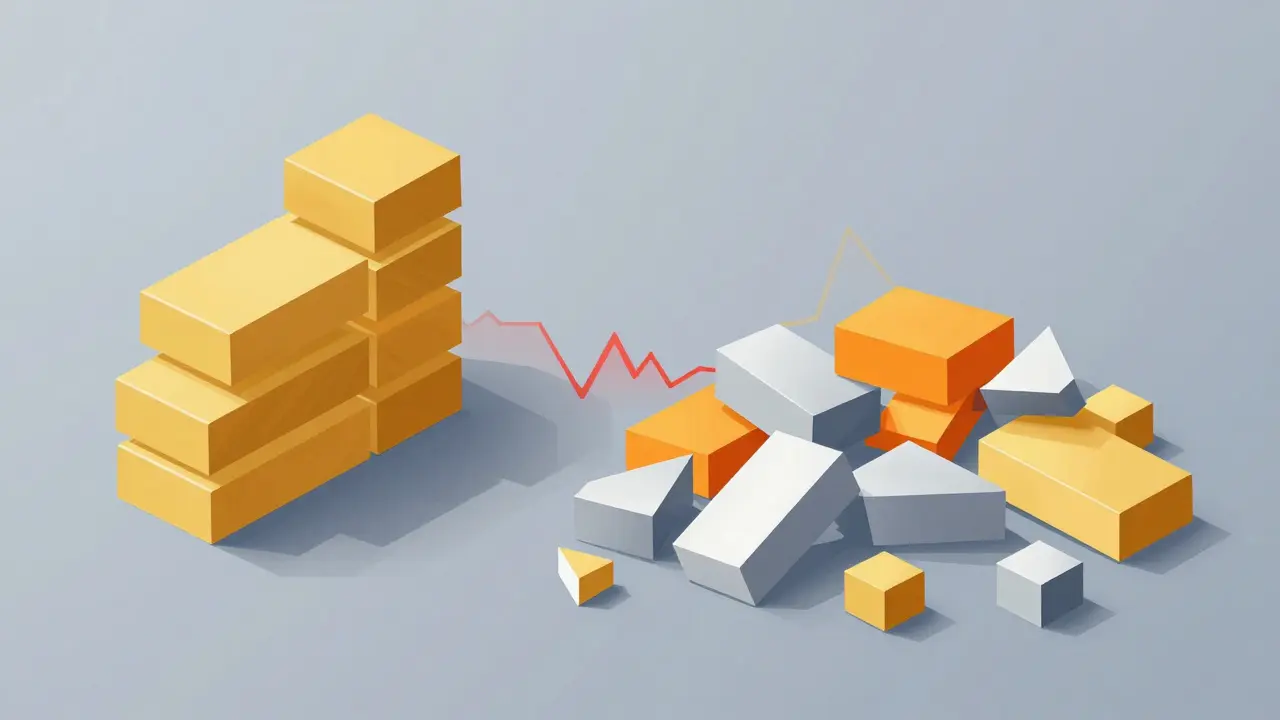
You cannot talk about token ratios without addressing impermanent loss (IL). This is the primary risk for liquidity providers. IL occurs when the price ratio of the tokens in the pool changes significantly compared to when you deposited them.
Here is how it works in practice:
- You deposit 1 ETH and 2,000 USDC into a pool when ETH is priced at $2,000. Your total value is $4,000.
- ETH price rises to $4,000. Arbitrageurs buy ETH from your pool because it's cheaper there than elsewhere.
- To maintain the
x * y = kconstant, the pool sells ETH and accumulates more USDC. - Your pool now holds less ETH and more USDC than before.
- If you withdraw now, you have fewer assets than if you had just held the original ETH and USDC in your wallet.
However, IL is only "realized" when you withdraw. While you remain in the pool, you earn trading fees. If the fees earned exceed the impermanent loss, you still come out ahead. This is why high-volume pools are often preferred despite the risks.
Advanced Mechanisms: Concentrated Liquidity and CLMMs
In 2026, the landscape has moved beyond simple 50/50 pools. Uniswap V3 introduced Concentrated Liquidity Market Makers (CLMMs). Instead of spreading your liquidity across all possible price ranges (from $0 to infinity), you specify a narrow range where you think the price will stay.
For example, if you believe ETH will trade between $3,000 and $3,500, you allocate your liquidity only in that band. Within this range, your capital efficiency is massively higher because your ratio is concentrated. You earn more fees per dollar invested. But the risk is sharper: if the price moves outside your range, your position stops earning fees and converts entirely into the less valuable asset, exposing you to maximum impermanent loss.
This requires active management. You may need to rebalance your position frequently as the market moves, adjusting your ratio targets to stay within profitable bands.

Stablecoin Pools and Curve Finance
Not all pools use the constant product formula. Stablecoin pools, pioneered by Curve Finance, use a different algorithm designed for assets that should always be worth roughly the same thing (e.g., USDC, DAI, USDT).
Because these assets are pegged to the US Dollar, their ratio should ideally remain 1:1. The Curve algorithm minimizes slippage for swaps between these assets, allowing large trades with almost no price impact. The token ratio here is less about price discovery and more about maintaining peg stability. Impermanent loss in these pools is generally negligible unless one stablecoin loses its peg-a rare but catastrophic event.
LP Tokens: Your Receipt and Claim
When you add liquidity, you don't just send tokens into a black hole. You receive LP (Liquidity Provider) tokens. These are ERC-20 tokens that represent your share of the pool's total ratio.
If you provide 1% of the total liquidity in a pool, you receive LP tokens representing 1% ownership. These tokens entitle you to:
- A proportional share of trading fees collected by the pool.
- The right to redeem your underlying assets plus accrued fees at any time.
Strategies for Managing Ratio Risk
So, how do you play this game wisely?
- Stick to Correlated Assets: Pairs like ETH/stETH or WBTC/RENBTC move together. Their ratios stay relatively stable, minimizing impermanent loss.
- Use Stablecoin Pools: If you want steady, low-risk returns, stick to Curve-style pools with established stablecoins.
- Monitor Volume: High volume means more fees. Even with some impermanent loss, high fee income can offset the loss. Check tools like DefiLlama to find active pools.
- Consider Weighted Pools: If you have a strong conviction about one asset, use Balancer to overweight that asset while still providing liquidity.
- Be Cautious with CLMMs: Only use concentrated liquidity if you are willing to actively manage your positions. Otherwise, you risk exiting a range and stopping earnings entirely.
What happens to my tokens if the pool ratio changes?
Your actual token balances in the pool change as trades occur. If you provided a 50/50 ratio and the price of one token rises, arbitrageurs will buy that token from the pool. You will end up with fewer of the appreciated token and more of the depreciated one. This rebalancing is automatic and continuous.
Is impermanent loss permanent?
No, it is only realized when you withdraw your liquidity. If the price ratio returns to your entry point, the impermanent loss disappears. However, if you withdraw during a period of divergence, the loss becomes real. Trading fees earned while in the pool can help offset this loss.
Why do I need to provide equal value in both tokens?
In standard 50/50 AMM pools, the constant product formula requires balanced value to function correctly. Providing unequal values would immediately skew the price and expose you to instant impermanent loss. Some advanced pools (weighted or concentrated) allow different inputs, but standard pools enforce equality.
What is the difference between Uniswap V2 and V3 ratios?
Uniswap V2 uses a broad 50/50 ratio across all price ranges. Uniswap V3 allows you to concentrate your liquidity in specific price ranges. This makes V3 more capital-efficient (higher fees per dollar) but requires active management to avoid running out of liquidity if the price moves out of your chosen range.
Can I lose all my money in a liquidity pool?
It is highly unlikely to lose everything unless one of the tokens in the pair goes to zero (rug pull or bankruptcy). Impermanent loss reduces your portfolio value compared to holding, but it rarely eliminates it entirely. Smart contract hacks are a separate risk that could lead to total loss, so using audited, reputable platforms is essential.