| Network | Approx. Yield (APR) | Min. Entry (Solo/Direct) | Risk Profile |
|---|---|---|---|
| Ethereum | 3.5% - 4.5% | 32 ETH | Moderate (Slashing penalties) |
| Polkadot | 14% - 15% | ~560 DOT | High (Up to 70% stake loss) |
| Solana | ~7.4% | Varies | Moderate (Uptime critical) |
| Cardano | ~4.6% | Varies | Low (Community-driven) |
Understanding the Role of a Validator
Before you commit your funds, you need to know what you're actually doing. In a Proof-of-Stake is a consensus mechanism where blockchain transactions are verified by validators who hold and "stake" the network's native cryptocurrency (PoS) system, validators are the backbone of the network. They don't use massive mining rigs like Bitcoin; instead, they use their stake as collateral to prove they will act honestly.
When you delegate your coins to a validator, you're essentially voting for them to handle the block production. In return, the network pays you rewards. However, the validator takes a small cut-the commission-for providing the hardware and electricity. If a validator goes offline or tries to cheat the system, the network may penalize them through a process called slashing. As a delegator, you often share in that pain, meaning your balance could drop if your chosen validator fails.
The Red Flags: What to Avoid
It's tempting to go for the validator offering the highest APR or, conversely, the one offering 0% commission. But in the staking world, if something looks too good to be true, it usually is. Professional analysts have warned that 0% fee validators are often "bait-and-switch" operations. They attract a massive amount of capital and then hike the fees to 100% once you're locked in, or they simply lack the funds to maintain high-end servers, leading to crashes.
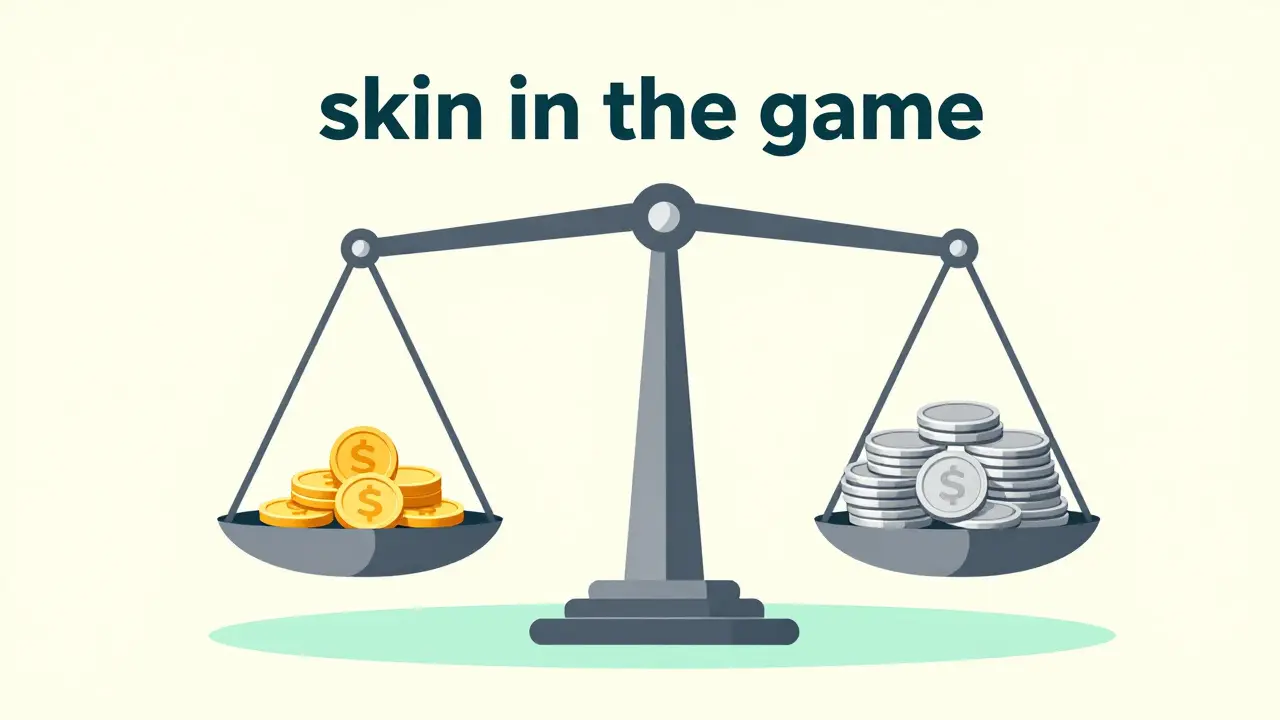
Another major warning sign is a low self-bonded ratio. This is the percentage of their own money the validator has put on the line. If a validator is staking millions of other people's coins but only a tiny fraction of their own, they have "skin in the game" only in name. Data shows that validators with a self-bonded ratio below 5% are significantly more likely to suffer slashing events compared to those who keep 10% or more of their own assets at risk.
Critical Metrics for a Safe Selection
To move from gambling to investing, you need to look at hard data. Start with uptime. An industry standard for a reliable node is 99.9% availability. For an Ethereum is a decentralized, open-source blockchain with smart contract functionality that transitioned to Proof-of-Stake in 2022 validator, even a few minutes of downtime results in a direct loss of ETH. If you see a validator with frequent "blips" in their history, move on.
Next, look at their communication channels. Do they have an active Discord or a transparent blog? The best validators provide regular performance updates. This transparency usually correlates with higher retention rates because users feel secure knowing the operator is awake and monitoring the node. Check if they have a documented history of how they handled previous network upgrades, like the Shanghai upgrade, to see if they stayed online during the chaos.
The Diversification Strategy
Putting all your eggs in one basket is a recipe for disaster in DeFi. If you stake all your assets with one validator and that node gets slashed, your entire portfolio takes a hit. The professional approach is to spread your stake across a diversified set of validators. Depending on the network, spreading your assets across 5 to 20 different nodes can drastically reduce your risk profile.
For those on Polkadot is a sharded multichain protocol that connects specialized blockchains into a unified network, you can use nomination pools. This allows you to participate with as little as 1 DOT, making it much easier to diversify without needing thousands of dollars. By picking a mix of institutional providers and smaller, community-run nodes, you balance the stability of a big firm with the decentralization of the community.

Step-by-Step Implementation Guide
If you're ready to start, follow this structured approach to avoid common beginner mistakes:
- Secure Your Assets: Set up a non-custodial wallet. Never stake directly from an exchange if you want full control over your validator choice.
- The Research Phase: Spend 2-5 hours evaluating 5-7 potential validators. Don't just look at the APR; check their self-bond ratio and uptime.
- Verify via Third-Party Tools: Use analytics platforms like Staking Rewards or network-specific explorers (like Polkadot.js) to verify the validator's claims.
- Execute Nominations: Divide your tokens among your selected validators. Ensure you aren't over-allocating to a single node that might be close to its capacity limit.
- Weekly Check-ins: Set a calendar reminder for 15-30 minutes a week to check for commission changes or performance drops.
The Institutional Shift and Future Outlook
We're seeing a massive surge in institutional staking. Companies like Coinbase and Figment are now managing billions in assets, providing a "set it and forget it" experience. While this is convenient, it leads to centralization. If a few giant firms control 50% of the staked assets, the network becomes less decentralized and more prone to single-point failures.
Looking ahead to 2026, technology like Verkle trees is expected to lower the hardware requirements for running a node. This is great news because it means more people can run their own validators from home, decreasing the reliance on big data centers and making the entire ecosystem more resilient. For the average user, the goal remains the same: prioritize uptime and skin-in-the-game over the promise of an extra 1% yield.
What happens if my validator is slashed?
Slashing is a penalty for malicious or negligent behavior. Depending on the network, you could lose a small fraction of your staked assets or, in extreme cases (like double-signing), a significant portion of your stake. This is why diversifying across multiple validators is the best way to protect yourself.
Is a 0% commission validator a good deal?
Usually, no. Running a validator costs money (hardware, electricity, security). A 0% fee often indicates that the operator is either unsustainable, trying to attract users before hiking prices, or operating a scam. A reasonable commission is typically between 5% and 15%.
Can I change my validator after I've already staked?
Yes, in most PoS networks you can move your delegation to a different validator. However, be aware of "unbonding periods." Some networks require you to wait several days or weeks before your funds are unlocked and can be moved to a new node.
How does the self-bonded ratio affect my safety?
The self-bonded ratio shows how much of their own money the validator has at risk. A high ratio (10%+) means the validator will suffer a huge financial loss if they are slashed, giving them a strong incentive to maintain perfect security and uptime.
Do I need expensive hardware to stake?
If you are delegating to another validator, you need no special hardware-just a secure wallet. If you want to run your own validator node, you generally need a dedicated server with at least 16GB RAM and a fast SSD (500GB+), along with a very stable internet connection.
Susan Wright
April 7, 2026 AT 23:24Definitely agree on the diversification part. Most people just dump everything into one big name and then panic when there's a tiny bit of downtime. Spreading it out is a total no-brainer for anyone who actually wants to sleep at night.
Matthew Wright
April 9, 2026 AT 20:18The part about the self-bonded ratio is super critical... a lot of people overlook this!! I've noticed that some of the 'top' validators by total stake actually have surprisingly low personal skin in the game... it's definitely a red flag!!!
Emma Pease-Byron
April 10, 2026 AT 21:22How quaint that some people actually believe a 'guide' is necessary to avoid the obvious trap of 0% commissions. It is almost adorable that we need to explicitly state that nothing in finance is free, especially not the maintenance of a high-availability server. I suppose for the masses, the concept of a 'bait-and-switch' is a revolutionary revelation.
Siddharth Bhandari
April 11, 2026 AT 21:02Regarding the institutional shift, it is worth noting that while Coinbase and others provide ease of use, they often have their own internal slashing insurance or risk mitigation that individual validators don't. However, the systemic risk of a single point of failure is very real and should be weighed carefully against the convenience.
Carol Prates
April 13, 2026 AT 03:50Omg the thought of waking up and seeing my funds gone because of a technical glitch literally gives me anxiety just thinking about it! Imagine the absolute chaos if a major node just vanished overnight lol.
Erica Mahmood
April 15, 2026 AT 02:46low self-bond is a huge L for security basically invite a slashing event if the op is lazy no cap. just stick to nodes with high uptime and legit comms channels otherwise you're just gambling with your seed phrase
akash temgire
April 16, 2026 AT 20:59The data regarding the 5% self-bonded ratio is insufficient. I require the specific source of this metric to verify its validity across different chains.
Sharhonda Walker
April 17, 2026 AT 21:58I triyed to do this last month and totaly forgot about the unbondin period! I needed my funds for a trade and had to wait like two weeks. Make sure u read the fine print on the unbonding time before u commit!!
Lauren Gilbert
April 19, 2026 AT 20:30It's interesting how we gravitate toward these quantitative metrics like uptime and ratios, but there is also a human element to trust and the collective philosophy of a community that supports a specific node, which often transcends the raw data and creates a more resilient network in the long run because people actually care about the project's survival rather than just the yield.
Adriana Gurau
April 20, 2026 AT 06:58Imagine still using an exchange for staking in 2025. 🙄 The lack of basic financial literacy is truly staggering. Just use a cold wallet, it's not that hard 💅
Manisha Sharma
April 21, 2026 AT 16:07Typical westren advice, always obsessing over small percentages. In India we understand the true value of long term patience and a stong community. These metrics are just tools, but the spirit of the network is what realy matters for those who seek enlightenment in wealth.
sekhar reddy
April 22, 2026 AT 01:50BRO I ALMOST LOST EVERYTHING ON A 0% FEE NODE LAST YEAR!!! IT WAS ABSOLUTELY INSANE!!! 😱 I felt like my heart stopped when I saw the balance dip. Never again!
Sonya Bowen
April 23, 2026 AT 05:08Diversification is key. It protects the small holder.
Nicholas Whooley
April 23, 2026 AT 22:17It is truly wonderful to see such a detailed breakdown for beginners. We should all strive to support those who are just starting their journey into the decentralized world with kindness and patience.
Carmelita Gonzales
April 24, 2026 AT 01:02thank you for sharing this info it helps a lot of people feel safe
alex rodea
April 25, 2026 AT 00:06This is a great list. Just follow the steps and you will be fine. Keep it simple!
Trish Swanson
April 26, 2026 AT 11:51Wait, is the 32 ETH limit for Ethereum still a huge barrier?? Definitely!! We need more liquid staking options!!!
Krystal Moore
April 27, 2026 AT 10:16Honestly, the fact that we even have to worry about 'slashing' is just a sign that some of these validator operators are completely immoral for taking people's money while being negligent with their servers. It's practically a crime to be that careless with other people's life savings!
Emma Pease-Byron
April 28, 2026 AT 11:53The moral outrage here is simply exhausting. Negligence is not a crime in the realm of voluntary risk-taking; it's a feature of the market. If you cannot handle the volatility of a delegated node, perhaps you belong in a savings account with a 0.01% interest rate.