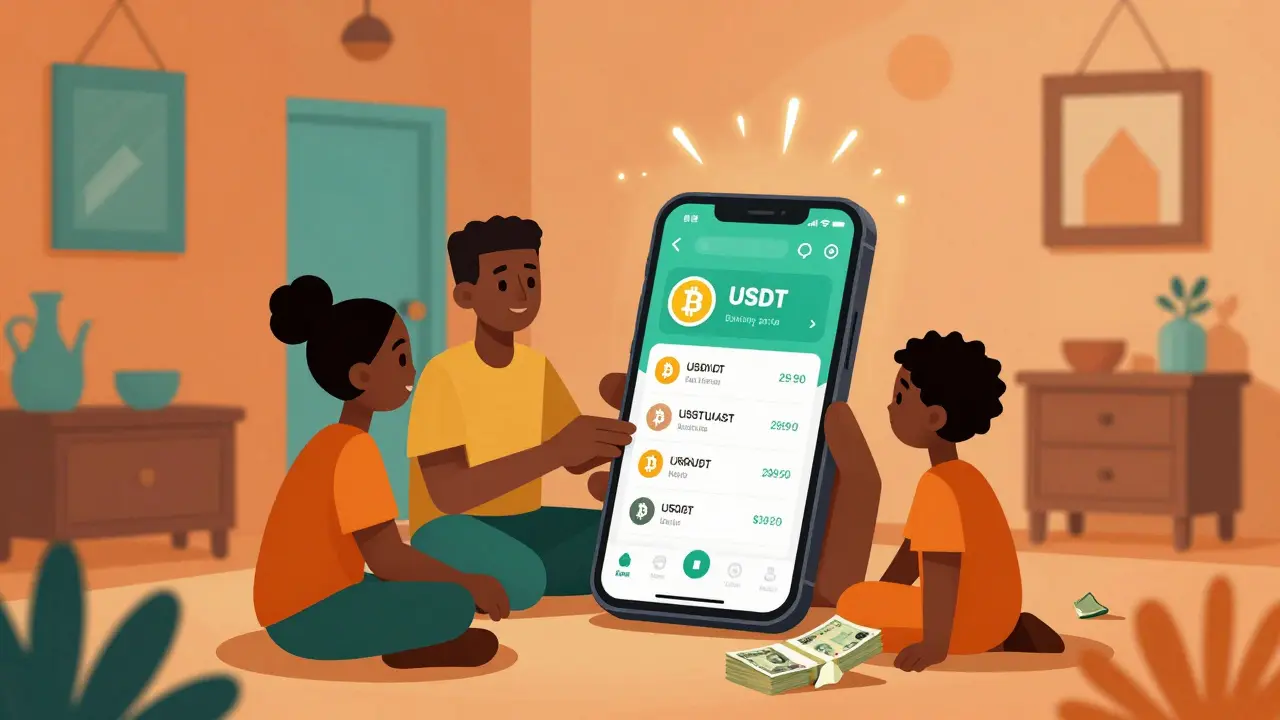
Nigeria isn't just using cryptocurrency-it's relying on it. With over 22 million people holding crypto in 2025, that’s more than 10% of the entire population. This isn’t a trend. It’s a survival strategy. When your currency loses 75% of its value in a decade and inflation hits 24%, you don’t wait for banks to fix things. You find another way. For millions of Nigerians, that way is crypto.
Why Nigeria Turned to Crypto
The naira’s collapse didn’t happen overnight. Since 2016, it’s lost more than three-quarters of its value against the US dollar. In 2023, inflation hit 24%. Savings in banks evaporated. Salaries bought less each month. People watched their money disappear-and they didn’t trust the system to fix it. At the same time, 36% of Nigerian adults had no bank account. Even those who did couldn’t easily send money abroad. Sending $100 home from the US could cost $8 in fees. For a freelancer in Lagos paid in dollars, that meant losing a full week’s pay just to get cash. Crypto offered a bypass. No bank approvals. No delays. No hidden charges. A Nigerian developer working for a company in the US could get paid in USDT, a stablecoin pegged to the dollar, and convert it to naira on a P2P exchange within minutes. The transaction fee? Often under 1%. This wasn’t speculation. It was necessity. People weren’t buying Bitcoin hoping it would hit $100,000. They were buying it because their naira was falling faster than a stone.The Regulatory Shift That Changed Everything
In 2021, the Central Bank of Nigeria (CBN) banned banks from dealing with crypto businesses. It didn’t stop people from using crypto-it just made it harder. You had to find shady middlemen. You risked losing your money if a P2P trader vanished. Exchanges shut down without warning. Then, in late 2023, everything flipped. The CBN lifted the ban. Licensed crypto exchanges could now open bank accounts. Suddenly, Binance, Quidax, and Yellow Card could operate openly. Banks started processing payments again. Investors felt safe. Institutional money started flowing in. By 2025, Nigeria’s crypto market hit $59 billion in transactions over just 12 months. That’s more than most European countries. And it wasn’t just traders. It was small businesses, freelancers, students, and even street vendors using crypto daily. The real game-changer? The Nigeria Inter-Bank Settlement System (NIBSS) partnered with Zone’s blockchain network in early 2025. Now, banks use blockchain to settle payments faster and with less fraud. This wasn’t about replacing the naira. It was about fixing the system that was broken. And crypto became the tool to do it.How Nigerians Are Actually Using Crypto
Most people don’t trade Bitcoin for profit. They use it to survive.- Remittances: Over 60% of crypto transactions in Nigeria involve sending or receiving money from abroad. A Nigerian in the UK sends $200 in USDT. Their family in Abuja cashes out in naira within 15 minutes. No Western Union. No waiting days.
- Stablecoins for savings: People keep their emergency funds in USDT or BUSD. When the naira drops 10% in a week, their crypto savings hold steady.
- Freelance income: Upwork, Fiverr, and remote jobs pay in dollars. Crypto lets Nigerians get paid without bank restrictions.
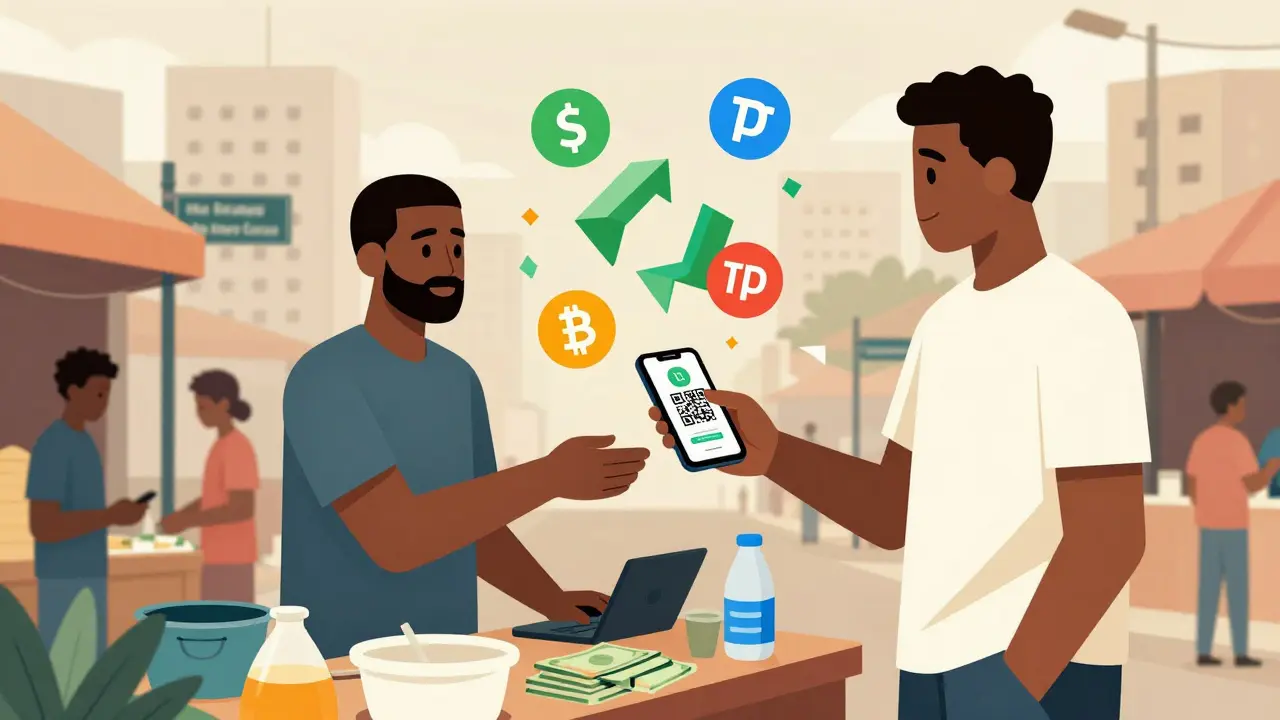
- Small business payments: A vendor in Ibadan accepts USDT for goods. They convert it to naira daily. No card fees. No chargebacks.
The Rise of Local Platforms
Global giants like Binance dominate, but Nigerian startups are rising fast. Quidax and Yellow Card built their businesses on local trust. They offer Pidgin English interfaces. They have customer service teams that answer calls in Yoruba, Igbo, and Hausa. They’ve partnered with mobile money agents so you can buy crypto with cash at a roadside stall. Moniepoint, a Nigerian fintech company, became a $1 billion unicorn in 2025. Why? Because it lets small shop owners accept crypto payments and instantly convert them to naira. No bank account needed. No paperwork. Just a QR code and a phone. These platforms aren’t trying to replace banks. They’re filling the gaps banks refuse to touch.What’s Holding Crypto Back?
Despite the growth, problems remain.- Exchange downtime: During big currency crashes, platforms like Binance P2P get overloaded. People can’t buy or sell for hours. Panic spreads.
- Security risks: Many users don’t understand private keys. They keep their crypto on exchanges and get hacked. Telegram groups are full of stories of people losing life savings because they clicked a fake link.
- Regulatory uncertainty: The CBN lifted the ban-but what if they change their mind again? No one trusts promises from institutions that have broken them before.
- Internet access: Not everyone has reliable data. In rural areas, slow connections make crypto trading impossible.

rachael deal
December 27, 2025 AT 00:53This is honestly one of the most real things I've read all year. People aren't chasing crypto like it's a lottery ticket-they're using it to eat, pay rent, and send money to their moms. That’s not speculation, that’s survival.
And the fact that street vendors in Kano are using WhatsApp to send USDT? That’s next-level innovation born from necessity. No government program ever did that.
I wish more people in the West understood this isn’t about getting rich. It’s about not disappearing.
Also, shoutout to Quidax for doing customer service in Pidgin. That’s respect.
Andrea Stewart
December 27, 2025 AT 20:47It’s wild how the CBN’s ban backfired so hard. Instead of killing crypto, they forced it underground-and when it came back, it was stronger, smarter, and more embedded in daily life.
People didn’t wait for permission. They built their own system. That’s the definition of resilience.
And now the banks are using blockchain to settle payments? Classic. The system only fixes itself when the people force it to.
Josh Seeto
December 28, 2025 AT 19:22Oh wow, Nigeria figured out crypto. What a shock. Next you’ll tell me water is wet and the sun rises in the east.
Meanwhile, the US is still debating whether to let people buy crypto with their debit cards. We’re not behind-we’re in a parallel universe where regulation is a religion and innovation is a crime.
Jordan Fowles
December 29, 2025 AT 11:56The real story here isn’t the tech. It’s the human will to adapt.
When institutions fail, people don’t wait for a policy paper. They grab a phone, download an app, and start moving value without asking anyone’s permission.
This isn’t a crypto revolution. It’s a dignity revolution.
And the fact that teenagers in Port Harcourt are turning crypto earnings into airtime? That’s poetry in motion.
Andrew Prince
December 30, 2025 AT 21:03Let’s be intellectually honest here: Nigeria’s crypto adoption is not a model. It’s a symptom of catastrophic governance failure. You don’t celebrate a broken system because people found a workaround-you mourn the system that broke in the first place.
And let’s not pretend this is ‘financial inclusion.’ It’s financial desperation dressed up in blockchain jargon. The fact that people are forced to use stablecoins to preserve their savings is not a triumph-it’s a tragedy wrapped in a whitepaper.
Mandy McDonald Hodge
January 1, 2026 AT 18:07omg i just cried reading this
my cousin in lagos sends me usdt every month so i can pay for my meds and i never thought about how insane that is until now
she doesnt even know what a blockchain is but she knows how to send money and keep it safe
we need more stories like this not less
❤️
Willis Shane
January 2, 2026 AT 22:57It’s irresponsible to frame this as a success story. The Nigerian government is still corrupt. The central bank still manipulates currency. And now they’re cozying up to crypto exchanges? That’s not progress-it’s co-optation.
These platforms are being absorbed into the same system they were meant to escape. The revolution is being monetized.
Don’t mistake adaptation for liberation.
Shawn Roberts
January 4, 2026 AT 17:51THIS IS THE FUTURE AND WE’RE LIVING IT
people in naija are doing what the whole world should be doing
no banks no fees no waiting
just send money and go
if you’re not excited about this you’re not paying attention
🙌🔥
Mike Pontillo
January 6, 2026 AT 12:28So let me get this straight. You’re praising a country where people use crypto because their money is worthless? That’s not innovation. That’s a dumpster fire with Wi-Fi.
And now you want to export this model? Great. Let’s all live in hyperinflation paradise where your savings vanish faster than your ex’s texts.
Steve Williams
January 7, 2026 AT 00:46As a Nigerian, I can confirm: this is not a trend. It is our reality.
My mother keeps her pension in BUSD. My brother pays his school fees in USDT. My aunt buys rice with crypto at the market.
We do not see this as rebellion. We see it as responsibility.
When the system fails you, you become the system.
Thank you for writing this with truth.
prashant choudhari
January 8, 2026 AT 23:46Interesting how the informal economy became the backbone of financial innovation
Traditional banking never served the majority
But a smartphone and a WhatsApp group did
This is decentralized finance done right
Not by Wall Street
By the people
For the people
Bruce Morrison
January 10, 2026 AT 19:04People keep talking about Bitcoin as an asset
But in Nigeria it’s not money
It’s medicine
It’s school fees
It’s rent
It’s dinner
That’s what matters
Joydeep Malati Das
January 11, 2026 AT 01:56The resilience displayed by Nigerians in adopting crypto under such adverse conditions is a testament to human ingenuity. While regulatory frameworks in developed economies remain mired in bureaucratic inertia, grassroots innovation continues to thrive in the Global South.
This case study deserves serious academic attention beyond the usual crypto hype cycles.
Jake West
January 13, 2026 AT 01:28So you’re telling me people in Nigeria use crypto because they’re too poor to have banks? Wow. What a breakthrough.
Next you’ll say people in Venezuela use Bitcoin because they’re hungry. Big surprise.
Can we please stop pretending this is ‘innovation’ and call it what it is: economic collapse with a blockchain sticker on it?
Elisabeth Rigo Andrews
January 14, 2026 AT 13:50Let’s be real-the entire narrative is performative. Crypto isn’t saving anyone. It’s just another asset class being weaponized by tech bros and venture capitalists who’ve never set foot in Lagos.
And don’t get me started on the ‘P2P traders’-they’re just unregulated forex brokers with a whitepaper.
The CBN lifting the ban? That’s not reform. That’s surrender to capital.
They didn’t fix the system. They just monetized the desperation.
Adam Hull
January 14, 2026 AT 22:55Oh look, another ‘crypto is liberation’ op-ed from someone who’s never had to pay a bribe to get a bank account.
Meanwhile, the real story is that Nigeria’s crypto boom is fueled by Western capital, Chinese stablecoin arbitrage, and a population so desperate they’re trading their life savings for a QR code.
This isn’t empowerment. It’s exploitation with a blockchain veneer.
And the fact that you’re all celebrating this? That’s the real tragedy.
Abhisekh Chakraborty
January 16, 2026 AT 03:51you think this is about money
no
this is about control
they took our currency
we took back our power
you can ban exchanges
you can shut down apps
but you can’t unlearn how to move money without permission
we are not waiting for you to catch up
we are already here