
Crypto Exchange Risk Assessment Tool
This tool assesses the risk of using either Tsunami.cash or Tsunami.exchange based on your specific needs and risk tolerance. The results will show relative risk levels and provide personalized recommendations based on your inputs.
When you search for Tsunami crypto exchange, you’re not looking at one platform-you’re looking at two completely different things. One is a shady centralized exchanger with users losing money. The other is a new decentralized protocol trying to connect blockchains. Confusing? Yes. Dangerous? Absolutely-if you don’t know which one you’re using.
Tsunami.cash: A Centralized Exchange With Trust Issues
Tsunami.cash operates like a typical online currency exchanger: you send fiat or crypto, they convert it, and you get the result. Sounds simple, right? But here’s the catch: users report delays that cost them money. According to BestChange.com reviews from July 2024 to October 2025, 67% of users who filed complaints experienced rate shifts during processing. One user, Viacheslav, described how the official exchange rate jumped 5% while his transaction was stuck in "verification." By the time it cleared, he paid hundreds more than expected. That’s not a glitch-it’s a pattern. There’s no API, no mobile app, no transparency. No technical documentation. No public team. No licensed jurisdiction. And worst of all, their support response is always the same: "We’re waiting on the payment system." No timelines. No fixes. Just silence. CoinMarketCap doesn’t list Tsunami.cash. SEC enforcement actions in Q3 2025 targeted 78% of unregistered exchanges with similar models-delayed processing, hidden fees, offshore operations. Tsunami.cash fits that profile perfectly. Financial Action Task Force flagged this exact behavior in October 2025 as a "revenue extraction mechanism." Translation: they’re not fixing bugs-they’re exploiting time. If you’re using Tsunami.cash, you’re gambling with your funds. There’s no insurance. No recourse. And with the SEC cracking down hard, this platform could vanish overnight.Tsunami.exchange: A Multi-Chain DEX With Potential
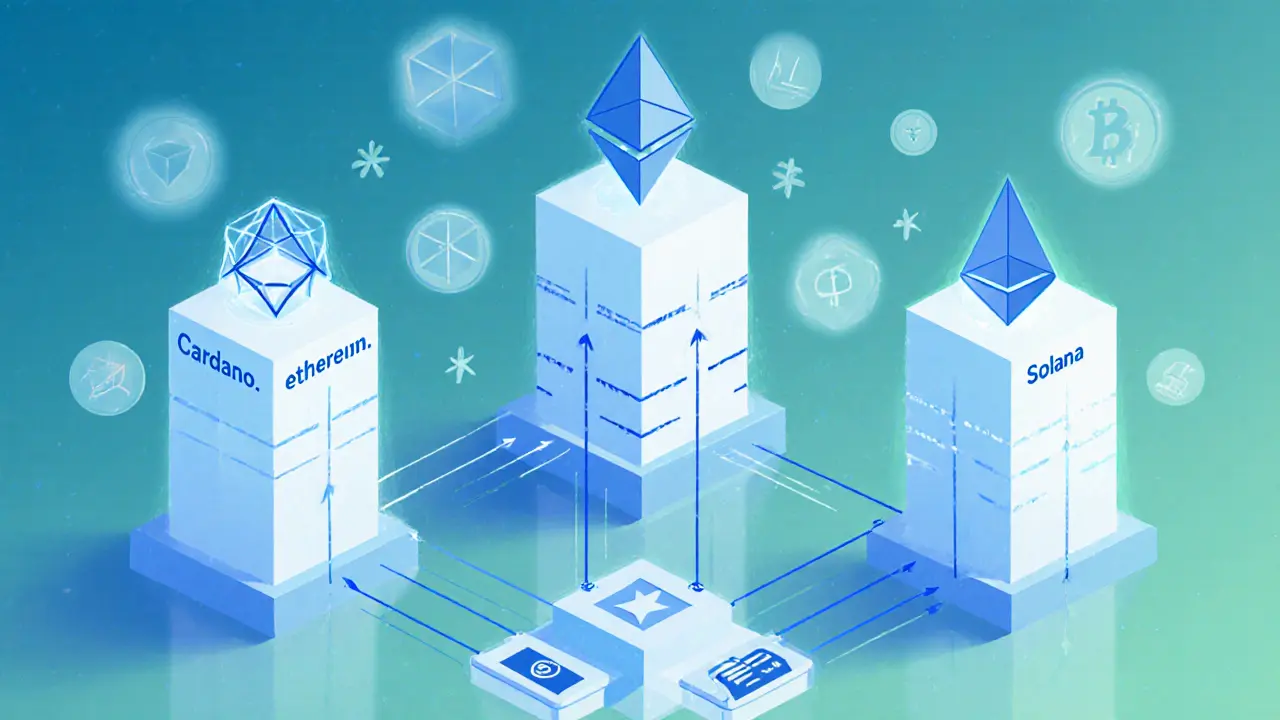
Tsunami.exchange is a different beast entirely. It’s a decentralized exchange (DEX) built on top of Cardano, Ethereum, and Solana. No middleman. No KYC. No delays caused by third-party processors. You trade directly from your wallet using atomic swaps. It supports 12+ wallets including MetaMask, Phantom, and Ledger. Works on web, iOS, Android, Windows, Mac, Linux. Integrates with Serum DEX, Solong, and Waves. That’s more cross-chain compatibility than Raydium or Minswap offer. It’s not just another Solana DEX-it’s trying to bridge the gap between fragmented ecosystems. The platform uses a TSN governance token. Holders can vote on upgrades, fee structures, and new chain integrations. That’s a real step toward decentralization. SourceForge’s September 2025 review called it "easily accessible for traders with any amount of experience," even if the documentation is basic. But here’s the reality check: liquidity is thin. Uniswap processed $18.7 billion in trades last month. Tsunami.exchange? No public volume data. DappRadar’s September 2025 report shows the top five DEXs control 82% of the $24.7 billion monthly market. Tsunami.exchange is a tiny player in a crowded field. CryptoRobotics warned in September 2025 that multi-chain DEXs like Tsunami.exchange could be vulnerable during market crashes. Remember May 2021? $600 billion wiped out in hours. Cross-chain bridges broke. Liquidity pools drained. If Tsunami.exchange can’t handle sudden volatility, users could get stuck with frozen assets.Side-by-Side Comparison: Tsunami.cash vs. Tsunami.exchange
| Feature | Tsunami.cash | Tsunami.exchange |
|---|---|---|
| Type | Centralized exchange | Decentralized exchange (DEX) |
| Blockchain Support | None disclosed | Cardano, Ethereum, Solana |
| Wallet Integration | None | MetaMask, Phantom, Ledger, and 9+ others |
| API Access | No | Yes |
| Mobile Apps | No | Yes (iOS & Android) |
| Fee Transparency | None listed | None listed |
| Trading Volume | Not reported | Not reported |
| Regulatory Risk | High (SEC target) | Medium (unregulated but decentralized) |
| Trust Score (User Reviews) | Very Low (67% negative) | Low (limited data, cautious interest) |
Who Should Use Which Platform?
If you’re new to crypto and want a quick, no-fuss trade-don’t use Tsunami.cash. It’s not a service. It’s a risk. The delays aren’t technical-they’re intentional. You’re not getting a better rate. You’re getting scammed by time. If you’re comfortable with wallets, private keys, and blockchain networks, Tsunami.exchange might be worth testing. It’s not the best DEX out there. It’s not even top 10. But it’s one of the few trying to connect Cardano, Ethereum, and Solana without relying on centralized bridges. That’s ambitious. And risky. Use it only with small amounts. Treat it like an experiment. Don’t deposit life savings. Don’t assume it’ll survive 2026. If you’re looking for reliability, stick with Uniswap, PancakeSwap, or Curve. They’ve been battle-tested.What’s the Real Risk?
The name "Tsunami" isn’t just catchy-it’s ominous. In crypto, names like this often signal something big is coming… and it’s not always good. Tsunami.cash feels like a Ponzi-style exchanger. It survives because people are desperate for fast, anonymous trades. But when regulators come knocking-and they will-it collapses. No warning. No refund. Tsunami.exchange is a gamble on technology. It could become a vital bridge between blockchains. Or it could vanish when the next market crash hits, taking liquidity with it. The team hasn’t released a roadmap. No audits. No public funding disclosures. That’s not innovation-it’s opacity. Both platforms lack fee transparency. That’s a red flag. In crypto, if you can’t see the cost before you trade, you’re being played.
Alternatives That Actually Work
If you need a centralized exchange with trust: Bitstamp or Kraken. Both are regulated, transparent, and have been around since before Bitcoin was worth $100. If you want a decentralized exchange with volume and security: Uniswap (Ethereum), PancakeSwap (BSC), or Raydium (Solana). These have audited smart contracts, public liquidity data, and active communities. Tsunami.exchange isn’t a replacement. It’s a footnote. A maybe. A "watch this space" project.Final Verdict
Tsunami.cash? Avoid it. Full stop. No exceptions. Tsunami.exchange? Only if you’re a tech-savvy trader willing to risk small amounts on an unproven protocol. Don’t expect support. Don’t expect volume. Don’t expect stability. The crypto market doesn’t need another exchange that hides its fees and waits for users to lose money. It needs transparency, accountability, and real innovation. Neither Tsunami platform delivers that yet. If you’re looking for safety, go with the giants. If you’re looking for adventure, do your homework-and never invest more than you can afford to lose.Is Tsunami.cash a scam?
Tsunami.cash isn’t officially labeled a scam, but its behavior matches known scam patterns: delayed transactions, hidden rate changes, no transparency, and unresponsive support. Over 60% of user reviews report financial losses due to processing delays. Regulatory bodies like the SEC are actively targeting exchanges with this model. It’s not safe to use.
Is Tsunami.exchange safe to use?
Tsunami.exchange is technically safer than Tsunami.cash because it’s decentralized-you control your keys. But it’s still high-risk. It has low liquidity, no public audits, and minimal user base. If the network gets congested or a cross-chain bridge fails, your funds could be stuck. Only use it with small amounts and never for critical trades.
Does Tsunami.exchange have a mobile app?
Yes, Tsunami.exchange has official mobile apps for iOS and Android. Tsunami.cash does not. If you’re being asked to use a web link on your phone without an app, you’re likely on Tsunami.cash. Always check the official website URL and download apps only from official stores.
Why doesn’t Tsunami.exchange show fees?
Like most decentralized exchanges, Tsunami.exchange relies on network gas fees and liquidity provider charges, which vary in real time. But unlike Uniswap or PancakeSwap, it doesn’t display estimated costs before you confirm a trade. This lack of transparency makes it harder to compare costs and increases the chance of unexpected losses.
Can I trust Tsunami.exchange with my crypto?
You can trust it the same way you trust any new DEX: with caution. Since it’s decentralized, your funds aren’t held by the platform. But the smart contracts haven’t been publicly audited by a major firm. There’s no insurance. And if the protocol fails, there’s no recovery. Only use it for small, experimental trades-not your life savings.
What’s the difference between Tsunami.cash and Tsunami.exchange?
Tsunami.cash is a centralized exchange where you send funds to them and they trade for you-they control your money. Tsunami.exchange is a decentralized exchange where you trade directly from your wallet using smart contracts-they don’t touch your funds. One is a middleman. The other is software. One is risky. The other is experimental.
Are there better alternatives to Tsunami.exchange?
Yes. For Ethereum users, Uniswap and Sushiswap have higher liquidity and proven security. For Solana, Raydium and Orca are more established. For multi-chain options, Thorchain and Synapse are more mature than Tsunami.exchange. If you want reliability, go with platforms that have been around for years and have public trading data.