Security Tokens: What They Are, How They Work, and Why Regulations Matter
When you hear security tokens, digital assets that represent ownership in a real-world asset like real estate, company equity, or revenue streams, and are regulated by financial authorities. Also known as tokenized securities, they’re not just another crypto fad—they’re the bridge between traditional finance and blockchain. Unlike Bitcoin or meme coins, security tokens come with legal obligations. They’re treated like stocks or bonds by regulators like the SEC, meaning issuers must register them, disclose risks, and follow strict rules. If you’re buying one, you’re not just speculating—you’re owning a piece of something tangible, and that changes everything.
That’s why crypto regulation, the set of laws and enforcement actions that govern how digital assets are issued, traded, and taxed is so critical. Countries like the U.S., EU, and Japan have clear frameworks for security tokens, while others ban them outright. In places like China and Bangladesh, even owning certain tokens can land you in legal trouble. The SEC crypto, the U.S. Securities and Exchange Commission’s enforcement actions against unregistered digital asset offerings has targeted dozens of projects that tried to pass off tokens as utility coins when they were clearly securities. You can’t ignore this. If a project promises returns based on someone else’s effort—like a team building a platform or managing funds—it’s likely a security token, whether they call it that or not.
tokenized assets, real-world properties like real estate, art, or company shares that are broken into digital fractions and traded on blockchain platforms are the real power behind security tokens. Imagine owning 0.1% of a Manhattan apartment building, or a share of a wind farm, all tracked on a public ledger. That’s what these tokens enable. But here’s the catch: most platforms offering them are still untested. Many lack audits, proper legal backing, or real liquidity. That’s why you’ll find posts here about blockchain compliance, the systems and processes that ensure digital assets follow financial laws, including KYC, AML, and reporting—because without it, even the most promising tokenized asset can vanish overnight.
What you’ll find in these posts isn’t hype. It’s the reality check. You’ll see how governments are cracking down on unregistered offerings, how exchanges get shut down for listing unapproved tokens, and why some projects that look like investments are actually scams hiding behind blockchain jargon. You’ll learn what happens when a security token gets flagged by the SEC, how privacy coins like Monero clash with compliance rules, and why even airdrops can be legal landmines. This isn’t about getting rich quick. It’s about understanding what’s real, what’s regulated, and what could cost you more than just money.
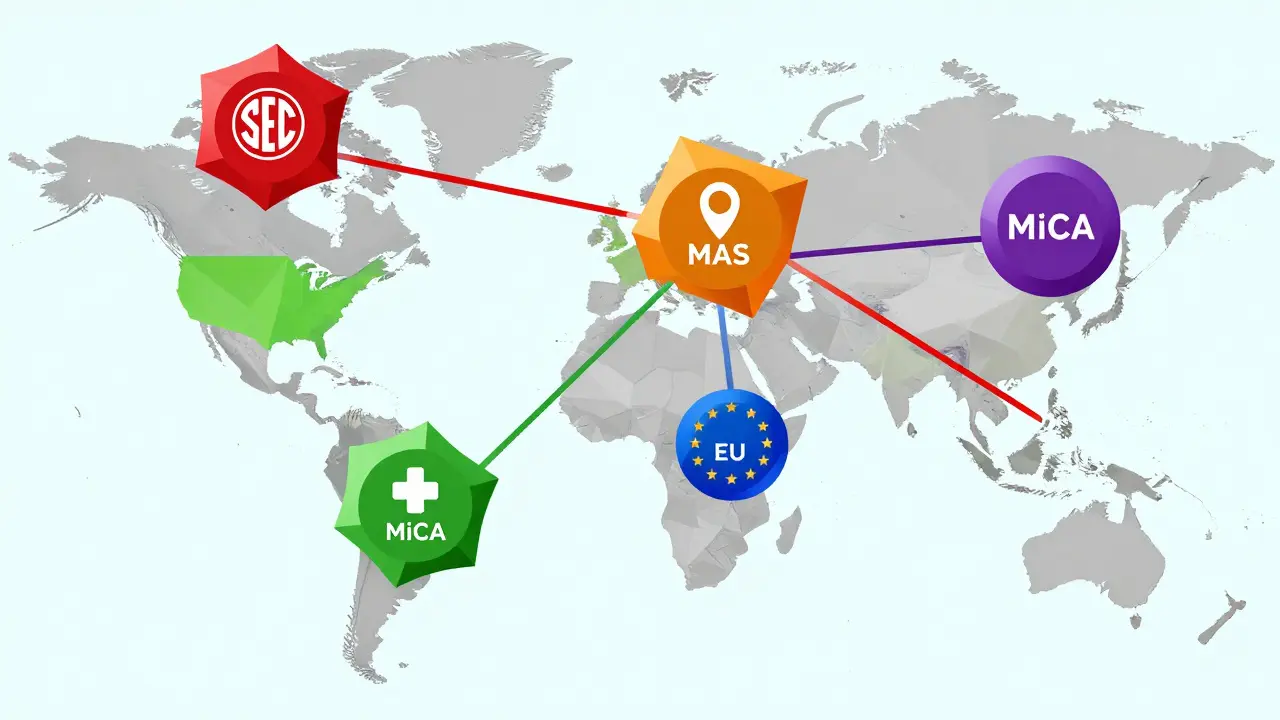
Regulatory Framework for Security Tokens: Global Rules in 2025
In 2025, security tokens are regulated differently across the globe. Learn how the SEC, MAS, MiCA, and others govern tokenized assets, what technical rules apply, and why compliance is now built into the code.
learn more