Security Token Compliance Checker
Compliance Summary
Low Risk (Compliant)
This tool provides general guidance only. Consult a qualified legal professional before launching any security token offering.
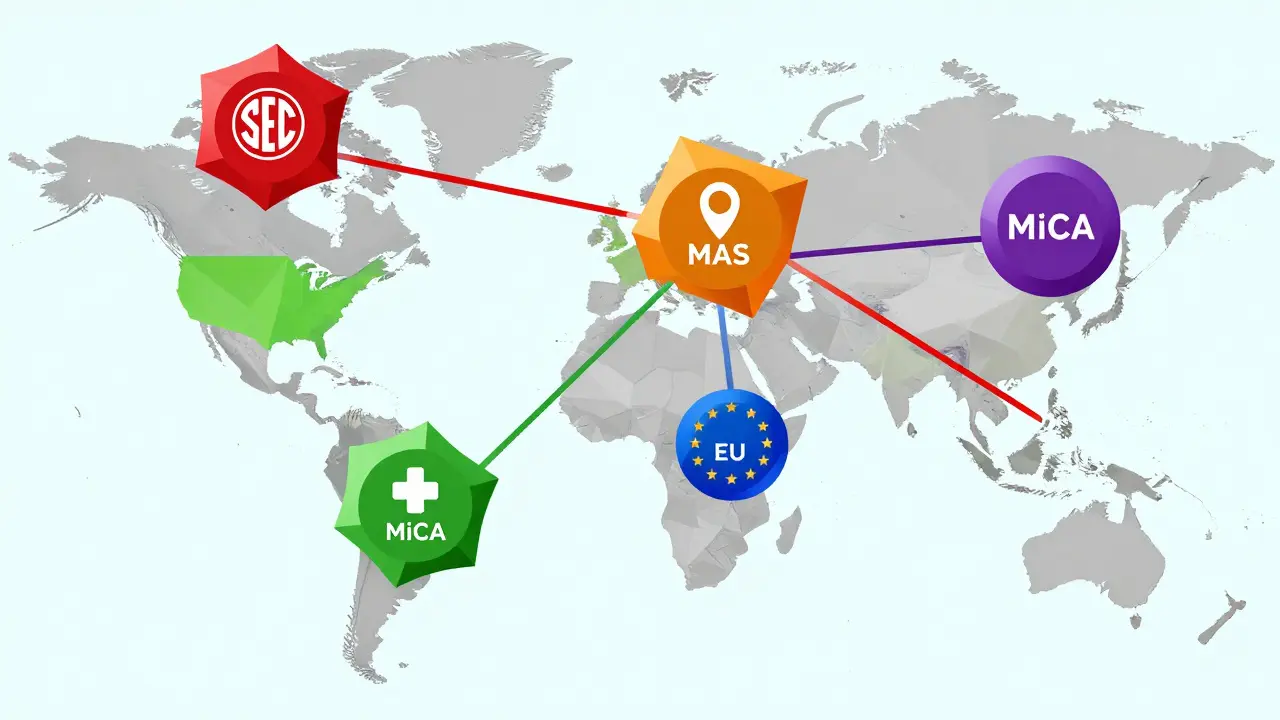
Security tokens aren’t just digital assets-they’re legally recognized investments. Unlike cryptocurrencies like Bitcoin or Ethereum, which operate as decentralized currencies or utility tokens, security tokens represent ownership in real-world assets: real estate, company shares, private equity, or even future revenue streams. And because they’re securities, they’re bound by strict financial regulations. In 2025, the rules around these tokens have finally started to catch up with the technology. But they’re not the same everywhere. What’s legal in Singapore might get you shut down in New York. Understanding the global regulatory landscape isn’t optional-it’s the difference between launching a successful token and facing a federal investigation.
What Makes a Token a Security?
The line between a utility token and a security token isn’t about the code. It’s about how it’s sold and what investors expect. The U.S. Securities and Exchange Commission (SEC) uses the Howey Test to decide. If people invest money in a common enterprise with the expectation of profit from someone else’s effort, it’s a security. That applies whether it’s shares in a startup or a token representing a fraction of a Manhattan apartment building. In 2025, the SEC made it clearer: a token can start as a security and later become something else-if the network becomes truly decentralized and no longer depends on a central team to drive value. This shift, called “substance over form,” is a big deal. It means projects aren’t stuck with permanent securities status forever.
U.S. Rules: Project Crypto and the Three-Year Exemption
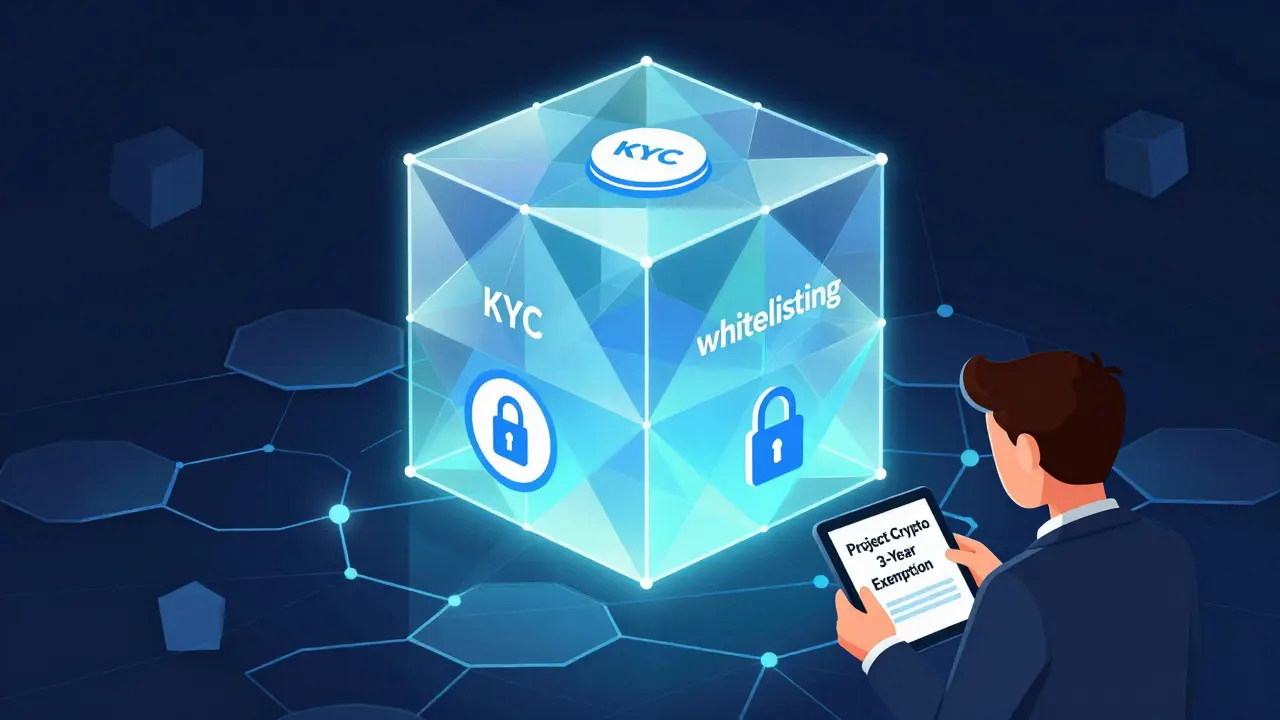
The U.S. used to rely on enforcement actions-fines and lawsuits-to guide the market. That changed in early 2025 with Project Crypto, a new regulatory roadmap from the SEC. One of its biggest moves is a proposed three-year exemption from full securities registration. To qualify, a token must meet four conditions: (1) make clear, public disclosures on a website anyone can access, (2) be offered for network development or access, not just investment, (3) file a notice with the SEC, and (4) submit an exit report after three years proving the network is mature. This gives startups breathing room to build without immediately jumping through all the hoops of an IPO. But don’t mistake this for a free pass. KYC and AML checks are still mandatory from day one. Every investor, even your cousin or best friend, must be verified. And if you skip that step, the SEC will come after you.
Europe: MiCA Doesn’t Cover Security Tokens
The European Union’s Markets in Crypto-Assets (MiCA) regulation, which went into effect in 2024, was supposed to be the big answer for crypto rules. But here’s the catch: MiCA explicitly excludes security tokens. That’s because EU member states already have strong securities laws under MiFID II. So if you’re issuing a token that represents shares in a company or a bond, you still need a prospectus approved by national regulators, and you must follow all the old rules-just on a blockchain. The upside? Predictability. If you know how to issue a bond in Germany, you know how to issue a tokenized bond. The downside? No innovation sandbox. Unlike Singapore, the EU doesn’t offer temporary relief for testing new models. That’s why many European startups still set up legal entities in places like Switzerland or Liechtenstein, where the rules are more flexible.
Singapore: The Innovation Sandbox
Singapore’s Monetary Authority (MAS) takes a tech-neutral approach: if it’s a security, it’s regulated like any other security. But MAS also runs the Project Guardian sandbox, where companies can test tokenized bonds, funds, and private equity with temporary regulatory relief. You can’t sell to the public yet, but you can run pilot programs with accredited investors and regulators watching closely. The result? More innovation. Singapore has become a hub for institutional-grade tokenization projects. Banks like DBS and Standard Chartered are issuing tokenized bonds there. The rules are strict, but they’re clear-and they don’t stifle experimentation. That’s why 38% of all APAC security token activity in 2025 was based out of Singapore, according to Chainalysis.
Hong Kong: High Bar, Fewer Players
Hong Kong’s Securities and Futures Commission (SFC) treats security tokens like complex financial products. That means any platform distributing them needs a Type 1 license for “dealing in securities.” Investors must pass suitability tests-meaning brokers have to prove the investment matches the person’s risk profile and knowledge. And if you’re marketing to retail investors, you need a full prospectus. That’s expensive and time-consuming. As a result, most STOs in Hong Kong are limited to professional investors only. The SFC also requires enhanced disclosures and risk warnings. It’s the most restrictive major jurisdiction, and it shows: only 12 security token offerings were launched in Hong Kong in 2025, compared to 89 in Singapore and 157 in the U.S.
Australia and Dubai: New Players, New Rules
Australia is moving fast. In September 2025, the Treasury released its draft bill requiring all crypto exchanges to hold an Australian Financial Services License (AFSL) from ASIC. That means even if you’re just trading tokenized shares, you need to be licensed like a stockbroker. The goal? To plug loopholes and bring crypto trading under the same oversight as traditional markets.
Dubai is taking a different route. The Virtual Assets Regulatory Authority (VARA) and Dubai Financial Services Authority (DFSA) proposed a shift in October 2025: instead of regulators deciding if a token is suitable for investors, the responsibility falls to licensed platforms. This puts the burden on exchanges and brokers to do their homework. It’s a more market-driven approach, and it’s attracting fintech firms looking for lighter oversight than the U.S. or EU. Dubai’s free zones are now home to 23 security token platforms, up from just 4 in 2024.
Technical Requirements: Smart Contracts That Enforce Rules
Regulation isn’t just paperwork-it’s code. Security tokens rely on smart contracts to automate compliance. For example, a token might be programmed to block transfers if the investor isn’t on the approved whitelist, or if they haven’t held the asset for the required lock-up period. These are called “programmable compliance” features. Ethereum-based blockchains dominate this space, making up 68% of all security token deployments in 2025, according to Deloitte. Platforms like Securitize, Polymath, and tZERO offer pre-built compliance layers that integrate with KYC providers like Jumio or Onfido. Without this automation, managing thousands of investors across multiple jurisdictions would be impossible. Manual tracking of accredited investor status? Forget it. That’s why 72% of STO issuers now use pre-built compliance platforms instead of building from scratch.
Market Trends: Who’s Issuing Tokens and Why?
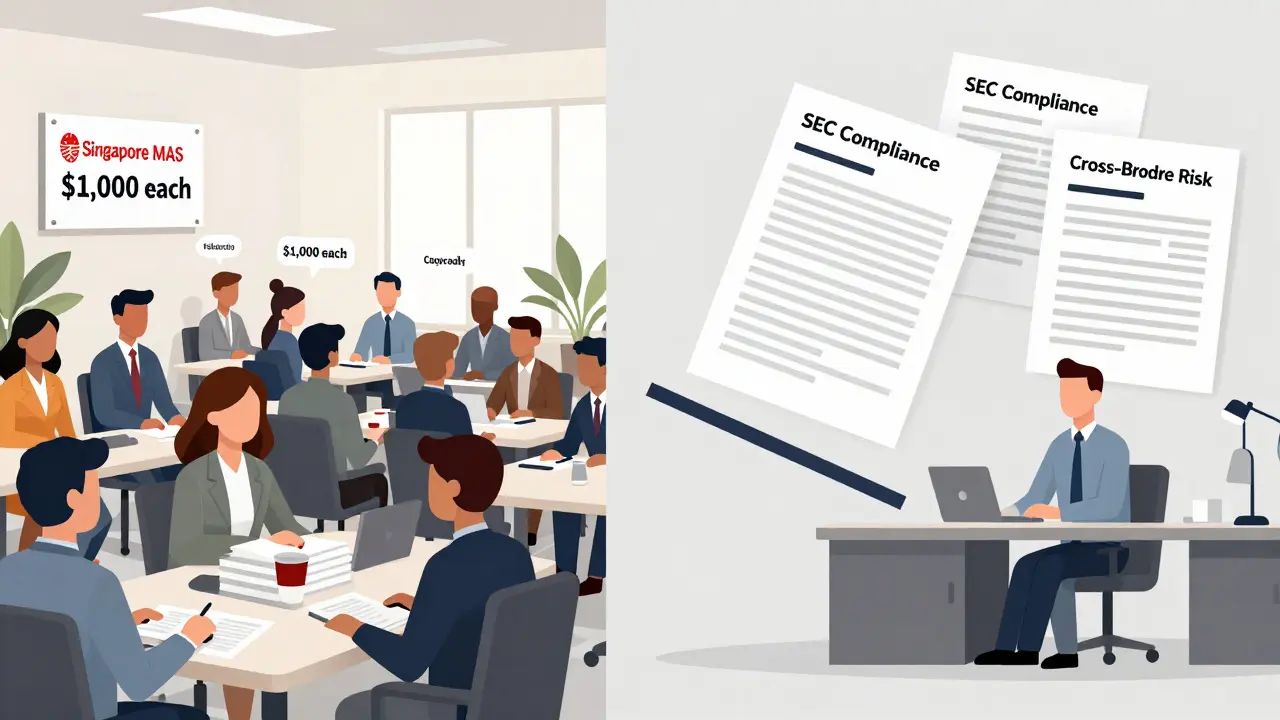
The global security token market hit $12.3 billion in Q3 2025, up 147% from the same period last year. Real estate leads the way-41% of all tokenized assets are property. Why? Because it’s illiquid, expensive, and perfect for fractional ownership. A $5 million office building can now be split into 5,000 tokens worth $1,000 each. Private equity follows at 29%, with platforms slashing minimum investments from $100,000 to under $1,000. That’s opened the door to retail investors who used to be locked out. Venture capital funds are next, at 18%. And it’s not just startups-78 of the S&P 100 companies have launched or announced security token projects. That includes banks, real estate giants, and even a Fortune 500 food distributor tokenizing its supply chain receivables.
Biggest Challenges: Fragmentation and Compliance Costs
The biggest problem? No global standard. A U.S. accredited investor rule doesn’t match the EU’s MiFID II definition. A Singaporean investor might be allowed to buy, but the same person in California can’t. That’s why 42% of STOs in 2025 struggled with cross-border compliance. The solution? Separate investor pools. One smart contract for U.S. investors, another for EU, another for Singapore. Each with its own rules baked in. But this adds complexity-and cost. Legal experts say founders spend 35-45% of their time on compliance, compared to 15-20% for traditional equity raises. And if you get it wrong? Fines, lawsuits, or worse-being shut down before you even launch.
What’s Next? Harmonization and the $7 Trillion Opportunity
The SEC’s next move-Regulation Crypto, expected in Q1 2026-could be a turning point. It’s designed to create tailored disclosures, exemptions, and safe harbors for digital asset offerings. Meanwhile, the Financial Stability Board is running a 17-country sandbox to test cross-border token interoperability. Results are due in Q2 2026. If successful, this could finally align rules across borders. McKinsey forecasts that by 2030, 10-15% of all traditional securities will be tokenized. That’s a $5-7 trillion market. But it only happens if regulators stop playing catch-up and start building frameworks that work with blockchain, not against it.
Are security tokens the same as cryptocurrencies like Bitcoin?
No. Bitcoin and Ethereum are cryptocurrencies-they’re designed as decentralized digital money or network utilities. Security tokens represent ownership in real assets like stocks, bonds, or real estate. They’re regulated like traditional securities by agencies like the SEC, MAS, or SFC. You can’t trade a security token on an unregulated exchange without breaking the law.
Can I issue a security token without a lawyer?
Not safely. Security tokens are legally classified as securities. That means you must comply with securities laws in every jurisdiction where you’re selling. This includes KYC/AML checks, investor disclosures, and licensing requirements. Skipping legal advice risks fines, enforcement actions, or being forced to refund investors. Most issuers spend 35-45% of their time and budget on compliance alone.
Which blockchain should I use for security tokens?
Ethereum is the most common, used in 68% of cases as of Q3 2025. It supports smart contracts that can enforce compliance rules like investor whitelists and transfer restrictions. Other chains like Polygon, Algorand, and Hedera are gaining ground for their lower fees and faster settlement. But Ethereum remains the default because of its ecosystem of compliant platforms like Securitize and Polymath.
Do I need to register with the SEC if I’m not in the U.S.?
Yes-if U.S. investors buy your tokens. The SEC has jurisdiction over any security offering that reaches U.S. persons, regardless of where you’re based. That includes citizens, residents, and even companies incorporated in the U.S. If you’re targeting global investors, you must either exclude U.S. investors entirely or comply with U.S. rules, including the proposed three-year exemption under Project Crypto.
Why do some countries allow retail investors to buy security tokens and others don’t?
It’s about risk tolerance and investor protection. Singapore and Dubai allow retail access under strict conditions-like suitability checks and mandatory disclosures. Hong Kong and the U.S. restrict most offerings to accredited investors (wealthy or sophisticated) because they view security tokens as complex, risky assets. The goal is to protect average people from losing money on unproven digital assets. But as platforms improve compliance and transparency, more countries are slowly opening up to retail.
Cristal Consulting
December 4, 2025 AT 16:38Finally, someone laid this out clearly. I’ve been telling my clients for months that tokenizing real estate isn’t just tech hype-it’s the future of liquidity. The SEC’s three-year exemption is a game changer for early-stage teams.
Shane Budge
December 6, 2025 AT 16:28Wait, so if a token starts as a security but becomes decentralized later, it’s no longer a security? That’s wild. How do you even prove that?
sonia sifflet
December 6, 2025 AT 19:31Don’t be fooled. The SEC doesn’t care about your ‘decentralization’ excuses. They’ve been chasing crypto for a decade and they’re not backing down. If you’re not registered, you’re breaking the law. Period.
Chris Mitchell
December 7, 2025 AT 06:07It’s not about regulation vs innovation-it’s about who gets to play. Right now, only those with legal teams and compliance budgets can even enter the game. That’s not progress, that’s gatekeeping.
Regina Jestrow
December 8, 2025 AT 00:0441% of tokenized assets are real estate? That’s insane. I just bought a fraction of a beach house in Miami through a token platform last month. No broker, no paperwork, just a wallet and a contract. It felt like magic.
Lore Vanvliet
December 8, 2025 AT 16:06Oh great, more Wall Street trying to control blockchain with their old-school rules. The whole point of crypto was to escape this crap. Now they’re just putting blockchain in a suit and calling it ‘compliant.’ Pathetic.
Scott Sơn
December 10, 2025 AT 02:02They turned blockchain into a courtroom drama. Tokens used to be wild, free, and dangerous. Now they’re like corporate bonds with a QR code. Where’s the revolution? It got buried under a pile of KYC forms.
Brooke Schmalbach
December 10, 2025 AT 08:07Let’s be real-72% of issuers use pre-built platforms because they’re lazy. Building your own compliance layer isn’t just hard, it’s expensive. But that’s also why the ecosystem is so fragile. One hack in Securitize and the whole house of cards collapses.
michael cuevas
December 12, 2025 AT 07:38So the SEC gives you 3 years to build… then you gotta submit a report proving you didn’t scam anyone? That’s not regulation, that’s a college final project with a fine.
Nina Meretoile
December 13, 2025 AT 03:36Global fragmentation is the real villain here. Imagine if you had to follow 10 different traffic laws just to drive across one country. That’s what this is. But I’m hopeful-this is just the messy middle. The $7 trillion prize is too big for us to stay divided.
Barb Pooley
December 13, 2025 AT 10:03They’re all lying. The SEC is just buying time until they can shut it all down. Remember when they said ‘we’re not going to regulate Bitcoin’? Then they taxed it. This is the same playbook. Don’t trust the narrative.
Joe West
December 14, 2025 AT 16:43For anyone thinking of launching a token: use Ethereum + Securitize. It’s not sexy, but it works. I’ve helped 12 clients go live in the last year. All compliant. All funded. No lawsuits.
Richard T
December 15, 2025 AT 05:28What about non-US investors? Can they access US-compliant tokens? Or is it just another wall? I’m curious how the cross-border pools actually work in practice.
jonathan dunlow
December 15, 2025 AT 09:54Look, I’ve been in fintech since 2015. We’ve had ICOs, we’ve had scams, we’ve had crackdowns, we’ve had hope. But this time? This is different. The real estate tokenization wave is real. Banks are building it. Funds are allocating to it. Retail is starting to get access. It’s not vaporware anymore. It’s happening. And it’s beautiful. The compliance costs? Yeah, they’re brutal. But the liquidity unlocked? Unbelievable. I’ve seen a $20M apartment building go from zero buyers to 87 investors in 3 weeks. That’s not finance. That’s magic.
Mariam Almatrook
December 15, 2025 AT 14:24The notion that blockchain can circumvent securities law is not only legally untenable, it is economically reckless. The integrity of capital markets is predicated on transparency, accountability, and jurisdictional coherence. To suggest otherwise is to invite systemic collapse.
rita linda
December 15, 2025 AT 15:35Singapore’s sandbox? Cute. They’re just letting startups play dress-up while the real regulators watch. Meanwhile, the U.S. is actually enforcing the rules. Real money, real consequences. Don’t confuse flexibility with legitimacy.
nicholas forbes
December 16, 2025 AT 16:04Just because you can tokenize something doesn’t mean you should. I’ve seen too many projects tokenize a lemonade stand and call it ‘innovation.’ The tech is cool, but the use cases need to be real.
Martin Hansen
December 17, 2025 AT 00:20If you’re not accredited, you shouldn’t be touching this stuff. You think you’re investing in the future? You’re just handing your rent money to some dev who can’t code a smart contract without a bug. Stay in index funds, kid.
Frank Cronin
December 17, 2025 AT 02:24Project Crypto? More like Project Giveaway. The SEC’s letting startups off the hook so they can get rich before the hammer drops. Classic. And you’re all falling for it like sheep.
Stanley Wong
December 17, 2025 AT 06:56I get why people are frustrated with regulation but I think we’re missing the bigger picture. The goal isn’t to kill crypto or make it boring. It’s to make it safe enough that grandma can invest in a tokenized apartment without losing everything. Maybe the rules are clunky now but if we keep building, if we keep talking, if we keep pushing for better systems… maybe one day we’ll get there. Not today. Maybe not tomorrow. But someday.