MiCA: What It Is, How It Shapes Crypto Regulation, and What It Means for You
When you hear MiCA, the Markets in Crypto-Assets Regulation, the European Union’s first unified crypto rulebook. Also known as Crypto-Asset Market Regulation, it’s not just another policy document—it’s the framework that will decide which crypto projects survive in Europe and which get pushed out. Before MiCA, every EU country had its own rules. Some banned crypto outright. Others let exchanges run wild. Now, if you’re launching a token, running a crypto exchange, or even holding stablecoins in Germany, France, or Spain, MiCA applies—and it’s binding.
MiCA doesn’t just regulate exchanges. It targets stablecoins, digital assets pegged to fiat currencies like the euro or dollar, which are now subject to strict reserve requirements and transparency rules. If a stablecoin wants to operate in the EU, it must prove it holds enough real money to back every coin in circulation. That’s why some small stablecoins have already vanished from European platforms. MiCA also forces crypto service providers, including exchanges and wallet providers, to get licensed, disclose fees, and protect user funds. No more anonymous trading platforms slipping through the cracks. If you’re using a no-KYC exchange in the EU, you’re now breaking the law under MiCA.
It’s not all control, though. MiCA also opens doors. Clear rules mean more banks are willing to work with crypto firms. More institutions are launching crypto products. Retail investors get better protections—like mandatory risk warnings and dispute resolution. But here’s the catch: MiCA doesn’t care if you’re a hobbyist or a billionaire. If you’re in the EU and you’re using crypto, you’re in the system. That’s why you’ll see posts here about how traders in Italy bypass MiCA restrictions with peer-to-peer networks, how German exchanges scrambled to comply, and why some crypto projects moved their headquarters to Switzerland or Dubai.
What you’ll find below isn’t theory. It’s real-world fallout. Posts about how crypto bans in Bolivia and Bangladesh mirror MiCA’s enforcement spirit. How China’s crackdown and Russia’s withdrawal limits show that regulation isn’t just a European thing—it’s global. You’ll see how privacy coins like Monero are being squeezed out, how NFT fees and exchange risks are now tied to compliance, and why so many airdrops and meme coins have no future under MiCA’s scrutiny. This isn’t about hype. It’s about what happens when governments finally start writing rules that stick.
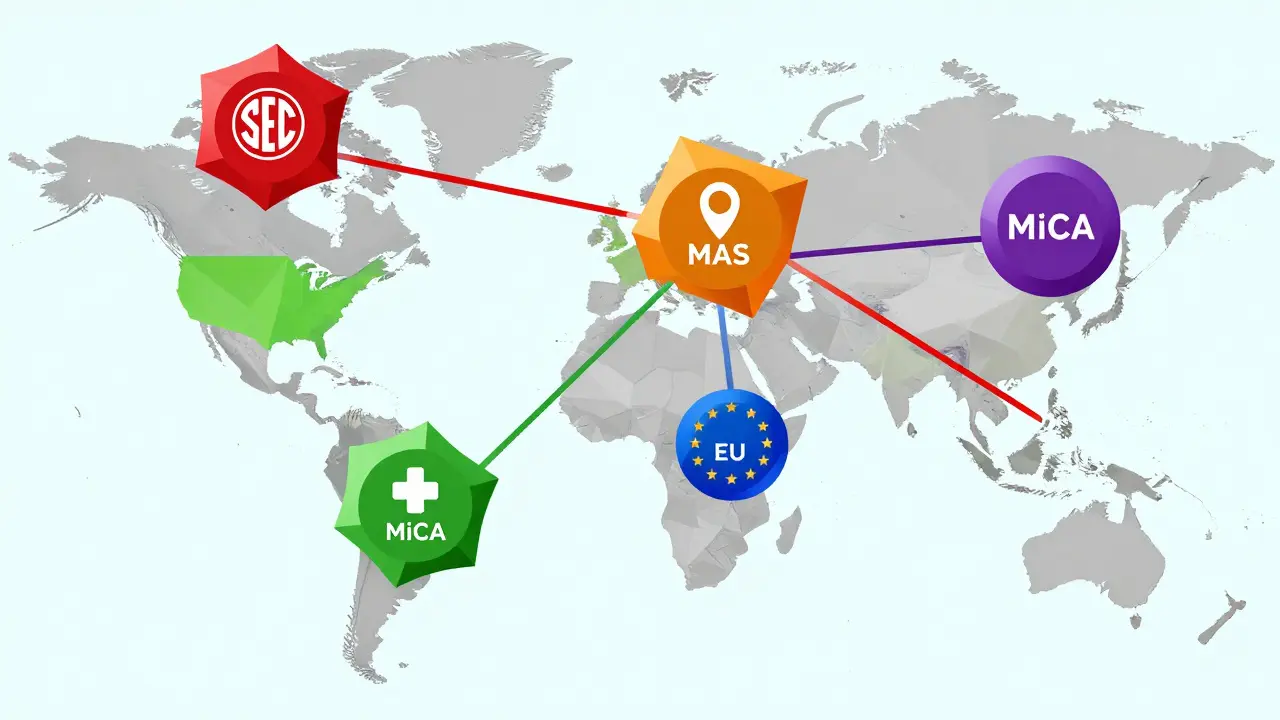
Regulatory Framework for Security Tokens: Global Rules in 2025
In 2025, security tokens are regulated differently across the globe. Learn how the SEC, MAS, MiCA, and others govern tokenized assets, what technical rules apply, and why compliance is now built into the code.
learn more