Cryptocurrency Phishing: How Scammers Steal Your Crypto and How to Stop Them
When you hear cryptocurrency phishing, a deceptive tactic where scammers trick users into giving up private keys, seed phrases, or login details to steal crypto assets. Also known as crypto scams, it’s not just a risk—it’s the number one way people lose money in crypto, even if they know the basics. Unlike hacking a wallet directly, phishing doesn’t need technical skill. It just needs you to click, copy, or confirm something you shouldn’t.
These scams come in many forms. You might get a fake email that looks like it’s from Binance, telling you to "verify your account"—but the link takes you to a cloned site that steals your login. Or you get a DM on Twitter from someone pretending to be a support rep, asking for your 12-word recovery phrase to "unlock" your funds. Sometimes, it’s a fake airdrop page that asks you to connect your wallet, and once you do, the scammer drains it. Phishing attacks, targeted social engineering schemes designed to trick users into surrendering sensitive crypto access. Also known as crypto fraud, they thrive on urgency, fear, and trust in familiar brands. The most dangerous part? You won’t know it’s fake until your balance hits zero.
Most victims aren’t beginners. They’ve used wallets before. They’ve heard of BIP39 seed phrases. But phishing doesn’t target ignorance—it targets attention. One wrong click, one copied phrase, one unchecked URL, and it’s over. That’s why wallet security, the practice of protecting crypto access points like private keys, seed phrases, and connected apps from unauthorized access. Also known as crypto security, it’s not about complex tools—it’s about habits. Never share your seed phrase. Never connect your wallet to unknown sites. Always double-check URLs—even if the logo looks right. Use hardware wallets for big holdings. Turn on 2FA everywhere. And if something feels off, it probably is.
The posts below show real cases of crypto fraud—fake airdrops that vanished, exchanges that disappeared, tokens that were minted by hackers, and projects that pretended to be something they weren’t. You’ll see how scams evolve, how people get fooled, and what signs to look for before it’s too late. Some of these stories are from people who lost everything. Others are from those who caught the scam in time. The difference? Awareness. This isn’t about being tech-savvy. It’s about being careful.
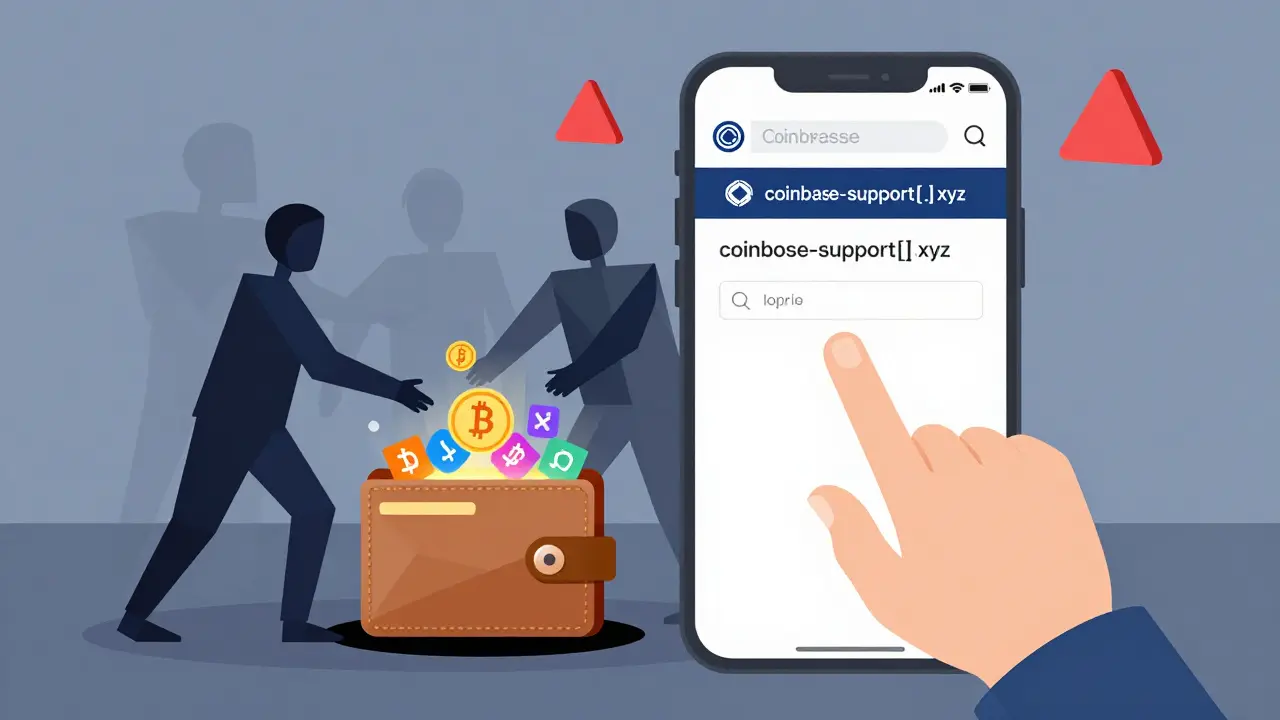
Cryptocurrency Phishing Scams Explained: How They Work and How to Stop Them
Cryptocurrency phishing scams trick users into giving up private keys or sending crypto to fake sites. Learn how they work, the most common types, and how to protect yourself from losing your digital assets forever.
learn more