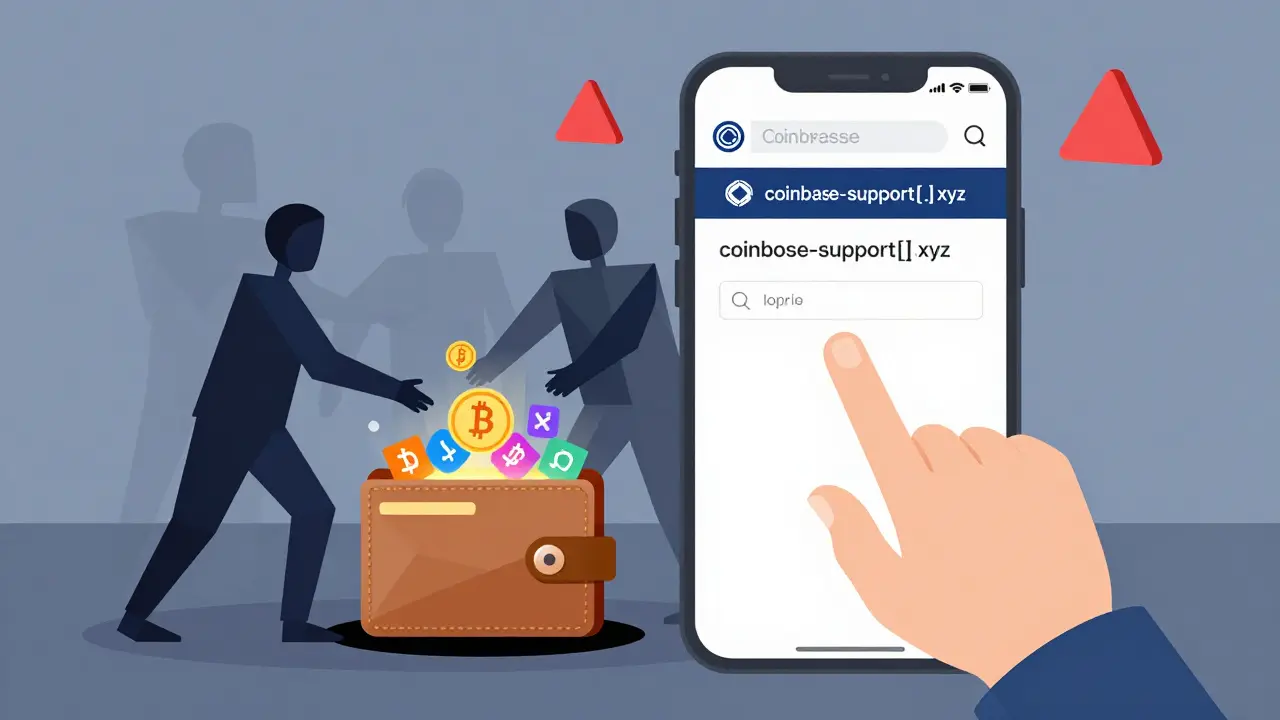
Every year, billions of dollars vanish into thin air - not because of market crashes or bad investments, but because someone clicked a link they shouldn’t have. Cryptocurrency phishing isn’t just a growing problem - it’s the most common way people lose their digital money. Unlike traditional bank fraud, there’s no customer service line to call. No chargebacks. No second chances. Once your private key is stolen, your crypto is gone forever.
How Crypto Phishing Actually Works
At its core, crypto phishing is about tricking you into giving up what only you should have: your private key or recovery phrase. These are the passwords that unlock your wallet. If someone else gets them, they can drain your balance in seconds.
Scammers don’t need to hack your computer. They don’t need complex code. They just need you to trust the wrong thing. A fake email that looks like it’s from Coinbase. A website that copies the exact layout of MetaMask. A DM from someone pretending to be a crypto influencer offering free ETH. These aren’t sloppy fakes - they’re polished, professional, and designed to fool even experienced users.
Here’s the scary part: most phishing attacks succeed because they exploit human behavior, not software flaws. You’re tired. You’re excited about a giveaway. You’re scared of a fake threat. That’s when your guard drops. And that’s when the scammer strikes.
The Top 7 Types of Crypto Phishing Scams
1. Fake Wallets and Exchange Websites
These are the most common. Scammers create websites that look identical to Binance, MetaMask, or Trust Wallet. You think you’re logging in - but you’re actually giving your seed phrase directly to the attacker. These sites often use URLs like binance-support[.]xyz or metamask-login[.]io. The difference is tiny. You won’t notice it unless you’re looking closely.
2. Clone Phishing
You get an email - say, from “Crypto.com Support” - about a recent login attempt. It looks real. It even has your name. But the link inside? It’s not the real site. It’s a copy of a previous legitimate email you received, but with a malicious link swapped in. This works because your brain trusts what it’s seen before.
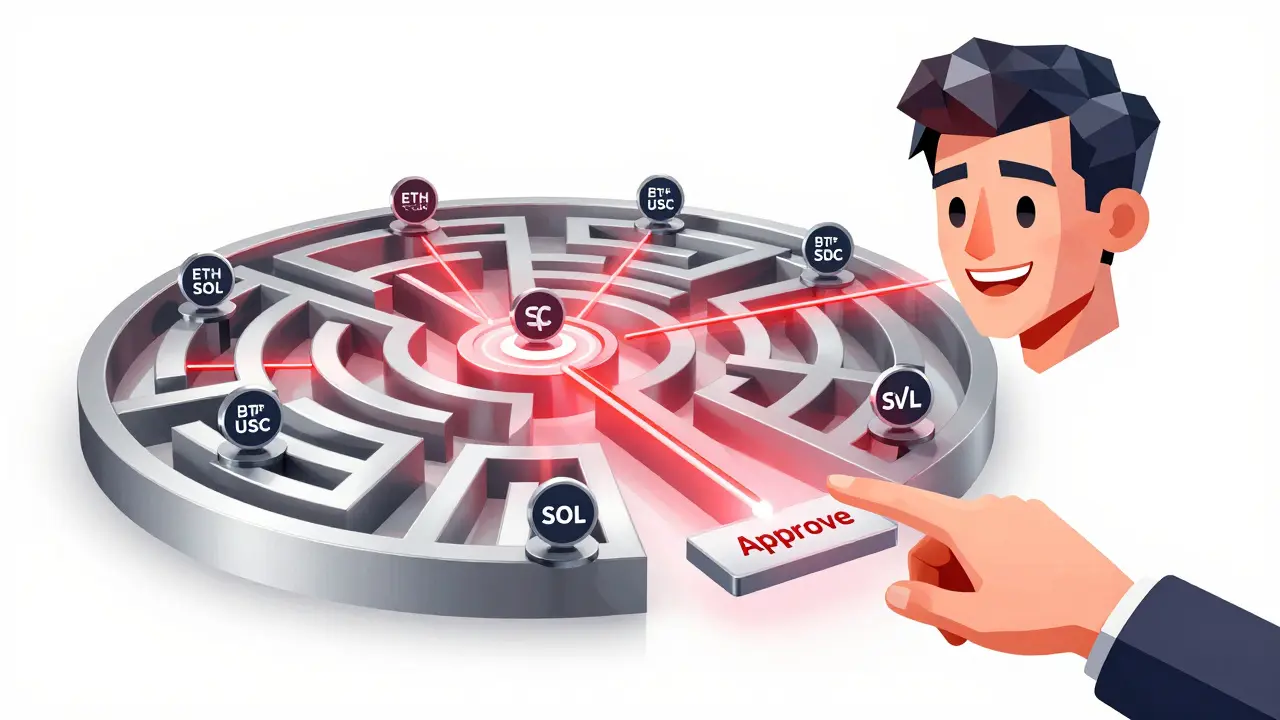
3. Smart Contract Approval Scams
You visit a “free NFT drop” site. It asks you to connect your wallet. You click “Connect.” Then it pops up: “Approve transaction to claim your NFT.” You approve it, thinking it’s just for the NFT. But the smart contract is actually granting unlimited access to your entire wallet. Within minutes, every token - ETH, SOL, USDC - is gone.
4. SIM Swap Attacks
Scammers call your mobile provider, pretend to be you, and convince them to transfer your phone number to a device they control. Suddenly, you lose SMS-based 2FA. They reset your exchange password, bypass your security, and drain your account. This isn’t rare - it’s a favorite tactic for high-value targets.
5. AI-Powered Deepfake Scams
Elon Musk, Sam Bankman-Fried, or Vitalik Buterin appear in a video saying, “Send 0.1 ETH to this address and I’ll send back 10 ETH.” The voice, face, and mannerisms are perfect. It’s AI-generated. It’s convincing. Thousands fall for it every week. These videos spread fast on Twitter, Telegram, and YouTube Shorts.
6. Romance and Pig Butchering Scams
You meet someone on a dating app. They’re charming, smart, and seem to understand crypto. After weeks of talking, they start sharing “investment tips.” They invite you to a private platform where you can “earn 20% daily.” You deposit $500. You see your balance grow. You deposit $5,000. Then the platform locks up. The person disappears. This scam has cost victims over $4 billion since 2021.
7. Fake Crypto ATMs and Urgent Payment Demands
You get a call: “This is the IRS. You owe $5,000 in back taxes. Pay in Bitcoin or we’ll arrest you.” Or: “Your wallet is frozen. Send 0.5 ETH to verify your identity.” They direct you to a crypto ATM. You scan the QR code. The money leaves your wallet. No trace. No recourse.
How to Spot a Phishing Scam
Here’s a simple checklist you can use every time you’re asked to connect your wallet or click a link:
- Check the URL - Is it coinbase.com or coinbase-login[.]xyz? Look at the domain name. Misspellings are the biggest red flag.
- Never approve unknown smart contracts - If a site asks you to “approve” your wallet, stop. Legitimate platforms don’t ask for blanket access.
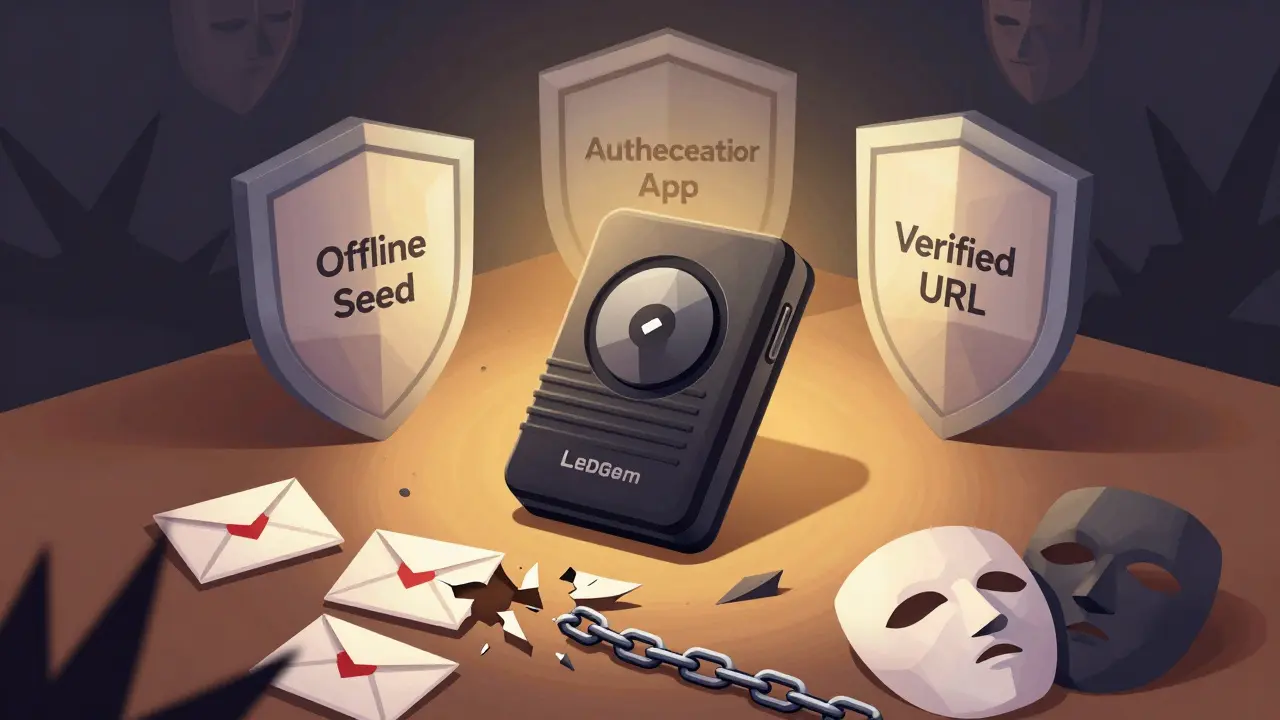
- Use hardware wallets - Keep your biggest holdings on a Ledger or Trezor. Even if you click a phishing link, your private key never leaves the device.
- Turn off SMS 2FA - Use an authenticator app like Authy or Google Authenticator instead. SMS can be intercepted via SIM swap.
- Verify everything through official channels - If you get a DM from “@VitalikButerin,” go to his verified Twitter profile. Check his bio. Look for official links. Don’t trust the DM.
- Never trust “free crypto” offers - If it sounds too good to be true, it is. No one is giving away ETH for gas fees.
- Use browser extensions like MetaMask’s phishing detector - It blocks known scam sites automatically.
What to Do If You’ve Been Scammed
First: Breathe. Panic won’t help. Here’s what actually does:
- Stop all activity - Don’t click anything else. Don’t reply to any messages.
- Check your wallet balance - Use Etherscan or Solana Explorer to see what was taken and where it went.
- Report it - File a report with the FTC (in the U.S.) or your local cybercrime unit. Provide transaction hashes.
- Alert your exchange - If your wallet was linked to an exchange, notify them immediately. They may freeze related accounts.
- Change all passwords - Especially for email, crypto exchanges, and cloud accounts.
- Consider a new wallet - If your seed phrase was exposed, generate a new one. Move remaining funds to a fresh wallet.
Unfortunately, recovering stolen crypto is almost impossible. Blockchain transactions are irreversible by design. That’s why prevention is everything.
How to Protect Yourself Long-Term
Think of crypto security like locking your house. You don’t just rely on one lock. You use deadbolts, alarms, cameras. Same here.
- Use a hardware wallet - It’s the single best investment you can make. A Ledger Nano S costs $60. It could save you $100,000.
- Store your recovery phrase offline - Write it on metal. Keep it in a safe. Never screenshot it. Never store it in the cloud.
- Enable app-based 2FA - No SMS. Ever.
- Use separate wallets - Keep small amounts in a hot wallet for daily use. Keep the rest in cold storage.
- Stay skeptical - If someone is pushing you to act fast, they’re trying to bypass your judgment. Real opportunities don’t require urgency.
- Follow official accounts only - Bookmark official websites. Don’t search for them. Don’t click ads.
Why This Keeps Happening
Crypto is new. Most people don’t understand how it works. That’s the scammer’s advantage. They don’t need to be tech geniuses - they just need to understand how people behave.
And the system isn’t helping. Exchanges don’t always warn users. Social media platforms let fake accounts run unchecked. Wallet apps don’t always block suspicious contracts. The responsibility falls on you.
But that’s not a reason to give up. It’s a reason to be smarter.
Final Warning
There is no “crypto security expert” who will ever DM you. No government agency will ever ask you to pay a fine in Bitcoin. No influencer is giving away free ETH. If you’re being asked to send crypto - especially if it’s urgent, secret, or too good to be true - you’re being targeted.
Trust nothing. Verify everything. Your crypto isn’t safe because of technology. It’s safe because of you.
What is the most common crypto phishing scam?
The most common scam is fake wallet or exchange websites. Scammers create perfect copies of Coinbase, MetaMask, or Binance. When you enter your login details or seed phrase, they steal it instantly. These sites often use URLs that look almost identical to the real ones - like "coinbase-support[.]xyz" instead of "coinbase.com".
Can I get my crypto back if I get phished?
Almost never. Blockchain transactions are irreversible. Once your funds are sent to a scammer’s wallet, there’s no way to undo it. Some law enforcement agencies may track the funds, but recovery is extremely rare. Prevention is the only reliable defense.
Are hardware wallets immune to phishing?
They’re not immune, but they’re the best protection. Hardware wallets like Ledger or Trezor keep your private key offline. Even if you connect to a phishing site, the scammer can’t steal your key. They can only see your public address. Your funds stay safe unless you manually approve a transaction - which you shouldn’t do on untrusted sites.
How do I know if a website is real?
Always type the URL manually. Don’t click links from emails or DMs. Check for HTTPS and the correct domain name. Use browser extensions like MetaMask’s phishing detector. Bookmark official sites. If a site asks you to approve a smart contract, stop - most legitimate platforms don’t require that.
Why do people fall for crypto scams?
People fall for scams because they’re designed to trigger emotions - fear, greed, urgency, or trust. A fake IRS call creates panic. A fake Elon Musk giveaway creates excitement. A romantic connection builds trust over weeks. Scammers don’t rely on technical skill - they rely on psychology. The smarter you think you are, the more vulnerable you can be.
Is two-factor authentication (2FA) enough to protect me?
No. SMS-based 2FA can be bypassed through SIM swapping. Use an authenticator app like Google Authenticator or Authy instead. Even then, 2FA won’t stop you from approving a malicious smart contract or entering your seed phrase on a fake site. Security requires multiple layers - not just one.
Jessica Eacker
December 10, 2025 AT 08:35Just got phished last month. Lost my whole ETH stash because I clicked a 'MetaMask update' link. I thought it was legit. Never again. Hardware wallet now. No excuses.
Andy Walton
December 11, 2025 AT 18:05bro i swear the internet is just one big scam farm now 😭 everyone’s out here tryna steal your seed phrase like it’s candy from a baby. i saw a deepfake of zuck offering free solana and i almost sent 0.5… thank god i had coffee first ☕️
Scot Sorenson
December 12, 2025 AT 14:27Wow. So let me get this straight. The entire crypto ecosystem is held together by hoping users don’t click ‘approve’ on a random contract? And we call this innovation? 🤦♂️
John Sebastian
December 13, 2025 AT 06:49People think they’re too smart for scams. That’s the exact mindset scammers bank on. I’ve seen PhDs fall for fake airdrops. It’s not about intelligence. It’s about fatigue. You’re tired. You’re excited. You’re distracted. That’s the window.
Ike McMahon
December 14, 2025 AT 15:07Use a hardware wallet. That’s it. Done. No more excuses. $60 saves you $60k. Simple math.
Madison Surface
December 14, 2025 AT 21:58I remember when I first got into crypto. I thought, ‘Oh, I’m tech-savvy, I’ll be fine.’ Then I got a DM from someone claiming to be a ‘Crypto Support Agent’ with my exact transaction history. I almost gave up my seed phrase. I cried for hours after. Don’t be like me. Slow down. Breathe. Double-check. Triple-check. You’re not alone in being fooled. We’ve all been there.
Taylor Fallon
December 15, 2025 AT 02:42It is a profound tragedy, really, that the very technology designed to liberate us from centralized control has become the most potent instrument of psychological exploitation the world has ever seen. The blockchain cannot save you from yourself. Only vigilance, humility, and discipline can. May we all choose wisely.
Lois Glavin
December 15, 2025 AT 16:06Just use a Ledger. Seriously. It’s not hard. And don’t trust anyone on DM. Ever. I’ve lost friends to this. It’s not worth the risk.
Sarah Luttrell
December 16, 2025 AT 08:46USA citizens are so gullible. I mean, really? You let some guy on Twitter with 300 followers pretend to be Vitalik? And you send ETH? 😭 We need to ban crypto until everyone passes a 5th-grade logic test. #AmericanCryptoProblems
PRECIOUS EGWABOR
December 18, 2025 AT 03:03Y’all are acting like this is some new thing. Nah. It’s just capitalism with more emojis. The same scams from 2008? Now with blockchain. Same energy. Same victims. Same profit margins. The tech didn’t change. People didn’t change. Just the packaging.
John Sebastian
December 18, 2025 AT 22:01Andy, you’re not helping. That deepfake thing? It’s not funny. People lose everything. And Sarah, no, this isn’t about Americans. It’s about humans. I’ve seen it happen in Tokyo, Lagos, Berlin. Scammers don’t care where you’re from. They care if you’re tired.