BNB Smart Chain: What It Is, How It Works, and Why It Powers Most Crypto Airdrops
When you hear about a new crypto airdrop or a DeFi app launching, there’s a good chance it’s running on BNB Smart Chain, a high-speed, low-fee blockchain built by Binance to support decentralized apps and tokens. Also known as BSC, it’s not just another Ethereum clone — it’s the go-to platform for projects that need speed and affordability without sacrificing compatibility. Unlike Ethereum, where gas fees can spike to $50 during hype cycles, BNB Smart Chain keeps transaction costs under $0.10 most days. That’s why meme coins, NFT drops, and DeFi protocols — like the YOOSHI SHIB ARMY NFT airdrop — all chose BSC. It’s not about being the most secure or decentralized. It’s about being the easiest place to launch something fast and get users on board.
What makes BNB Smart Chain work is its twin-engine design. It runs parallel to the Binance Chain (which handles fast trades) but adds smart contract support, making it perfect for tokens, games, and automated finance tools. Developers use it because they can deploy contracts in minutes, not days. Traders use it because swapping tokens costs pennies. And airdrop organizers love it because they can distribute thousands of tokens without draining their budget. The BNB token, the native currency of the chain used to pay fees and stake for network security is also one of the most traded cryptocurrencies in the world — it’s not just a utility token, it’s the backbone of the whole system. Projects like KibbleSwap and Seascape Crowns built their early user bases on BSC because it was the only way to reach real people without charging them $20 just to join.
But BSC isn’t perfect. Its speed comes with trade-offs. The network is more centralized than Ethereum or Solana, with fewer validators. That’s why some projects, like Kryptomon and BlockVault Token, ended up failing — not because of the chain, but because they built on it without real utility. And while BSC hosts dozens of airdrops, most of them vanish after the initial pump. The crypto airdrops, free token distributions meant to grow user bases and reward early supporters on BSC are often the first thing people see — but they’re also the most likely to disappear. That’s why you need to know the difference between a real project and a quick cash grab. The posts below show you exactly that: which airdrops actually delivered, which tokens still work today, and which ones turned into ghost tokens with zero trading volume. You’ll see how BSC enabled real innovation — and how it also became a magnet for scams. No hype. Just what happened, why it mattered, and what to watch out for next.
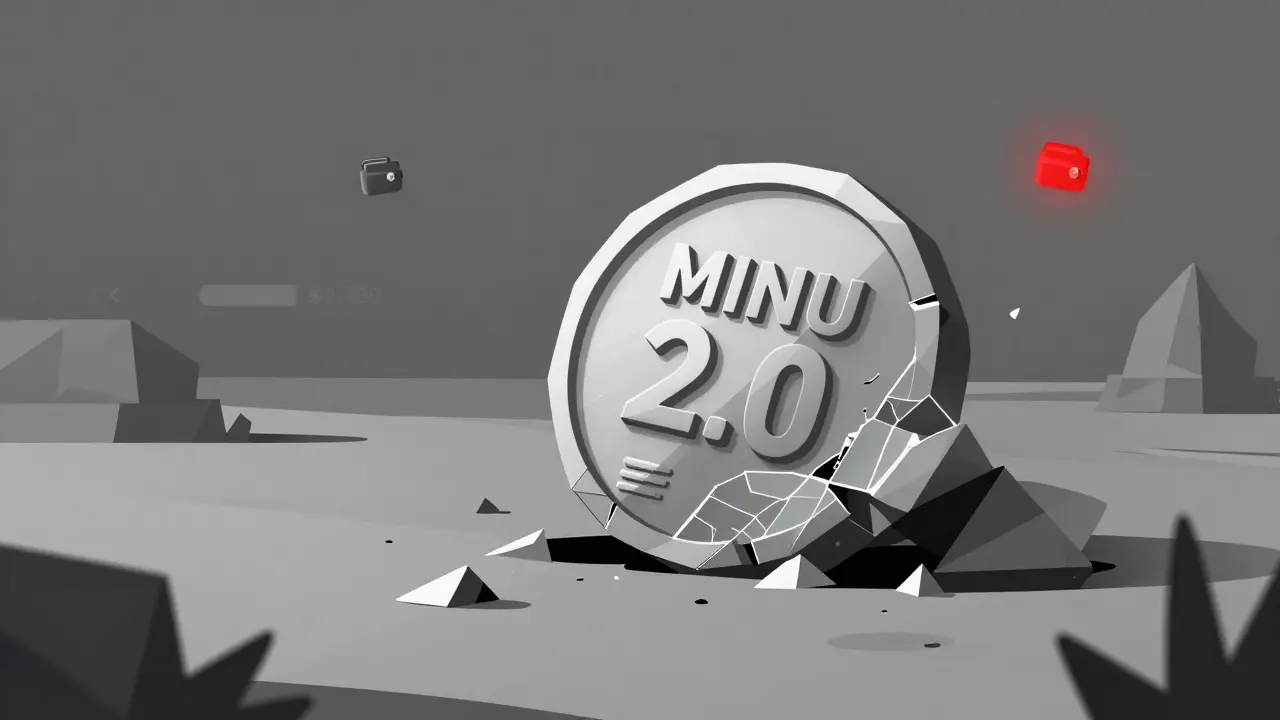
What is MINU 2.0 (MINU) crypto coin? The truth about this near-dead meme token
MINU 2.0 is a dead meme coin with zero trading volume, only 163 holders, and a $2,780 market cap. Learn why this BNB Smart Chain token is not worth your time - and what to look for instead.
learn more