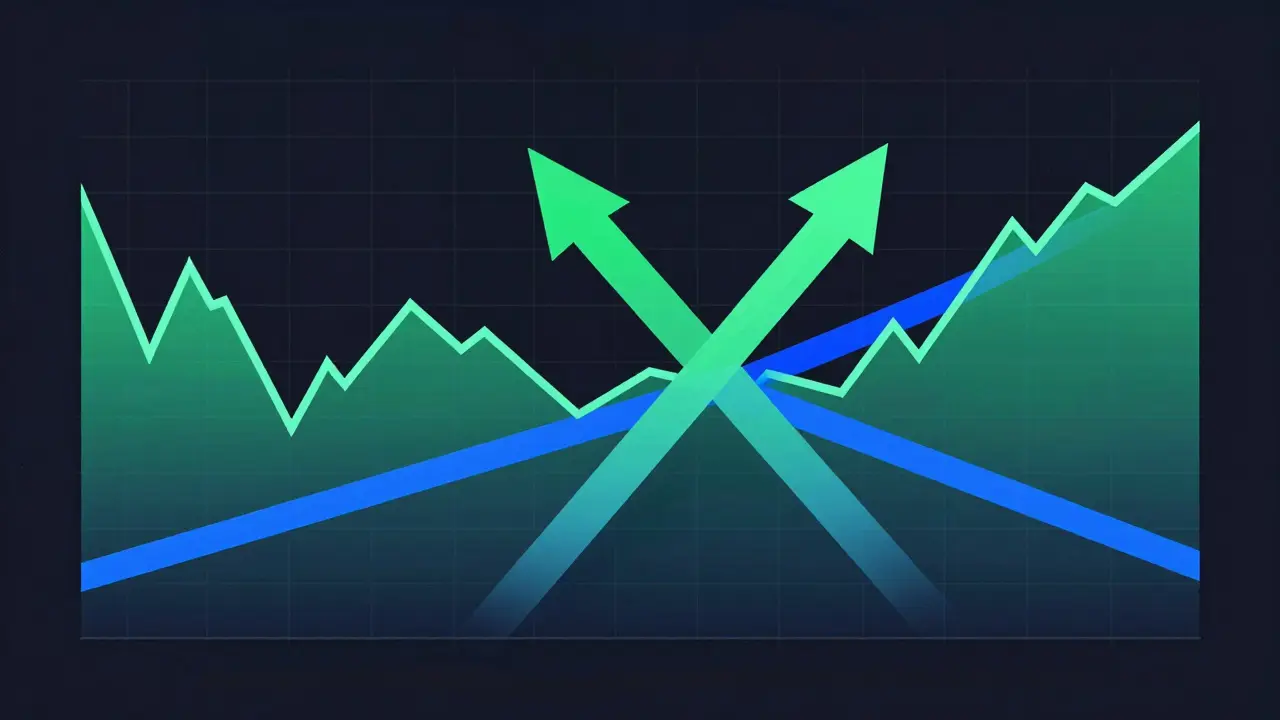
When you look at a crypto price chart, the noise can be overwhelming. Prices jump up one minute, drop the next, and it’s hard to tell if it’s a real trend or just random swings. That’s where moving averages come in. They don’t predict the future, but they help you see what’s actually happening beneath the chaos. In crypto trading-where volatility is the norm-moving averages are one of the most trusted tools for figuring out direction, timing entries, and avoiding bad trades.
What Moving Averages Actually Do
A moving average is just an average price over a set number of time periods. If you take the last 50 days of Bitcoin’s closing prices, add them up, and divide by 50, you get the 50-day simple moving average (SMA). Plot that number on a chart every day, and you get a smooth line that follows the price-but lags behind it. That lag is the point. It filters out the daily noise so you can see the real trend. Crypto markets move fast. A 15-minute chart might show 20 price spikes in an hour. A moving average turns that into a clear line. You don’t need to guess if the market is up or down. If the line is going up, the trend is bullish. If it’s going down, it’s bearish. Simple.Simple vs. Exponential: Which One Do Traders Use?
There are two main types of moving averages in crypto: Simple Moving Average (SMA) and Exponential Moving Average (EMA). They do the same job, but they calculate it differently. The SMA gives equal weight to every price in the period. So a 200-day SMA treats a price from day one the same as today’s price. That makes it stable, but slow to react. If Bitcoin crashes on day 199, the SMA won’t show it until day 200. That’s why SMAs are great for long-term traders who want to ignore short-term panic. The EMA, on the other hand, gives more weight to recent prices. It reacts faster. If Bitcoin surges today, the EMA picks it up within hours, not days. That’s why short-term traders and day traders prefer EMAs. They’re more sensitive to news, whale moves, and sudden pumps. Most crypto traders use both. The SMA gives you the big picture. The EMA shows you the momentum. You don’t have to choose one. Use them together.The 50-Day and 200-Day Moving Averages: The Gold Standard
In crypto, two moving averages stand out above all others: the 50-day and the 200-day. The 200-day MA is like a wall. It’s the most watched level in the entire market. When Bitcoin drops toward it, hundreds of traders watch it like a hawk. If it bounces off, it’s a sign the trend might reverse. If it breaks through, it’s a signal the downtrend is strong. Cointree’s data shows Bitcoin has bounced off its 200-day MA over 70% of the time in the last five years. The 50-day MA is the faster cousin. It shows medium-term momentum. When the 50-day crosses above the 200-day, traders call it a “Golden Cross.” That’s a classic bullish signal. When it crosses below, it’s a “Death Cross”-a red flag for sellers. These aren’t magic. They’re just widely followed. And when enough people act on the same signal, it becomes self-fulfilling. That’s why these levels matter more than any other indicator in crypto.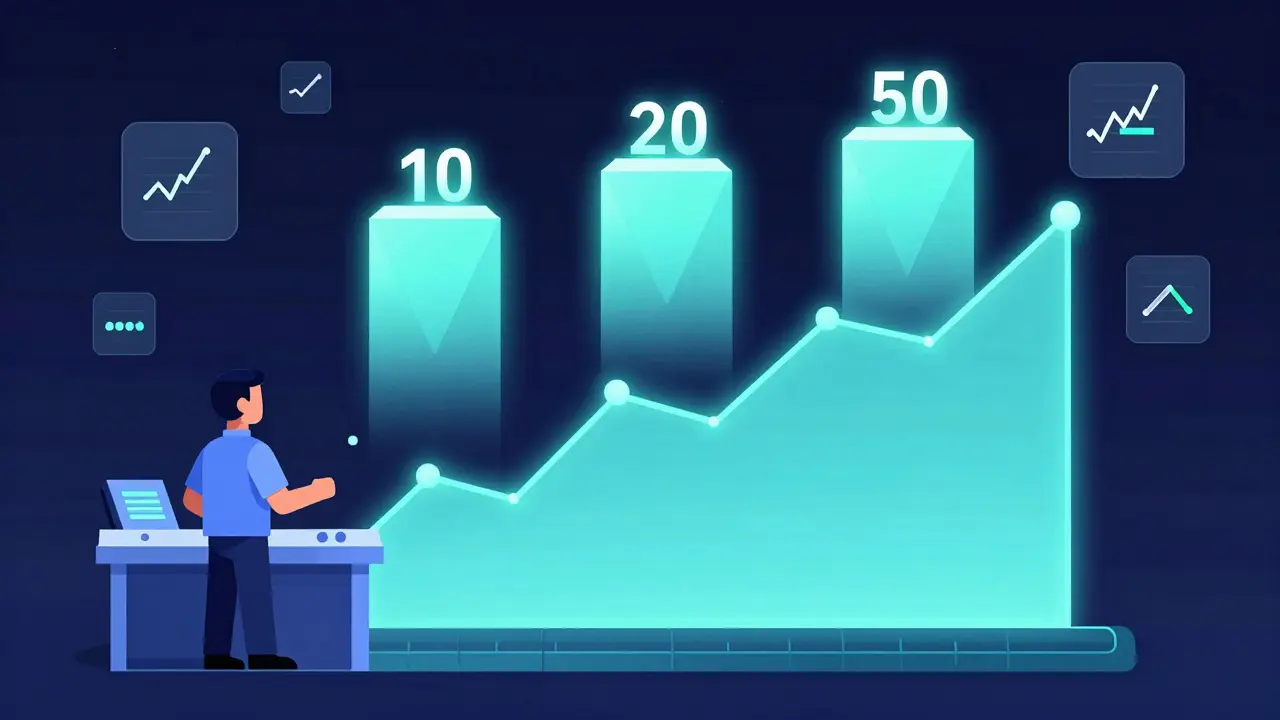
How to Use Moving Averages for Entries and Exits
There are three main ways traders use moving averages to make decisions:- Trend following: Buy when price is above the 50-day and 200-day MAs. Sell when it’s below. This works best in strong trending markets.
- Crossover signals: Watch for the 10-day EMA crossing above the 50-day EMA for a short-term buy signal. Or the 50-day crossing above the 200-day for a major shift. These are the signals most crypto bots are coded to follow.
- Support and resistance: Use the 200-day MA as a floor. If price pulls back to it and bounces, that’s a buy zone. If it breaks below and stays below, it’s time to get out.
Why Moving Averages Alone Aren’t Enough
Here’s the truth: moving averages are lagging indicators. They react to price, they don’t predict it. That means you’ll often miss the very start of a move. You’ll buy after the big pump, sell after the dump. That’s normal. That’s how they work. Relying only on moving averages is like driving with your eyes on the rearview mirror. You’ll see where you’ve been-but not what’s ahead. Smart traders always combine MAs with other tools. Volume spikes? RSI showing oversold? A breakout from a key resistance level? These confirm the MA signal. Without them, you’re gambling. Reddit traders often talk about the “triple MA strategy”: using 10, 20, and 50-day EMAs together. When all three are stacked in a bullish order (10 > 20 > 50), it’s a strong uptrend signal. When they’re stacked downward, it’s a clear sell zone. That’s a system, not a guess.What Timeframes Should You Use?
The chart timeframe changes everything. On a 15-minute chart, a 50-day MA is useless. It’s like trying to see the shape of a mountain with a magnifying glass. On a daily chart? Perfect. On a weekly chart? Even better. Most serious crypto traders start with the daily chart. That’s where the real trends live. Then they check the 4-hour for entry timing. And sometimes, the weekly chart for the big picture. A 200-day MA on a daily chart equals about 10 months of data. That’s enough to smooth out cycles, pump-and-dumps, and news spikes. A 200-day on a 1-hour chart? That’s just 8 days. It’s noise. Use the right timeframe for your strategy. Day traders? 4-hour and daily. Swing traders? Daily and weekly. Long-term holders? Just watch the weekly 200-day MA.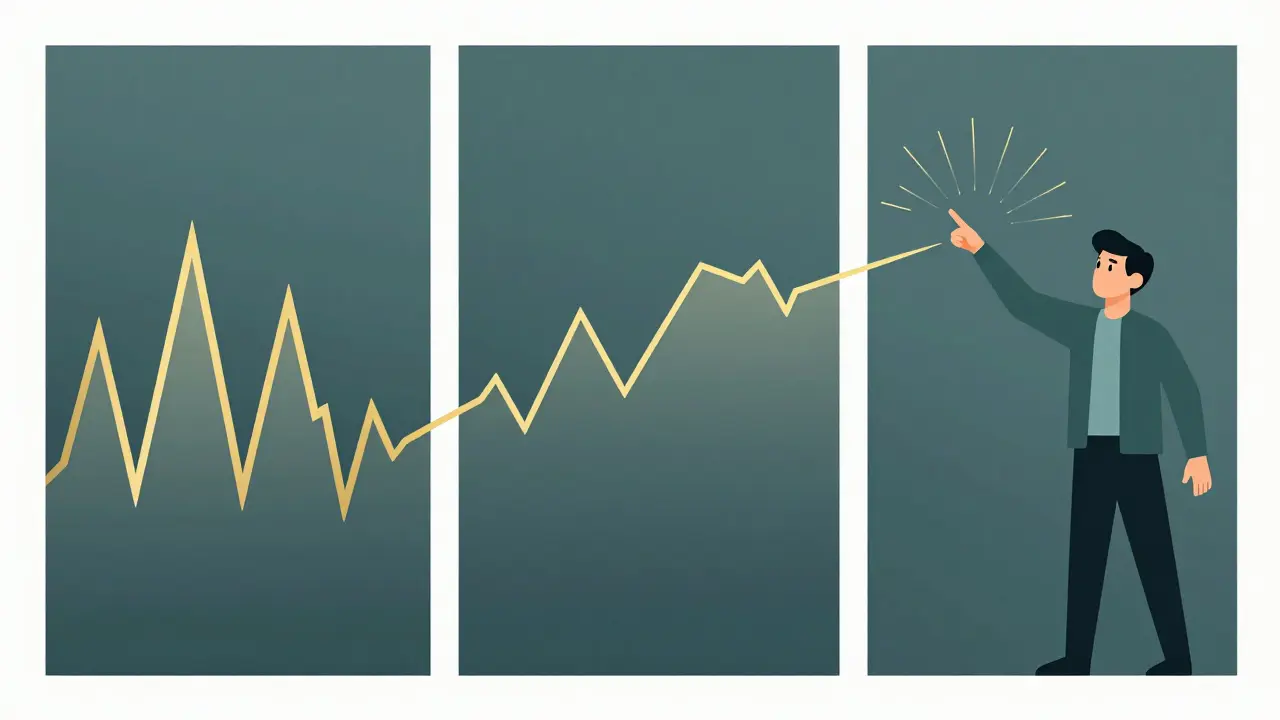
Common Mistakes New Traders Make
Most beginners think moving averages are a magic bullet. They’re not. Here’s what goes wrong:- Using too many MAs: Putting 10 different lines on your chart just makes it messy. Stick to 2 or 3.
- Trading every crossover: Not every Golden Cross means a bull market. In sideways markets, you’ll get false signals. Always wait for confirmation.
- Ignoring volume: A price bounce off the 200-day MA with low volume? That’s a trap. High volume on the bounce? That’s real.
- Forgetting risk management: Moving averages tell you when to trade, not how much to risk. Always set a stop-loss. Never go all-in on one signal.
Where to Find Moving Averages and How to Learn
You don’t need fancy software. TradingView gives you free access to every type of moving average. Just open a chart, click “Indicators,” search for “Moving Average,” and pick SMA or EMA. Set the period. Done. Start with Bitcoin. It’s the most liquid, the most predictable. Watch how the 200-day MA holds during corrections. Then try it on Ethereum, Solana, or other major coins. There are tons of free resources: YouTube channels like CryptoCred and Benjamin Cowen break down moving averages in plain language. Reddit’s r/CryptoCurrency and r/BitcoinMarkets have daily threads where traders post charts with their MA setups. It takes a few weeks to get comfortable. But once you start seeing how price respects these lines, you’ll never look at a chart the same way again.The Future of Moving Averages in Crypto
Some people think AI and machine learning will replace moving averages. They won’t. Why? Because moving averages are simple, transparent, and work across every market condition-bull, bear, or sideways. What’s changing is how they’re used. Crypto trading bots now combine MAs with volume profiles, order flow, and on-chain data. But the core logic? Still based on moving averages. Institutional investors-hedge funds, family offices, crypto ETFs-rely on them. Why? Because they’re standardized. Everyone sees the same 200-day line. That creates consensus. And consensus drives price. Moving averages aren’t going away. They’re becoming the foundation for even smarter systems. The traders who master them now will be the ones who thrive when the next bull run hits.What is the best moving average for crypto trading?
There’s no single “best” moving average-it depends on your strategy. For long-term trends, the 200-day SMA is the most reliable. For faster signals, the 50-day or 20-day EMA works better. Most traders use both together. Beginners should start with the 50-day and 200-day SMAs on the daily chart.
Do moving averages work in crypto markets?
Yes, they work-but not perfectly. Crypto is volatile, and moving averages lag behind price. That means you’ll sometimes enter trades late or get whipsawed in sideways markets. But when used with volume, support/resistance levels, and other confirmation tools, they’re among the most effective indicators for spotting real trends.
Should I use SMA or EMA for crypto?
Use EMA if you trade short-term or want faster signals. Use SMA if you’re a longer-term trader who wants to ignore noise. Most traders use both: EMA for entry timing, SMA for trend confirmation. The 200-day SMA is especially trusted as a support level in Bitcoin and Ethereum.
What does a Golden Cross mean in crypto?
A Golden Cross happens when the 50-day moving average crosses above the 200-day moving average. It’s seen as a strong bullish signal, indicating that short-term momentum is overtaking long-term trends. Historically, Golden Crosses in Bitcoin have often preceded major bull runs-but they’re not guaranteed. Always wait for volume and price confirmation.
Can moving averages predict the next crypto bull run?
No, they can’t predict. But they can show you when a bull run is likely underway. If price breaks above the 200-day MA with rising volume and strong momentum, it’s a sign the trend has shifted. Traders use this as a confirmation tool, not a crystal ball. The best moves happen when multiple signals align-not just one moving average.
Gustavo Gonzalez
February 3, 2026 AT 04:57Calvin Tucker
February 4, 2026 AT 18:34Dahlia Nurcahya
February 5, 2026 AT 12:08Lori Quarles
February 6, 2026 AT 12:03Jeremy Dayde
February 7, 2026 AT 23:12Sunil Srivastva
February 9, 2026 AT 06:54Devyn Ranere-Carleton
February 10, 2026 AT 07:59Nickole Fennell
February 10, 2026 AT 15:10Richard Kemp
February 11, 2026 AT 20:41Gurpreet Singh
February 13, 2026 AT 19:00Will Pimblett
February 15, 2026 AT 07:19Christopher Michael
February 16, 2026 AT 15:45Rico Romano
February 17, 2026 AT 21:01Meenal Sharma
February 19, 2026 AT 13:32Freddy Wiryadi
February 19, 2026 AT 18:21Mark Ganim
February 21, 2026 AT 17:48mary irons
February 23, 2026 AT 17:17Wayne mutunga
February 24, 2026 AT 18:06Gavin Francis
February 26, 2026 AT 00:13