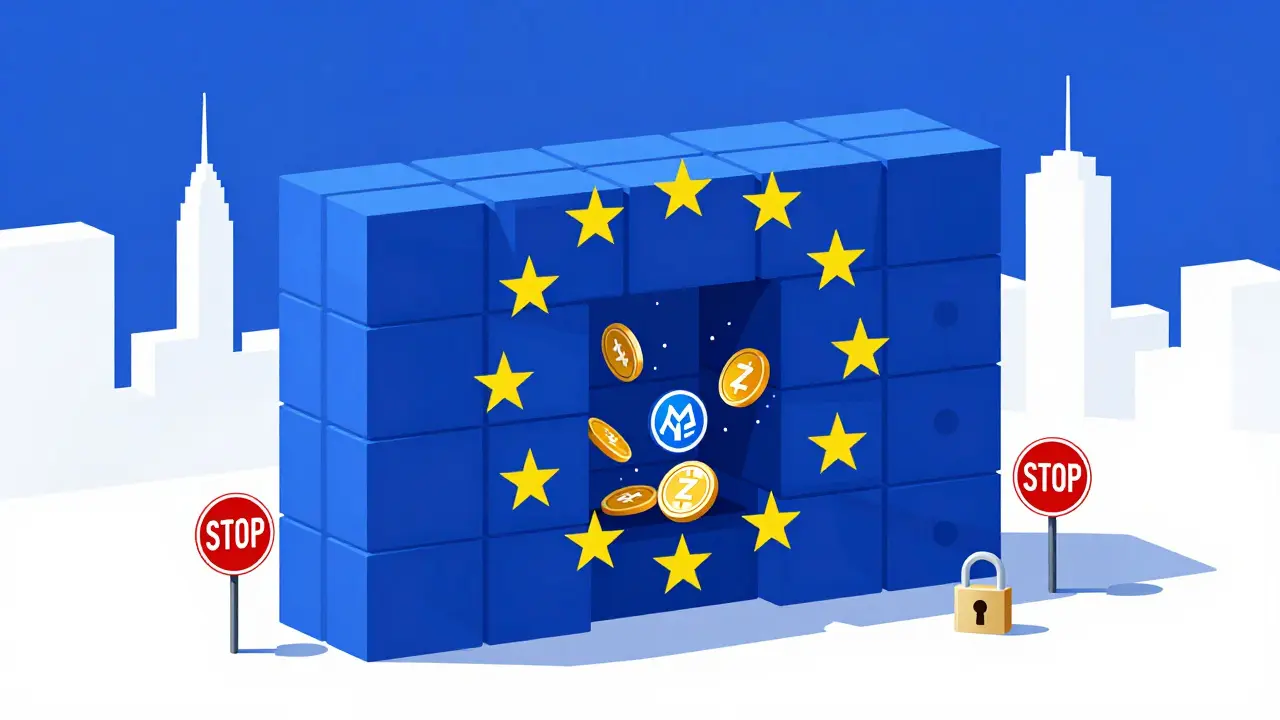
By July 1, 2027, you won’t be able to trade Monero or Zcash on any exchange based in the European Union. It’s not a rumor. It’s not a proposal. It’s law. The EU’s new Anti-Money Laundering Regulation (AMLR), passed in May 2024, explicitly bans crypto-asset service providers from handling any coin that hides transaction details. That means Monero, Zcash, and similar privacy coins are effectively outlawed in the EU’s financial system. If you hold these coins, you need to understand what this means for you - now.
Why the EU is banning privacy coins
The EU doesn’t want to ban coins because they’re "bad." They’re banning them because they can’t be tracked. Monero uses ring signatures and stealth addresses to make every transaction untraceable. Zcash lets users send shielded transactions where the sender, receiver, and amount are hidden. To regulators, that’s not privacy - it’s a blind spot for crime. The EU’s goal is simple: no more anonymous money. Every transfer above €1,000 must have a clear paper trail. Privacy coins break that rule by design.It’s not about targeting users. It’s about blocking platforms. The regulation forces crypto exchanges, wallet providers, and other service providers - called CASPs - to verify every user’s identity and log every transaction. If a coin can’t be traced, the platform can’t legally touch it. That’s why Monero and Zcash are being removed, not because they’re used for crime, but because they make it impossible to prove they’re not.
What the law actually says
The key part is Article 79 of Regulation 2024/1624. It says: "Crypto-asset service providers shall not offer services for crypto-assets that allow for the anonymization of transactions." That’s it. No loopholes. No exceptions. The law doesn’t say "if used for illegal purposes." It says if the coin can anonymize, it’s banned. Monero and Zcash are on that list because their core tech makes anonymity unavoidable.The ban applies to all EU-regulated entities - that’s every exchange, ATM, custodial wallet, and trading platform operating within the 27 member states. Even if you live in Portugal or Poland, you can’t buy Monero on Binance EU or Kraken’s EU platform after July 1, 2027. These companies will be required to remove privacy coins from their trading pairs and freeze any deposits involving them.
Who’s enforcing this?
A new body called the Anti-Money Laundering Authority (AMLA) will oversee enforcement. They won’t go after individual holders. They’ll go after the platforms. The first targets? The 40 biggest crypto firms in the EU - the ones handling over €50 million in transactions or serving tens of thousands of customers. Smaller platforms will follow under national regulators, but the pressure will be the same.The European Banking Authority is still working out the technical details - like how exactly platforms should detect privacy coin transactions. But the outcome won’t change. If a coin can’t be traced, it’s out. That’s the rule. And it’s final. Even industry groups like the European Crypto Initiative admit resistance is pointless. Their official advice to firms? "Stay compliant. Adapt now."
What happens to your Monero and Zcash?
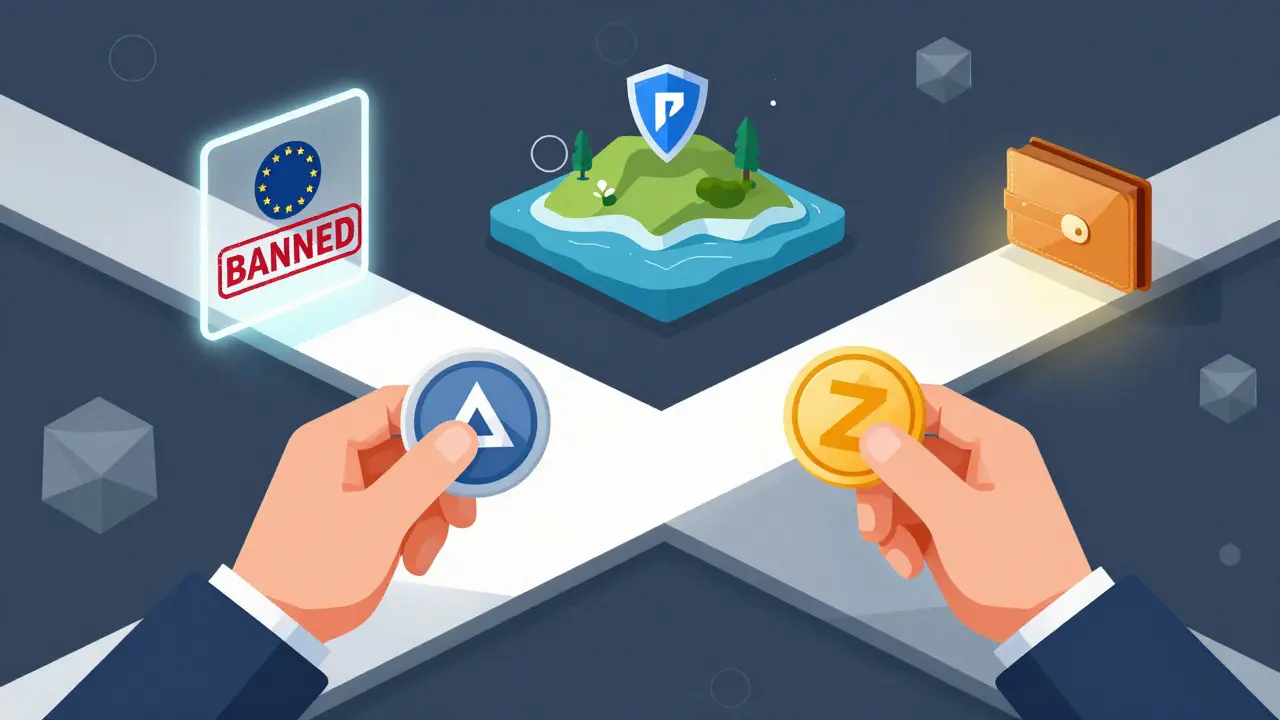
Here’s the part people get wrong: you won’t be arrested for holding Monero or Zcash. The law doesn’t criminalize ownership. It bans service providers from handling them. So if you bought Monero on a non-EU exchange like KuCoin or Binance (offshore), you can still hold it. You can still send it to a non-EU wallet. You can still use a decentralized exchange that doesn’t require KYC.But here’s the catch: if you want to cash out into euros, you’ll have to go through an EU-regulated platform. And those platforms won’t let you deposit privacy coins after July 2027. Your coins won’t disappear - but your ability to convert them into fiat currency within the EU will vanish.
Some people will try to use peer-to-peer platforms like LocalMonero. But even those are under pressure. If a P2P platform is based in the EU and has any connection to regulated financial services - like bank transfers or payment processors - they could be shut down for facilitating transactions in banned assets.
What about other privacy coins?
Monero and Zcash are the biggest, but they’re not alone. Dash, Pirate Chain, and others with similar privacy features are also caught in the net. The law doesn’t name specific coins - it bans any coin with anonymity-enhancing features. That’s why even if a new privacy coin launches in 2026, it won’t be allowed on EU platforms. The door is closed.Transparent coins like Bitcoin, Ethereum, and Solana are fine. Why? Because every transaction is visible on the blockchain. Regulators can trace where funds came from and where they went. That’s the standard now: no anonymity, no problem. Privacy = risk. Transparency = compliance.
How will this affect the market?
The EU is one of the biggest crypto markets in the world. Millions of people hold crypto here. Billions in trading volume flow through EU exchanges every month. Removing Monero and Zcash means a major drop in liquidity for those coins within Europe. Prices could drop as demand from EU traders disappears.But here’s the twist: demand might just move elsewhere. Non-EU exchanges in Asia, the U.S., or Switzerland could see a surge in privacy coin trading. Some EU users may start using VPNs and foreign wallets to bypass the restrictions. That’s not illegal - but it’s risky. If you’re using a non-EU exchange, you lose the legal protections and customer support that come with regulated platforms.
Already, some traders are moving their Monero to cold wallets ahead of the deadline. Others are selling off, fearing future restrictions. The market is reacting - not with panic, but with preparation.
What’s next for privacy coins?
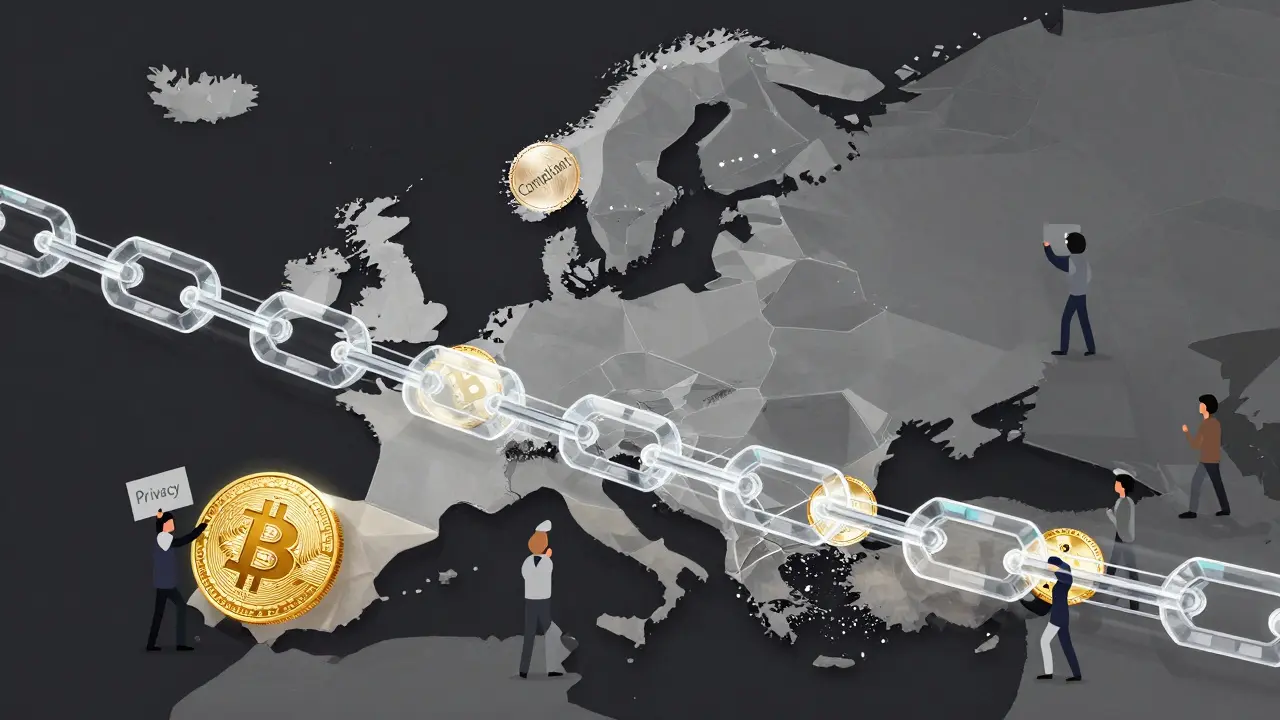
The EU’s move is a blueprint. Other countries are watching closely. The U.S. hasn’t banned privacy coins yet, but the Treasury Department has flagged them as high-risk. The UK, Canada, and Australia are all reviewing similar rules. If the EU’s system works - meaning it reduces illicit activity without causing chaos - expect others to copy it.Privacy coin developers aren’t giving up. Some are exploring ways to make their tech "compliant" - like adding optional audit trails or regulatory keys. But that goes against the whole point of privacy. If you can trace the transaction, it’s not private anymore.
The truth? The battle isn’t about technology. It’s about control. The EU wants financial systems that are open, traceable, and regulated. Privacy coins represent a challenge to that model. And right now, the EU has the power to enforce its vision.
What should you do now?
If you hold Monero or Zcash and live in the EU:- Don’t panic. You’re not breaking the law by holding them.
- Know your options. You can still store them in a non-EU wallet or on a non-EU exchange.
- Plan your exit. If you want to convert to euros, do it before July 2027 - or prepare to use a non-EU platform.
- Avoid risky workarounds. Using a VPN to access EU exchanges won’t help. The system will still block deposits from privacy coins.
- Keep records. If you ever need to prove your coins were legally acquired, keep transaction history and purchase receipts.
If you’re thinking of buying privacy coins now: ask yourself why. Are you using them for legitimate privacy? Or are you betting on a future where they’re still usable in Europe? The timeline is clear. Two years from now, they’ll be gone from EU platforms. That’s not speculation. It’s policy.
Is this the end for privacy coins?
No. But it’s the end of their place in the mainstream financial system - at least in Europe. Privacy coins will still exist. They’ll still be traded. They’ll still be used. But they’ll be pushed to the edges: decentralized exchanges, peer-to-peer networks, and jurisdictions that don’t care about EU rules.The real question isn’t whether the ban will happen. It’s whether you’re ready for the world that comes after it. One where financial privacy isn’t illegal - but it’s no longer easy. Where the tools you trusted are now locked out of the system. And where your options are fewer, but not gone.
Will I go to jail for holding Monero or Zcash after 2027?
No. The EU ban targets service providers - exchanges, wallets, and platforms - not individual holders. You can still own Monero or Zcash. You just won’t be able to trade them on EU-regulated platforms after July 1, 2027. Holding the coins is not illegal.
Can I still buy Monero on non-EU exchanges after 2027?
Yes. Exchanges outside the EU - like KuCoin, Binance (non-EU entities), or OKX - are not bound by EU law. You can still buy, sell, and store Monero and Zcash there. But if you want to withdraw euros to a bank account in Germany or France, you’ll need to use an EU platform - and they won’t accept privacy coins.
What happens to my Zcash if I try to deposit it into a EU exchange after July 2027?
The exchange will likely reject the deposit. Most platforms will have automated systems that detect privacy coin addresses and block them. Even if the deposit goes through, they may freeze your account and request proof of origin - which you can’t provide for shielded Zcash transactions. It’s not worth the risk.
Will other countries follow the EU’s ban?
Yes, likely. The EU’s approach is the most comprehensive privacy coin ban to date. Countries like the U.S., UK, Canada, and Australia are already monitoring the outcome. If the ban reduces illicit activity without causing major disruption, expect similar rules to spread. The EU is setting the global standard.
Can privacy coins be made compliant with EU law?
Technically, maybe - but it defeats the purpose. Some developers are exploring "regulatory keys" that let authorities trace transactions with permission. But if you need permission to see who sent the money, it’s not private anymore. Most privacy coin users reject this idea. The whole point is to remove intermediaries from the transaction - not add them back.
What’s the difference between Monero and Bitcoin in terms of this ban?
Bitcoin transactions are fully public. Anyone can see the sender, receiver, and amount on the blockchain. That’s why Bitcoin is allowed. Monero hides all of that. The EU requires traceability. Bitcoin meets that. Monero doesn’t. That’s the only difference that matters under the new law.
Will this ban affect DeFi or NFTs?
Not directly. DeFi protocols and NFT marketplaces aren’t classified as crypto-asset service providers under this law - unless they offer fiat on-ramps or custody. But if a DeFi platform lets you swap Monero for ETH, and it’s based in the EU, it would be violating the ban. Most DeFi platforms avoid privacy coins anyway to stay compliant.
Richard Kemp
January 27, 2026 AT 09:38so theyre banning monero but still letting banks do whatever they want with our money lol. classic. guess privacy is only a problem when it’s not controlled by the state.
Sunil Srivastva
January 28, 2026 AT 15:02honestly this makes sense from a regulatory standpoint. if you can’t trace money, how do you stop laundering? i get the privacy argument, but at some point you gotta choose between freedom and safety. the eu picked safety. not perfect, but not crazy either.
Devyn Ranere-Carleton
January 29, 2026 AT 01:45wait so if i buy xmr on binance global and send it to my ledger… im still cool? or is the feds gonna come knockin? 🤔
Robert Mills
January 29, 2026 AT 04:15privacy coins are dead. long live transparency! 💪
Jerry Ogah
January 29, 2026 AT 11:45THIS IS A NIGHTMARE. THEY’RE TAKING AWAY OUR RIGHT TO FINANCIAL ANONYMITY. THIS IS THE BEGINNING OF A DICTATORSHIP. WHERE’S MY FREEDOM?! I’M SENDING ALL MY XMR TO A CRYPTIC WALLET IN THE DEEP WEB AND NEVER LOOKING BACK. #STANDWITHPRIVACY
Rachel Stone
January 30, 2026 AT 06:48so the solution to crime is to ban tech that *could* be used for crime? brilliant. next they’ll ban knives because someone once stabbed a guy.
Nickole Fennell
January 30, 2026 AT 18:12you people don’t get it. this isn’t about crime. this is about control. they want to know where every dollar goes. they want to freeze your account if you buy too much coffee. this is fascism dressed up as regulation. i’m moving to georgia. anyone wanna join me?
Edward Drawde
January 30, 2026 AT 23:49monero users are just crypto criminals waiting to get caught. this law is long overdue. no more hiding. no more excuses. pay your taxes or get out.
Akhil Mathew
January 31, 2026 AT 08:46the real issue here is that the eu is forcing compliance on global systems. if i’m in india and use a non-eu exchange, why should i care? this is like banning a language because some people use it to plot. the tech isn’t the problem, the policy is. also, zcash shielded txns can be audited with a key-why not allow opt-in compliance instead of a blanket ban?
laurence watson
January 31, 2026 AT 20:36hey everyone, i just want to say-this is a tough time for people who value privacy. i get why the eu did it. i really do. but i also know people who use monero to protect themselves from abusive partners, or journalists in oppressive countries, or just folks who don’t want big brother watching every purchase. maybe there’s a middle ground? like, what if privacy coins had a way to prove they’re not being used for crime, without giving up anonymity? i’m not saying it’s easy… but maybe we can talk about it instead of just yelling at each other? 🤗