Most people think of crypto coins as just digital money - something you buy, hold, or trade. But Terrace (TRC) isn’t just another token. It’s the engine behind a full trading ecosystem built for serious crypto users who are tired of juggling wallets, exchanges, and gas fees. If you’ve ever lost time switching between 1inch, Uniswap, Binance, and a dozen other platforms just to execute one trade, TRC was made for you.
What Is Terrace?
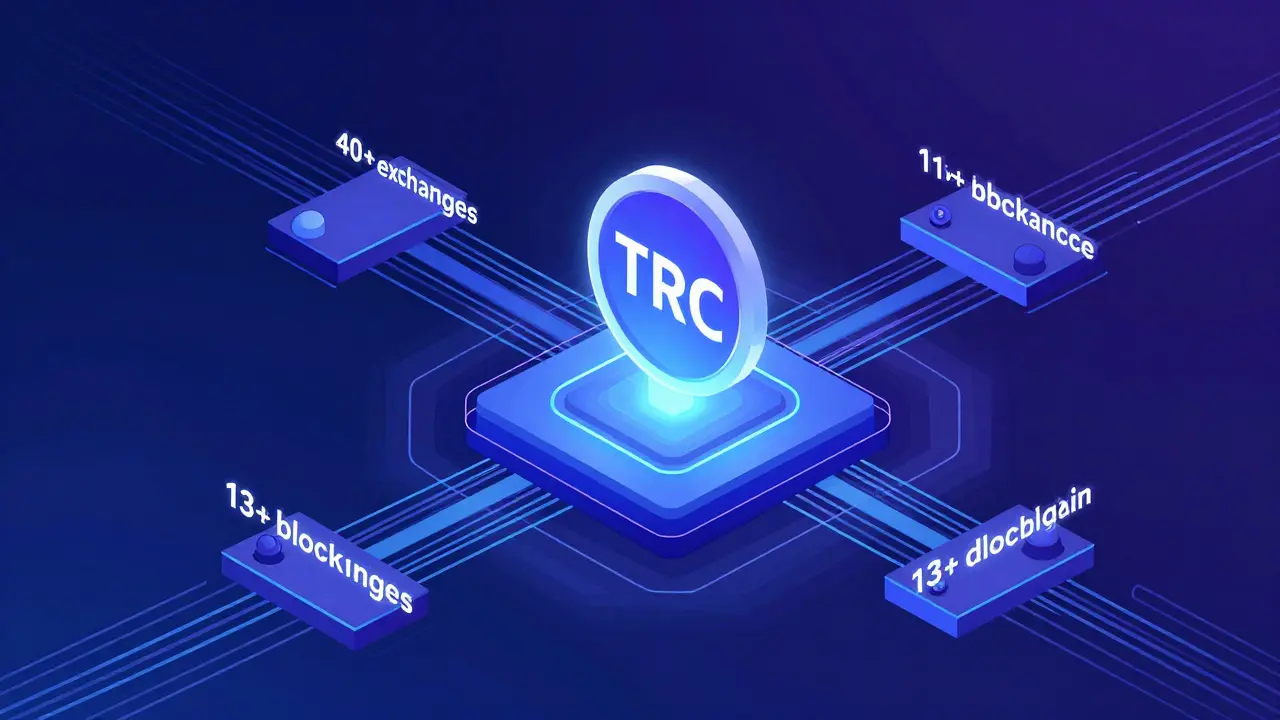
Terrace isn’t a wallet. It’s not a DEX. It’s not an exchange. It’s all of them - wrapped into one. Launched in March 2025, Terrace is a non-custodial trading terminal that connects over 40 centralized and decentralized exchanges, OTC desks, and market makers across 13+ blockchains. Think of it like a universal remote for crypto trading: instead of pressing five different buttons to get from Ethereum to Solana to Polygon, you press one.
Behind the scenes, Terrace uses a smart system called Pathfinder - a real-time engine that scans billions of possible trade paths to find the best price, lowest slippage, and fastest execution. It doesn’t just pick the cheapest swap; it figures out if you should trade via Curve, then route through Aave, then settle on Arbitrum - all in one click. No bridges. No manual transfers. No waiting for confirmations across chains.
What Is TRC?
The TRC token is the lifeblood of the Terrace ecosystem. It’s not just a utility token - it’s the key to unlocking lower fees, better access, and future governance power. The total supply is capped at 1 billion TRC coins. At launch, only 13-20% of that was in circulation, meaning it’s still early in terms of token distribution.
As of February 2026, TRC trades around $0.004-$0.008 depending on the exchange. On CoinGecko, it had a 24-hour volume of over $150,000 with a circulating supply of 220 million tokens. That gives it a market cap of roughly $650,000 - small compared to giants like Ethereum or Solana, but growing fast as more traders adopt the platform.
Why TRC Matters: 5 Real Uses
TRC isn’t just a speculative asset. It’s designed to be used - and used often. Here’s how it actually works in practice:
- Pay trading fees in TRC and save - Every trade, every portfolio check, every OTC order on Terrace has a fee. If you pay in TRC, you get a discount. The more TRC you hold, the bigger the cut.
- Stake TRC for lower base fees - Holding TRC in your Terrace wallet isn’t enough. Stake it, and you unlock tiered fee structures. Some users report fee reductions of up to 40% just by staking 10,000 TRC.
- Gas-free trading - This is huge. Terrace covers all blockchain transaction fees (gas) for you. Instead of needing ETH, MATIC, or SOL just to pay for a swap, Terrace takes the cost out of your final trade proceeds. No more running out of gas mid-trade.
- Future native gas token - Terrace plans to launch its own Layer 2 blockchain. When it does, TRC will be the only token accepted for gas fees on that chain. That means every time someone trades on Terrace’s native network, TRC will be burned - reducing supply and increasing scarcity.
- Governance rights - Future voting on platform upgrades, new exchange integrations, or fee changes will be reserved for TRC holders. The more you hold, the more say you have.
Who Is Terrace For?
You might assume this is only for institutions. It’s not. Terrace targets two groups: institutional traders who’ve been stuck with clunky legacy systems, and retail traders who are tired of the chaos.
Institutional users care about liquidity depth, order execution speed, and compliance. Terrace gives them access to OTC desks, market makers, and CEXs like Binance and Coinbase - all with institutional-grade order types: iceberg orders, VWAP, TWAP, and limit-on-close. And because it’s non-custodial, they never have to give up control of their keys.
For retail users, it’s simpler: no more switching between 10 wallets. No more guessing which chain has the best price. No more paying $50 in gas to move $200 worth of tokens. Terrace does the heavy lifting. You just pick your token, set your price, and hit trade.
How TRC Compares to Other Tokens
There are dozens of DeFi utility tokens - 1INCH, CVX, UNI, MKR. What makes TRC different?
| Feature | TRC (Terrace) | 1INCH | UNI (Uniswap) | CVX (Convex) |
|---|---|---|---|---|
| Primary Function | Trading terminal + fee discount + future gas token | DEX aggregator fee discount | DAO governance | Staking rewards on Curve |
| Number of Exchanges Integrated | 40+ | 15-20 | 1 (Uniswap only) | 1 (Curve only) |
| Chain Support | 13+ blockchains | 5-7 | Ethereum | Ethereum |
| Gas Fee Coverage | Yes (built-in) | No | No | No |
| Non-Custodial | Yes | No | No | No |
| Future Native Chain | Yes (planned) | No | No | No |
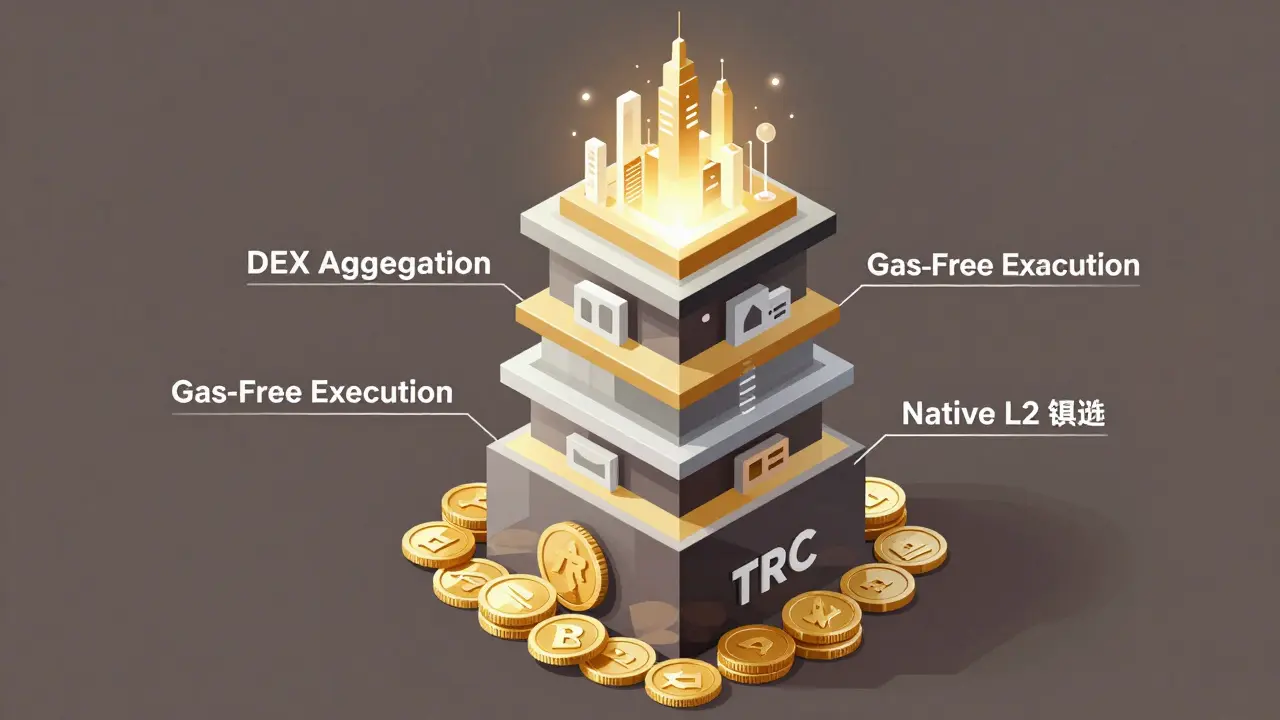
TRC stands out because it doesn’t just improve one part of the trading process - it removes entire friction points. No other token combines exchange aggregation, gas-free execution, non-custodial control, and future blockchain integration in one package.
Is TRC a Good Investment?
That depends on what you’re looking for.
If you want a speculative asset with high volatility, TRC might not be your best pick. Its market cap is small, and trading volume is low compared to top 100 coins. Price swings of 3-5% daily are common.
If you’re a trader who uses Terrace regularly, then TRC is a cost-saving tool. Paying fees in TRC saves money. Staking it saves more. Holding it long-term could mean access to a future native blockchain where TRC becomes essential - not optional.
There’s also a buyback and burn mechanism planned. If Terrace starts buying back TRC with platform revenue (as rumored), that could reduce supply and push price up over time - especially if adoption grows.
Right now, TRC isn’t a “get rich quick” coin. But for active crypto traders, it’s one of the few tokens that actually makes your life easier - and cheaper.
Where to Buy TRC
TRC launched on March 12, 2025, on Gate.io, MEXC, and Aerodrome. As of early 2026, it’s also listed on several smaller DEXs and centralized platforms. You won’t find it on Coinbase or Kraken yet, but it’s expected to hit more major exchanges as Terrace scales.
To buy TRC:
- Use a wallet that supports Ethereum, Polygon, or Base (TRC is an ERC-20 token on Ethereum, but also available on other chains).
- Connect your wallet to Gate.io or MEXC.
- Search for TRC and swap in USDT, ETH, or BTC.
- Transfer it to your Terrace wallet to start using it.
Always double-check the contract address before sending. Scammers have created fake TRC tokens on some DEXs. The official contract is verified on Etherscan under Terrace’s official repository.
What’s Next for Terrace and TRC?
Terrace raised $4.7 million across two funding rounds. That money is being used to build its own Layer 2 blockchain - a move that could change everything. When it launches, TRC will become the native gas token, meaning every trade on the network will burn TRC. That’s deflationary by design.
They’re also adding institutional features: automated tax reporting, multi-signature vaults, and compliance tools for regulated entities. The goal? To become the Bloomberg Terminal of crypto trading.
If they pull it off, TRC won’t just be a utility token - it’ll be the backbone of a new trading infrastructure. And early adopters who use it now will benefit the most as adoption grows.
Is TRC a coin or a token?
TRC is a token - specifically, an ERC-20 utility token built on Ethereum. It’s not a native blockchain coin like Bitcoin or Solana. But Terrace plans to launch its own blockchain in the future, where TRC will become the native gas token.
Can I stake TRC?
Yes. You can stake TRC directly through the Terrace platform. Staking unlocks lower trading fees, priority access to new features, and higher reward tiers. There’s no lock-up period, and you can unstake anytime without penalty.
Is Terrace safe? Do I lose control of my funds?
Terrace is non-custodial. That means your assets never leave your wallet. The platform connects to your wallet to execute trades, but it never holds your coins. You’re in full control. This makes it safer than centralized exchanges like Binance or Coinbase.
Why is TRC price so low?
TRC is still early. With a circulating supply of 220 million and a total supply of 1 billion, most tokens haven’t been released yet. Low price doesn’t mean low value - it means the token is in its initial distribution phase. Price will likely rise as adoption grows and buybacks begin.
Do I need KYC to use Terrace?
No - but it depends on what you’re doing. For DeFi trades on DEXs, no KYC. For OTC trades, institutional orders, or access to centralized exchange liquidity, you’ll need to complete KYC. Terrace gives you both options in one platform.
Charrie VanVleet
February 19, 2026 AT 08:29Scott McCrossan
February 19, 2026 AT 13:18Nikki Howard
February 20, 2026 AT 18:59Sasha Wynnters
February 21, 2026 AT 18:51Ruby Ababio-Fernandez
February 22, 2026 AT 20:44Jenn Estes
February 23, 2026 AT 01:36Angela Henderson
February 24, 2026 AT 20:48Geet Kulkarni
February 25, 2026 AT 10:22Paul David Rillorta
February 26, 2026 AT 17:14andy donnachie
February 28, 2026 AT 16:57Lauren Brookes
March 2, 2026 AT 10:58Chris Thomas
March 3, 2026 AT 20:37James Breithaupt
March 5, 2026 AT 04:09Sarah Shergold
March 5, 2026 AT 15:54Andrew Edmark
March 6, 2026 AT 19:45Charrie VanVleet
March 7, 2026 AT 16:56Dominica Anderson
March 8, 2026 AT 17:26