Imagine investing in a coin that promises to make you money just for holding it, while simultaneously becoming rarer every time someone trades it. That is the pitch behind SafeBlast (BLAST) is a multi-chain cryptocurrency token designed as both a payment method and a deflationary asset with an autonomous yield generation protocol. While the idea of "passive income" and "burning supply" sounds great on paper, the reality for BLAST is a lot more complicated. If you are looking at this coin, you need to know that there is a massive gap between what the project claims and what the actual market data shows.
Quick Summary of SafeBlast (BLAST)
- Core Function: A dual-purpose token for payments and deflationary rewards.
- Technical Standard: Operates as both BEP20 (Binance Smart Chain) and ERC20 (Ethereum).
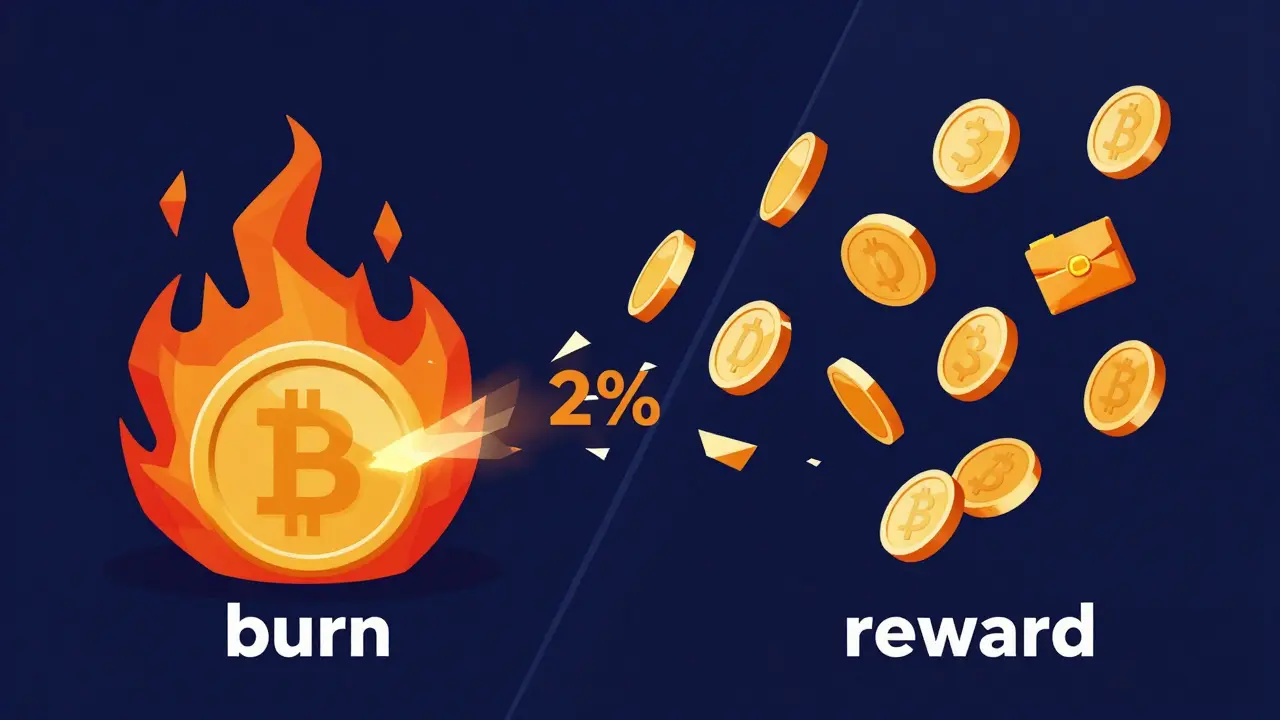
- Key Mechanic: 2% of transactions are burned, and 3% are distributed to holders.
- Current Status: Extremely low liquidity and high price volatility.
- Risk Level: Very High due to low trading volume and inconsistent data.
How SafeBlast Actually Works
At its heart, SafeBlast tries to solve the problem of token inflation. Most coins just print more tokens, which drops the price. BLAST does the opposite. It uses a mechanism where every single transaction triggers a "burn." Specifically, 2% of the tokens involved in a trade are permanently removed from circulation. This is intended to create upward pressure on the price over time.
Then there is the reward system. When people trade BLAST on PancakeSwap, 3% of that transaction is redistributed to people who already hold the coin in their wallets. It is essentially a reflection system. However, there is a major catch: these rewards only work for transactions on the BNB Chain. If you trade on a centralized exchange or through Uniswap, you don't get those rewards. This splits the community into those who are actually earning and those who are just holding a stagnant asset.
The Multi-Chain Ambition vs. Reality
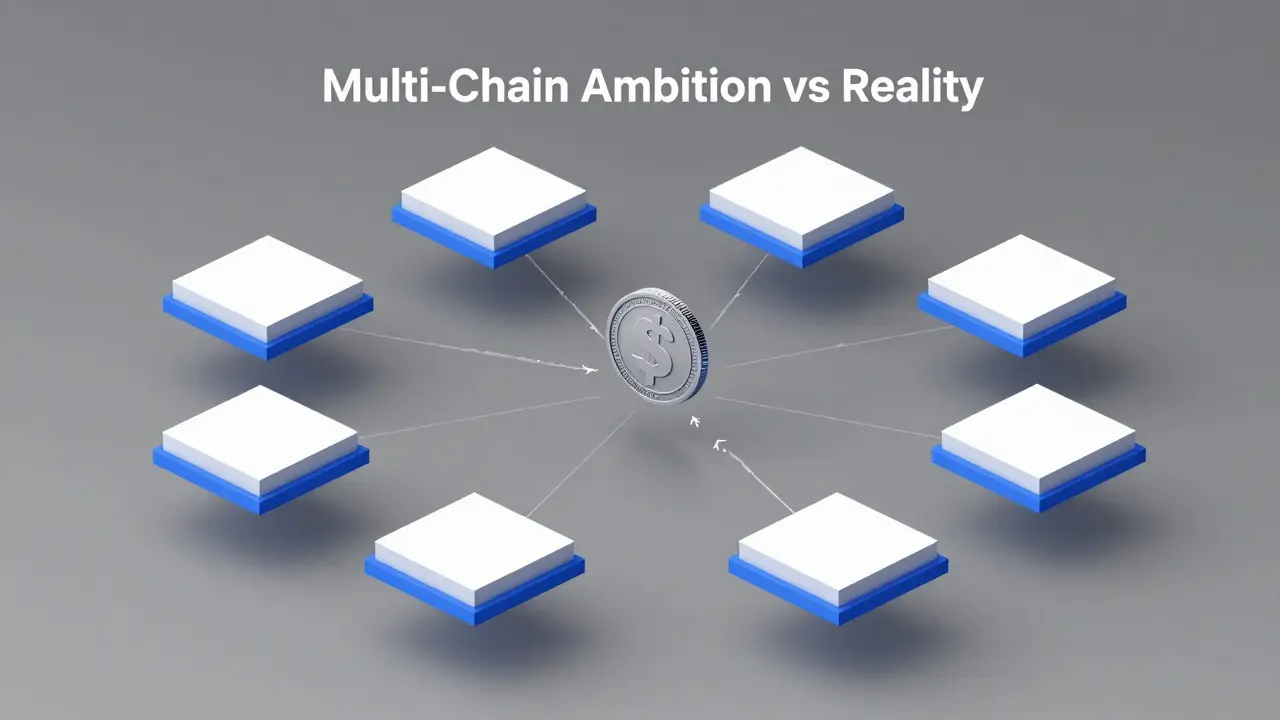
One of the biggest selling points for BLAST is its presence across eight different blockchain ecosystems. It isn't just on one network; it spans Ethereum, Avalanche, Polygon, Fantom, Arbitrum, Cronos, and Optimism. In theory, being everywhere makes a coin more accessible.
But here is where the math stops adding up. While the token exists on all these chains, the actual trading volume is nearly non-existent. For example, CoinGecko reported a 24-hour trading volume of just $1.08 at one point. To put that in perspective, a healthy coin needs thousands, if not millions, of dollars in daily volume to ensure you can actually sell your tokens without crashing the price. Having a "multi-chain presence" doesn't mean much if nobody is actually trading the token on those chains.
| Feature | SafeBlast (BLAST) | Standard Deflationary Coins |
|---|---|---|
| Network Reach | 8 Blockchains | Usually 1 or 2 |
| Reward Mechanism | PancakeSwap only | Global or Contract-wide |
| Liquidity | Critically Low | Variable to High |
| Supply Cap | 1 Quadrillion | Varies by project |
The Red Flags: Liquidity and Data Gaps
If you are thinking about buying SafeBlast (BLAST), you need to look at the liquidity. Liquidity is the "exit door" of a cryptocurrency. If there is no liquidity, you might see your account balance go up in value on a screen, but you won't be able to actually trade those tokens for cash. Many users on Reddit and Trustpilot have reported "slippage" issues, where the price changes so drastically during a transaction that the trade fails entirely.
Even more concerning is the data inconsistency. Depending on which tracker you use, the price of BLAST varies wildly. One platform might show it at $0.08, while another shows it at a tiny fraction of a cent. When the major data providers can't agree on the price, it's usually a sign that the token lacks a stable market and is easily manipulated by a few small trades.
Expert Opinions and Market Sentiment
Industry analysts aren't exactly cheering for BLAST. Experts like Dr. Elena Rodriguez from Delphi Digital have pointed out that any token with a daily volume under $2 faces "existential liquidity challenges." In plain English: the coin is barely functioning as a currency. While some analysts praised the technical ambition of launching on eight chains, they admit that actual adoption is almost zero.
The market sentiment is overwhelmingly bearish. The Fear & Greed Index for this token has hovered in the "Fear" zone, and the project's roadmap-which promised merchant partnerships and better bridges-has remained stagnant since late 2023. When a project stops updating its roadmap and its community groups start shrinking, it is usually a warning sign that the developers have moved on.
The Regulatory Shadow
Beyond the technical failures, there is the legal side. The U.S. SEC has been cracking down on tokens that promise "autonomous yields" or rewards just for holding. Because SafeBlast is built on the idea of distributing rewards to holders, it risks being classified as a security. If that happens, the legal hurdles for the project become almost impossible to clear, especially for a team that doesn't even have a documented official support channel.
Is it Practical to Use?
For a regular person, trying to use SafeBlast is a bit of a nightmare. To actually get the rewards, you have to navigate the BNB Chain and configure a wallet specifically for PancakeSwap. For a beginner, this can take nearly an hour of setup. Once you're in, you're likely to face transaction failures. Reports show that a huge percentage of users experience failed trades due to the lack of liquidity pools, meaning you could lose money on gas fees without even completing your trade.
Is SafeBlast (BLAST) a safe investment?
Based on current market data, it is extremely high-risk. With trading volumes often falling below $2 per day and significant user reports of failed transactions, there is a high probability that you may not be able to sell your tokens once you buy them.
How do I earn rewards with BLAST?
Rewards are distributed to holders when transactions occur on PancakeSwap via the BNB Chain. If you hold the token on other chains or in a centralized exchange, you generally will not receive these automatic distributions.
What is the maximum supply of BLAST?
The maximum supply is capped at 1 Quadrillion tokens. Because of the 2% burn mechanism, the total supply decreases every time a transaction is made on the supported platforms.
Why are my BLAST transactions failing?
This is most likely due to low liquidity and high slippage. When there aren't enough tokens in the liquidity pool to cover a trade, the transaction fails. Some users try increasing their slippage tolerance to 15%, but this can be risky as it may result in a much worse price.
Does SafeBlast have a working roadmap?
The roadmap was last updated in December 2023. As of 2026, most of the promised goals, such as merchant adoption and advanced cross-chain bridges, have not materialized.
Next Steps and Troubleshooting
If you already hold BLAST and are having trouble selling, try the following:
- Check your network: Ensure you are using the BNB Smart Chain if you are trading on PancakeSwap.
- Adjust Slippage: If a trade fails, try increasing slippage in 1-2% increments, but be aware that you will receive fewer tokens.
- Verify the Balance: Use a blockchain explorer like BscScan to ensure your tokens are actually in your wallet and not locked in a contract.
If you are a new investor, the smartest move is to prioritize liquidity. Before buying any low-cap coin, check the 24-hour volume. If it is in the double or triple digits rather than the thousands, you are effectively walking into a room with no exit.
Susan Wright
April 8, 2026 AT 20:49The liquidity part is the biggest red flag here. If you can't get out of a position, the "price" on the screen is literally just a number that doesn't exist in the real world.
david head
April 9, 2026 AT 08:13totally agree with that 🚀 liquidity is everything in crypto lol
Alexandra Lance
April 10, 2026 AT 16:10Oh look, another "revolutionary" coin with a supply of a quadrillion. How original! 🙄 I bet the devs are laughing all the way to the bank while you peasants hope for a 3% reflection reward. It's almost cute that people still fall for this basic level of manipulation 🤡
Lauren Gilbert
April 11, 2026 AT 22:57It is quite fascinating when you step back and consider the philosophical implication of a token that exists across eight different chains yet possesses no actual movement, as it almost creates a digital ghost town where the architecture of connectivity is present but the soul of commerce is completely absent, making the entire venture an exercise in theoretical existence rather than practical utility.
Sonya Bowen
April 12, 2026 AT 05:05The multi-chain strategy here is just noise. Utility requires volume.
Carol Prates
April 13, 2026 AT 15:07Omg the drama of a $1 daily volume is actually hilarious! Imagine waking up and realizing the entire market cap of your project is basically the cost of a fancy coffee ☕️’
Hugo Lopez
April 14, 2026 AT 12:34I appreciate the detailed breakdown of the risks. It is always better to be cautious with these low-cap projects! 😊
Carmelita Gonzales
April 15, 2026 AT 00:47too many red flags for me i just dont trust these reflection tokens anymore
Nicholas Whooley
April 16, 2026 AT 17:44It is unfortunate that the roadmap has not been updated since 2023. One must maintain professional consistency to attract serious investors.
alex rodea
April 18, 2026 AT 02:30Just stay away from this one guys. Not worth the risk.
Krystal Moore
April 18, 2026 AT 21:28Honestly, it's a scam. Period. Why are we even pretending this is a "high risk investment" when it's clearly just a trap for people who don't know how to read a chart. It's morally bankrupt to even market this stuff to beginners!
Sharhonda Walker
April 19, 2026 AT 14:53try to check the slipage setings in pancakswap if u r really stuck but seriously its probablly gone
Manisha Sharma
April 19, 2026 AT 19:03Typical western analysis trying to act smart. You guys dont understnd how these tokens work in emerging markets. Totaly irrelevant data points used here and it shows your lack of real depth in the crypto space lol
shubhu patel
April 19, 2026 AT 22:00I think we should all just try to be patient and look at the broader perspective of why these projects fail, because often it is not just about the liquidity but about a lack of community trust that evolves over time into a death spiral that no amount of burning tokens can actually fix in the long run.
Arlen Medina
April 21, 2026 AT 04:31Listen, the US market is the only one that matters anyway. If the SEC doesn't like it, it's dead. Simple as that. This coin is a joke and anyone buying it is a fool!
Taylor Meadows
April 23, 2026 AT 03:39You're all just sheep. You don't see the pattern. These tokens are designed to harvest data and manipulate psychological triggers. The lack of volume isn't an accident; it's a filter to see who is desperate enough to stay.
Patty Levino
April 24, 2026 AT 07:14If anyone is struggling with the BNB chain setup, just take it slow. It can be overwhelming for new people, but the most important thing is to keep your private keys safe and not trust any "support" accounts that DM you.
Brooke Herold
April 25, 2026 AT 01:58I've seen this cycle too many times in different markets to care anymore.