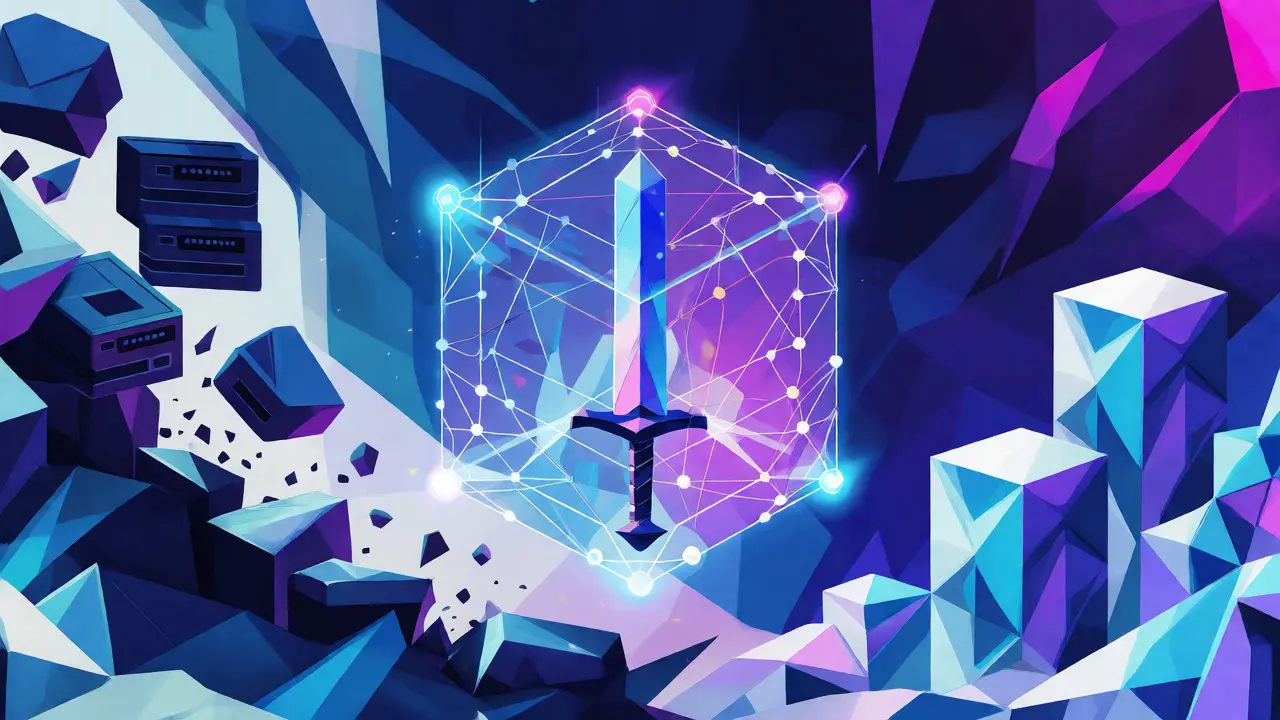
Imagine owning a sword in a video game that you can actually sell for real money, not just trade with friends who might never buy it. That’s the promise of MixMarvel (MIX). It’s not just another coin trying to ride the hype wave; it’s a utility token powering a specific ecosystem designed to fix the broken ownership model in modern gaming. But does it work? And why has its price fallen so far from its peak? If you’re curious about what this token actually does beyond the charts, you’re in the right place.
The Core Problem: Who Really Owns Your Game Items?
Most gamers have felt the frustration. You spend hundreds of hours grinding for a rare item, only to realize you don’t truly own it. The game developer owns the database entry. They can nerf it, delete it, or shut down the servers entirely, and your investment vanishes. MixMarvel aims to solve this by leveraging blockchain technology to create true digital asset ownership. Through Non-Fungible Tokens (NFTs), players hold their assets on-chain, meaning they retain control even if the game itself changes hands or closes.
This isn’t just theoretical. The platform acts as an incubator for games, providing developers with the tools to integrate these features without needing to build complex blockchain infrastructure from scratch. For players, it means their time and money spent in-game translate into tangible, tradable assets. It shifts the power dynamic from centralized publishers to decentralized communities, where value flows back to those creating content and playing the games.
How MixMarvel Works: More Than Just a Coin
To understand MIX, you need to look at the machine it powers. It operates within a broader ecosystem called MixMarvel, which functions as a content-incubation platform. Think of it as a startup accelerator specifically for blockchain games. Developers apply to join, and if accepted, they get access to a suite of services including SDKs (Software Development Kits), economic design assistance, and marketing support.
The MIX token serves multiple roles here. It’s used for governance, allowing holders to vote on which new projects get funded through the platform’s DAO Venture arm. It’s also used for staking, where users lock up their tokens to earn rewards or provide liquidity. This multi-use case structure is crucial because it prevents the token from being purely speculative. If people are using MIX to stake, govern, and pay for services, there’s inherent demand beyond just buying and selling.
| Component | Function | User Benefit |
|---|---|---|
| MIX Token | Utility & Governance | Voting rights, staking rewards, transaction fees |
| MixMarvel.SDK | Developer Toolset | Faster integration of blockchain features (40% time reduction) |
| DAO Venture | Investment Arm | Community-funded project incubation |
| NFT Marketplace | Asset Trading | True ownership and cross-platform trading potential |

Tokenomics: Supply, Demand, and Reality Check
Let’s talk numbers, because they matter. The maximum supply of MIX is capped at 10 billion tokens. As of mid-2024, approximately 72% of these were in circulation. Why does this matter? High circulating supply often leads to lower individual token prices, making them accessible but potentially harder to pump significantly without massive volume.
Here’s the uncomfortable truth: MIX has seen significant depreciation. Its all-time high was around $0.1461. Recent data shows it hovering near fractions of a cent, often below $0.0001. This represents a drop of over 99%. While some analysts predict a slow climb back up-PricePrediction.net suggests a target of $0.0418 by 2030-others like TradingBeast forecast continued stagnation or decline. The discrepancy highlights the volatility inherent in niche altcoins. Liquidity is thin, meaning large buy or sell orders can swing the price wildly. If you’re looking at MIX, you must accept that it’s a high-risk, low-cap asset.
Why Developers Choose MixMarvel Over Competitors
You might ask, "Why use MixMarvel when platforms like Enjin or Immutable X exist?" The answer lies in specialization. Larger metaverse platforms try to be everything to everyone. MixMarvel focuses tightly on gaming content incubation. Their SDK reportedly cuts development time by nearly half compared to building custom blockchain solutions. For indie studios with limited budgets, this efficiency is a game-changer.
Moreover, the community co-creation aspect sets it apart. Projects like DeHero and Loot Rangers allow players to vote on game updates and asset designs. This feedback loop keeps engagement high and ensures the games remain relevant to their audience. It’s not just top-down development; it’s a collaborative effort. However, this strength is also a weakness. Because the focus is so niche, mainstream adoption remains elusive. Most players still prefer traditional games with no blockchain friction.

Risks and Challenges You Can’t Ignore
No discussion about MIX is complete without addressing the risks. First, regulatory uncertainty looms large, especially in Western markets where blockchain gaming faces stricter scrutiny than in Asia. Second, competition is fierce. Giants like Axie Infinity and The Sandbox have deeper pockets and larger user bases. MixMarvel struggles to compete for mainstream attention.
Then there’s the issue of exchange listings. MIX trades primarily on Asian exchanges like Gate.io. Limited fiat on-ramps make it difficult for average users outside Asia to buy in easily. Slippage is another concern; with low trading volumes, executing large trades can result in unfavorable prices. Always use limit orders if you decide to enter the market.
Is MixMarvel Worth Your Attention in 2026?
If you’re a hardcore blockchain gamer or a developer looking for cost-effective tools, MixMarvel offers genuine utility. The platform’s commitment to supporting indie creators through its DAO Venture fund shows long-term vision. However, for pure speculators hoping for a quick moonshot, the current trajectory suggests caution. The token’s performance depends heavily on the broader resurgence of interest in play-to-earn models, which slowed significantly after the 2021 bull run.
Keep an eye on their roadmap. Planned upgrades include enhanced cross-chain compatibility and expanded DeFi tools. If they successfully bridge the gap between casual gamers and blockchain complexity, MIX could see renewed interest. Until then, treat it as a speculative bet on the future of decentralized gaming infrastructure, not a guaranteed winner.
What is the primary use case for the MIX token?
The MIX token is primarily used for governance, staking, and paying for services within the MixMarvel ecosystem. Holders can vote on new game projects funded by the DAO Venture arm and stake tokens to earn rewards from liquidity mining programs.
Where can I buy MixMarvel (MIX)?
MIX is most commonly traded on Asian cryptocurrency exchanges such as Gate.io. Due to lower liquidity on major Western exchanges, traders should be aware of potential slippage and use limit orders when purchasing.
How does MixMarvel differ from other blockchain gaming platforms?
Unlike broad metaverse platforms, MixMarvel specializes in incubating indie blockchain games. It provides specialized developer tools (SDKs) that reduce integration time and fosters a community-driven approach where players help shape game development through voting mechanisms.
Is MixMarvel a good investment?
It depends on your risk tolerance. MIX has experienced significant price declines from its all-time high. While it offers utility for developers and gamers, its low market cap and thin liquidity make it a high-risk, high-reward speculative asset rather than a stable store of value.
Can I earn passive income with MIX?
Yes, through staking and liquidity mining. Users can stake MIX or pair it with other tokens (like BUSD) in liquidity pools to earn annual percentage yields (APY), which have historically ranged from 15-25% during periods of high activity.
Diego Alamir
September 14, 2026 AT 19:33They buried the real reason for the price drop in a footnote.
The Asian exchanges are dumping on us while Western retail sleeps. It’s not utility it’s exit liquidity.
Kyle Whitehead
September 15, 2026 AT 20:58dude that's just conspiracy theory nonsense mixed with basic market mechanics
i've been holding since 2021 and yeah it hurts but blaming 'them' doesn't fix your portfolio
the SDK actually works i used it for a side project last year
Jennifer Phipps
September 16, 2026 AT 22:52Hey everyone! 👋 Just wanted to add some helpful context here because I see a lot of confusion about the tech stack. 🛠️
First off, the 40% reduction in dev time mentioned in the article is legit. If you're an indie dev looking at MixMarvel vs Enjin, the difference is in the specialized gaming SDKs. Enjin is broad, MixMarvel is laser-focused on game logic integration.
Second, regarding the tokenomics: don't ignore the staking APYs. They aren't always 25%, but during active seasons, they provide real yield which helps offset volatility. 💰
Also, remember that low liquidity means slippage is your enemy. Always use limit orders if you're buying more than $100 worth. Don't get wrecked by market makers! 😅
Hope this helps clarify things for anyone new to blockchain gaming!
Lakshmi Sailaja Devarakonda
September 17, 2026 AT 12:42Oh, how absolutely delightful it is to read such optimistic prose from someone who clearly has never had to explain to their family why they spent rent money on a digital sword that now trades for less than a cup of mediocre coffee, isn't it? Because surely, the fact that the 'utility' is dependent entirely on whether or not some obscure indie studio decides to keep their servers running next month is exactly what makes this investment safe and sound for the average American household, right? And let's not even get started on the 'community governance' aspect, which usually just means five guys in Discord voting on which color scheme looks better while the actual development team hasn't shipped a major update in eighteen months, but sure, let's call that revolutionary decentralization instead of what it actually is, which is a slow-motion car crash dressed up in buzzwords. It is truly heartwarming to see people still believing in the fairy tale of play-to-earn when the only thing being earned is disappointment and a lesson in opportunity cost.
Adam Barrett
September 18, 2026 AT 21:32I appreciate the passion, both sides. The reality is nuanced. Yes, the price action is brutal, but dismissing the tech ignores the actual work being done on the SDK. We need to find middle ground where we acknowledge the risk without ignoring the innovation.
Manoj Ramachandran
September 19, 2026 AT 00:42It is imperative to approach this analysis with a degree of scholarly rigor. While the emotional responses are understandable, one must consider the macroeconomic factors influencing niche altcoins. The correlation between MIX and broader crypto trends is high, yet its beta remains elevated due to low market cap. Therefore, diversification is prudent.
Zayda Hayes
September 20, 2026 AT 12:39Indeed... indeed...
One must also consider... the regulatory landscape... specifically in the EU... where MiCA regulations... may impact... token classification...
Furthermore... the DAO structure... requires... careful examination... of voting power... concentration...
Matthew Alunni
September 20, 2026 AT 19:26We are chasing ghosts in a machine that was never meant to be owned. The concept of true ownership in a simulated environment is a philosophical paradox. You cannot own code. You can only license access. MixMarvel sells the illusion of agency to those desperate for meaning in a digital void. It is not an investment; it is a tax on hope.
Alan Farley
September 21, 2026 AT 10:49Love the perspective here! It's all about building bridges between traditional gaming and Web3. Even if the token struggles short term, the infrastructure they are building for developers is valuable long term. Let's keep encouraging the builders!
Newman Thurairatnam
September 21, 2026 AT 23:48The charts do not lie, but they omit the truth.
Who benefits from the stagnation?
The whales.
Always the whales.
👀
Tish Dalton
September 22, 2026 AT 14:38Hey folks, just checking in! 🌟 I think we're missing the bigger picture on user experience. For casual gamers, the friction of wallets is still too high. MixMarvel needs to focus on hiding the blockchain complexity completely. That's the real key to adoption, not just token incentives. Keep pushing for seamless UX! 💪
Dominic Hird
September 23, 2026 AT 13:09That's a really valid point about UX. If my grandma can't play it without knowing what a gas fee is, it's not ready for the masses. We need to be inclusive of non-crypto natives here. Empathy for the user journey is crucial.
Frances Schnepfleitner
September 25, 2026 AT 11:59forget the ux talk
look at the volume
it's dead
don't buy until volume returns
simple as that
Manish Pahuja
September 26, 2026 AT 19:55Chilling here reading through the comments. Both bulls and bears have points. Time will tell if the ecosystem grows beyond speculation. Staying neutral for now.
Samantha Du-Cell
September 28, 2026 AT 10:19This whole 'decentralized' narrative is just globalist fluff designed to distract from the fact that these platforms are still run by offshore entities dodging US taxes. We should be supporting domestic gaming studios, not throwing money at tokens traded primarily in Asia. America first, even in crypto.
Mark Riquelme
September 28, 2026 AT 20:41While the geopolitical sentiment is noted, it is essential to maintain objectivity regarding the technical merits. The cross-chain compatibility roadmap addresses the isolation issue. A balanced portfolio should include exposure to emerging infrastructure regardless of geographic origin, provided the risk profile aligns with the investor's strategy.