
Have you ever tried moving money between different blockchains and felt like you were walking through a minefield? You pay high fees, wait for minutes or hours, and worry that the bridge connecting the chains might get hacked. That frustration is exactly what Layer One X, known by its ticker symbol L1X, aims to fix.
Layer One X is not just another cryptocurrency token; it is a fourth-generation decentralized platform designed to make interoperability between blockchains seamless and efficient. Unlike older systems that rely on risky "bridges" to move assets, L1X claims to offer "bridgeless" connectivity. This means it attempts to link Ethereum-compatible networks with completely different types of blockchains directly at the protocol level. If you are looking to understand whether this project is a solid investment, a useful tool for developers, or just another hype cycle, you need to look past the marketing buzzwords and examine how the network actually works.
How Layer One X Works: The Bridgeless Promise
The biggest selling point of Layer One X is its approach to cross-chain communication. In the traditional crypto world, if you want to send Bitcoin to an Ethereum-based application, you usually have to use a bridge. These bridges lock your Bitcoin in one place and mint a "wrapped" version on the other side. It sounds simple, but these bridges have been the target of billions of dollars in hacks because they create single points of failure.
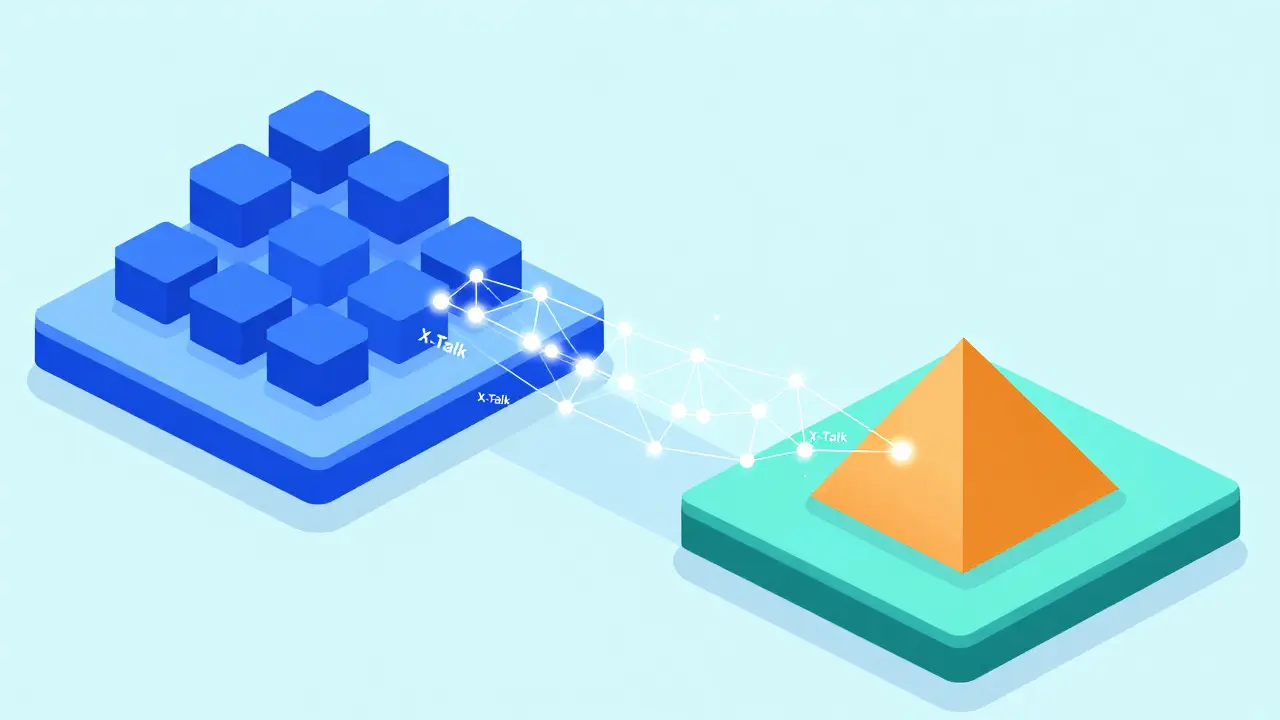
Layer One X tries to solve this by integrating cross-chain messaging into its core engineering layer. Instead of relying on external, third-party bridge contracts, L1X uses a system called X-Talk nodes. These specialized nodes handle the communication between different blockchains. They monitor external networks and verify state changes, allowing smart contracts on L1X to interact with assets on other chains without needing a traditional lock-and-mint bridge. For users, this translates to potentially safer and faster swaps. The official L1X App even promotes "zero-cost swaps" with rewards, though you should always check the fine print regarding gas fees and liquidity conditions.
The Technology Behind the Scenes
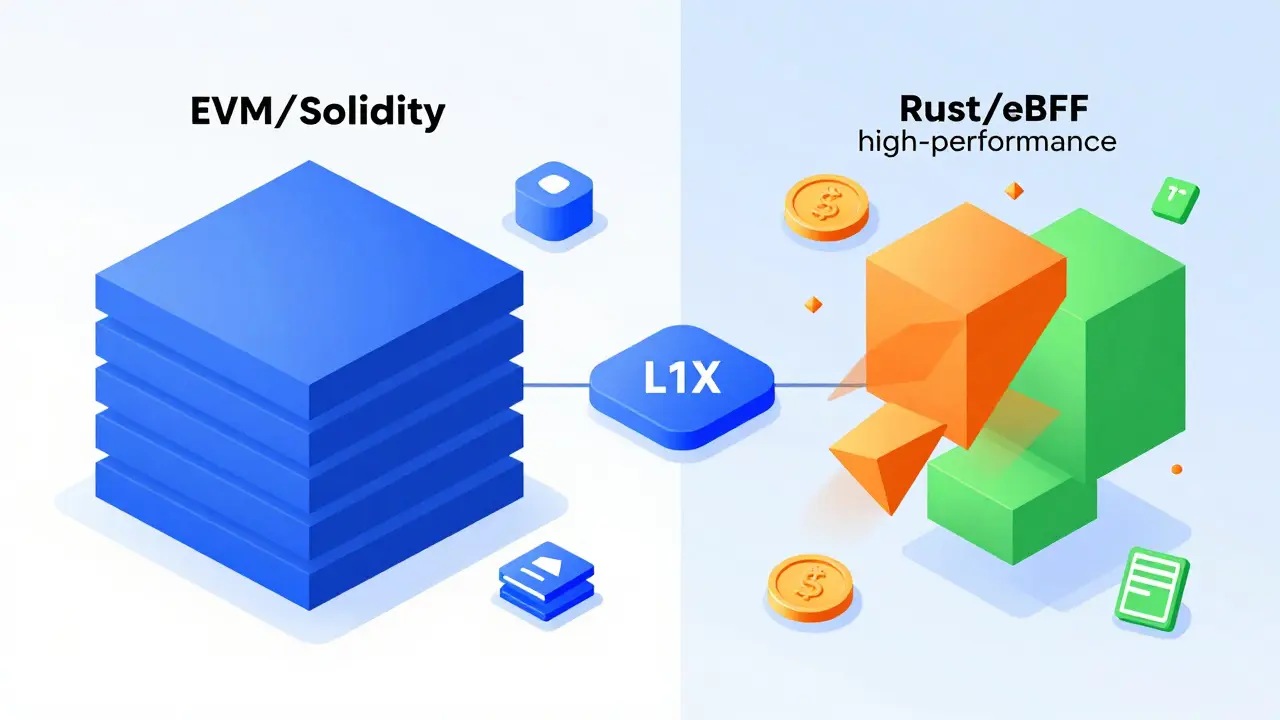
To support this ambitious goal, Layer One X runs on a unique technical stack that blends familiarity with innovation. Most developers today know Solidity, the language used to build apps on Ethereum. L1X is fully EVM-compatible, meaning you can deploy existing Ethereum smart contracts on L1X with minimal changes. This lowers the barrier to entry for developers who don't want to learn a brand-new coding language from scratch.
However, L1X also offers something more powerful for those who need higher performance. It features a Rust-based Virtual Machine (VM) that compiles code using WebAssembly (WASM) down to eBPF (extended Berkeley Packet Filter). Why does this matter? eBPF is known for being incredibly fast and secure, often used in kernel-level networking. By offering both EVM and this high-performance Rust/eBPF environment, L1X attracts two different groups: Ethereum veterans and performance-focused Rust developers. This dual-VM design is similar to what projects like Solana or NEAR have experimented with, but L1X packages it specifically for cross-chain utility.
Security is maintained through a custom consensus mechanism called Proof-of-X. While detailed mathematical specifications are scarce in public summaries, it operates similarly to Proof-of-Stake (PoS). Validators stake L1X tokens to secure the network and validate transactions. If they act maliciously, their stakes can be slashed. As of early 2025, the network reported having around 160 full validator nodes processing over 2 million transactions, suggesting a growing but still relatively small decentralization footprint compared to giants like Ethereum.
Understanding the L1X Token Utility
The L1X token is the fuel that keeps this engine running. It isn't just a speculative asset; it has several functional roles within the ecosystem:
- Transaction Fees: You pay for gas fees and cross-chain swap operations using L1X.
- Staking: Validators must stake L1X to participate in the Proof-of-X consensus and earn rewards.
- Governance: Token holders can vote on protocol upgrades and resource allocation decisions.
- Node NFTs: Interestingly, operating certain types of nodes requires purchasing specific Node NFTs using L1X tokens. This adds a layer of scarcity and utility to the token beyond just staking.
- Liquidity Provision: Users provide L1X to decentralized exchange pools to facilitate trading and earn yield.
When evaluating any crypto token, supply dynamics are crucial. Here, things get a bit murky. Different data aggregators report conflicting figures. CoinMarketCap lists a total supply of roughly 495 million L1X, while CoinGecko references a maximum supply of 1 billion L1X. This discrepancy creates uncertainty about long-term inflation and dilution. Always check the latest official whitepaper or tokenomics documentation before making investment decisions, as these numbers can change with protocol updates.
Market Position and Risks
Let's talk about the elephant in the room: risk. Layer One X is an emerging project in a crowded market. It competes with established interoperability players like Polkadot, Cosmos, Chainlink CCIP, and LayerZero. Those competitors have years of operational history, massive developer communities, and billions in total value locked (TVL).
L1X is still building its ecosystem. As of 2025, it lacks the deep liquidity and widespread institutional adoption seen in top-tier chains. Daily trading volumes have hovered under $1 million, which means large trades could cause significant price slippage. Additionally, the security track record of new consensus mechanisms like Proof-of-X and integrated oracles needs time to prove itself against real-world attacks. There have been no major publicized hacks yet, but there also hasn't been enough time for extensive peer review of its core protocols.
| Feature | Layer One X (L1X) | Traditional Bridges | Relay Chains (e.g., Polkadot) |
|---|---|---|---|
| Connectivity Model | Bridgeless, Protocol-Level | Lock-and-Mint / Burn-and-Release | Shared Security via Relay Chain |
| Virtual Machine | EVM + Rust/WASM/eBPF | Dependent on Source/Dest Chain | Parachain Specific (often WASM) |
| Oracle System | Inbuilt/Native | External (e.g., Chainlink) | Integrated or External |
| Maturity | Early Stage (Emerging) | High Risk (History of Hacks) | Established (Years of Operation) |
| Developer Language | Solidity & Rust | Varies | Rust (Primarily) |
Getting Started with Layer One X
If you decide to explore L1X, here is how you typically interact with it. First, you need to acquire the tokens. L1X is listed on several exchanges, including LBank, BitMart, and Uniswap v3 (on Ethereum). You can buy L1X using USDT or ETH pairs. Once you have the tokens, you can transfer them to a compatible wallet. For cross-chain swaps, users often utilize the L1X App, which markets itself as requiring no wallet connection for certain promotional swaps, though standard DeFi interactions will likely require a Web3 wallet like MetaMask.
For developers, the path is straightforward if you already know Solidity. You can deploy your existing Ethereum dApps to L1X to test its cross-chain capabilities. If you prefer Rust, you can leverage the high-performance VM for more complex logic. Running a node is another way to contribute; however, remember that you may need to purchase a Node NFT and stake a significant amount of L1X to become a Full Validator Node (FVN). Always consult the official documentation for the latest hardware requirements and staking thresholds.
Is Layer One X (L1X) safe to use?
Like all cryptocurrencies, L1X carries risks. While its "bridgeless" design aims to reduce the risk of bridge hacks, the network is still relatively new. The Proof-of-X consensus and integrated oracle systems have not yet undergone the same level of long-term stress testing as older chains like Ethereum. Always do your own research, start with small amounts, and never invest more than you can afford to lose.
What is the difference between L1X and other cross-chain solutions?
Most cross-chain solutions rely on "bridges" that lock assets on one chain and release them on another, creating potential security vulnerabilities. Layer One X claims to offer "bridgeless" connectivity by integrating cross-chain messaging directly into its protocol via X-Talk nodes. Additionally, L1X supports both EVM (Solidity) and a high-performance Rust/eBPF virtual machine, offering flexibility that some competitors lack.
Where can I buy L1X tokens?
As of recent data, L1X is available on centralized exchanges like LBank and BitMart, as well as decentralized exchanges like Uniswap v3 on Ethereum. Availability may vary by region and over time, so check current listings on aggregator sites like CoinGecko or CoinMarketCap before attempting to trade.
What is the total supply of L1X?
There is currently conflicting information regarding the total supply. Some sources report a total supply of approximately 495 million L1X, while others cite a maximum supply of 1 billion L1X. This discrepancy highlights the importance of verifying tokenomics directly from the project's official whitepaper or smart contract audits, as supply figures can impact long-term value and inflation.
Can I run a node on the Layer One X network?
Yes, you can run a node, but it involves specific requirements. To operate a Full Validator Node (FVN), you typically need to stake L1X tokens and purchase a Node NFT. There are also X-Talk nodes that handle cross-chain communication. Hardware and software requirements should be checked on the official L1X documentation, as they may change with network upgrades.