Have you ever wondered how a single cryptocurrency can power both a massive user platform and an entirely new blockchain network? That is exactly what Gravity (G) is designed to do. Developed by Galxe, a leading Web3 infrastructure company, the G token sits at the intersection of two powerful ecosystems: the Gravity blockchain and the broader Galxe application suite.
If you are navigating the complex world of Web3 in 2026, understanding G is crucial. It is not just another speculative coin; it is a utility token with real functions, from paying for transactions on a new chain to governing decentralized applications. Let’s break down what Gravity actually is, how it works, and why it matters for your crypto portfolio.
The Dual Ecosystem Strategy
Most cryptocurrencies serve one primary purpose. Some are purely for trading, others for specific dApps, and some power a single blockchain. Gravity (G) takes a different approach. Galxe created G to unify two distinct but interconnected worlds under one token architecture.
| Ecosystem Component | Function | Role of G Token |
|---|---|---|
| Gravity Blockchain | A Layer-1/Layer-2 hybrid network for smart contracts and high-speed transactions. | Native gas token for transaction fees and network security. |
| Galxe Platform | A suite of Web3 tools including Quest, Passport, and Shop for user engagement. | Utility token for paying fees, accessing premium features, and participating in rewards. |
This "one token, two ecosystems" model is strategic. By linking the infrastructure layer (Gravity Chain) with the application layer (Galxe apps), Galxe ensures that demand for G comes from multiple sources. If developers build on Gravity, they need G for gas. If users engage with Galxe Quests or buy items in the Galxe Shop, they use G. This diversification aims to create more stable tokenomics compared to projects relying on a single use case.
How Gravity Blockchain Works
The Gravity blockchain itself is an ambitious technical project. It is built to be Ethereum-compatible, meaning developers familiar with Solidity can deploy their apps here with minimal friction. However, it introduces unique concepts inspired by physics-specifically, gravity.
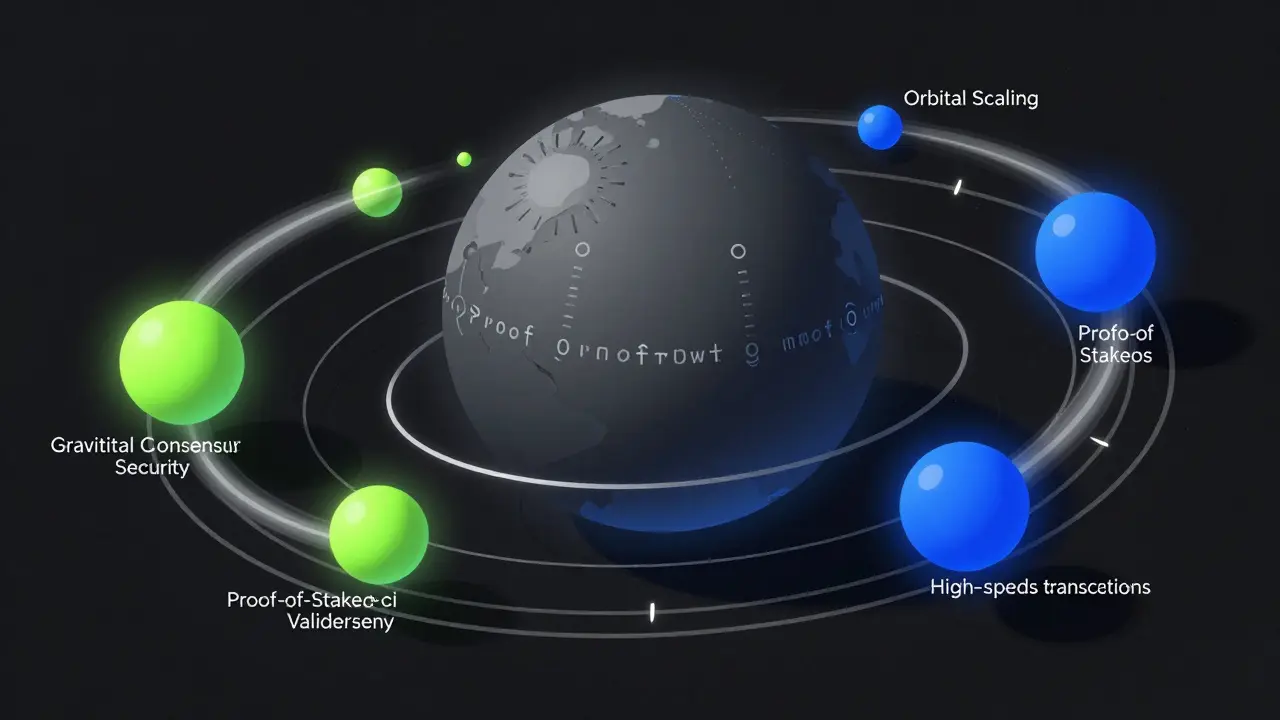
At its core, Gravity uses a consensus mechanism called Gravitational Consensus. This is a hybrid system combining elements of Proof-of-Stake (PoS) and Proof-of-Work (PoW). Why mix them? Pure PoS can sometimes struggle with decentralization if a few large validators dominate. Pure PoW is energy-intensive. Gravitational Consensus attempts to balance speed, security, and energy efficiency. It allows the network to process transactions quickly while maintaining robust security against attacks.
To handle scale, Gravity employs Orbital Scaling. Think of this like planets orbiting a star. As more activity enters the network, the Orbital Scaling solution dynamically adjusts to accommodate higher transaction throughput without clogging the main chain. This is critical for a platform aiming to onboard mainstream users who expect instant confirmations, not minutes-long waits.
Developers building on Gravity use the G-Force programming framework. This proprietary toolset allows creators to leverage the network’s unique economic mechanics directly in their smart contracts. For example, a game developer could tie in-game asset rarity to the "gravitational pull" of certain tokens, creating dynamic economies that adapt to market conditions.
Token Utilities: More Than Just Speculation
When evaluating any crypto asset, you must ask: "What does this token actually do?" For Gravity (G), the utilities are extensive and deeply integrated into daily operations.
- Governance via G DAO: Holding G gives you a voice. The G DAO (Decentralized Autonomous Organization) allows token holders to vote on key organizational decisions. This includes protocol upgrades, treasury management, and partnership approvals. It is a transparent framework designed to foster unity among members.
- Staking and Security: You can stake your G tokens to help secure the Gravity network. In return, you earn rewards. These aren’t just empty promises; stakers gain access to exclusive benefits from applications built within the Galxe ecosystem. Staking also contributes to the long-term sustainability of the network by locking up supply and reducing circulating pressure.
- Payment for Services: Within the Galxe ecosystem, G is the currency. Whether you are completing quests on Galxe Quest, verifying your identity via Galxe Passport, or shopping in the Galxe Shop, you will likely interact with G. It powers features like Galxe Score and Alva, making it essential for active participants.
- Gas Fees: On the Gravity blockchain itself, G is the native gas token. Every smart contract execution, NFT mint, or transfer requires a small amount of G as a fee. This creates constant organic demand from developers and users interacting with the chain.
Supply Distribution and Multi-Chain Presence
Understanding where the tokens live is important for liquidity and accessibility. Gravity (G) is not confined to a single blockchain. It operates across multiple networks to maximize reach.
The total supply structure is distributed as follows:
- Ethereum: 10 billion G tokens. This is the primary anchor, leveraging Ethereum’s security and vast DeFi ecosystem.
- BNB Chain: 2 billion G tokens. This provides access to BNB Chain’s high-speed, low-cost environment and large user base.
- Base Network: Initially 0 supply, with tokens bridged from other networks. This strategy allows Galxe to tap into Coinbase’s Base chain growth without initial fragmentation, ensuring liquidity is consolidated first.
This multi-chain deployment is a deliberate move toward cross-chain interoperability. It means you don’t have to be locked into one ecosystem to use G. You can bridge your tokens between Ethereum, BNB Chain, and Base as needed, though always keep an eye on bridge fees and security risks associated with cross-chain transfers.
Market Context and Adoption Initiatives
As of mid-2026, Gravity (G) trades around $0.01036 USD, holding a market rank of #363 on major aggregators like CoinMarketCap. With a 24-hour trading volume exceeding $4.4 million, it shows moderate liquidity. While not a top-10 giant, its position reflects a growing niche in Web3 identity and infrastructure.
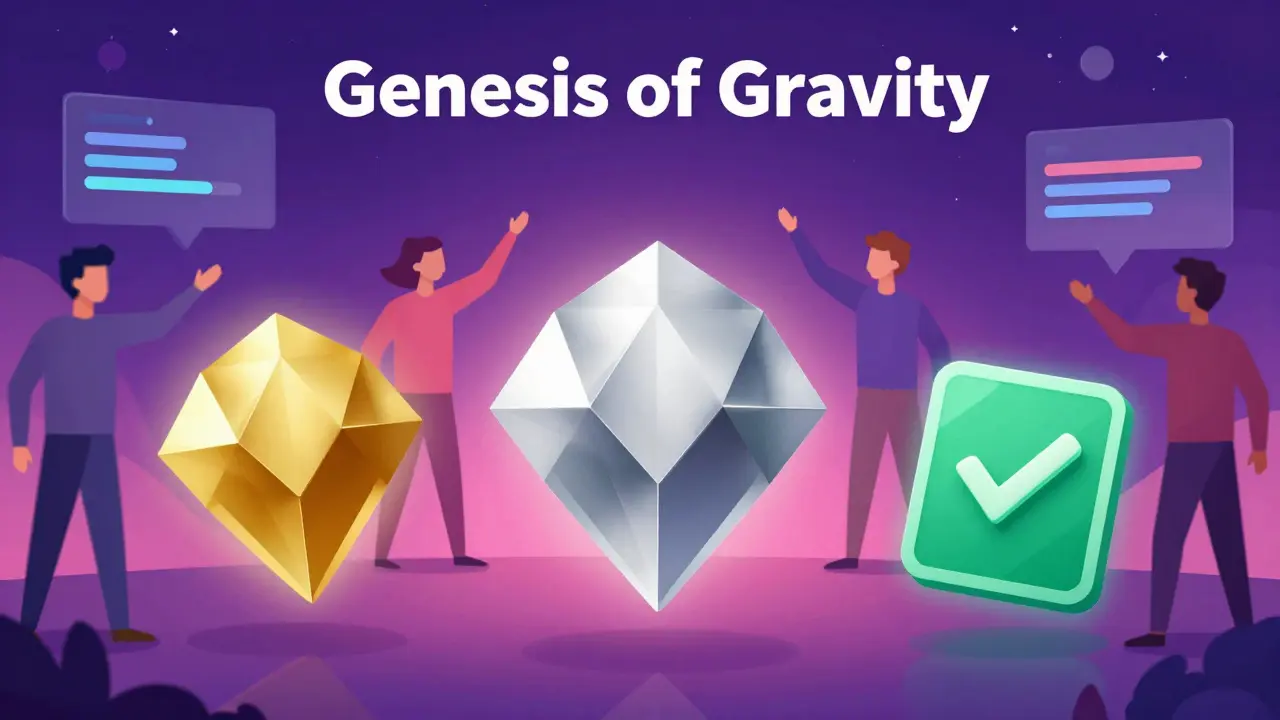
Galxe is actively driving adoption through gamified initiatives. The Genesis of Gravity event is a prime example. Users complete NFT quests to collect rare fragments. These fragments come in tiers:
- Rare Fragment NFTs: Guarantee future rewards.
- Ultra Rare Fragment NFTs: Yield higher-value rewards.
- Galxe Plus Subscriptions: Exclusive one-month subscriptions for original minters.
These fragments are tradable, creating a secondary market and incentivizing early participation. This "play-to-earn" style engagement helps bootstrap network effects, bringing in users who might not otherwise interact with blockchain technology.
Is Gravity (G) Right for You?
Like any investment, G carries risks. Its value is tied to the success of both the Gravity blockchain and the Galxe platform. If adoption stalls, demand for gas and utility could drop. However, for those bullish on Web3 identity solutions and decentralized governance, G offers a unique entry point.
It is particularly relevant if you are already using Galxe services. Holding G enhances your experience, giving you voting power and access to premium features. For developers, it opens doors to a growing ecosystem with strong industry partnerships. Galxe has positioned itself as a "juggernaut" in Web3 infrastructure, supporting teams from stealth development through mainnet growth.
Before buying, consider your goals. Are you looking for passive income through staking? Do you want to participate in governance? Or are you betting on the long-term growth of Web3 identity management? Gravity (G) serves all these roles, but understanding which one aligns with your strategy is key.
What is the difference between Galxe and Gravity?
Galxe is the overarching company and platform providing Web3 infrastructure tools like Quest and Passport. Gravity is the specific blockchain network developed by Galxe. The G token connects both, serving as the utility token for Galxe apps and the native gas token for the Gravity blockchain.
Can I stake Gravity (G) tokens?
Yes. Staking G allows you to help secure the Gravity network and participate in governance. Stakers receive rewards and often gain access to exclusive features within the Galxe ecosystem, such as premium subscription perks or higher quest rewards.
Which blockchains support the G token?
The G token is deployed on Ethereum (10 billion supply), BNB Chain (2 billion supply), and Base (bridged supply). This multi-chain presence allows users to access G across different ecosystems, enhancing liquidity and usability.
What is Gravitational Consensus?
Gravitational Consensus is Gravity’s hybrid consensus mechanism. It combines elements of Proof-of-Stake and Proof-of-Work to balance transaction speed, network security, and energy efficiency. It aims to provide the best aspects of both models for a scalable blockchain.
How do I earn rewards from Genesis of Gravity?
You earn rewards by completing NFT quests during the Genesis of Gravity event. Collecting Rare and Ultra Rare Fragment NFTs guarantees future payouts. Original minters may also receive Galxe Plus subscriptions. These fragments can be traded, adding another layer of potential value.
Is Gravity (G) a good investment in 2026?
Investment suitability depends on your risk tolerance and belief in Web3 identity solutions. G has real utility in governance, staking, and platform fees. However, like all cryptocurrencies, its price is volatile and tied to ecosystem adoption. Always conduct your own research before investing.