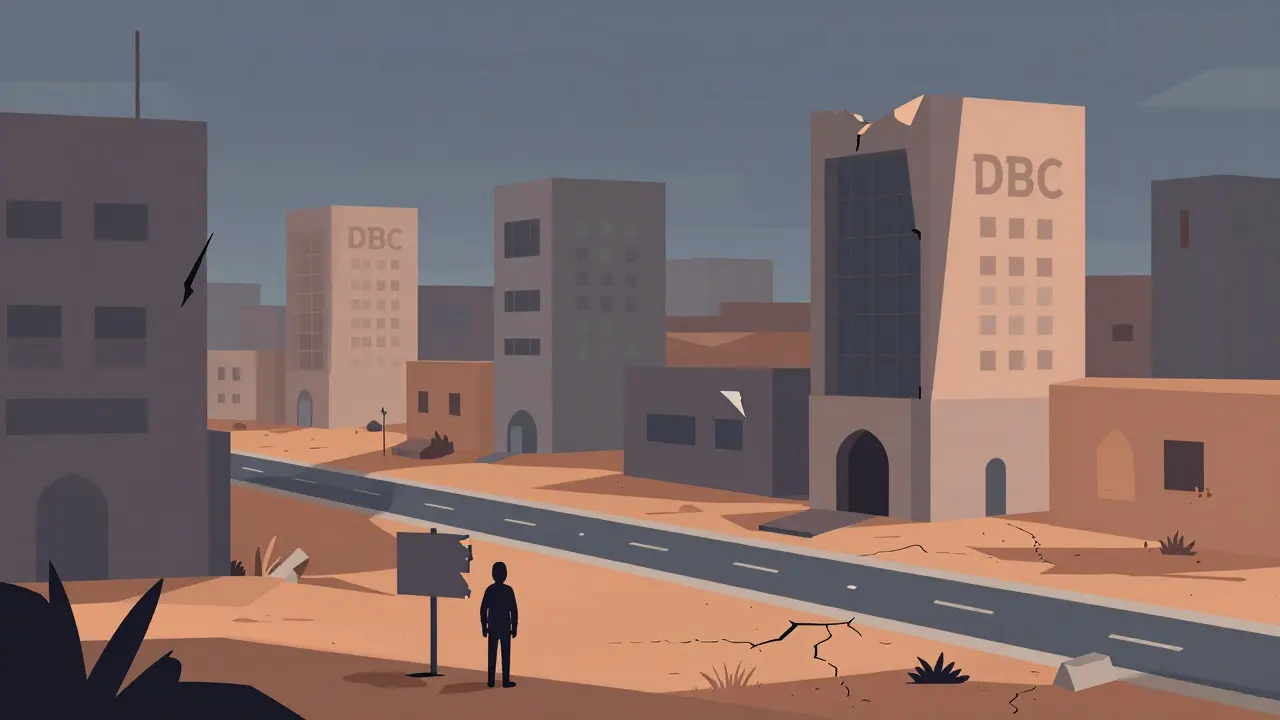
Have you ever scrolled through a list of cryptocurrencies and stumbled upon a name that sounds familiar but feels oddly empty? That’s exactly what happens with Dhabi Coin (DBC). It sits on the blockchain, it has a ticker symbol, and it shows up on major price trackers. But if you dig just a little deeper, you’ll find a project that looks more like a ghost town than a bustling digital economy.
DBC is a small-cap cryptocurrency token built on the BNB Smart Chain (formerly known as Binance Smart Chain). It uses the BEP-20 standard, which means it works similarly to Ethereum tokens but runs on a faster, cheaper network. The project claims to bridge Arab markets with global crypto users, offering low-fee payments for e-commerce and retail. However, the reality on the ground tells a different story: extremely low liquidity, missing supply data, and a price that has crashed over 95% from its peak.
The Basics: What Exactly Is Dhabi Coin?
To understand DBC, you first need to understand where it lives. It doesn’t have its own blockchain. Instead, it exists as a smart contract on the BNB Smart Chain. This is significant because it inherits both the strengths and weaknesses of that network. On the plus side, transactions are fast-usually confirming in about three seconds-and fees are incredibly low, often costing less than five cents per transfer. This makes it theoretically attractive for small payments.
However, being a BEP-20 token also means DBC is just one of thousands of similar tokens on the same chain. Unlike Bitcoin or Ethereum, which have unique consensus mechanisms and massive developer ecosystems, DBC relies entirely on the infrastructure provided by BNB Chain. It doesn’t introduce new technology; it simply leverages existing tools to exist as a tradable asset. The token was likely deployed between 2021 and 2022, based on historical chart data, though no official launch date or founding team details are publicly verified.
Price History and Market Reality
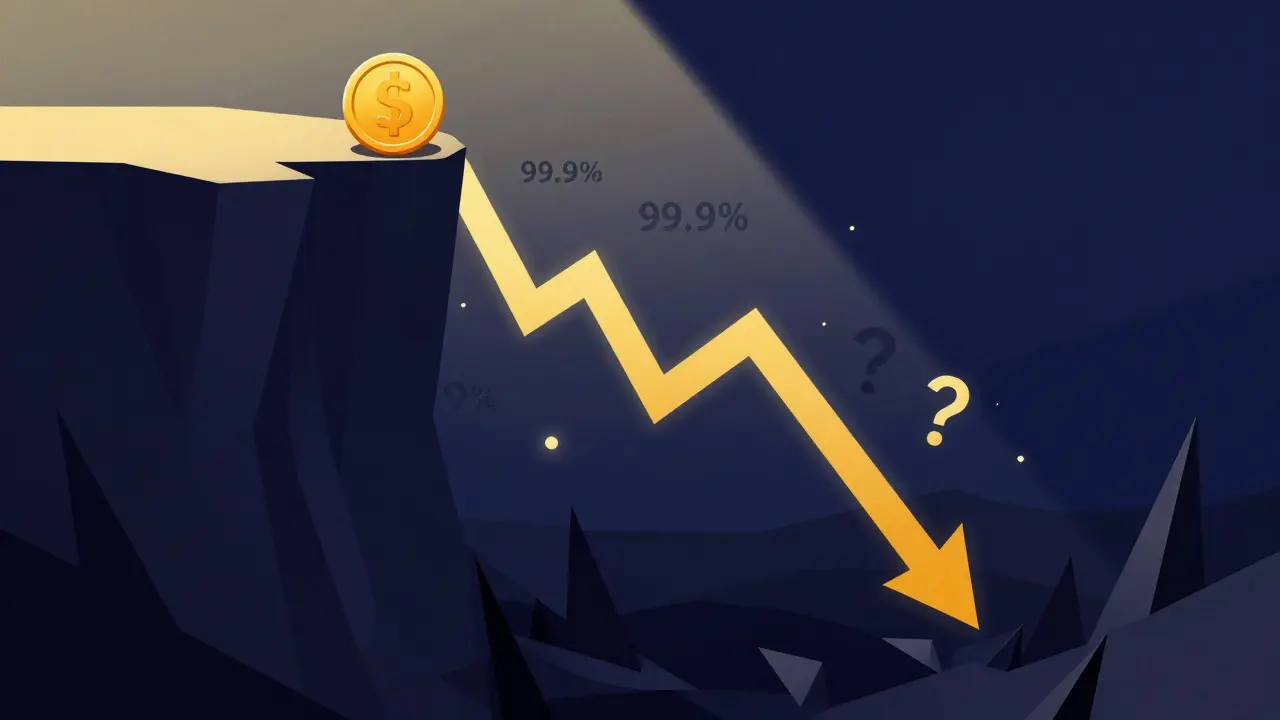
If you’re looking at DBC as an investment, the numbers might give you pause. At its all-time high, Dhabi Coin traded for around $0.0847. Today, depending on the tracker you check, it hovers around $0.00000037 to $0.00000059. That is a decline of nearly 99.9%. To put that in perspective, your money would need to multiply by almost 200,000 times just to break even from today’s prices.
Liquidity is another major concern. Major aggregators like Coinbase and Crypto.com report daily trading volumes for DBC that sometimes dip below $10. In a healthy market, you want to be able to buy or sell without moving the price significantly. With such thin volume, even a small trade can cause massive slippage, meaning you might pay much more than the listed price to buy, or receive much less when you sell. Furthermore, circulating supply data is often listed as zero or missing on these platforms, making it impossible to calculate a true market capitalization.
| Feature | Dhabi Coin (DBC) | USDT / USDC (Stablecoins) | BNB (Native Chain Token) |
|---|---|---|---|
| Network | BNB Smart Chain (BEP-20) | Multi-chain (Ethereum, BSC, etc.) | BNB Smart Chain (Native) |
| Daily Volume | ~$10 - $100 (Extremely Low) | $Billions | $Hundreds of Millions |
| Merchant Adoption | No verified major merchants | Widely accepted globally | Accepted in many DeFi protocols |
| Price Stability | Highly Volatile / Declining | Pegged to USD ($1.00) | Market-driven volatility |
| Audit Status | No public audits found | Regularly audited by firms like CertiK | Core protocol audited |
Use Cases: Promise vs. Practice
The marketing materials for Dhabi Coin paint a picture of a seamless payment solution for the Arab world and beyond. The idea is simple: use DBC to buy goods online or in stores, benefiting from instant settlement and near-zero fees. It also promotes itself as a tool for community rewards, using airdrops to incentivize users to share content or refer friends.
But does this actually happen? As of mid-2026, there is little evidence of real-world adoption. You won’t find DBC integrated into major payment gateways like Stripe or Shopify. There are no well-known retailers accepting it at checkout. The "airdrop" strategy is common among speculative tokens trying to build hype, but it rarely translates into long-term value unless there is genuine utility backing it up. Without merchants accepting the coin, it remains a speculative asset rather than a currency.
How to Buy and Store Dhabi Coin
If you still decide to take the risk, here is how the process typically works. Since DBC is not listed on major centralized exchanges like Binance CEX or Coinbase Pro for direct spot trading, you have to use decentralized finance (DeFi) tools.
- Set Up a Wallet: Download a non-custodial wallet like MetaMask or Trust Wallet. Make sure you configure it to connect to the BNB Smart Chain network.
- Get BNB: You will need BNB (the native token of the chain) to pay for transaction fees (gas). Buy BNB on a centralized exchange and withdraw it to your MetaMask address.
- Find a DEX: Go to a decentralized exchange like PancakeSwap, which is the most popular DEX on BSC.
- Import the Token: Paste the official DBC contract address into the swap interface. Be very careful here-scammers often create fake tokens with the same name. Always verify the address from a trusted source like CoinMarketCap.
- Swap: Exchange your BNB or a stablecoin like USDT for DBC. Expect high slippage due to low liquidity.
Risks and Red Flags
Before you spend any money, consider these critical risks:
- Ticker Confusion: DBC is also the ticker for DeepBrain Chain, a completely different project focused on AI computing. Buying the wrong one is easy if you don’t check the contract address and network.
- Lack of Audits: Reputable security firms like CertiK or Quantstamp do not list public audit reports for Dhabi Coin. This means the code could contain vulnerabilities or hidden functions that allow the developers to freeze funds or mint unlimited tokens.
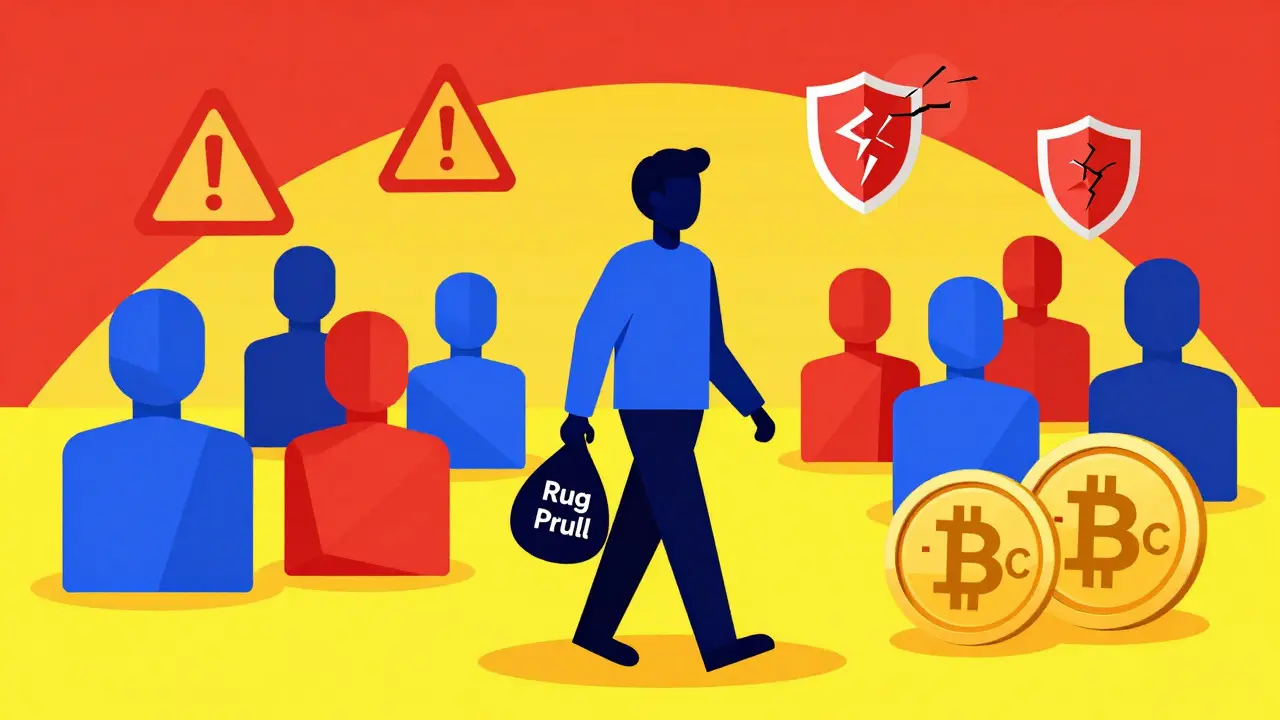
- Opacity: The team behind DBC is anonymous or poorly documented. In crypto, anonymity isn’t always bad, but combined with low liquidity and falling prices, it increases the risk of a "rug pull," where developers abandon the project and take the remaining funds.
- Regulatory Uncertainty: Small, unregistered tokens are increasingly under scrutiny by regulators worldwide. If authorities crack down on speculative assets, illiquid tokens like DBC could become unsellable.
Is Dhabi Coin Worth Your Attention?
For the average investor, the answer is likely no. Dhabi Coin lacks the fundamentals that drive sustainable value: a strong team, clear utility, active development, and broad adoption. It trades in the shadows of the crypto market, with negligible volume and extreme price depreciation. While the low barrier to entry on BSC allows anyone to create a token, it doesn’t guarantee success.
If you are curious about blockchain payments in the Middle East, established stablecoins like USDT or USDC offer far more stability and acceptance. If you are interested in the BNB ecosystem, holding BNB itself gives you exposure to the network’s growth without the added risk of a micro-cap token. Dhabi Coin serves as a cautionary tale: just because a token exists on a blockchain doesn’t mean it has value.
What is Dhabi Coin (DBC) used for?
Dhabi Coin is marketed as a utility and payment token for e-commerce and retail transactions, particularly targeting Arab markets. It also uses airdrops to reward community engagement. However, actual merchant adoption is minimal, and it functions primarily as a speculative asset.
Is Dhabi Coin the same as DeepBrain Chain?
No. They share the ticker symbol DBC but are completely different projects. Dhabi Coin is a BEP-20 token on the BNB Smart Chain. DeepBrain Chain is a separate project focused on decentralized AI computing. Always verify the contract address before buying.
Where can I buy Dhabi Coin?
DBC is not available on major centralized exchanges like Binance CEX or Coinbase. You must use a decentralized exchange (DEX) like PancakeSwap on the BNB Smart Chain. You will need a Web3 wallet (like MetaMask) and some BNB for gas fees.
Why is the price of Dhabi Coin so low?
The price has dropped over 95% from its all-time high due to lack of adoption, low liquidity, and declining investor interest. With daily trading volumes often under $100, the token struggles to maintain value against broader market trends.
Is Dhabi Coin safe to invest in?
It is considered high-risk. There are no public security audits from reputable firms, the team is largely anonymous, and liquidity is extremely low. These factors increase the risk of significant financial loss or potential scams.
Heather Austin
July 23, 2026 AT 21:54hey everyone, just wanted to add that the contract address is super important here because there are so many fake DBC tokens out there on BSC right now i always double check on pancakeswap before swapping anything because one wrong digit and you lose everything its crazy how many people get scammed by copycats
Michelle Walker
July 24, 2026 AT 05:31stop buying garbage. this is a dead coin. look at the volume. it is zero. nobody cares about this token anymore. waste of time reading this.
Linda Hilliard
July 25, 2026 AT 22:33Oh, please. The sheer ignorance displayed in assuming any BEP-20 token with a generic name has merit is staggering. :/ One must understand the fundamental mechanics of liquidity pools versus market cap dilution. This project lacks the requisite technical architecture to sustain even a fraction of its initial valuation. It is not merely 'risky'; it is structurally bankrupt from day one. The absence of a CertiK audit is not a 'red flag'; it is an indictment of the entire development team's competence. Do not confuse accessibility on BSC with viability. Most tokens on this chain are digital confetti. DBC is no exception. It serves only as a cautionary tale for those who fail to perform due diligence beyond a superficial glance at CoinMarketCap. The correlation between low daily volume and high slippage is elementary economics, yet it seems lost on the retail investors flocking to these micro-caps. Proceed with extreme skepticism, or better yet, proceed nowhere near it. :-)
Lisa Chong
July 25, 2026 AT 23:02they are hiding something big behind the anonymous team structure because why would real developers hide their faces unless they were planning a rug pull from the start it feels like a government experiment to track small investors movements through the blockchain ledger every transaction is recorded forever so they know exactly who bought this trash and when the price crashes it will be blamed on market forces but we know the truth the system is rigged against us common people who just want fair access to wealth generation without the elite gatekeepers controlling the narrative around which coins are safe to buy
Ran Tao
July 25, 2026 AT 23:21Wait wait wait 🛑 You guys are all sleeping on this! 😴 Just because it’s down 99% doesn’t mean it can’t go back up! 🚀 I’ve been holding since the top and honestly? It’s character building! 💪 Who needs utility when you have community vibes? 🌈 Plus, if it goes to zero, it’s free money for the next cycle! 🤷♂️ Don’t let the haters tell you what to do with your own wallet! 💸 #HODL #DBCarmy 🦄✨
Logan Edmison
July 26, 2026 AT 17:15the nature of value is purely subjective in the end isnt it we create meaning out of thin air by agreeing on symbols and numbers dancing on screens maybe dhabi coin is more real than gold because gold is just heavy metal sitting in a vault doing nothing while dbc represents the collective hope of thousands of people dreaming of financial freedom its a spiritual journey really not just a financial one the crash is just a test of faith for those willing to look deeper into the abyss of decentralized finance
Shay Thomson
July 28, 2026 AT 14:20I think we should all try to find some positivity here! While the charts are definitely looking grim, isn't it amazing that technology allows anyone to create a token? It's a testament to human creativity! Let's support each other regardless of the price action. Maybe the team is working on something huge in secret! We never know until we give them the benefit of the doubt!
DJ Maleko
July 29, 2026 AT 02:04Look, I don't usually care about these micro-caps, but I checked the holder distribution and wow, the top wallets hold like 60% of the supply. That's terrifying. 📉 If they dump, you're wiped out instantly. I've seen this movie before. Save your gas fees for something that actually moves. Don't be a bagholder for a ghost town. 👻💸
Erika Pozzetto
July 29, 2026 AT 20:42It is indeed quite fascinating to observe the intricate dynamics of such a niche market segment where the interplay between speculative interest and fundamental utility creates a rather volatile environment for participants who may not fully grasp the underlying technological constraints of the BNB Smart Chain ecosystem particularly regarding liquidity depth and the associated risks of slippage which can significantly impact the effective entry and exit prices for traders operating within such thinly traded pairs thus necessitating a cautious approach to capital allocation
Russ Fincham
July 30, 2026 AT 00:51Here is the thing folks. You need to understand that most tokens on BSC are created in minutes by bots. Dhabi Coin is just one of millions. The fact that it has survived this long is impressive but irrelevant. The lack of audits means anyone with a basic coding skill could exploit it. Stop romanticizing failure. Buy BNB or USDT and sleep at night. This is basic risk management 101.
Winston Lacewing
July 30, 2026 AT 16:36You guys are missing the moral point here! 😡 Why are we even discussing this? It's essentially gambling with other people's potential savings. The developers are morally bankrupt for launching something with no clear utility and no transparency. It's a scam plain and simple. Shame on everyone who buys this! 🤬 They deserve to lose their money for supporting such shady practices. Wake up sheeple! 🐑💔