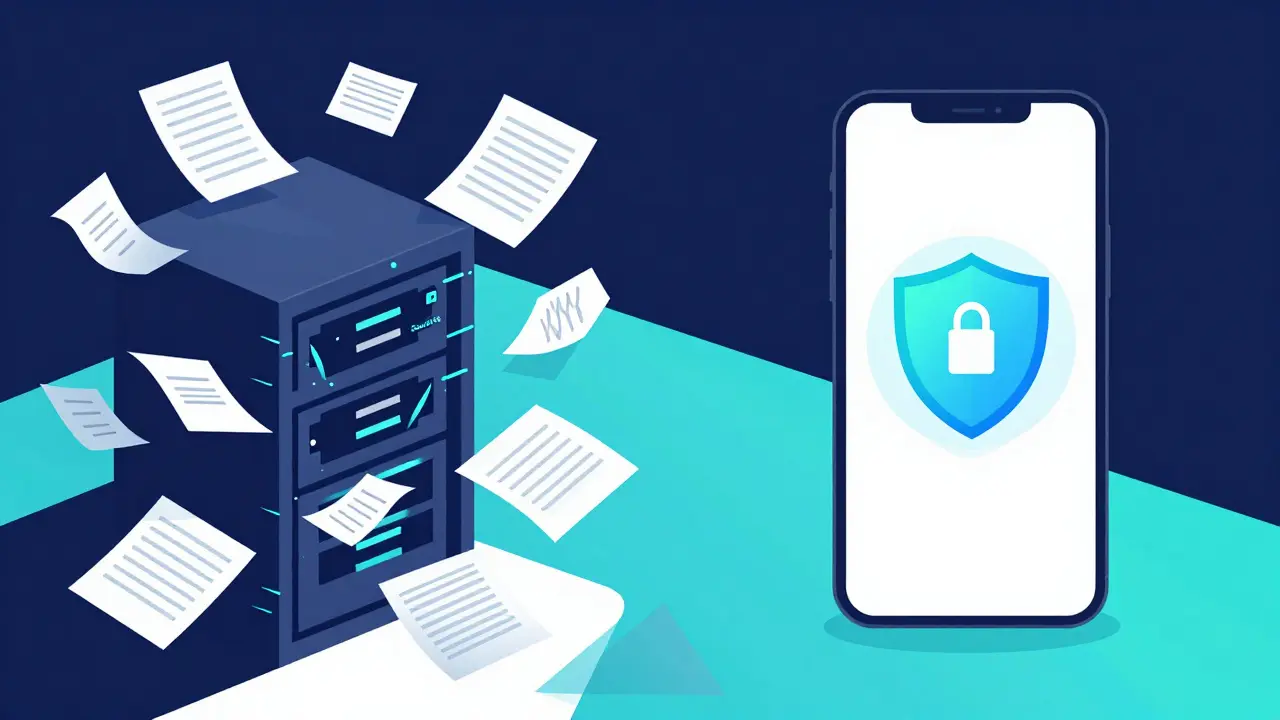
Imagine handing over your driver’s license, passport, and proof of address to every single website you sign up for. Now imagine that one of those websites gets hacked, and suddenly your private data is floating around on the dark web. This is the messy reality of traditional identity verification. It’s slow, it’s insecure, and frankly, it’s annoying. Enter Civic, a platform built to fix this exact problem using blockchain technology.
Civic isn’t just another speculative coin you buy hoping it will moon overnight. It’s a utility tool designed to solve the "Know Your Customer" (KYC) headache that plagues both traditional finance and the cryptocurrency world. If you’ve ever wondered what the CVC token actually does, or if this project is still relevant in 2026, you’re in the right place. We’ll break down how it works, why it matters, and whether it has a place in your digital wallet.
The Core Problem: Why Do We Need Digital Identity?
To understand Civic, you first have to understand the friction in online trust. When you open a bank account or join a crypto exchange, regulations require them to verify who you are. This process is called KYC. Traditionally, this means uploading photos of your ID documents to a central server owned by the company. Here lies the danger: centralized databases are prime targets for hackers. Every time you submit your data, you create a new vulnerability.
Civic changes the model entirely. Instead of storing your data on their servers, Civic stores a cryptographic hash-a unique digital fingerprint-of your verified identity on the blockchain. The actual sensitive data stays on your phone. You control who sees it, and for how long. This shift from centralized storage to decentralized verification is the foundational promise of Web3 identity solutions.
How Civic Works: The Mechanics of Privacy
The magic happens through a combination of mobile apps and distributed ledger technology. Here is the step-by-step flow of how a user interacts with the system:
- Verification: You download the Civic app and upload your government ID. The platform uses AI and human validators to confirm the document is real and matches your face via a liveness check (preventing bots from faking identities).
- Storage: Once verified, your identity credentials are stored securely on your mobile device. No central server holds your raw data.
- Sharing: When a service provider (like a DeFi app or an exchange) needs to verify you, they send a request to your app. You approve it with a biometric signature (fingerprint or FaceID).
- Proof: The blockchain confirms that your identity has been verified without revealing your name, address, or ID number to the requesting party. They only get a "yes/no" confirmation based on the criteria set.
This method ensures compliance with Anti-Money Laundering (AML) laws while preserving user privacy. It’s the difference between showing someone your entire wallet versus just letting them know you have enough cash for the transaction.

The Role of the CVC Token
If the technology is so good, why do we need a token? The CVC token serves as the fuel for this ecosystem. It operates primarily as an ERC-20 token on the Ethereum network, though there have been significant developments regarding its integration with other chains like Solana. Here is how the token adds value:
- Paying for Services: Service providers can use CVC tokens to pay for identity verification services within the Civic network. This creates a seamless payment layer for KYC processes.
- Incentivizing Validators: Human validators who review ID documents earn CVC tokens for their work. This crowdsourced approach helps scale the verification process.
- Governance and Staking: Holders can stake their CVC tokens to participate in governance decisions regarding the protocol’s future. Staking also offers rewards, aligning the interests of investors with the health of the network.
It’s important to note that CVC cannot be mined in the traditional sense. It was issued during an initial coin offering (ICO) in 2017 and has a hard cap of 1 billion tokens. With approximately 670 million tokens in circulation, the supply dynamics are fixed, which influences its market behavior.
Civic Pass and Modern Use Cases
As the crypto landscape evolved, so did Civic’s offerings. One of their most significant products is Civic Pass. This feature allows decentralized applications (dApps) to restrict access to users who meet specific criteria without compromising privacy. For example, a DeFi platform might want to allow only US-based residents due to regulatory constraints. Civic Pass can verify location and citizenship status without exposing the user’s home address.
Other key features include:
- Liveness Checks: Ensuring the person behind the screen is a real human, not a bot or deepfake.
- Watchlist Screening: Checking against global sanctions lists and Politically Exposed Persons (PEP) databases.
- IP Location Checks: Detecting VPN usage to ensure geographic compliance.
These tools make Civic attractive not just to crypto users, but to traditional businesses looking to digitize their customer onboarding securely.

Market Position and Challenges
Despite its innovative tech, Civic hasn’t become the household name some predicted after its 2017 ICO. As of 2026, the CVC token trades at a relatively low price point, reflecting broader market trends and adoption hurdles. The platform faces stiff competition from other identity protocols and the growing complexity of cross-chain interoperability.
A major recent development involves the transition of CVC tokens to the Solana network. While Ethereum remains the base layer for many legacy contracts, moving to Solana offers faster transactions and lower fees. However, this migration introduces uncertainty. Users must ensure their wallets support the new contract addresses, and the burning of Ethereum-based tokens to mint Solana-based ones requires careful attention to avoid losing assets.
Furthermore, widespread adoption depends on partnerships. While Civic integrates with various exchanges and dApps, it lacks the ubiquitous presence of giants like Google or Apple ID. Until more mainstream platforms adopt blockchain-based identity verification, CVC remains a niche player in a larger puzzle.
| Feature | Traditional KYC | Civic (Blockchain) |
|---|---|---|
| Data Storage | Centralized Servers | User’s Mobile Device + Blockchain Hash |
| Privacy | Low (Full data shared) | High (Selective disclosure) |
| Security Risk | High (Single point of failure) | Low (Decentralized) |
| Reusability | No (Repeat per service) | Yes (One-time verification) |
| User Control | None | Full Control via Biometrics |
Is CVC Worth Your Attention?
For investors, CVC represents a bet on the infrastructure of Web3 rather than the hype of meme coins. Its value is tied directly to the adoption of decentralized identity. If governments and corporations begin mandating self-sovereign identity solutions, demand for CVC could rise. However, regulatory ambiguity remains a headwind. Governments are still figuring out how to regulate digital identities, which slows down enterprise adoption.
For users, the benefit is immediate convenience and security. By using Civic, you reduce your exposure to data breaches. The $1 million Cryptocurrency Protection Guarantee offered by Civic adds an extra layer of safety for those who lose access to their wallets due to phone loss or system failures. This insurance-like feature is rare in the crypto space and highlights the platform’s focus on user protection.
Ultimately, Civic solves a real problem with real technology. Whether it becomes the standard for global identity verification depends on its ability to integrate seamlessly into everyday digital life beyond just crypto exchanges. Keep an eye on their partnership announcements and the progress of their Solana migration to gauge future momentum.
Can I mine CVC tokens?
No, you cannot mine CVC tokens. CVC is an ERC-20 utility token that was pre-mined and distributed during an Initial Coin Offering (ICO). There is no Proof-of-Work or mining mechanism associated with the CVC token itself. You can only acquire it by purchasing it on exchanges or earning it through staking rewards and validator incentives within the Civic ecosystem.
Is Civic safe for storing my personal data?
Civic is designed to be safer than traditional methods because it does not store your raw personal data on central servers. Instead, your data remains on your mobile device, and only a cryptographic hash is recorded on the blockchain. This significantly reduces the risk of mass data breaches. Additionally, Civic offers a $1 million protection guarantee for certain scenarios involving lost access to cryptocurrencies.
What is the total supply of CVC?
The total supply of CVC tokens is capped at 1 billion. Approximately 670 million tokens were in circulation as of late 2020, representing about 67% of the total supply. The remaining tokens are allocated for ecosystem growth, team vesting, and other operational needs as defined in their original whitepaper.
Does Civic work on networks other than Ethereum?
While CVC originated as an ERC-20 token on Ethereum, the platform has been expanding its infrastructure. Notably, there is an ongoing transition to support the Solana network to leverage its speed and lower transaction costs. Users should check the official Civic documentation for the latest instructions on managing tokens across these different blockchains.
How do I use Civic Pass?
Civic Pass is used when interacting with decentralized applications (dApps) that require identity verification. When a dApp requests verification, you receive a prompt in the Civic mobile app. You approve the request using your biometric signature (fingerprint or face ID). The dApp then receives a verified credential confirming you meet their criteria (such as age or location) without seeing your actual personal details.
Amit Varpe
May 13, 2026 AT 10:44Indian data sovereignty is non-negotiable for us. If Civic doesn't comply with local laws, it's useless here. 🇮🇳
Kimberly Herbstritt
May 14, 2026 AT 16:35I actually think the whole decentralized identity thing is overhyped and probably won't work as advertised but hey maybe I'm wrong.
Pauline Larocco71
May 16, 2026 AT 12:56I totally get why people are skeptical about this tech. It feels so new and scary to give up control like that. But honestly seeing how many breaches happen lately makes me wonder if we have a choice really. The idea of keeping my ID on my phone instead of some random server sounds way better even if i dont fully understand the blockchain part yet. I just hope they make it easy for normal folks who aren't tech wizards to use without getting confused or losing their stuff by accident.
beti macedo
May 18, 2026 AT 08:53This is an excellent overview of the technology. It is very important to understand the security benefits clearly. I believe this will help many users feel safer in their digital interactions. Thank you for sharing this informative content with everyone here today.
Michelle Bonahoom
May 18, 2026 AT 15:30another crypto scam trying to sell vaporware to gullible masses the token price is trash and always has been stay away from this garbage project unless you want to lose your money fast
Matt Davis
May 19, 2026 AT 09:35You are all completely missing the point! This isn't about convenience; it's about total surveillance capitalism wrapped in pretty blockchain packaging. They want to track every single transaction you make under the guise of 'identity verification.' It is absolutely outrageous that anyone would trust these corporate entities with their biometric data. Wake up sheeple!
Albert Lee
May 20, 2026 AT 00:27Wow, look at all the negativity here! 😩 I really appreciate how detailed this guide is. It helps so much when trying to figure out which projects are legit. Let's try to keep the conversation constructive please! 💪
Ankush Pokarana
May 20, 2026 AT 12:50The philosophical implications of self-sovereign identity are profound indeed. When we decentralize trust we essentially remove the middleman from the social contract itself. This raises questions about accountability and error correction mechanisms in a system where no central authority exists to appeal to. We must consider the long term societal impact of such technological shifts carefully before embracing them wholesale.
Bianca Vilas Boas Lourenço
May 22, 2026 AT 12:25Oh great another boring post about crypto utilities yawn 🙄 I'd rather watch paint dry than read about KYC processes again. Can we talk about something fun for once? 👀
Yash Lodha
May 24, 2026 AT 07:39The deep state wants you to believe this is safe. They are building a global database using these 'decentralized' systems. Notice how they push for universal adoption? It is a trap. Your biometric data will be used against you eventually. Do not fall for their propaganda.
Jesse Alston
May 24, 2026 AT 08:21Hey guys! 👋 Just wanted to add that if you're using Civic, make sure you double-check the contract addresses especially with the Solana migration mentioned. It's super easy to send tokens to the wrong place by mistake. Stay safe out there! 🔒
Sarah C
May 25, 2026 AT 23:05I agree with the points made here. It seems like a solid step forward for privacy. I've been looking into similar solutions and this looks promising.
Sharada Vakkund
May 27, 2026 AT 20:25Let's welcome everyone to this discussion! Whether you are bullish or bearish on Civic, your perspective matters. How do you think this will impact everyday users in developing countries specifically?
Sudarshan Anbazhagan
May 29, 2026 AT 10:15It is imperative that one understands the fundamental mechanics of cryptographic hashing before dismissing this technology as mere speculation. The security model relies heavily on the integrity of the user's device which introduces a new vector for vulnerability that is often overlooked by casual observers who fail to grasp the complexity of the underlying architecture.
Bronwen Butler
May 30, 2026 AT 03:40everyone is just repeating what the article says without adding anything new honestly