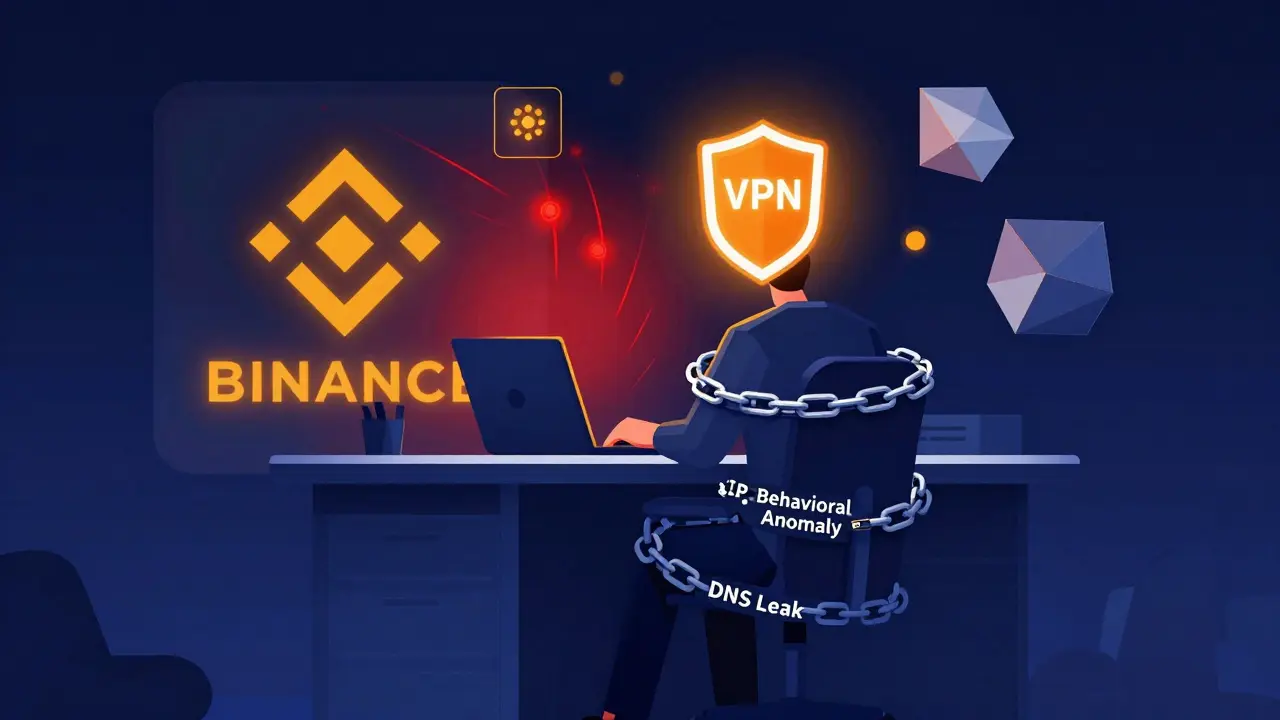
Every day, thousands of crypto traders try to access their exchanges using a VPN. Some do it to bypass regional restrictions. Others want to hide their IP from hackers or avoid surveillance. But here’s the hard truth: VPNs for crypto exchange access are being caught more often than you think. Reports from major exchanges and security firms show detection rates between 70% and 80% - especially for free or low-end services. If you’re using a VPN to trade crypto, you’re not just risking a blocked account. You might be triggering a full investigation.
How Exchanges Know You’re Using a VPN
Crypto exchanges don’t guess. They have systems built to catch masked traffic. These aren’t simple blacklists. They’re smart, layered tools that look at dozens of signals at once. First, they check IP addresses. Every VPN service uses a pool of servers - and those IPs are already known to exchanges. Binance, Coinbase, Kraken, and others maintain massive databases of IP ranges tied to NordVPN, ExpressVPN, ProtonVPN, and even obscure free services. If your login comes from an IP flagged as a known VPN node, the system flags it immediately. Then comes behavioral analysis. Exchanges track how you use the platform. Do you log in from London at 9 AM, then New York at 9:05 AM? That’s impossible unless you’re teleporting - or using a VPN. If your trading pattern suddenly changes - like placing 20 orders in 30 seconds from a new location - the system assumes automation or fraud. They also check for leaks. Even if your VPN is turned on, your browser might still expose your real IP through WebRTC, DNS leaks, or cookies. Many users don’t realize their browser is leaking location data. Exchanges use this to cross-check what your VPN claims. Machine learning plays a big role too. Platforms like Chainalysis train algorithms to spot anomalies in traffic patterns. A user who logs in from the same city every day, then suddenly switches servers every 15 minutes? That’s a red flag. The system doesn’t need to know you’re using a VPN - it just knows something’s off.Free VPNs Are the Worst Choice for Crypto
If you’re using a free VPN like Hola, Windscribe (free tier), or any service that says “unlimited data for $0,” you’re almost guaranteed to get caught. Why? Because these services rely on shared IPs - thousands of users share the same server address. That means every time someone else on that server does something shady - like sending stolen crypto - the whole IP gets blacklisted. Free VPNs also have poor security. Many sell user data to advertisers. Some have malware built in. A 2025 study by Security.org found that 42% of free VPN apps contained tracking code or hidden mining scripts. If you’re using one to access your crypto exchange, you’re not hiding from the exchange - you’re inviting hackers to your wallet. Even if you don’t get blocked, your account might be flagged for manual review. That means delayed withdrawals, extra KYC checks, or frozen funds while they verify your identity. For active traders, that’s a nightmare.Premium VPNs Work Better - But Not Perfectly
Not all VPNs are created equal. Services like NordVPN and ExpressVPN have built features specifically for crypto traders. NordVPN offers dedicated IP addresses - meaning you get an IP that only you use. This avoids the shared-IP problem. They also accept Bitcoin, Ethereum, and other cryptos for payment, so your billing info doesn’t link back to your real identity. Their servers run on RAM-only systems in Panama, which means no data is ever stored on disk. Even if someone breaks in, there’s nothing to find. ExpressVPN works similarly, with servers in 94 countries and a strict no-logs policy based in the British Virgin Islands. They also accept Bitcoin only for payments, which helps maintain anonymity. But here’s the catch: even these top-tier services aren’t foolproof. Exchanges are constantly updating their detection lists. A server that worked last month might be blocked today. If you switch locations too often - say, from Singapore to Germany to Brazil within an hour - you’ll trigger behavioral alarms. The best practice? Pick one server in a stable jurisdiction and stick with it. Don’t hop around. Don’t use it for anything else. Use it only for trading. Treat it like a secure tunnel - not a general privacy tool.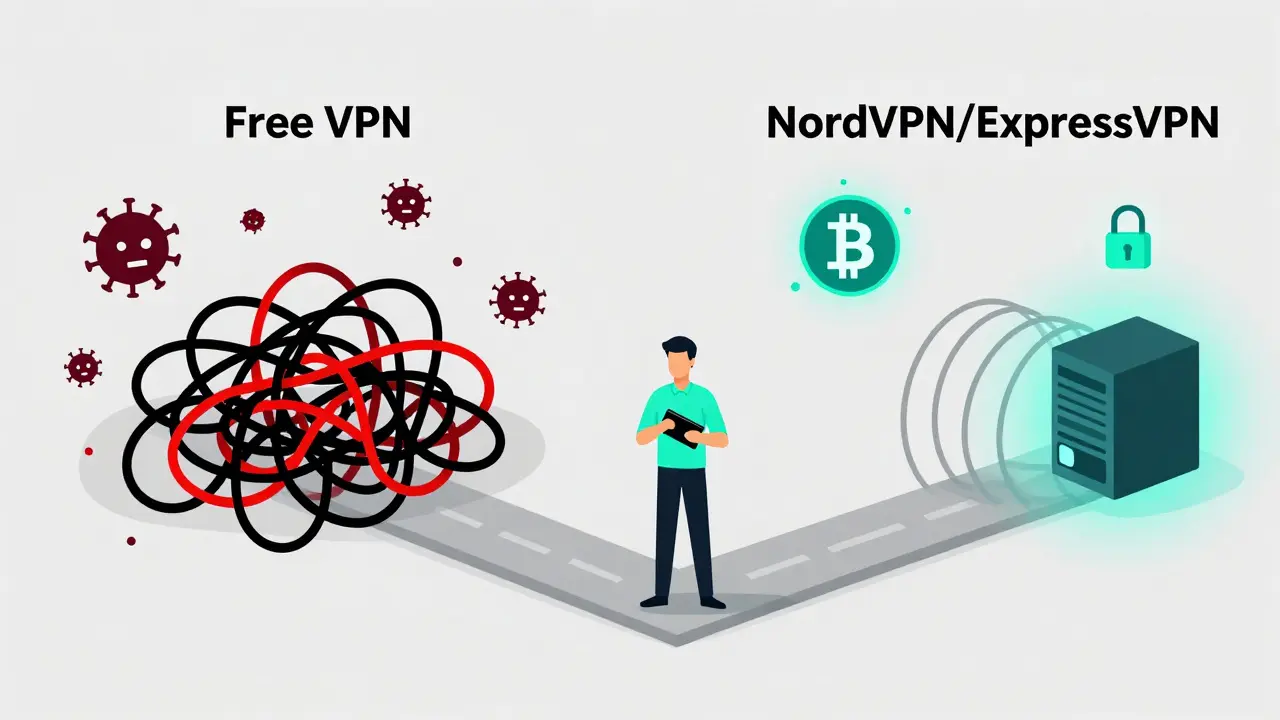
Why Exchanges Are So Aggressive About VPNs
You might think exchanges are just being controlling. But there’s a legal reason. Most major exchanges are licensed by financial regulators in the U.S., EU, UK, or Singapore. These regulators require them to know exactly where their users are. This is called KYC (Know Your Customer) and AML (Anti-Money Laundering). If a user in Russia accesses Binance through a VPN to bypass sanctions, the exchange could face fines up to $100 million. That’s why they don’t just block VPNs - they sometimes freeze accounts and demand proof of residence. Even if you’re not breaking any laws, using a VPN makes you look suspicious. And in finance, suspicion equals risk. Some exchanges have started tiered systems. If you use a VPN, you might still trade - but your withdrawal limit drops from $100,000 to $5,000. Or you’re forced to complete extra ID verification. It’s not a full ban - but it’s a penalty.What Happens When You Get Caught
Getting flagged isn’t always instant. Sometimes you’ll notice small things first:- Your withdrawal request takes 3-5 days instead of 24 hours
- You get an email asking for a selfie with your ID and a handwritten note
- Your trading volume suddenly gets capped
- You’re locked out of the app and forced to use web login
Alternatives to VPNs - And Why They’re Riskier
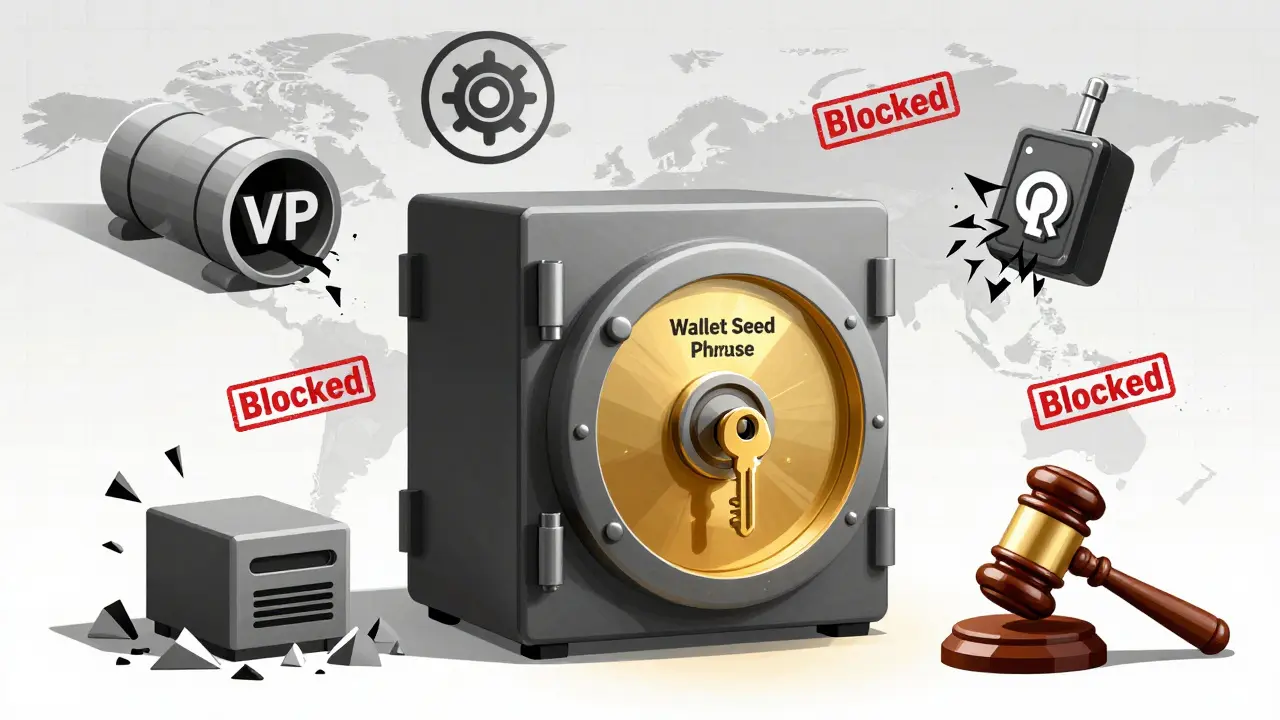
Some users try alternatives: residential proxies, Tor, or GPS spoofing on mobile. Residential proxies give you an IP from a real home internet connection. They’re harder to detect - but they cost $50-$200/month. And most are unregulated. You don’t know who owns the IP. It could be a compromised device in someone’s home. If that person did something illegal, you get blamed. Tor is slow, clunky, and blocks most crypto exchanges outright. You’ll see “Access Denied” messages constantly. GPS spoofing on Android or iOS? That works for apps - but not for web-based exchanges. And if you’re caught spoofing location on a regulated exchange, you’re looking at a permanent ban. There’s no magic solution. If you want privacy and access, you have to pick your trade-offs.What You Should Do Instead
If you’re in a country where crypto exchanges are restricted, here’s what actually works:- Use a regulated exchange that operates in your region - even if it has fewer coins. It’s safer.
- If you’re traveling, use your real location. Don’t try to bypass local laws.
- If you need privacy, use a hardware wallet. That’s where your real security lies - not in hiding your IP.
- If you must use a VPN, pick NordVPN or ExpressVPN, pay with crypto, and use one server only.
- Never use free services. Ever.
Final Reality Check
The 70-80% detection rate isn’t a myth. It’s the result of years of technical upgrades, regulatory pressure, and smart algorithms. Exchanges aren’t trying to ruin your privacy - they’re trying to avoid fines, lawsuits, and shutdowns. If you’re using a VPN to access crypto exchanges, you’re playing a high-stakes game. And the house always wins. The real question isn’t whether you can beat detection. It’s whether you need to. For most traders, the risks - frozen funds, extra verification, permanent bans - outweigh the benefits. The best way to stay safe? Trade legally. Secure your keys. And leave the VPNs for browsing, not trading.Can I use a free VPN to access crypto exchanges?
No. Free VPNs are almost always detected because they use shared, blacklisted IP addresses. They also often contain malware or sell your data. Using one puts your crypto at risk - not just your account access.
Which VPNs work best for crypto exchanges in 2025?
NordVPN and ExpressVPN are the top choices. Both offer dedicated IPs, accept crypto payments, and operate under strict no-logs policies in privacy-friendly jurisdictions. They’re expensive - but they’re the only ones that reduce detection risk.
Why do exchanges block VPNs if they’re legal?
Exchanges aren’t blocking VPNs because they’re illegal - they’re blocking them because regulators require them to know where users are. If they can’t verify your location, they risk massive fines under AML and KYC laws.
Will I get banned if I use a VPN once?
Not necessarily. Many users get flagged and asked for extra verification instead of being banned. But if you switch locations often or use a known free VPN, your chances of a permanent ban rise sharply.
Is it safer to use a VPN or not?
For privacy from hackers, yes - a good VPN helps. For access to exchanges, no. The risk of account restrictions outweighs the privacy benefit. Focus on securing your wallet with a hardware device and strong passwords instead.
Zavier McGuire
December 25, 2025 AT 11:10Why even bother with a VPN for crypto? Just use a hardware wallet and stop trying to outsmart the system. You’re not a hacker, you’re just paranoid.
roxanne nott
December 25, 2025 AT 11:27lol free vpns are for people who think their ip is their biggest problem. you’re getting hacked because you reuse passwords and click phishing links, not because you didn’t pay $10/mo for a server in panama.
Dusty Rogers
December 26, 2025 AT 07:45So many people treat crypto like a video game where they can cheat with proxies. Real traders secure their keys, not their IPs. You don’t need to hide-you need to be smart.
Rachel McDonald
December 26, 2025 AT 14:10OMG I got flagged last week 😭 they asked for my utility bill and I cried for 3 hours. I just wanted to trade from my couch in Bali 🥲
Helen Pieracacos
December 28, 2025 AT 02:40Oh so now it’s illegal to want privacy? Next they’ll ban encryption and call it ‘financial compliance’.
Ashley Lewis
December 28, 2025 AT 21:34The assertion that 70–80% detection rates are ‘real’ lacks empirical citation. Without peer-reviewed methodology or audit logs from exchanges, this is merely speculative rhetoric masquerading as technical authority.
Sophia Wade
December 30, 2025 AT 04:50There’s a profound irony in how we fetishize anonymity in digital finance while surrendering our identities to centralized institutions that demand KYC. The real question isn’t whether you can bypass detection-it’s whether you should participate in a system that demands it at all.
Vijay n
December 31, 2025 AT 18:13Amit Kumar
January 1, 2026 AT 03:31Bro in India we use VPNs because Binance got blocked by RBI. You think I wanna risk my life savings on a local exchange that charges 5% fees and takes 7 days to process withdrawals? I use NordVPN, pay in BTC, and stick to one server. It works. Stop preaching from your Silicon Valley bubble.
Collin Crawford
January 1, 2026 AT 05:40There is a fundamental flaw in your analysis. You assume detection equals intent. But behavioral anomalies can arise from legitimate user behavior-roaming, dynamic IPs, corporate networks. The system conflates correlation with causation. This is algorithmic overreach dressed as security.
Dustin Bright
January 2, 2026 AT 00:33my buddy used a free vpn and got his account frozen… then he realized his wallet had been drained. turns out the vpn had a keylogger 😭 i told him to just use a ledger and stop being lazy
Megan O'Brien
January 3, 2026 AT 12:46Exchanges are just using VPN detection as a pretext to enforce geo-restrictions and lock users into their walled gardens. It’s not about compliance-it’s about market control.
Steve B
January 5, 2026 AT 03:33The regulatory pressure argument is valid, but the moral high ground claimed by exchanges is hypocritical. They profit from speculative trading while denying access to those who need it most. This is financial colonialism.
Sybille Wernheim
January 6, 2026 AT 15:26Hey! I just started trading last month and was so scared of getting flagged… but I followed the advice: NordVPN, paid in ETH, one server in Singapore. No issues so far! 💪 You can do it too-just be consistent!
Mmathapelo Ndlovu
January 7, 2026 AT 03:09I live in South Africa and I use a VPN because local exchanges don’t even offer ETH. Is it wrong to want access to the global market? I’m not laundering money-I’m trying to build wealth. Why is that a crime?
Sarah Glaser
January 9, 2026 AT 00:55The notion that privacy is inherently suspect in financial systems reflects a deeper societal shift: we have normalized surveillance as security. The real vulnerability is not the VPN-it is our collective surrender of autonomy to institutional authority. The wallet’s seed phrase is sacred, yes-but so is the right to financial discretion.
Brian Martitsch
January 9, 2026 AT 10:18Only uneducated noobs use free VPNs. If you’re not paying $12/month for a dedicated IP with crypto payment, you’re already losing. End of story. 🤡
Rishav Ranjan
January 10, 2026 AT 18:37VPN? Just use a proxy.
Earlene Dollie
January 12, 2026 AT 17:16I used to think VPNs were the answer… until I lost $12k because my ‘secure’ server got blacklisted. Now I just trade on Kraken from my home. My peace of mind is worth more than the 3 coins I was missing.
Kevin Karpiak
January 13, 2026 AT 18:49Why are we even talking about this? Americans are the only ones who think they deserve global access. If you’re in a country that bans crypto, tough. Adapt. Don’t hack the system. That’s not freedom-that’s entitlement.