Nepal Remittance Fee Calculator
How Much Does Remittance Cost?
Compare traditional bank transfers versus cryptocurrency transactions for sending money to Nepal. Based on article data about remittance costs.
Traditional Remittance
Crypto Remittance
Based on article data: Crypto typically costs less than 1% for remittances to Nepal
⚠️ Important Note: Crypto remittances in Nepal are illegal under current law (2025). This calculator shows potential savings based on industry data. Government enforcement focuses on large operations, but small traders still face risks of account freezes, fines, and legal action.
Despite a total ban since 2017, cryptocurrency trading in Nepal hasn’t disappeared-it’s just gone deeper. You won’t find crypto exchanges listed on Google, but you’ll find people buying Bitcoin in back alleys, settling payments through eSewa, and using Telegram to coordinate trades. The government calls it illegal. The police have made arrests. Banks have been ordered to freeze accounts. And yet, billions of rupees keep moving through hidden channels. Why? Because for many Nepalis, crypto isn’t a gamble-it’s the only way to send money home, invest abroad, or escape a broken financial system.
How the Ban Actually Works
The Nepal Rastra Bank (NRB) didn’t just discourage crypto. It outlawed it entirely. In 2017, the central bank issued a circular that made it illegal to buy, sell, mine, or even hold Bitcoin or any other digital currency. Violators face fines, asset seizures, and jail time under the Foreign Exchange Regulation Act and the Cybercrime Act. By 2021, the Nepal Telecommunication Authority blocked over 200 crypto-related websites, including Binance, Coinbase, and Kraken. In 2025, the rules got even tighter: using a VPN to access these sites is now a punishable offense. So is promoting crypto on social media or accepting it as payment-even if you’re just selling a used phone. The government’s logic is simple: crypto threatens monetary control. If people can send money out of Nepal without going through banks, the NRB loses visibility. If people start using Bitcoin instead of the Nepali rupee, inflation control becomes harder. So they shut it down. Hard.How People Still Trade
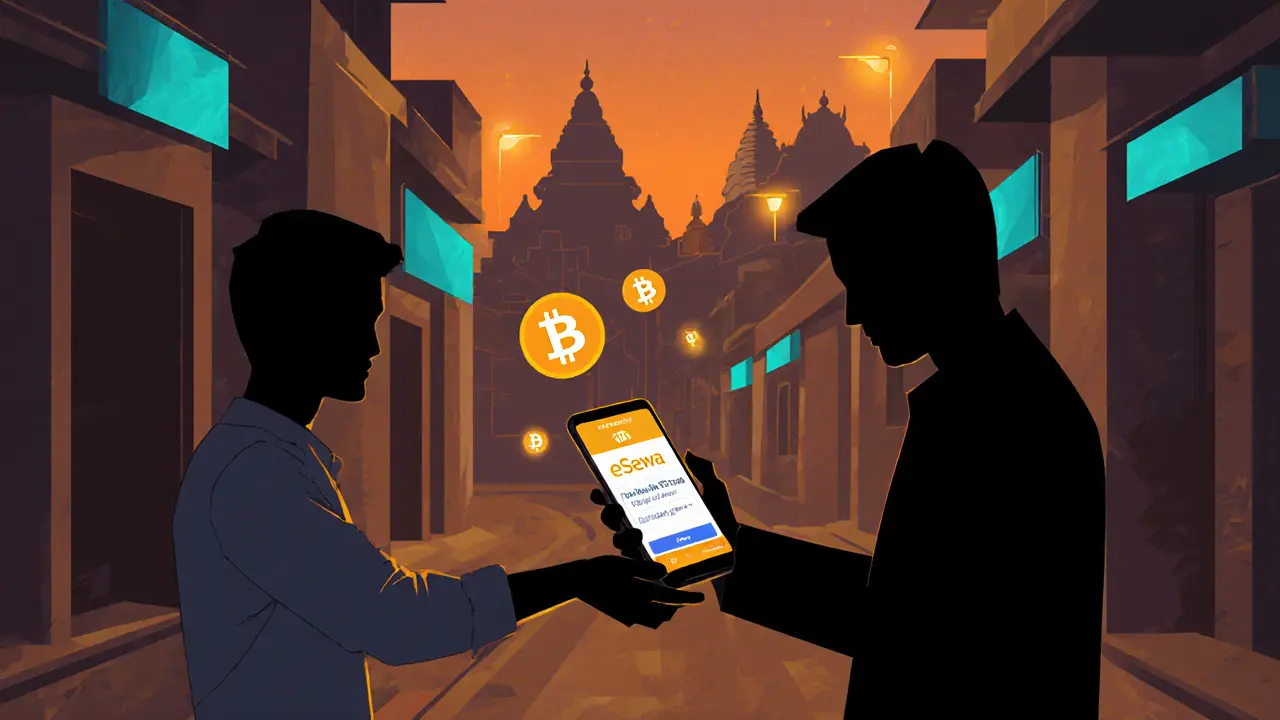
If you’re trying to buy Bitcoin in Nepal, you won’t find a website. You’ll find a person. That person might be a student in Kathmandu, a shopkeeper in Pokhara, or a Nepali worker in Qatar sending money home. Here’s how it actually works:- P2P trading through eSewa and IME Pay: Traders use peer-to-peer platforms like Binance P2P, but they don’t log in directly. They use a friend’s account or a middleman who handles the transaction. Buyers pay via eSewa or IME Pay-digital wallets that are harder to trace than bank transfers. The seller then sends Bitcoin to a private wallet, often held overseas.
- VPN networks are everywhere: Most serious traders use VPNs to bypass website blocks. The government knows this, but blocking every VPN provider is impossible. Thousands of Nepalis use ExpressVPN, NordVPN, or free alternatives like ProtonVPN just to access crypto sites. The NRB has started monitoring traffic patterns, but many users rotate servers daily.
- Telegram and WhatsApp are the new stock exchanges: There are dozens of encrypted groups where traders post rates, confirm payments, and share wallet addresses. One group in Lalitpur has over 1,200 members. They don’t post screenshots of transactions. They use coded language: “2000 today” means 2,000 rupees for 0.0005 BTC. “Check the bag” means the Bitcoin has been sent.
- Money changers turned crypto brokers: In areas like New Baneshwor and Thamel, traditional money changers now offer crypto services. They’ll take your cash, send it to an Indian or Thai contact, and deliver Bitcoin to your wallet. They charge 3-5% fees-higher than exchanges, but lower than wire transfers.

Who’s Doing It-and Why
It’s not just tech nerds. The underground crypto market in Nepal includes:- Overseas workers: Over 3 million Nepalis work abroad, mostly in India, Malaysia, and the Gulf. Sending money home through banks takes days and costs up to 10%. Crypto lets them send funds in minutes for less than 1%.
- Young investors: With inflation at 7% and bank interest rates below 5%, many young people see crypto as the only way to grow savings. A 2024 survey by a Kathmandu university found 38% of students under 25 had tried crypto trading.
- Small business owners: Some importers use crypto to pay suppliers in China or Turkey, avoiding currency controls and bank delays.
The Risks Are Real
This isn’t a game. People get caught. In July 2025, two Indian nationals were arrested in Lalitpur after running a crypto operation worth Rs 1.5 billion under the guise of a grocery store. Police seized cash, CCTV footage, and transaction logs. They were charged under Nepal’s Criminal Code for illegal hundi transactions and unauthorized use of virtual currency. In 2022, a 24-year-old from Birgunj was jailed for six months after police traced his crypto purchases through his eSewa history. His phone was seized. His bank account frozen. His family paid a fine to get him out. Even if you’re careful, the risk isn’t just legal-it’s financial. Scams are rampant. Someone might take your money and vanish. Or you might send Bitcoin to the wrong wallet and lose it forever. There’s no customer support. No chargebacks. No recourse.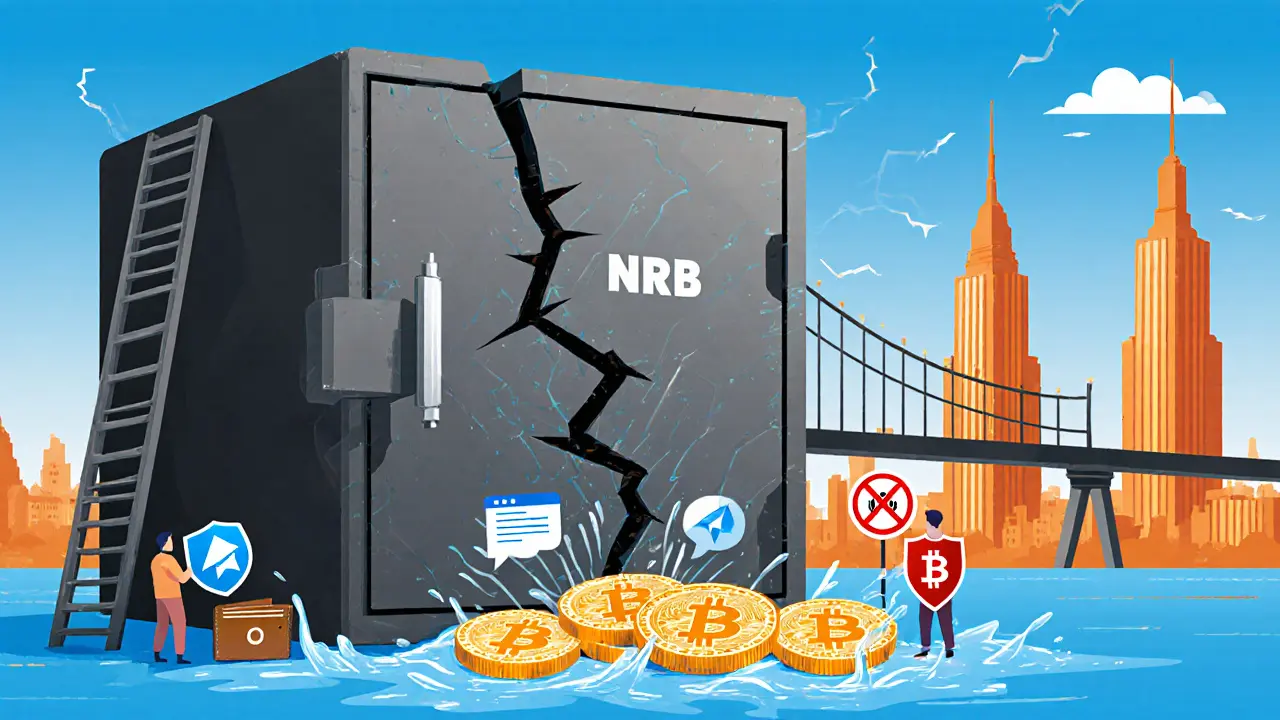
Becky Shea Cafouros
November 15, 2025 AT 06:12So let me get this straight - the government bans crypto, but people just use eSewa and Telegram like it’s a grocery list? That’s not resistance, that’s just how humans work when bureaucracy gets stupid.
sandeep honey
November 15, 2025 AT 20:35India’s doing a sandbox, Bhutan’s testing blockchain, and Nepal’s still treating Bitcoin like a drug? This isn’t regulation - it’s denial with a police badge. The real crime is the lack of vision.
Byron Kelleher
November 17, 2025 AT 17:18I’ve seen this play out in other countries. When you ban something people actually need, you don’t stop it - you just make it dangerous. These traders aren’t criminals. They’re just trying to survive a broken system.
Cherbey Gift
November 19, 2025 AT 06:52Imagine being so afraid of money moving freely that you’d jail a kid for using his mom’s eSewa to buy Bitcoin. The state’s scared of autonomy. Not fraud. Not scams. Just people deciding for themselves. That’s the real threat - freedom.
Mandy Hunt
November 19, 2025 AT 08:22They’re using VPNs and Telegram? That’s the government’s fault. They didn’t ban crypto because it’s dangerous - they banned it because they’re scared of losing control. And now they’re spying on keywords. Like a 1984 nightmare with Nepali tea
David Cameron
November 19, 2025 AT 09:30It’s funny how we call it 'underground' like it’s a secret society. It’s not. It’s just capitalism with a middle finger to bureaucracy. The system failed them. So they built a better one - in the dark. That’s not rebellion. That’s adaptation.
anthony silva
November 20, 2025 AT 23:08So the government blocks websites, bans VPNs, arrests people… and yet the market grows? That’s not a failure of enforcement. That’s a failure of logic. Congrats, NRB - you turned Bitcoin into a cult.
Anthony Forsythe
November 22, 2025 AT 00:12Think about it - the entire financial system in Nepal is a monument to inertia. Banks take days to transfer money. Fees eat your remittances. Inflation eats your savings. And now you want to punish the only thing that gives people agency? This isn’t about currency control. It’s about power. And power doesn’t like being questioned. Especially by a 19-year-old in Pokhara with a phone and a dream.
Hannah Kleyn
November 22, 2025 AT 08:49I wonder how many of these traders are women. I’ve heard stories from Kathmandu - mothers using eSewa to send money to their sons working in Qatar. They don’t know what blockchain is. They just know it works. And that’s the real story here.
Vanshika Bahiya
November 22, 2025 AT 16:55For anyone thinking this is just tech bros - nope. My cousin in Birgunj used crypto to pay his supplier in Turkey. Saved him 8% on fees. He doesn’t even know what a wallet is. He just taps eSewa, gets a code, and sends it. That’s the future - simple, fast, invisible to the system. The ban is just noise.
Kandice Dondona
November 24, 2025 AT 09:58People are risking jail just to send money home… and we’re still talking about legality? 😔 This isn’t crypto. This is love. This is survival. This is what happens when institutions forget their purpose. 💪❤️
gary buena
November 25, 2025 AT 15:09They arrested someone for using a VPN? Bro. That’s like arresting someone for using a flashlight in a dark room. The government’s not fighting crypto - they’re fighting the internet. And they’re losing. Badly.
Drew Monrad
November 27, 2025 AT 05:46OH MY GOD. I just read this and I’m crying. Not because of the tech. Not because of the politics. But because of the mother in Qatar sending her last Rs 50,000 to her daughter in Kathmandu using a coded Telegram message. That’s not trading. That’s a lifeline. And they’re calling it a crime? I’m sick. I’m furious. This is the most beautiful, terrifying thing I’ve ever seen.
ratheesh chandran
November 28, 2025 AT 22:29how can u ban bitcoin when u cant even stop people from using phones?? the nrb is like a man tryna stop the ocean with a broom. they dont get it. its not about money. its about trust. people trust crypto more than their own banks. and that scares them. not the tech. the truth.
Cody Leach
November 29, 2025 AT 07:11There’s a reason this works. Because it’s human. No forms. No delays. No bureaucracy. Just trust between two people with a phone. The government doesn’t need to ban crypto. They need to fix the system that made crypto necessary.