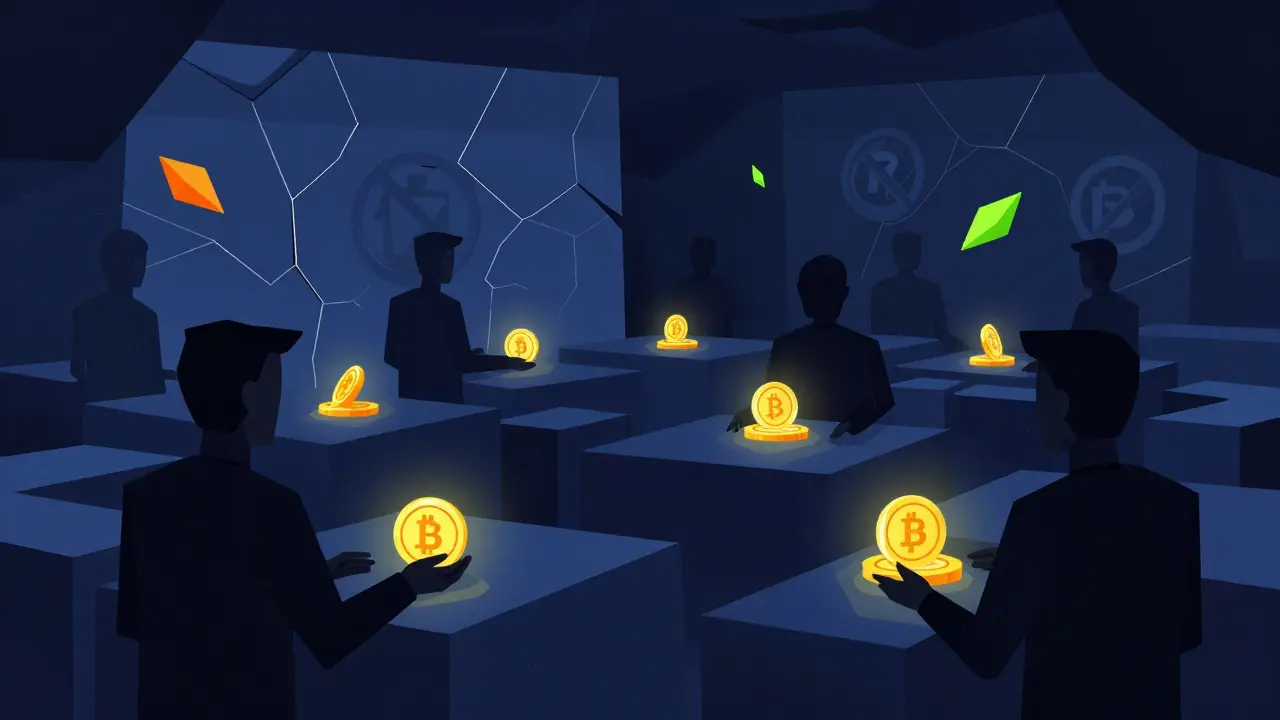
When a government says "you cannot own Bitcoin," people don't just stop wanting it. They find another way. This is the birth of an underground crypto market premium. In countries where digital assets are illegal or heavily restricted, the price you pay to buy or sell cryptocurrency isn't determined by global supply and demand alone. It includes a hefty markup for risk, secrecy, and scarcity. As of mid-2026, this shadow economy is growing more sophisticated, driven by aggressive bans in nations like China and Afghanistan, and strict enforcement in emerging markets.
If you’ve ever tried to send money across borders in a restrictive regime, you know that convenience has a cost. But when the activity itself is criminalized, that cost skyrockets. The "premium" is the difference between the official exchange rate (like Bitcoin trading at $65,000 on Coinbase) and what someone in a banned jurisdiction actually pays to get those same coins into their wallet. Sometimes, that gap is small. Other times, it’s massive. Understanding why-and how-these premiums form helps explain the resilience of crypto despite some of the world’s harshest laws.
The Economics of Illicit Demand
To understand underground premiums, you have to look at basic economics. When legal supply is cut off, but demand remains constant-or even grows-the price goes up. But in crypto, it’s not just about scarcity. It’s about risk.
In a banned jurisdiction, buying crypto involves three main costs that legitimate traders never face:
- Risk Premium: Sellers charge extra because they could be arrested, fined, or have their assets seized if caught facilitating the trade.
- Liquidity Penalty: Underground markets lack deep order books. You might not find a buyer or seller quickly, so prices fluctuate wildly based on who’s desperate enough to trade right now.
- Operational Costs: Using peer-to-peer (P2P) networks, decentralized exchanges (DEXs), or privacy coins requires technical skill and often higher fees to avoid detection.
For example, in Afghanistan, under Taliban rule since 2022, all crypto activities are banned as "haram" under Sharia law. The Da Afghanistan Bank and FinTRACA actively shut down exchanges and confiscate funds. Yet, demand persists among merchants needing to bypass currency controls and individuals seeking to preserve wealth against inflation. Because finding a trustworthy counterparty is dangerous, sellers add a significant margin to cover the threat of imprisonment. While exact data is hard to pin down due to the covert nature of these trades, analysts estimate premiums can range from 10% to over 30% above global averages during periods of tight enforcement.
China’s Total Ban and the Digital Yuan Shift
No country illustrates the impact of total prohibition better than China. On May 30, 2025, Beijing passed sweeping legislation that didn’t just ban mining and trading-it criminalized personal ownership of cryptocurrencies like Bitcoin and Ethereum. The state is betting everything on its Central Bank Digital Currency (CBDC), the digital yuan, which offers full transparency to authorities.
This move created a perfect storm for underground premiums. With no legal avenue to hold private keys, anyone wanting true financial sovereignty had to go dark. Here’s how the market adapted:
- Shift to OTC Desks: Large holders moved transactions to over-the-counter (OTC) desks operating outside the formal banking system, using cash or cross-border wire transfers disguised as trade payments.
- Rise of Privacy Coins: Assets like Monero and Zcash saw increased interest because their transaction histories aren’t publicly visible on blockchains, making them harder for Chinese regulators to trace.
- Premium Volatility: During crackdowns, premiums spiked. When enforcement relaxed slightly, they dipped. This volatility makes holding crypto in China expensive-not just financially, but mentally.
While specific premium percentages remain elusive due to the secretive nature of these deals, industry observers note that acquiring Bitcoin in China post-2025 often costs significantly more than buying it in Europe or North America. The extra cost reflects the danger involved in moving value without triggering alerts from the People’s Bank of China.
Emerging Markets: Compliance vs. Criminalization
Not every ban is absolute. In many emerging markets, the line between "restricted" and "illegal" blurs, creating complex underground ecosystems. Take Egypt, which imposed a blanket ban on crypto trading. In 2025, Egyptian authorities arrested 112 individuals for violating anti-crypto regulations. Despite this, usage continues. Why? Because the local currency faces pressure, and citizens seek alternatives.
In such environments, premiums emerge differently than in totalitarian states. Instead of pure fear-based markups, we see compliance-driven inefficiencies. For instance:
- Nigeria: The Economic and Financial Crimes Commission (EFCC) seized $38 million in crypto assets linked to cybercrime in 2024-a 27% increase from the previous year. While Nigeria doesn’t fully ban crypto, heavy scrutiny pushes users toward informal P2P networks where premiums reflect trust deficits rather than outright illegality.
- India: The Financial Intelligence Unit (FIU) fined non-compliant platforms $9.5 million in 2024. These fines raise operational costs for exchanges, which may pass some expenses onto users via wider spreads, effectively acting as a soft premium.
- South Africa: Suspending licenses for 12 firms in 2025 for AML failures forced some traders underground temporarily, causing short-term spikes in local P2P rates before regulated options stabilized.
The key takeaway? Even partial restrictions create friction. And friction always has a price tag.
Technology Enables the Shadow Market
You can’t talk about underground premiums without discussing the tools that make them possible. Technology lowers barriers to entry while raising the stakes for both buyers and sellers.
| Technology | Impact on Premiums | Risk Factor |
|---|---|---|
| Decentralized Exchanges (DEXs) | Reduces reliance on centralized intermediaries; allows direct swaps. | Smart contract vulnerabilities; impermanent loss. |
| Peer-to-Peer (P2P) Platforms | Enables local currency trades with escrow services. | Fraud risk; platform bans in restricted regions. |
| Privacy Coins (e.g., Monero) | Commands higher premiums due to anonymity features. | Banned on most major exchanges; limited liquidity. |
| Cross-Border Stablecoins | Facilitates value transfer without traditional banks. | Regulatory crackdowns on stablecoin issuers. |
Consider Monero. Unlike Bitcoin, whose ledger is public, Monero obscures sender, receiver, and amount. In banned jurisdictions, this feature is priceless. Consequently, Monero often trades at a premium relative to its global average because fewer people are willing to sell it openly, and those who do demand compensation for the heightened suspicion it attracts from authorities.
Meanwhile, DEXs allow users to swap tokens without ever depositing funds into a company-controlled account. This reduces counterparty risk but introduces new challenges: slippage. If you’re trying to move a large amount through a shallow pool, your execution price will be worse than the displayed rate. That slippage acts as an implicit premium.
Enforcement Intensity Dictates Price Gaps
Here’s a crucial insight: the size of the underground premium correlates directly with enforcement intensity. Countries with sophisticated surveillance systems tend to have larger gaps between official and black-market prices.
Think about it. If you live in a place where police routinely monitor bank accounts and blockchain explorers flag suspicious wallets, selling crypto becomes a high-stakes game. Sellers factor this danger into their asking price. Conversely, in regions with weak enforcement or widespread corruption, premiums stay lower because the actual risk of getting caught is minimal-even if the law says otherwise.
Egypt serves as a good case study. Arrests happen, yes-but they’re sporadic. Most everyday transactions occur quietly through trusted networks. As a result, premiums there hover closer to normal levels compared to places like Afghanistan, where the penalty for possession can mean severe physical harm.
On the other end of the spectrum sits China. With advanced AI-driven monitoring of financial flows and strict capital controls, any attempt to move crypto off-shore triggers red flags. Hence, the premium there reflects not just inconvenience, but existential threat.
Global Regulatory Patchwork Creates Arbitrage Opportunities
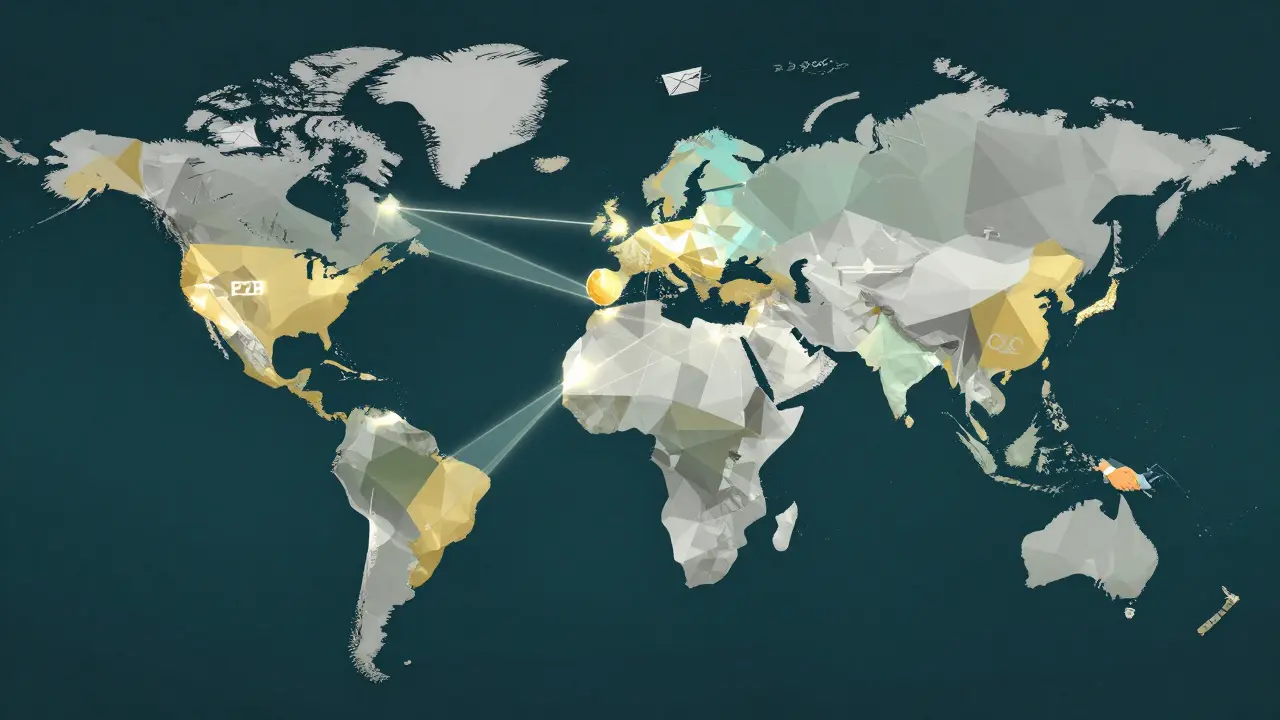
As of June 2025, the Financial Action Task Force (FATF) reported that 99 jurisdictions had passed or were drafting crypto-related laws. This fragmentation creates arbitrage opportunities for savvy actors.
Imagine you’re in Egypt. You want to buy Bitcoin. Instead of dealing with risky local contacts, you might partner with someone in Turkey or Dubai, where regulations are looser. They buy BTC legally, then transfer it to you via a mix of crypto and fiat channels. Each step adds cost, but also safety. The final price you pay includes:
- The base market rate
- Transfer fees
- Counterparty markup
- A "geographic risk" buffer
This layered approach explains why premiums aren’t uniform globally. They depend on proximity to friendly jurisdictions, availability of correspondent banking relationships, and the sophistication of local underground networks.
Moreover, as more countries adopt Virtual Asset Service Provider (VASP) registration rules-83% of emerging markets did so by 2025-compliance costs rise. Legitimate players absorb some of these costs, but others exit entirely, leaving vacuum spaces filled by unregulated operators charging steeper premiums.
What Does This Mean for Users?
If you’re living in or traveling through a banned jurisdiction, understanding underground premiums isn’t academic-it’s practical. Ignoring them leads to bad decisions. Paying too much hurts your purchasing power. Underestimating risks puts you in jail.
Here’s what experienced users do:
- Compare Multiple Sources: Don’t rely on one P2P platform. Check several to gauge fair value.
- Use Escrow Wisely: Never release payment until you confirm receipt of funds. Trust no one blindly.
- Diversify Entry Points: Combine different methods-some cash, some crypto, some gift cards-to reduce exposure to any single point of failure.
- Stay Informed on Enforcement Trends: Premiums spike during crackdowns. Timing matters.
Remember, the goal isn’t to exploit loopholes. It’s to navigate reality safely. Underground markets exist because people need freedom. Your job is to access that freedom without paying unnecessary penalties.
Why do crypto premiums exist in banned countries?
Premiums exist because legal supply is blocked, forcing users into risky, inefficient channels. Sellers charge extra to compensate for arrest risk, asset seizure, and low liquidity. Think of it like smuggling goods-the danger increases the price.
Which countries currently ban cryptocurrency?
As of 2026, notable examples include China (total ban including ownership), Afghanistan (religious and economic ban), Egypt (trading ban), Algeria, Morocco, and Bolivia. Some nations impose partial restrictions instead of full prohibitions.
Do privacy coins really command higher premiums?
Yes. Coins like Monero offer enhanced anonymity, making them attractive in repressive regimes. However, fewer exchanges list them, reducing liquidity and increasing bid-ask spreads. Buyers pay more for the added layer of security.
How does enforcement affect premium sizes?
Stronger enforcement equals higher premiums. In places like China, where surveillance is intense, the risk of detection drives up prices dramatically. In weaker enforcement zones, premiums remain modest since actual danger is lower despite official bans.
Can I avoid paying underground premiums?
Only if you leave the jurisdiction or use approved CBDCs. Within banned areas, avoiding premiums means accepting greater risk. Smart users minimize costs by comparing sources, timing purchases carefully, and leveraging trusted networks.
Is using DEXs safer than P2P platforms?
It depends. DEXs remove central intermediaries, lowering counterparty fraud risk. But they expose you to smart contract bugs and slippage. P2Ps involve human interaction, increasing scam potential but allowing negotiation. Both carry unique risks.
Will premiums disappear if bans are lifted?
Likely yes, gradually. Once legal pathways open, competition returns, driving prices toward global norms. However, legacy distrust may keep some users in underground circles temporarily, sustaining minor premiums.
Are there reliable sources for tracking these premiums?
Official statistics rarely capture underground activity. Researchers rely on anecdotal reports, P2P platform data scrapes, and expert interviews. Organizations like Chainalysis provide insights, but real-time precision remains impossible due to secrecy.
What role does FATF play in shaping premiums?
The FATF sets global standards for combating money laundering. Its guidance pushes countries to regulate VASPs strictly. Stricter rules increase compliance costs, pushing some users underground and indirectly inflating premiums.
Should I invest in crypto if I live in a banned country?
Proceed with extreme caution. Understand local laws thoroughly. Consider whether the potential gains outweigh legal and financial risks. Consult independent advisors familiar with regional nuances before committing funds.
Kenneth Riley
June 21, 2026 AT 23:25typical government overreach creating artificial scarcity to keep the little people poor while they print infinite fiat. the premium is just a tax on freedom you idiots are paying because you trust the system instead of taking control of your own wealth. stop complaining about the price and start understanding that risk is the only real currency left in this dying economy
Mauricio Contreras Loredo
June 22, 2026 AT 16:47oh look another article explaining why we should pay extra for the privilege of being criminals. brilliant analysis truly. i guess if you want to buy bitcoin in china you really have to love losing money to the black market dealers who probably scam half their clients anyway
Kumaran sowkarpet
June 24, 2026 AT 10:53hey guys, just wanted to share my experience with P2P trading in India. it's not as scary as people make it out to be :) you just need to find trusted sellers on local platforms and use escrow properly. the premiums here are small compared to banned countries but still exist due to bank freezes. hope this helps someone looking for practical tips! :)
sreeja boora
June 24, 2026 AT 18:33The regulatory framework in India is designed to protect citizens from financial instability and illicit activities. While some may view restrictions as burdensome, they are necessary measures to ensure national security and economic integrity. It is important to respect these laws rather than seeking loopholes or engaging in underground markets which pose significant risks to individual and societal well-being.
Benjamin Eisen
June 25, 2026 AT 03:14i think the point about liquidity penalty is super interesting. when you cant just click buy on coinbase you have to wait for someone to match your trade. that waiting period creates stress and makes prices bounce around. its like trying to sell a house in a ghost town. anyone else notice how much slower things move in restricted regions?
Grace Newman
June 25, 2026 AT 05:56One must consider the deeper implications of such clandestine financial networks. The surveillance state does not merely ban transactions; it seeks to map the very consciousness of dissent through blockchain analytics. Those participating in these underground markets are not merely buying assets; they are voluntarily inserting themselves into a honeypot designed by intelligence agencies to identify and neutralize potential threats to the established order. The premium paid is not for risk, but for the privilege of being monitored.
ravi mahla
June 26, 2026 AT 12:17haha yeah good luck finding a seller in afghanistan without getting arrested. sounds like a fun weekend trip right there. maybe next time ill try selling crypto in north korea for even higher profits lol
Suman Patil
June 26, 2026 AT 18:16we need to look at this from a holistic perspective where community trust becomes the ultimate hedge against volatility. in many emerging markets the social capital you build with local traders is worth more than the actual tokens. its about creating inclusive ecosystems where everyone feels safe to transact even if the legal framework is shaky. lets focus on education and peer support rather than just chasing yield or avoiding taxes. together we can navigate these complex landscapes with empathy and open minds.
Abby Sivertsen
June 27, 2026 AT 08:03i've seen friends get burned trying to use privacy coins thinking they're safe. monero isn't magic. exchanges delist them so you're stuck holding the bag or using shady OTC desks. the premium is high because the exit liquidity is terrible. just be careful out there.
Mark Brunschwiler
June 28, 2026 AT 10:03why do we fear the unknown? the underground market is just nature finding a way. the government tries to dam the river but the water always finds a crack. you pay more because you are buying hope. you are buying the dream of freedom. is that not worth the cost? the soul has a price tag too.
Terry Hyland
June 29, 2026 AT 02:02this whole thing is evil. governments ban crypto to stop crime but then people go underground and it gets worse. the premiums are a sign of moral decay in society. we should just follow the rules and let the banks handle our money. anything else is cheating and wrong.
Tim Lefebvre
June 30, 2026 AT 08:22hey i had a similar issue with my p2p trades last month. the fees were crazy high but i managed to cut costs by splitting payments across different methods. sometimes using gift cards helps avoid direct bank links. just make sure you double check everything before sending money. easy to make mistakes when you rushed