
Switzerland isn’t just about chocolate and watches anymore. It’s become one of the most predictable and business-friendly places in the world to run a crypto company. If you’re thinking about launching a blockchain startup, exchange, DeFi platform, or stablecoin project, Switzerland offers a clear path - not just hope, not just buzzwords, but real rules that work. And unlike the EU’s MiCA regulation, which rolls out one-size-fits-all rules across 27 countries, Switzerland has built its own system: precise, flexible, and designed for real companies doing real business.
Why Switzerland? It’s Not Just Tax
People talk about low taxes, but that’s only part of the story. Switzerland doesn’t have a digital service tax. There’s no special crypto tax. No VAT on cryptocurrency trading between private parties. But more importantly, there’s no guessing game. The Swiss Financial Market Supervisory Authority, or FINMA, doesn’t wait for problems to happen before acting. They’ve been watching crypto since 2016, and they’ve written down exactly what they expect from businesses.Over 1,000 blockchain firms now operate under Swiss law. That’s not because it’s trendy. It’s because they can plan. You know what you need to do. You know who to talk to. You know what happens if you mess up. That kind of clarity is rare.
The Four License Paths
If you want to operate legally in Switzerland, you don’t just register a company. You apply for a license. FINMA gives you four clear options, depending on what you’re doing:- Fintech license - For startups that accept deposits up to CHF 100 million (about $110M USD) but don’t pay interest or invest the funds. This is the most common entry point. You don’t need full banking status, but you still have to follow strict AML rules.
- Exchange license - If you run a platform where people trade crypto for fiat or other crypto, you need this. You must hold client assets securely, keep records for 10 years, and report all suspicious activity.
- Investment fund license - For tokenized funds, crypto ETFs, or any pooled investment vehicle. FINMA treats these like traditional funds, with full transparency and audit requirements.
- Banking license - Only if you’re taking deposits and lending crypto or fiat. This is the hardest to get. You need capital reserves, a full compliance team, and a proven track record.
Most new companies start with the fintech license. It’s designed for innovation. You can launch, test, and scale without the overhead of a full bank. But don’t think it’s easy. You still need to prove you have solid KYC systems, secure wallets, and a real business plan.
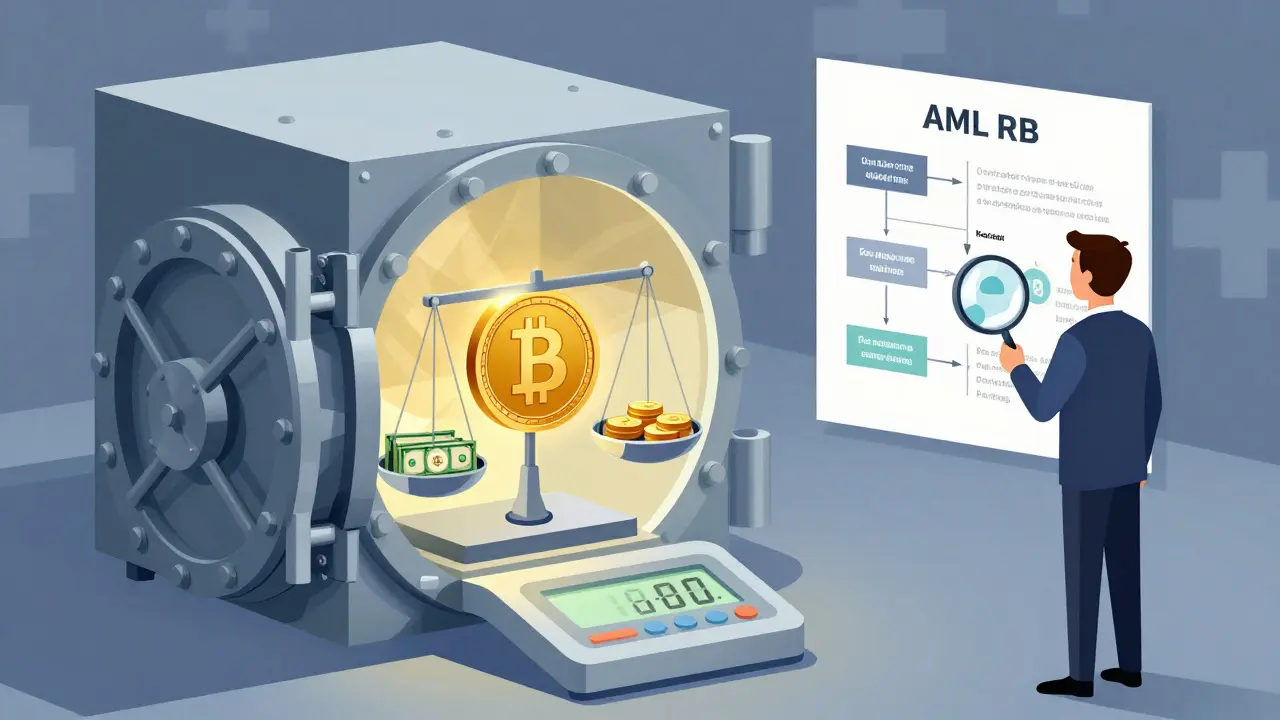
AML: The Real Rule That Matters
Switzerland’s Anti-Money Laundering Act (AMLA) isn’t just a guideline - it’s law. And it’s stricter than what the Financial Action Task Force (FATF) recommends. The Travel Rule? Switzerland implemented it in 2019, two years before most countries. That means every crypto transfer over CHF 1,000 must carry full sender and receiver info. No exceptions. No privacy loopholes.You need to:
- Verify every customer’s identity with official documents
- Identify who really owns the company (beneficial owners)
- Monitor all transactions for red flags - sudden large transfers, repeated small deposits from unknown wallets, etc.
- Report anything suspicious to MROS (Money Laundering Reporting Office Switzerland)
Failure to comply isn’t a fine. It’s a license revocation. And once you lose it, getting it back is nearly impossible. This isn’t bureaucracy - it’s survival. Companies that treat AML as a checkbox are already gone.
Stablecoins: The Gray Zone
Stablecoins are the hottest thing in crypto right now. But in Switzerland, they’re a legal minefield. FINMA doesn’t have a specific law for them. Instead, they look at what the stablecoin actually does.If it’s backed by cash and you’re selling it like a currency? You might need a banking license. If it’s backed by crypto and promises redemption? You might need an investment fund license. Some issuers try to avoid licensing by using bank guarantees - but FINMA has warned this creates hidden risks. The bank that backs you could collapse if too many users demand cash out at once.
There’s no official approval process. You have to talk to FINMA before launch. They’ll tell you what rules apply. No guessing. No hoping. You show them your whitepaper, your treasury setup, your redemption mechanism - and they decide if you’re safe.
How It Compares to the EU (MiCA)
The EU’s MiCA regulation came into force in 2024. It’s detailed. It’s complex. And it’s mandatory for all EU members. But here’s the catch: if your Swiss company sells services to EU customers, you still have to follow MiCA. So you’re not escaping regulation - you’re managing two sets of rules.Switzerland’s advantage? Flexibility. MiCA forces all stablecoins into one category. Switzerland lets you design your product first, then figure out the rules. If your stablecoin is more like a security, you follow securities law. If it’s more like a payment tool, you follow payment rules. That’s not chaos - it’s precision.
Also, MiCA requires public disclosures, audit reports, and governance structures that many small teams can’t afford. Switzerland lets you grow before you’re forced into full transparency. That’s why Ethereum, Solana, and Tezos all have their legal headquarters in Zug - not Berlin or Paris.

The Business Side: More Than Just Rules
Switzerland isn’t just about regulation. It’s about infrastructure. You get:- Political stability - no sudden policy shifts
- Strong banking system - even traditional banks now work with crypto firms
- Highly skilled workforce - engineers, lawyers, compliance experts who understand crypto
- Time zone advantage - sits between U.S. and Asian markets
- No corporate income tax for holding companies - if structured right
And because so many crypto companies are already here, you get network effects. Lawyers know the space. Accountants have done this before. VCs are looking for Swiss-based startups. It’s easier to hire, fund, and grow.
What You Need to Do Next
If you’re serious about launching in Switzerland:- Register a Swiss AG or GmbH - this is your legal entity. You can’t operate without it.
- Build your compliance system - KYC, AML, transaction monitoring. Use tools that meet FINMA’s standards.
- Define your business model - Are you an exchange? A wallet? A stablecoin issuer? Your license depends on this.
- Apply for a fintech license if you’re new - it’s the easiest entry point.
- Engage FINMA early - don’t wait until you’re ready to launch. Talk to them during planning.
Don’t hire a lawyer who only knows traditional finance. Find someone who’s handled crypto licenses before. Switzerland has dozens. Use them.
What’s Coming in 2026
The Basel Committee’s new rules on cryptoasset exposures go live in January 2026. Swiss banks will have to treat crypto holdings as high-risk assets. That means tighter limits on how much they can lend against crypto. It also means crypto firms will need stronger balance sheets to get banking services.This isn’t a setback. It’s a signal. Switzerland is preparing for the next phase - where crypto isn’t a side project. It’s part of the financial system. And if you’re building now, you’re building for that future.
Can I run a crypto business in Switzerland without a license?
No. If you’re accepting deposits, trading crypto, issuing tokens, or handling client funds, you need a FINMA license. Operating without one risks criminal charges, asset seizure, and being barred from the Swiss financial system. Even if you’re targeting non-Swiss customers, if you’re based in Switzerland, you’re under FINMA’s jurisdiction.
How long does it take to get a fintech license in Switzerland?
Typically 6 to 12 months. The timeline depends on how complete your application is. FINMA asks for detailed business plans, compliance manuals, IT security audits, and proof of capital. If you submit incomplete documents, they’ll pause your application until everything is fixed. There’s no fast-track option.
Do I need to be physically in Switzerland to get a license?
Yes. Your company must have a registered office in Switzerland, and key personnel - like the compliance officer and CEO - must be based there. Remote teams from other countries are allowed, but the legal entity and core operations must be physically present. You can’t just register a mailbox and call it a headquarters.
Are crypto profits taxed in Switzerland?
Personal crypto gains are generally tax-free if held as private assets. For businesses, corporate income tax applies, but rates vary by canton. Zurich and Zug have some of the lowest rates - as low as 11% for profitable companies. There’s no capital gains tax on crypto sales by businesses, but you must report all income. VAT doesn’t apply to crypto-to-crypto trades, but it does apply if you sell crypto for fiat goods or services.
Can I use a Swiss company to serve EU customers without following MiCA?
No. If your Swiss-based company offers services to EU residents - even one customer - you must comply with MiCA. Switzerland’s rules don’t override EU law for cross-border activity. Most firms operating in both regions maintain dual compliance: Swiss rules for local operations, MiCA for EU-facing services.
nalini jeyapalan
March 9, 2026 AT 05:42Christina Young
March 9, 2026 AT 15:59Drago Fila
March 9, 2026 AT 18:32Steven Lefebvre
March 9, 2026 AT 23:51Leah Dallaire
March 11, 2026 AT 19:38prasanna tripathy
March 12, 2026 AT 02:43James Burke
March 13, 2026 AT 15:31Jonathan Chretien
March 14, 2026 AT 02:29Bill Pommier
March 15, 2026 AT 23:00Olivia Parsons
March 17, 2026 AT 21:29Nick Greening
March 19, 2026 AT 03:45Issack Vaid
March 19, 2026 AT 21:01Shawn Warren
March 20, 2026 AT 03:46Jackson Dambz
March 21, 2026 AT 17:35