If you've spent any time reading about the early days of digital currency, you've probably come across the name Silk Road. Many people today search for a "Silk Road crypto exchange review," expecting to find a guide on how to trade coins on a legendary platform. Here is the first thing you need to know: Silk Road was never a cryptocurrency exchange. If you are looking for a place to swap your assets for cash or other coins, you are looking for something that never existed.
Instead, Silk Road is an infamous darknet marketplace that operated from 2011 until 2013, facilitating the anonymous sale of illicit goods using Bitcoin. It didn't provide trading pairs or liquidity; it provided a storefront for things you couldn't buy on Amazon. Understanding this distinction is key to understanding why the platform eventually collapsed and how it shaped the way we view crypto today.
The Reality of the Silk Road "Exchange"
To be clear, Silk Road functioned as an e-commerce site, not a financial exchange. While a modern exchange like Coinbase or Binance allows you to trade Bitcoin for USD or Ethereum, Silk Road only accepted Bitcoin (BTC) as its sole payment method. It was the currency of the realm, not the product being traded.
The platform was created by Ross Ulbricht, who went by the pseudonym "Dread Pirate Roberts." He built a hidden service on the Tor network, which is a system designed to mask a user's IP address and location. Because of this, you couldn't just type a URL into Chrome to get there; you needed the Tor Browser to access the .onion domain.
The business model was simple: Silk Road acted as the middleman. They charged sellers a commission of 8-12% per transaction. Over its short 2.5-year run, the site facilitated about $183 million in nominal Bitcoin transactions. When you adjust for the massive price increase of BTC over the years, that volume is estimated at roughly $1.2 billion. However, the site's goal wasn't to grow the crypto market-it was to hide the trail of money.
How the Platform Actually Worked
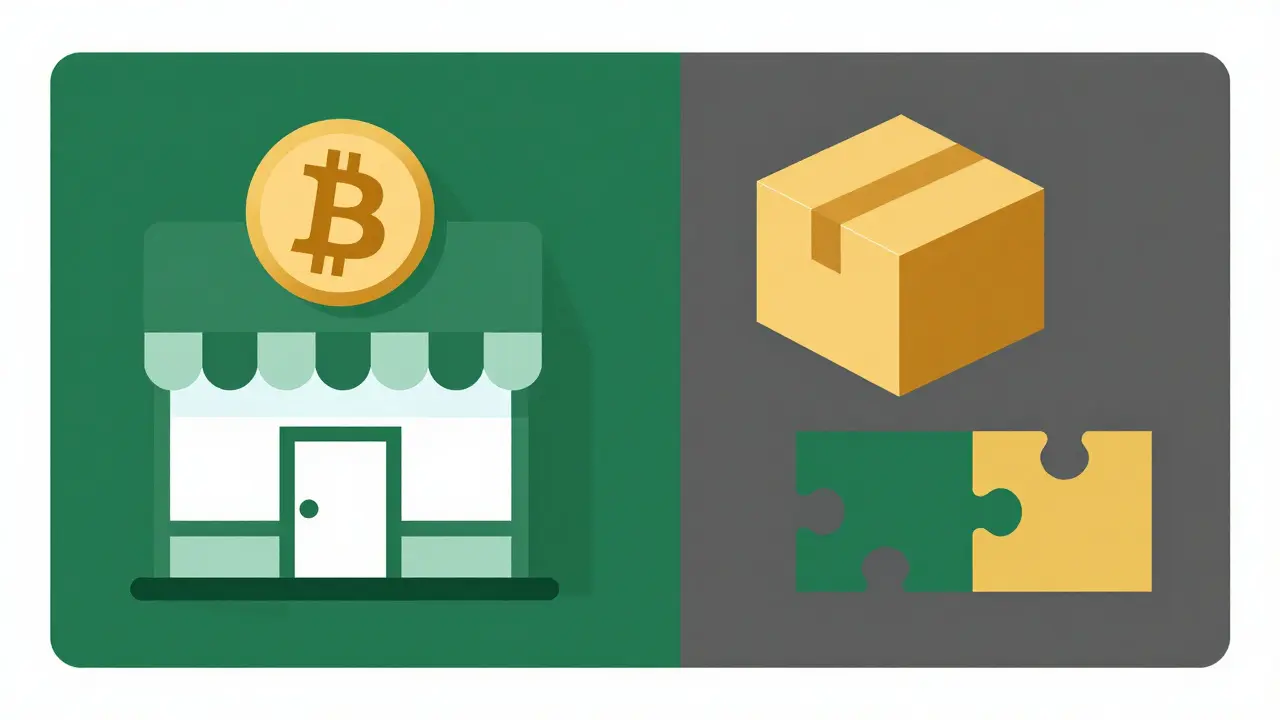
If you had used Silk Road back in 2012, the experience would have felt surprisingly familiar. The interface looked like a basic version of eBay or Amazon. You had product listings, categories, and a feedback system. But since there was no one to trust in a lawless digital void, they implemented an escrow system.
Here is how a typical transaction went down:
- A buyer would find a vendor and agree on a price in Bitcoin.
- The buyer sent the BTC to a Silk Road escrow account.
- The vendor shipped the physical goods (usually via standard mail).
- Once the buyer confirmed the package arrived, Silk Road released the funds to the vendor, minus the commission.
This system created a "reputation economy." According to a study by Dr. Nicolas Christin from Carnegie Mellon University, top vendors often maintained positive feedback rates of 98%. It's a strange irony that one of the world's largest criminal enterprises relied on a high-quality customer service model to survive.
| Feature | Silk Road (Marketplace) | Modern Exchange (e.g., Coinbase) |
|---|---|---|
| Primary Purpose | Selling illicit goods/services | Trading digital assets |
| Identity Verification | None (Anonymous) | Strict KYC/AML requirements |
| Network | Tor (.onion) | Public Web (HTTPS) |
| Asset Utility | Payment method for goods | Investment and liquidity tool |
The Fatal Flaw: Centralization
For a platform that preached anonymity and decentralization, Silk Road had a massive Achilles' heel: it was controlled by one person. Ross Ulbricht managed the servers, the escrow, and the administration. This meant the entire operation had a single point of failure.
The FBI spent years tracking the site's technical leaks. Eventually, they didn't just crash the site; they waited until they could catch the administrator in person. On October 1, 2013, Ulbricht was arrested at a public library in San Francisco. Because the site was centralized, the FBI was able to seize the servers and the Bitcoin wallets immediately. The entire "empire" collapsed within 24 hours.
This serves as a cautionary tale for anyone in the crypto space. If you trust a centralized entity with your keys or your data, you are relying on that entity's security and legality. When that entity fails, your assets usually go with it.
The Legacy and Impact on Bitcoin
You can't talk about Silk Road without talking about how it ruined Bitcoin's reputation for a decade. In the early 2010s, nearly 87% of mainstream media coverage about Bitcoin focused on Silk Road. This created a narrative that crypto was simply a "tool for criminals."
However, from a technical perspective, Silk Road did something no one else was doing: it gave Bitcoin a real-world use case. It proved that a digital currency could facilitate global trade without a bank. It essentially functioned as the first large-scale beta test for the Blockchain as a payment rail.
The regulatory fallout was swift. The FinCEN (Financial Crimes Enforcement Network) issued its first cryptocurrency guidance in May 2013 specifically because of Silk Road. This led to the strict KYC (Know Your Customer) rules we see today on every legal exchange. The very anonymity that made Silk Road possible is now the primary target of government regulations globally.
What Happened to the Bitcoin?
One of the most interesting parts of the Silk Road story is what happened to the money. The U.S. government seized over 144,000 BTC from the servers. At the time of the seizure in 2013, this was worth a few million dollars. By late 2025, that stash was valued at over $9 billion.
The U.S. Marshals Service has been selling these coins off in batches over the last decade. These "government dumps" often cause ripples in the market. A study from the University of Chicago found that every time the government sold 10,000 BTC, the price tended to dip by about 2.3% within a day. It's a reminder that even "dead" platforms can still influence the current price of a coin.
Is there a Silk Road 2.0?
There were attempts to bring it back. Silk Road 2.0 launched shortly after the first site fell, but it was plagued by technical issues and security holes. In February 2014, it suffered a $2.7 million theft due to a vulnerability called "transaction malleability." This highlighted the difference between a hobbyist-run darknet site and a professional financial institution. Professional exchanges invest millions in security audits; darknet markets usually just hope they don't get hacked.
Today, the spirit of the site lives on in other decentralized markets, but they've learned from Ross Ulbricht's mistakes. Many now use multi-signature escrow and decentralized hosting to ensure that no single arrest can take down the whole network.
Can I still access Silk Road today?
No. The original Silk Road was shut down by the FBI in October 2013. Any site claiming to be the "original" Silk Road today is a scam designed to steal your Bitcoin.
Was Silk Road a legitimate way to buy Bitcoin?
No. You could not buy Bitcoin on Silk Road. You had to buy Bitcoin from an external exchange (like the now-defunct Mt. Gox) and then use that Bitcoin to buy illegal goods on Silk Road.
Who was the Dread Pirate Roberts?
Dread Pirate Roberts was the online alias used by Ross Ulbricht, the creator and administrator of Silk Road. He was arrested in 2013 and sentenced to double life imprisonment.
What was the escrow system on Silk Road?
The escrow system acted as a trust mechanism. The site held the buyer's Bitcoin in a temporary account and only released it to the seller after the buyer confirmed they received their order.
Did Silk Road help Bitcoin grow?
In a complex way, yes. While it gave Bitcoin a bad reputation, it proved that the technology worked for real-world payments and forced the development of blockchain analysis tools and regulatory frameworks.
Tyler Webb
April 15, 2026 AT 00:24It is wild how much the government still holds onto these coins. Just feels a bit contradictory for them to preach against the volatility while holding a multi-billion dollar bag :)
daniella davis
April 16, 2026 AT 01:41Omg please tell me people actualy think a darknet market is an exchage lol. Like, do we even read the headlines anymore? It's so embarasing that I have to explain this but the logic is just basic. Anyne with a modicum of internet literasy knows that the Silk Road was about illicit trade, not swapping coins for a profit. Honestly, the fact that this needs a whole article is just a testament to how far down the rabbit hole of ignorance some people have fallen. It's just laughable at this point. Like, really, a review for a store that doesn't even exist? I can't even deal with this level of cluelessness today. My head hurts just thinking about the lack of critical thinking skills in the general popullation. Just google it next time, people!
Lane Montgomery
April 17, 2026 AT 00:55Who used it? Tell me.
EDOZIEM MICHAEL
April 17, 2026 AT 23:49it is interesting how we seek freedom in the shadows only to find the same chains of trust in escrow systems man just shows that humans always need a middleman even when they think they are escaping the system
william manes
April 18, 2026 AT 00:28USA first! 🇺🇸 FBI did a great job cleaning up the trash 🗑️. Weak people try to hide behind tor 🤡.
Artavius Edmond
April 19, 2026 AT 06:56I totally get where you're coming from. It's a cool look back at the history of how we got to where we are now with crypto. Pretty wild ride overall!
Jason Davis
April 20, 2026 AT 15:50Actually, many people forgot that Mt Gox was the real disaster back then. It's easy to blame the darknet but the legit exchanges were just as messy with their securty. Just a bit of a mess all around lol.
jennelle williams
April 22, 2026 AT 04:06it is a sad story really. just a guy with a dream that went wrong
Rebecca Violette
April 23, 2026 AT 10:17i feel like this post is just tryin to make me feel bad for not knowing stuff... why is everyone so mean on here anyway it just makes me so sad to see people fighting over a website that doesnt even exist anymore 😭
Lela Singh
April 24, 2026 AT 10:08Absolute goldmine of info! Such a vivid breakdown of the chaos!
Samson Selleck
April 25, 2026 AT 18:31The systemic failure of the Silk Road was not merely a lack of decentralization, but a fundamental misunderstanding of the Byzantine Generals Problem in a trustless environment. Ulbricht's insistence on a centralized escrow created a catastrophic single point of failure that effectively neutralized the inherent censorship resistance of the Bitcoin protocol. It is quite amusing, though intellectually bankrupt, to suggest that this was a "beta test" for blockchain payment rails when it was essentially a glorified eBay for contraband. The correlation between government seizures and market volatility is a pedestrian observation at best, failing to account for the broader macroeconomic pressures on the asset class. Truly a masterclass in operational insecurity.
Amanda Faust
April 26, 2026 AT 01:00everyone knows the escrow was the only reason it lasted as long as it did
Alan Seiden
April 26, 2026 AT 12:57This is an utterly pathetic excuse for an analysis. The British government would have handled such a nuisance with far more efficiency and grace. Absolute rubbish.
Swati Sharma
April 27, 2026 AT 13:21I agree that the shift toward multi-signature escrow is a great way to mitigate the risk of a single point of failure. It really optimizes the trustless nature of the protocol!
Mikayla Murphy
April 29, 2026 AT 02:56It's interesting to see how different cultures perceive the balance between privacy and legality. The Silk Road really brought those tensions to the surface for everyone.
Agnessa Dale
April 29, 2026 AT 08:02It's a great lesson for all of us to stay positive and keep learning from the past!
logan bates
April 29, 2026 AT 15:09FBI did their job. Period.