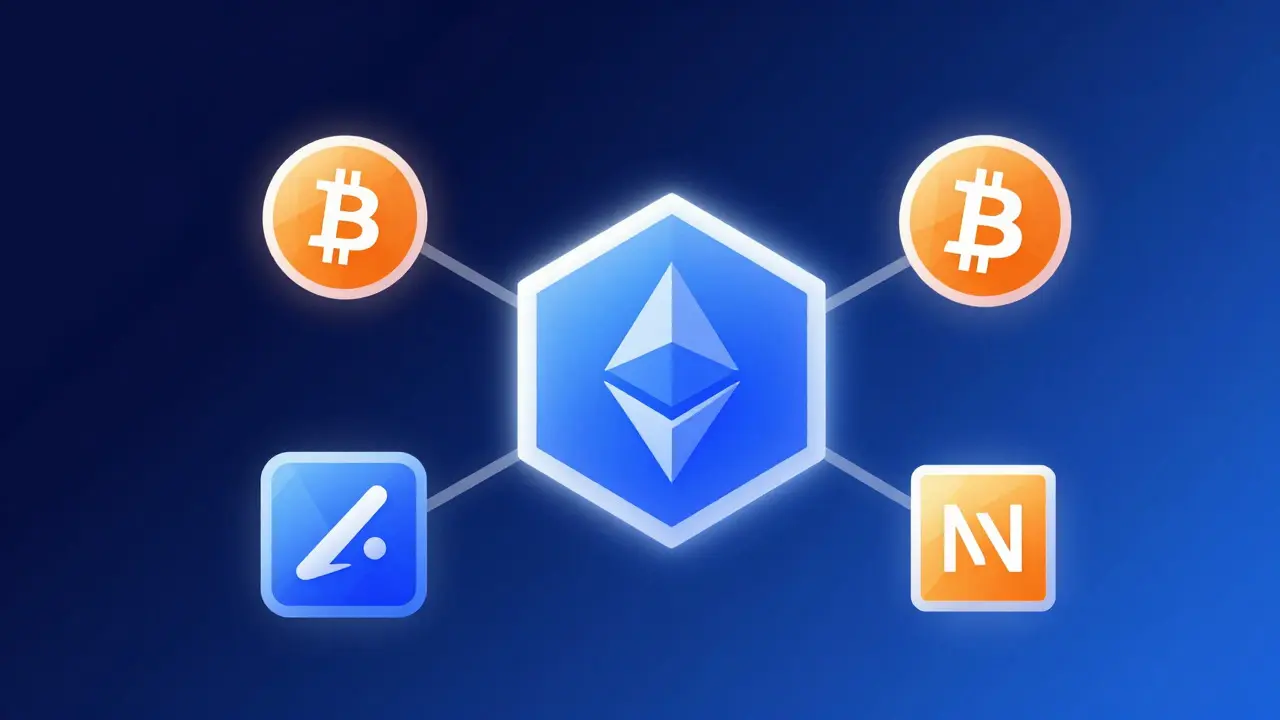
Have you ever tried to swap Bitcoin for an Ethereum-based token without using a centralized exchange like Binance or Coinbase? If you have, you know the headache. You usually need a bridge, multiple wallets, and a lot of patience while waiting for confirmations across different networks. That is exactly the problem Sifchain was built to solve. It promises to be the first true omni-chain decentralized exchange (DEX), allowing you to trade assets across dozens of blockchains directly from one interface.
But here is the catch: does it actually work well in 2026? Or is it just another ambitious project with thin liquidity and a steep learning curve? I’ve dug into the technical specs, user feedback, and market data to give you a clear picture. Spoiler alert: Sifchain has a brilliant vision, but its execution faces serious hurdles that every trader needs to understand before connecting their wallet.
What Exactly Is Sifchain?
Sifchain is an omni-chain decentralized exchange protocol that enables direct cross-chain swaps without wrapped tokens or bridges. Founded in 2020 by a US-based team, it launched as a Cosmos SDK blockchain designed to connect major ecosystems like Ethereum, Bitcoin, BNB Smart Chain, Solana, and Avalanche.
The core idea is simple but powerful. Instead of wrapping your Bitcoin into "wBTC" on Ethereum to trade it, Sifchain allows you to keep your native BTC on the Bitcoin network while swapping it for ETH on the Ethereum network. The protocol handles the atomic swaps behind the scenes. Its native utility and governance token is called ROWAN. You use ROWAN to pay for transaction fees, provide liquidity, and vote on protocol upgrades through the SifDAO.
Unlike traditional DEXs that operate within a single chain (like Uniswap on Ethereum), Sifchain aims to integrate 20-25 major blockchains. This makes it what experts call an "omni-chain" solution. However, being first to market doesn't always mean being the best. Let's look at how the technology actually performs.
How Sifchain Works: Technology Under the Hood
To understand if Sifchain is reliable, you need to know how it executes trades. Most DEXs use Automated Market Makers (AMMs) where you swap against a pool of funds. Sifchain combines this with an order book model. This means you can place limit orders, not just market orders.
Here is the step-by-step process when you make a cross-chain swap:
- Order Placement: You submit a hashed version of your transaction first. This uses a commitment-reveal scheme to prevent front-running bots from seeing your intent before the trade executes.
- Liquidity Matching: The protocol matches your order with liquidity providers who have deposited assets into the pools.
- Cross-Chain Execution: Validators on the Sifchain network verify the transaction on both the source chain (e.g., Bitcoin) and the destination chain (e.g., Ethereum).
- Settlement: Once confirmed, the assets are released to your respective wallets on each chain.
This architecture is impressive because it avoids the security risks associated with centralized custodians. However, it introduces complexity. The reliance on validators means that if the validator set becomes compromised, the entire cross-chain trust layer could fail. This is why security audits and decentralization of validators are critical metrics for any user.
| Feature | Sifchain | THORSwap | Uniswap V3 |
|---|---|---|---|
| Type | Omi-chain DEX | Omi-chain DEX | Single-chain DEX |
| Supported Chains | 20+ (Target) | 10+ | Ethereum & L2s |
| Native Token | ROWAN | RUNE | UNI |
| Limit Orders | Yes | No | No |
| Wrapped Tokens Needed? | No | No | Yes (for cross-chain) |
| Learning Curve | Steep | Moderate | Low |
The Big Problem: Liquidity and Slippage
If there is one thing that kills a DEX, it’s low liquidity. Without enough money in the pools, your trades suffer from high slippage-meaning you get fewer tokens than expected because the price moves against you during the swap.
Data from late 2023 showed Sifchain’s Total Value Locked (TVL) at around $1.8 million. Compare that to its main competitor, THORSwap, which held over $847 million at the same time. While TVL fluctuates, this gap highlights a significant adoption challenge. In 2026, if Sifchain hasn’t drastically increased its liquidity depth, users will still face issues trading anything other than major pairs like BTC/ETH or BTC/USDT.
User reports from Reddit and CoinGecko communities consistently mention this issue. One user noted, "Good concept but liquidity is thin on less popular pairs - stick to major assets." This means if you try to swap a smaller altcoin from Polygon to Solana via Sifchain, you might lose a significant percentage of your value to slippage. For large institutional traders, this is unacceptable. For small retail users, it might be manageable, but it’s a risk you must calculate before clicking "swap."

ROWAN Token: Utility vs. Speculation
The ROWAN token is central to the ecosystem. It serves three main purposes:
- Transaction Fees: All cross-chain swaps incur a fee paid in ROWAN.
- Governance: Holders vote on proposals in the SifDAO, such as adding new chains or changing fee structures.
- Liquidity Mining: Providers earn ROWAN rewards for depositing assets into pools.
However, the token’s price performance has been volatile. Historical data shows periods of sharp decline, underperforming the broader crypto market. Analysts have offered conflicting predictions. Some bearish models suggested a drop due to low utility demand, while bullish forecasts pointed to potential growth if the platform gains mass adoption. As of 2026, you should view ROWAN primarily as a utility token rather than a guaranteed investment vehicle. Its value is tightly coupled with the success of the Sifchain protocol itself. If the DEX fails to gain traction, the token’s utility diminishes.
User Experience: A Steep Learning Curve
Let’s talk about usability. If you are used to clicking "Swap" on MetaMask or Trust Wallet, Sifchain will feel complex. The DeFi Education Project rated its difficulty as "steep" (4.2 out of 5). New users often report taking 8-10 hours to become proficient, compared to 2-3 hours for simpler DEXs.
Why is it so hard? Because you need to manage gas fees on two different chains simultaneously. To swap BTC for ETH, you need BTC for the Bitcoin network fee and ETH for the Ethereum network fee. If you don’t have enough ETH in your destination wallet, the transaction can fail, leaving you stuck or losing your initial fee. Documentation quality has been rated average (3.7/5), with gaps in troubleshooting these specific failure scenarios.
Support response times also lag behind industry leaders. Average wait times were reported at 18 hours, whereas competitors like Thorchain averaged under 5 hours. For a platform dealing with irreversible blockchain transactions, slow support is a major pain point.
Security and Risks
In crypto, security is everything. Sifchain uses a proof-of-stake consensus mechanism with validators securing the network. The commitment-reveal scheme helps protect against front-running, which is a common exploit in DEXs. However, cross-chain bridges are historically the most hacked area in DeFi.
While Sifchain avoids traditional bridges by using atomic swaps, it relies on the integrity of its validator set. If a majority of validators collude, they could theoretically steal funds. Therefore, checking the decentralization of the validator set is crucial. Additionally, regulatory uncertainty looms. The SEC’s framework for multi-chain applications suggests that governance tokens like ROWAN could face scrutiny in the future, potentially impacting listing status on centralized exchanges.
Is Sifchain Right for You?
Sifchain is not for everyone. Here is who should consider using it and who should avoid it:
Use Sifchain if:
- You are an advanced DeFi user comfortable managing multi-chain gas fees.
- You want to swap major assets (BTC, ETH) without wrapping them.
- You believe in the long-term vision of omni-chain interoperability and want to support the protocol via governance.
Avoid Sifchain if:
- You are a beginner looking for a simple, one-click swap experience.
- You plan to trade low-cap altcoins (liquidity is too thin).
- You need immediate customer support for failed transactions.
Final Thoughts
Sifchain represents a bold attempt to unify the fragmented cryptocurrency landscape. Its technology is sound, offering true cross-chain swaps without the security compromises of wrapped tokens. However, in 2026, competition is fierce. With rivals like THORSwap holding significantly more liquidity and offering smoother user experiences, Sifchain must prove its worth beyond just technical capability.
If you decide to try it, start small. Test the waters with minor amounts to understand the fee structure and timing. Always double-check your gas balances on both chains. And remember, in DeFi, you are your own bank. Do your own research, check the current TVL, and never invest more than you can afford to lose.
Is Sifchain safe to use?
Sifchain uses non-custodial atomic swaps, meaning you retain control of your private keys. However, like all DeFi protocols, it carries smart contract risks and dependency on validator honesty. Always verify the latest security audit reports before depositing large amounts.
What is the minimum amount to swap on Sifchain?
There is no strict minimum set by the protocol, but practical minimums exist due to gas fees. For Bitcoin swaps, you typically need at least 0.001 BTC to cover network fees and ensure the trade is economically viable. Check the interface for real-time fee estimates.
How long do cross-chain swaps take on Sifchain?
Swap times depend on the confirmation speeds of the involved blockchains. Bitcoin swaps may take 10-60 minutes due to BTC block times, while Ethereum or BNB Chain swaps can settle in 1-5 minutes. Recent updates aim to reduce latency further.
Can I earn passive income with Sifchain?
Yes, by providing liquidity to the pools. You deposit pairs of tokens and earn a share of the trading fees plus ROWAN rewards. However, be aware of impermanent loss, especially if the price of one asset changes significantly relative to the other.
Which wallets are compatible with Sifchain?
Sifchain supports standard Web3 wallets like MetaMask, Trust Wallet, and Ledger. For Bitcoin swaps, you may need a wallet that supports the specific integration methods provided by the Sifchain interface, such as broadcasting raw transactions.