
Remember the hype of the last bull run? Thousands of us scrambled to claim free tokens, hoping for a quick flip. PolkaWar was one of those names that popped up everywhere. If you participated in the CoinMarketCap airdrop campaign for PolkaWar, you might have claimed your share of the $30,000 prize pool years ago. But where is that project now? And what happened to the PWAR tokens sitting in your wallet?
This isn't just a nostalgia trip. Understanding what went wrong-or right-with projects like PolkaWar helps you spot the next big thing without getting burned by empty promises. We are looking at the specifics of the PWAR airdrop, the game's mechanics, and the harsh reality of its current market performance.
What Was the PolkaWar Airdrop on CoinMarketCap?
The PolkaWar airdrop was a promotional initiative hosted by CoinMarketCap. It wasn't some obscure community giveaway; it was part of CMC's broader strategy to engage users with new or existing crypto projects. The total value of the campaign was around $30,000.
If you were active on CMC during that period (roughly 3-4 years ago), you had the chance to win up to 75 PWAR tokens per user. It sounds small now, but back then, if the token had held its early momentum, those 75 tokens could have been worth a decent lunch. Or more. The catch? Like most airdrops, the real value depended entirely on whether the project delivered on its roadmap after the free money stopped flowing.
Why did they do it? Simple marketing. Projects need visibility. By partnering with a data giant like CoinMarketCap, PolkaWar bought exposure to millions of retail investors. Did it work? Well, they got the attention. Whether they kept it is another story.
Inside the PolkaWar Ecosystem: More Than Just a Token
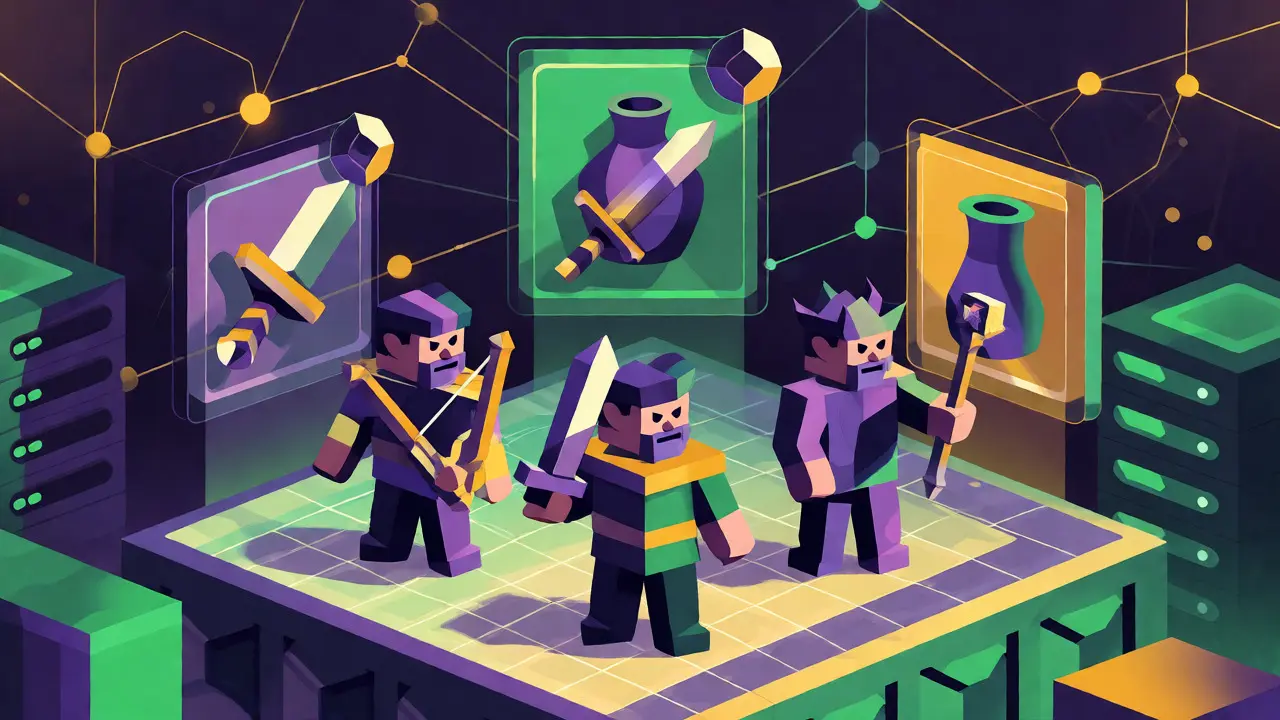
Before we look at the price chart, let's talk about what PolkaWar actually is. It’s not just a coin; it’s a cross-chain decentralized fighting game that integrates NFTs and competitive gaming. The vision was ambitious. They wanted to build a "play-to-earn" world where you don't just click buttons-you develop characters and fight.
The game launched initially on the Binance Smart Chain (BSC). Why BSC? Because Ethereum gas fees were eating players alive. BSC offered low fees and fast processing, which is crucial for a game where you might be upgrading gear every few minutes.
The ecosystem has three main pillars:
- PolkaWar Realm: This is the core game. You pick a character class-Warrior, Archer, or Magician-and equip them with weapons like Swords, Big Knives, Bows, Guns, Tessens, Scepters, or Magic Vases. It’s classic RPG stuff, but on the blockchain.
- PolkaWar NFT Marketplace: Here, you trade in-game items. Your sword isn't just pixels; it's an NFT you can sell or lease. This adds a layer of financial speculation to the gameplay.
- PolkaWar Logistics: This is the weirdly cool part. They promised physical delivery of NFT replicas worldwide. Imagine buying a digital sword and having a real, physical replica shipped to your door in Bristol. That bridge between digital and physical ownership was their unique selling point.
The plan included expanding to Polkadot and other blockchains later. Cross-chain compatibility is the holy grail of Web3 gaming, so this made sense on paper.
PWAR Tokenomics and Market Reality
Let’s get into the numbers, because this is where things get painful for long-term holders. As of late September 2026, the PWAR token trades at extremely low valuations.
CoinMarketCap reports the live price at roughly $0.00204 USD. But here’s the kicker: data discrepancies are huge. Depending on which regional Binance platform you check, prices range from $0.000599 to $0.001948. This volatility suggests thin liquidity. When trading volume is low, a single large sell order can crash the price, and a single buy can spike it. For context, the 24-hour trading volume hovers around $40,670. That’s tiny. In the crypto world, that’s barely enough to move the needle.
| Metric | Value / Status |
|---|---|
| Current Price (CMC) | $0.00204 USD |
| All-Time High (ATH) | $1.199606 USD |
| Decline from ATH | > 99% |
| Circulating Supply | 82.82 Million PWAR |
| Total Max Supply | 100 Million PWAR |
| Market Cap Range | $49k - $161k USD |
| CMC Rank | #2931 |
Look at that decline. From an all-time high of nearly $1.20 down to fractions of a cent. That’s a drop of over 99%. If you bought at the peak, you’re down 99%. If you got it via airdrop, you’re still technically "in profit," but the absolute dollar value is negligible.
Why Did PWAR Crash? Analyzing the Failure Points
It’s easy to blame "the bear market," but plenty of GameFi projects survived the downturn better than others. What went wrong with PolkaWar?
First, competition. The GameFi sector became saturated. Axie Infinity proved the model worked, and hundreds of clones followed. Players got tired of low-quality graphics and repetitive gameplay. PolkaWar needed to offer something genuinely fun, not just financially rewarding.
Second, sustainability. Many play-to-earn games rely on new players entering to pay out rewards to older players. When the influx stops, the economy collapses. With daily volumes under $50k, it’s clear the player base shrank significantly. Without active players generating transaction fees and demand for NFTs, the token loses utility.
Third, execution delays. The promise of moving to Polkadot and launching sophisticated cross-chain features takes time. In crypto, three years feels like a decade. While PolkaWar was building, competitors launched faster, polished experiences. The lack of recent major updates or viral moments suggests reduced activity. Media coverage dried up, and when the noise stops, the speculative interest follows.
Is It Too Late to Buy PWAR?
You might see that 99% drop and think, "Cheap! Time to buy." Hold on. Low price doesn't mean good value. It often means the market has priced in the risk of failure.
Here’s what you need to ask yourself before buying any dust-sized altcoin:
- Is there an active community? Check their Discord or Telegram. Are people talking about game updates, or just complaining about the price?
- Are developers still committing code? A GitHub repository with no commits in six months is a red flag.
- Does the game actually work? Try playing it. Is it fun? If you wouldn't play it for free, why would you pay to play it?
- What’s the roadmap status? Did they deliver on the Polkadot integration? If not, why?
If you’re holding PWAR from the airdrop, consider this: the opportunity cost of holding dead capital is high. Unless you believe strongly in a revival, it might be better to rotate that capital into assets with stronger fundamentals and higher liquidity.

The Lesson from the CoinMarketCap Airdrop Era
The PolkaWar airdrop serves as a case study in crypto marketing. CoinMarketCap used its platform to distribute tokens, creating initial buzz. But buzz fades. Fundamentals remain.
Airdrops are great for awareness, but they don't guarantee adoption. Users who received free PWAR likely dumped it quickly if they didn't see immediate value. This created sell pressure from day one. Successful airdrops today are structured differently-they often require staking or locking tokens to align incentives.
For investors, the takeaway is clear: Don't chase the airdrop. Chase the product. If the game is fun and the tokenomics are sustainable, the price will follow. If it’s just a whitepaper and a press release, the price will bleed out.
Frequently Asked Questions
How many PWAR tokens did I get from the CoinMarketCap airdrop?
Participants in the specific CoinMarketCap campaign for PolkaWar could win up to 75 PWAR tokens each. The total value of the entire campaign was approximately $30,000 at the time of distribution.
Is PolkaWar still active in 2026?
The project exists, but activity levels appear low. Trading volumes are minimal (under $50k daily), and significant media coverage has decreased. While the token still trades on platforms like Binance and CoinMarketCap, the pace of development and community engagement has slowed compared to its peak hype cycle.
What is the current price of PWAR?
As of September 2026, the price fluctuates around $0.00204 USD on CoinMarketCap. However, be aware of significant price discrepancies across different exchanges, with some Binance regional platforms showing prices as low as $0.000599 due to low liquidity.
Did PolkaWar launch on Polkadot?
PolkaWar initially launched on the Binance Smart Chain (BSC). Expansion to Polkadot and other chains was part of the long-term roadmap. While the ambition for cross-chain compatibility remains, widespread adoption on Polkadot has not materialized to the extent initially hyped.
Should I hold or sell my airdropped PWAR tokens?
This depends on your risk tolerance. Given the >99% drop from its all-time high and low trading volume, the token carries high risk. If you need capital for more liquid or fundamentally strong assets, selling might be prudent. If you believe in a niche comeback for legacy GameFi projects, holding is an option, but expect limited short-term gains.