
Landing a free token distribution can feel like winning the lottery, but in the world of crypto, the timing of when you sell matters more than how many tokens you get. The Peanut.Trade is a decentralized finance protocol that acts as a price balancer, aiming to fix inefficiencies in Automated Market Makers (AMMs) to reduce slippage for traders. Also known as NUX, the project launched with the goal of bridging the gap between centralized and decentralized exchanges. While many people search for current airdrop opportunities, looking back at the NUX distribution provides a masterclass in market volatility and the reality of DeFi rewards.
The NUX Airdrop Breakdown: What Happened?
Back in 2021, Peanut.Trade teamed up with CoinMarketCap to run a massive community growth campaign. This wasn't just a random giveaway; it was a strategic move to build a user base by requiring participants to engage across multiple social platforms. The airdrop distributed a total pool of 71,000 NUX tokens, which had a total estimated value of $22,000 USD at the time.
The campaign was designed to reward 2,000 winners. If you were one of the lucky ones, you could have received up to 35.50 NUX tokens. To qualify, users had to jump through a few hoops, which is standard for these types of marketing events. You had to add NUX to your CoinMarketCap watchlist, join their Telegram groups, follow their Twitter account, and fill out a registration form. Winners were announced on August 27, 2021, and the tokens were sent out over the following few days.
| Detail | Value |
|---|---|
| Total Token Pool | 71,000 NUX |
| Total Value (at time of event) | $22,000 USD |
| Number of Winners | 2,000 |
| Max Individual Reward | 35.50 NUX |
| Distribution Date | August 27-31, 2021 |
How the Peanut Protocol Actually Works
To understand if the Peanut.Trade airdrop had long-term value, you have to look at the tech. Most decentralized exchanges suffer from "slippage," where the price of a token changes between the time you place an order and when it's executed. This usually happens because of how Automated Market Makers (or AMMs) handle liquidity.
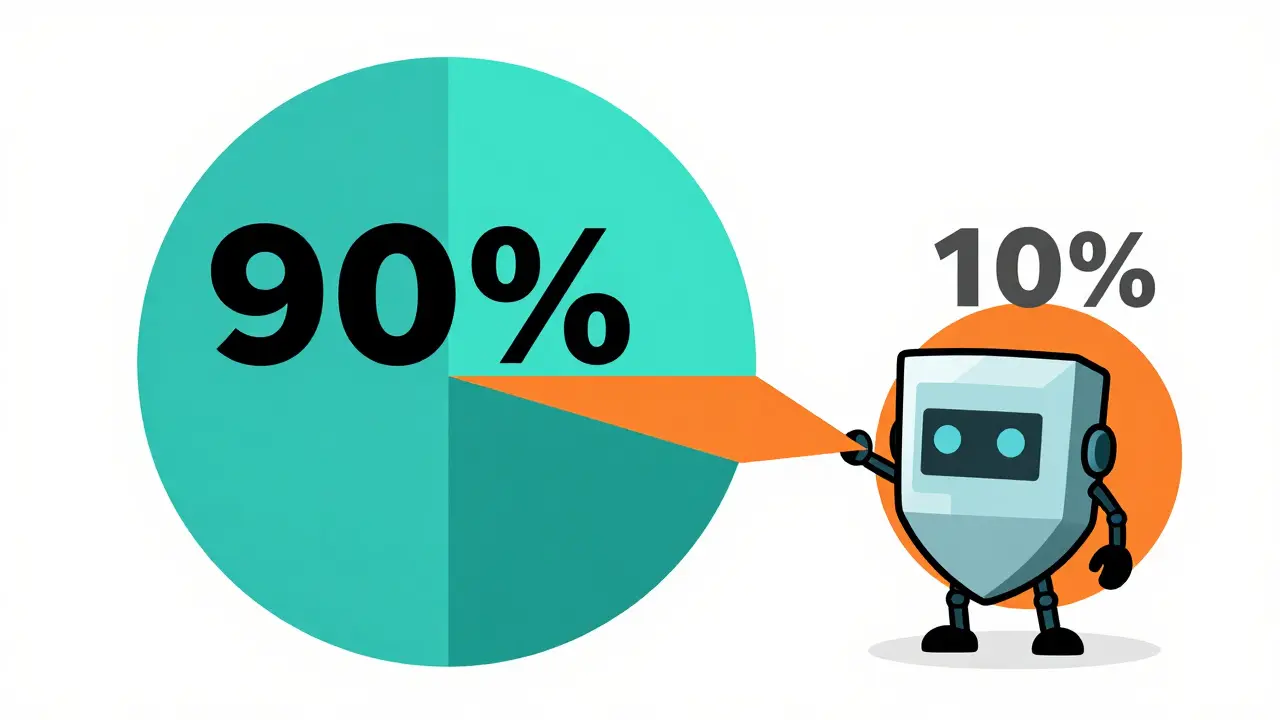
Peanut solves this by splitting assets. They put 90% of their assets into a DEX like Uniswap, while the other 10% goes into a specialized intermediary mechanism. This small slice of assets is used to actively balance prices between the DEX and Centralized Exchanges (CEXs). By doing this, they try to protect regular traders from DeFi bots that use front-running strategies to steal profits from the average user.
The Financial Rollercoaster: ATH to Current Reality
If you held your NUX tokens from the 2021 airdrop, you've witnessed one of the most extreme price swings in the crypto space. At its absolute peak, NUX hit an all-time high (ATH) of $31.69. For someone who won the maximum 35.50 NUX, that portfolio would have been worth over $1,100 at the top. Fast forward to late 2025, and the picture looks very different.
Currently, NUX trades around $0.0042. That is a staggering 99.99% drop from its peak. The total market cap has shrunk to roughly $210,121, with a circulating supply of 50 million tokens. Most of the trading activity now happens on Gate.io, where the NUX/USDT pair remains the most active. This decline is a cautionary tale for airdrop hunters: the value of a free token is only real if you sell it before the market corrects.

Looking Forward: Price Predictions for 2026 and Beyond
Depending on who you ask, the future of NUX is either a moonshot or a slow fade. There is a massive divide between algorithmic predictions and technical analysis. On one side, platforms like CoinLore use historical bull market patterns to suggest a massive comeback. They project NUX could climb back to $1.80 in 2026 and even reach $28.52 by 2041. These models assume that the project will find a new wave of utility or benefit from a broader market surge.
On the other hand, technical analysts offer a much more grounded view. Data from CoinCodex shows a far more conservative range, expecting the price to hover between $0.0030 and $0.0065. Their analysis looks at the 200-Day Simple Moving Average (SMA) and the Relative Strength Index (RSI), which currently shows a neutral-to-bullish sentiment but lacks the volume needed for a massive breakout. For a modest $1,000 investment, these analysts see only a few dollars in profit over a couple of months, rather than the thousands predicted by long-term AI models.
The Lesson for Airdrop Hunters
The Peanut.Trade experience highlights a few key rules for anyone chasing free tokens. First, check the vesting schedule. Peanut had a Token Generation Event (TGE) where only 3.5% of tokens were unlocked immediately, with the rest released over 700 days. If you are locked into a vesting period while the price is crashing, you can't exit your position.
Second, understand the utility. A project that promises to "balance prices" is only valuable if people are actually trading on it. If the volume on exchanges like LATOKEN or Uniswap V2 dries up, the token price usually follows. Finally, always diversify. While the NUX airdrop was a great marketing tool, the 99.98% loss for long-term holders proves that "free money" can disappear quickly in a bear market.
How many NUX tokens were distributed in the airdrop?
A total of 71,000 NUX tokens were distributed to 2,000 winners through the CoinMarketCap campaign in 2021. Individual winners received up to 35.50 NUX tokens each.
What is the current price of Peanut (NUX)?
As of late 2025, NUX is trading at approximately $0.0042, which is a decrease of 99.99% from its all-time high of $31.69.
Where can I trade NUX tokens?
The primary trading venue for NUX is Gate.io, specifically the NUX/USDT pair. You can also find it on LATOKEN and Uniswap V2 on the Ethereum network.
What does Peanut.Trade actually do?
Peanut.Trade is a DeFi price balancer. It allocates 90% of assets to a DEX and 10% to an intermediary mechanism to reduce slippage and protect traders from front-running bots.
Is the NUX token predicted to go back up?
Predictions vary wildly. Some models suggest it could reach $1.80 in 2026, while technical analysts believe it will stay below $0.01 in the short term. This indicates high uncertainty and risk.
Noel Mandotah
April 26, 2026 AT 15:50Typical DeFi fairy tale. Imagine actually believing a 2041 price prediction for a token that dropped 99.99% 🙄
Nitin Gupta
April 27, 2026 AT 02:55It is worth noting that the 10% intermediary mechanism is a clever way to handle slippage, though the execution seems to have struggled over time.
edie rosa
April 27, 2026 AT 05:58The sheer greed of people chasing these airdrops is disgusting. They treat these projects like casinos and then cry when the inevitable crash happens because they didn't care about the actual utility, just the quick buck. It's morally bankrupt to promote these speculative bubbles as "opportunities" when most of the retail investors are just exit liquidity for the whales who actually know how the game is played. This whole ecosystem is basically a digital sweatshop for hope, and the fact that people still fall for "moonshot" predictions in 2026 shows a complete lack of critical thinking. Honestly, the collapse of NUX isn't a tragedy; it's a necessary cleansing of a market built on delusions. We should be focusing on ethical finance instead of celebrating a project that effectively vanished into thin air. It's honestly exhausting seeing the same pattern repeat every single cycle while people refuse to learn that free money doesn't exist without a hidden cost. The psychological toll of these crashes is real, and yet the industry just keeps churning out more vaporware to prey on the desperate. Totally pathetic.
Janis Naglis
April 28, 2026 AT 15:04Oh my goodness!!! Even if the price dipped, the concept of bridging CEX and DEX is so visionary!!! We just need more synergistic liquidity providers to pivot the momentum!!!! ✨✨
Abhishek Verma
April 29, 2026 AT 13:05Sure, "visionary." Because nothing says vision like a 99.99% loss. I'm sure the holders are just thrilled with the synergy right now 😂
Wayne Gillis
April 30, 2026 AT 11:04I remember this one! 🚀 I actually missed the window for the form but I still followed them on Twitter lol! Guess I dodged a bullet 😅💎
Brendan Thraxton
April 30, 2026 AT 14:06just remember that vesting schedules are there for a reason usually to stop a massive dump at launch but if the project loses steam while you are locked in you are basically stuck holding a bag for a ghost ship
AP Fisher
April 30, 2026 AT 17:54Slippage is a weird concept. So the 10% part just keeps the price steady?
Jan Conrad
May 2, 2026 AT 09:17Basically, yes. It acts as a buffer. Instead of the price jumping wildly when a big order hits the DEX, that small reserve helps smooth out the transition to keep the price closer to what you'd see on a centralized exchange.
Elle Kharitou
May 4, 2026 AT 01:58It is quite fascinating how we perceive value in these digital assets, as it reflects a deeper human desire for rapid evolution and the hope of a sudden leap in status 🌿. While the financial loss is stark, perhaps the true reward was the lesson in market psychology and the realization that patience is often a liability in a hyper-volatile environment 🌏✨. We must look at the flow of energy and attention that these tokens represent, rather than just the numbers on a screen, to truly understand the era of decentralized finance and its inherent contradictions 🌌.
Barbara Jones
May 5, 2026 AT 05:27i still have some of these in an old wallet lol. think i just gonna leave them there and forget about it
Gabrielle Danis
May 7, 2026 AT 02:10The divergence between the algorithmic predictions from CoinLore and the technical analysis from CoinCodex serves as a critical reminder that historical data is not always a reliable predictor of future performance in highly volatile assets.
Kathleen Warren
May 9, 2026 AT 02:02It's okay if you lost money on this. Lots of us did back in the day. Just take it as a learning experience for the next one!