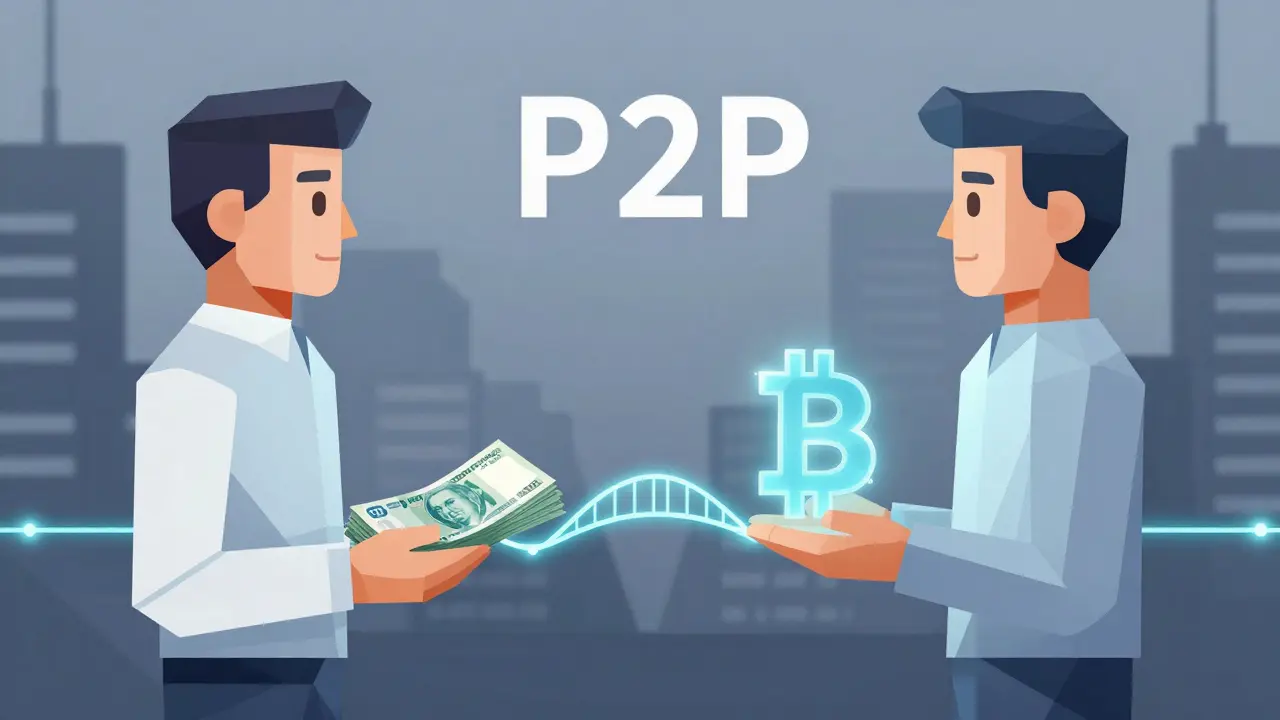
Buying or selling cryptocurrency in Russia has changed dramatically. You can’t just walk into a bank and swap rubles for Bitcoin anymore. Traditional exchanges have pulled back, and direct bank transfers often get blocked. So, what do you do? Most people turn to P2P crypto trading. It’s the lifeblood of the Russian crypto market right now. But it’s not without its dangers. One wrong move, and your money could vanish into thin air.
This guide cuts through the noise. We’ll look at which platforms actually work in 2026, how to spot a scam before it happens, and why some payment methods are safer than others. If you’re moving money between rubles and crypto, this is the manual you need.
Why P2P Is the Only Game in Town
In 2025 and 2026, the landscape shifted hard. Major global players like Binance and OKX stopped supporting Russian ruble (RUB) transactions entirely. Their P2P sections show zero activity for RUB users. Why? Sanctions and regulatory pressure. This left a vacuum that local-friendly exchanges rushed to fill.
Now, P2P isn’t just an option; it’s the primary way Russians convert fiat to digital assets. According to recent data from October 2025, Bybit alone processed over $27 million in daily volume with nearly 4,000 active advertisements. HTX followed with about $7.7 million, while MEXC and KuCoin handled millions more each. These numbers aren’t small change-they represent the entire flow of capital for thousands of traders.
Why did Binance and OKX stop RUB trading?
Due to international sanctions and compliance requirements, these major exchanges withdrew support for Russian ruble transactions to avoid legal penalties. They no longer list RUB pairs in their P2P markets.
The Top Platforms for Russian Traders
Not all exchanges are created equal when you’re dealing with rubles. Some offer better liquidity, lower fees, or more reliable customer support in Russian. Here’s how the current leaders stack up.
| Platform | Daily Volume (Approx.) | Key Features for RUB Users | Fees |
|---|---|---|---|
| Bybit | $27.1M | Full Russian localization, Sberbank/Tinkoff support, high liquidity | 0.1% trading fee |
| MEXC | $2.2M | Zero maker fees, supports Yandex Money (Ю Money), altcoin focus | 0% maker / 0.02% taker |
| HTX | $7.6M | Strong reputation system, diverse payment options | Competitive standard rates |
| KuCoin | $3.2M | Card-only deposits, wide coin selection | 0.1% trading fee |
| Bitget | $1.8M | Bulgarian VASP license, copy trading, full Russian support | 0.1% spot / 0.02% maker futures |
Bybit is currently the heavyweight champion. It offers a fully localized interface and customer support in Russian, which matters when you’re stuck in a dispute. It accepts deposits via Sberbank, T-Bank (formerly Tinkoff), Raiffeisenbank, OZON Bank, and MIR cards. The platform also supports Advcash and various e-wallets, giving you flexibility if one bank blocks your transaction.
If you’re hunting for new tokens, MEXC is your best bet. It lists over 2,800 cryptocurrencies, often adding new projects days after they launch globally. Since early 2025, MEXC has seen massive volume in new token trades. Its "Traderfest" program even waives fees on select pairs. For ruble users, it accepts payments via SBP (Fast Payment System), Yandex Money, and local bank transfers.
Bitget brings a different angle. After obtaining a VASP license in Bulgaria in February 2025, it positioned itself as a compliant European hub while still serving Russian users with full localization. It’s particularly popular among those who use copy trading, allowing beginners to mimic the moves of successful traders with leverage up to 125x.
How P2P Actually Works: Step-by-Step
You don’t just click "buy" and get crypto instantly. P2P is a manual process involving two humans and an escrow service. Here’s the typical workflow:
- Buy Stablecoins First: Most users start by buying USDT (Tether) using a trusted method. Then, they navigate to the P2P section to sell that USDT for RUB, or vice versa.
- Select an Advertiser: Browse ads filtered by payment method (e.g., Sberbank, MIR card). Look for sellers with high completion rates (ideally above 95%) and many verified orders.
- Initiate Trade: Enter the amount you want to trade. The platform locks the seller’s crypto in escrow. This means neither party can touch the funds until the deal is done.
- Make Payment: Transfer the rubles to the seller’s specified bank account. Do this outside the chat window-never send money based on verbal promises.
- Release Crypto: Once the seller confirms receipt of funds, they release the crypto from escrow to your wallet. If they don’t pay, you open a dispute.
Notice the color codes mentioned in user forums? "Local Card (Green)" usually means Sberbank. "Yellow Card" often refers to T-Bank. These nicknames exist because some banks restrict crypto-related descriptions, so advertisers use vague terms. Knowing these codes helps you choose a payment method that matches your own bank.
The Real Risks: Scams, Bans, and Volatility
P2P sounds simple, but it’s rife with traps. Understanding these risks is the difference between making a profit and losing everything.
Counterparty Fraud
This is the biggest threat. A buyer might receive your crypto and then claim they never sent the money. Or worse, they send a fake screenshot of a transfer. Always check the balance in your actual banking app, not just a notification. If a deal feels off, pause. Use the platform’s dispute resolution center immediately. Never release crypto until you see the funds in your account.
Bank Account Freezes
Russian banks are under strict scrutiny from the Central Bank (CBR). If you frequently receive large sums from unknown individuals, your account might be flagged for potential money laundering. This can lead to temporary freezes or mandatory explanations. To mitigate this:
- Keep transactions within reasonable limits for your profile.
- Avoid using personal accounts for business-like volumes of trading.
- Use dedicated cards for crypto activities if possible.
Price Slippage
Crypto prices change every second. In a volatile market, the price you agreed on might shift significantly by the time you complete the payment. Some platforms have automatic cancellation clauses if the price moves too much, but always agree on a fixed rate before starting the trade.
Phishing and Fake Support
Scammers create fake Telegram groups or websites mimicking Bybit or MEXC. They’ll ask for your private keys or seed phrase. Remember: legitimate support will never ask for your password or seed phrase. Enable two-factor authentication (2FA) on all your accounts, preferably using an authenticator app rather than SMS.
Security Best Practices for Russian Traders
Protecting yourself requires discipline. Here’s a checklist to keep your funds safe:
- Verify Identities: Ensure the name on the bank account matches the trader’s verified profile. Mismatches are a huge red flag.
- Use Escrow: Never trade outside the platform. Off-platform deals have no protection.
- Check Reputation: Stick to traders with over 100 completed orders and a rating above 95%. New accounts with low history are risky.
- Document Everything: Take screenshots of the trade agreement, payment details, and chat logs. If a dispute arises, evidence wins cases.
- Start Small: If you’re new to a platform, test with small amounts first to understand the flow and verify reliability.
Regulatory Landscape: What’s Legal?
The Russian government hasn’t banned crypto outright, but it’s heavily regulated. The Central Bank monitors flows closely. While owning crypto is legal, using it for payments is restricted. P2P trading exists in a gray area-it’s tolerated because it provides liquidity, but it’s not officially endorsed.
Exchanges operating in Russia must comply with anti-money laundering (AML) rules. This is why KYC (Know Your Customer) verification is mandatory on platforms like Bybit and Bitget. You’ll need to upload your passport and sometimes a selfie. Skipping this step limits your withdrawal amounts and increases suspicion.
Future regulations may tighten further. Keep an eye on announcements from the Ministry of Finance. As of mid-2026, there are talks about licensing domestic crypto brokers, which could eventually replace P2P with more formal channels. Until then, P2P remains the king.
Final Thoughts: Navigating the Maze
P2P crypto trading in Russia is complex, but it’s manageable if you respect the risks. Choose established platforms like Bybit or MEXC, stick to verified traders, and never rush a transaction. The convenience of instant swaps isn’t worth the risk of losing your savings to a scammer.
As the market evolves, tools will improve. Dispute resolution systems are getting faster, and payment integrations are becoming smoother. But human error remains the weakest link. Stay alert, stay informed, and trade safely.
Is P2P crypto trading legal in Russia?
Owning cryptocurrency is legal in Russia, but using it for payments is restricted. P2P trading operates in a regulatory gray area but is widely practiced. Exchanges must follow AML laws, requiring user verification (KYC).
Which bank is safest for P2P transactions?
There is no "safest" bank, as all are monitored. However, Sberbank and T-Bank (Tinkoff) are most commonly used due to high liquidity. Avoid mixing personal salary accounts with high-volume crypto trades to reduce freeze risks.
What should I do if a P2P seller doesn't release crypto?
Immediately open a dispute within the platform. Provide proof of payment (bank statement showing the transfer). Do not communicate off-platform. The exchange's support team will review the evidence and decide whether to return the funds.
Can I use Yandex Money for P2P trading?
Yes, MEXC supports Yandex Money (Ю Money) for RUB deposits. Other platforms may vary, so always check the available payment methods in the P2P filter settings before initiating a trade.
Why are fees lower on MEXC compared to Bybit?
MEXC uses a zero-maker-fee model to attract volume, especially for new altcoins. Bybit charges 0.1% but offers higher liquidity and more robust institutional features. Choose based on whether you prioritize cost (MEXC) or stability/support (Bybit).