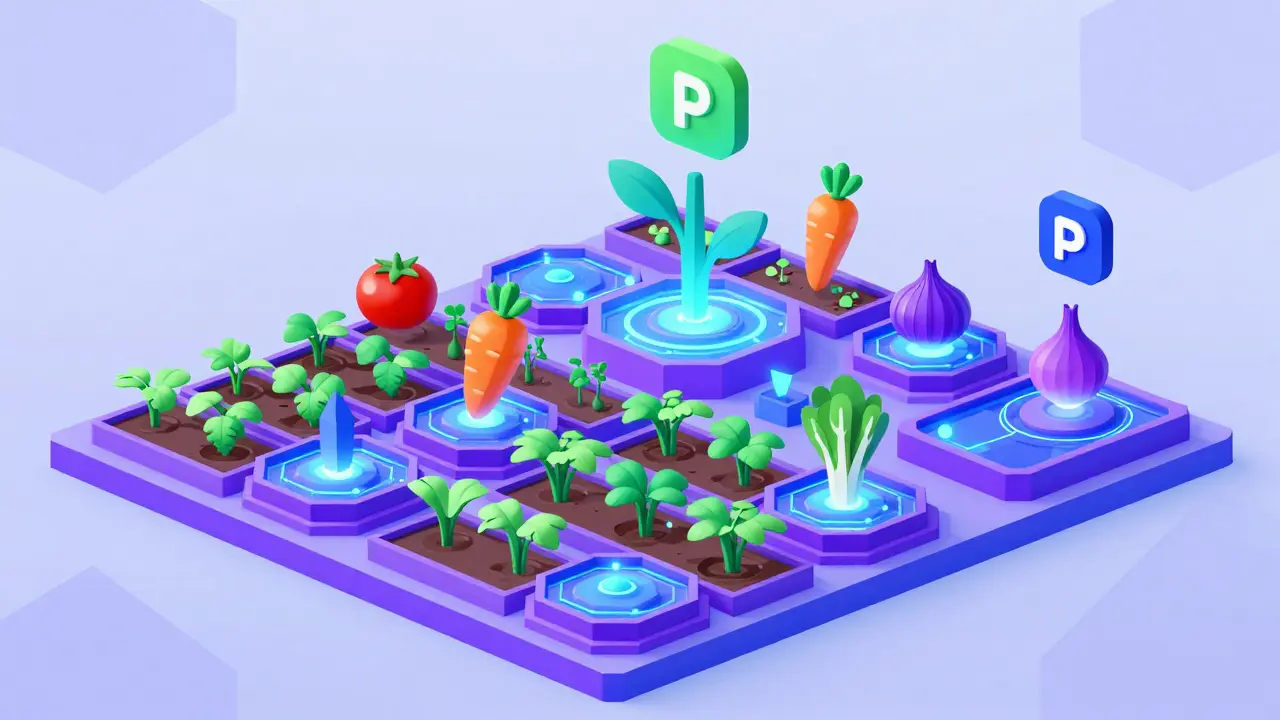
Most people hear the word "airdrop" and expect a free windfall of tokens landing in their wallet overnight. However, the OneRare is a food-themed metaverse, often called the Foodverse, that brings global cuisine to the blockchain. In this ecosystem, getting your hands on Ingredient NFTs isn't always about a random giveaway; it's about playing the game and strategically managing your assets on the Polygon network. If you're looking for a shortcut to free assets, you'll find that OneRare rewards active participants rather than passive holders.
Quick Summary: Getting Your Ingredients
- Primary Method: Stake ORARE tokens in farming pools to earn Ingredient NFTs.
- NFT Utility: Use ingredients to mint Dish NFTs in the Kitchen or sell them at the Farmer's Market.
- Risk Factor: In-game environmental disasters (like droughts) can stop the production of certain crops.
- Network: Everything runs on Polygon to keep gas fees low and speeds high.
Understanding the OneRare Ingredient Distribution
Unlike traditional crypto projects that blast a fixed amount of tokens to early adopters, OneRare uses a dynamic distribution system. The "airdrop" feel comes from the farming mechanics. Instead of a one-time event, the platform emits Ingredient NFTs at a fixed hourly rate. To get these, you need to interact with the farming pools.
There are six themed farming pools in the Foodverse. When you stake your ORARE tokens-the native utility token of the platform-you enter a lottery-style system. You can't simply pick "Tomato" or "Onion"; the ingredients are randomized. This means your strategy depends on what the pool decides to give you, creating a natural secondary market where players trade the specific items they need to complete a recipe.
The Four Pillars of the Gaming Zone
To make the most of the OneRare Ingredient NFT system, you have to understand how the Gaming Zone is structured. It isn't just one big map; it's divided into functional areas that dictate how your assets move from raw materials to valuable digital collectibles.
First is the Farm. This is the engine of the economy. This is where the staking happens and where the Ingredient NFTs are born. If you aren't staking here, you aren't earning the basic building blocks of the game.
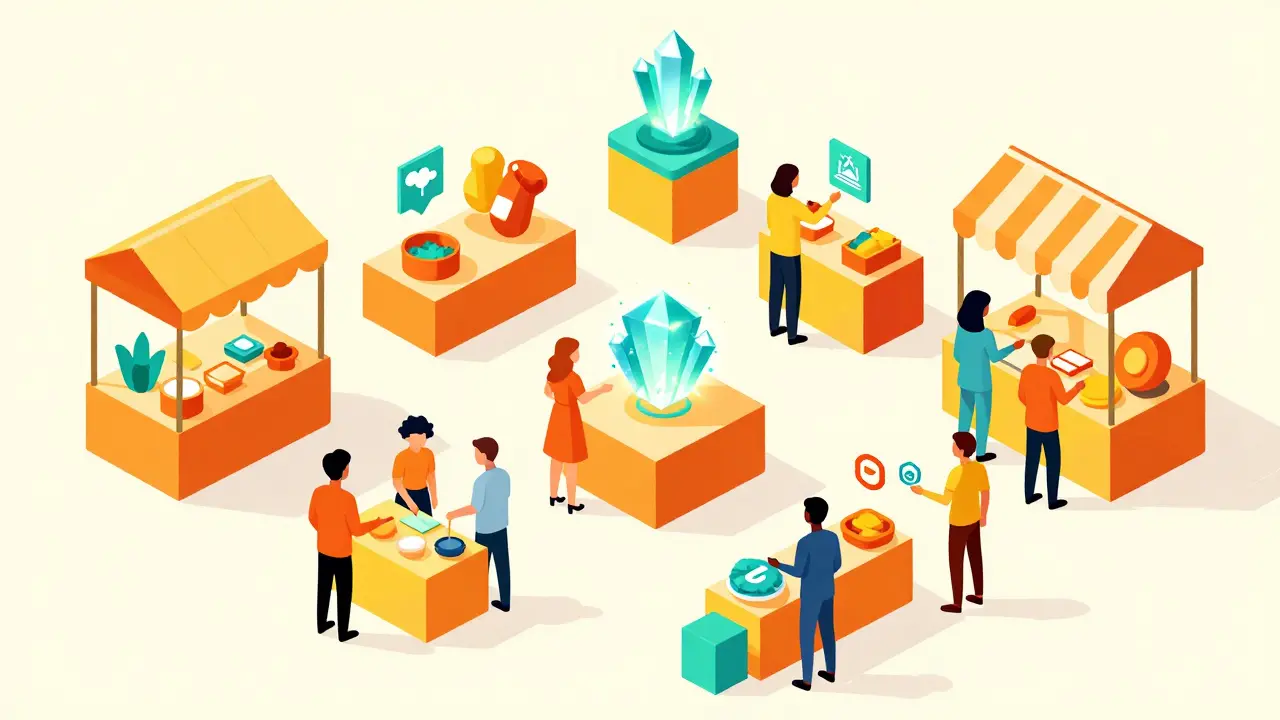
Next is the Farmer's Market. This acts as the hub for commerce. If the farming pool gives you ten lettuces but you desperately need a potato for a dish, the Market is where you swap. It also features special shops for "rare" ingredients that you simply cannot farm, forcing players to use their ORARE tokens to buy specific high-tier items.
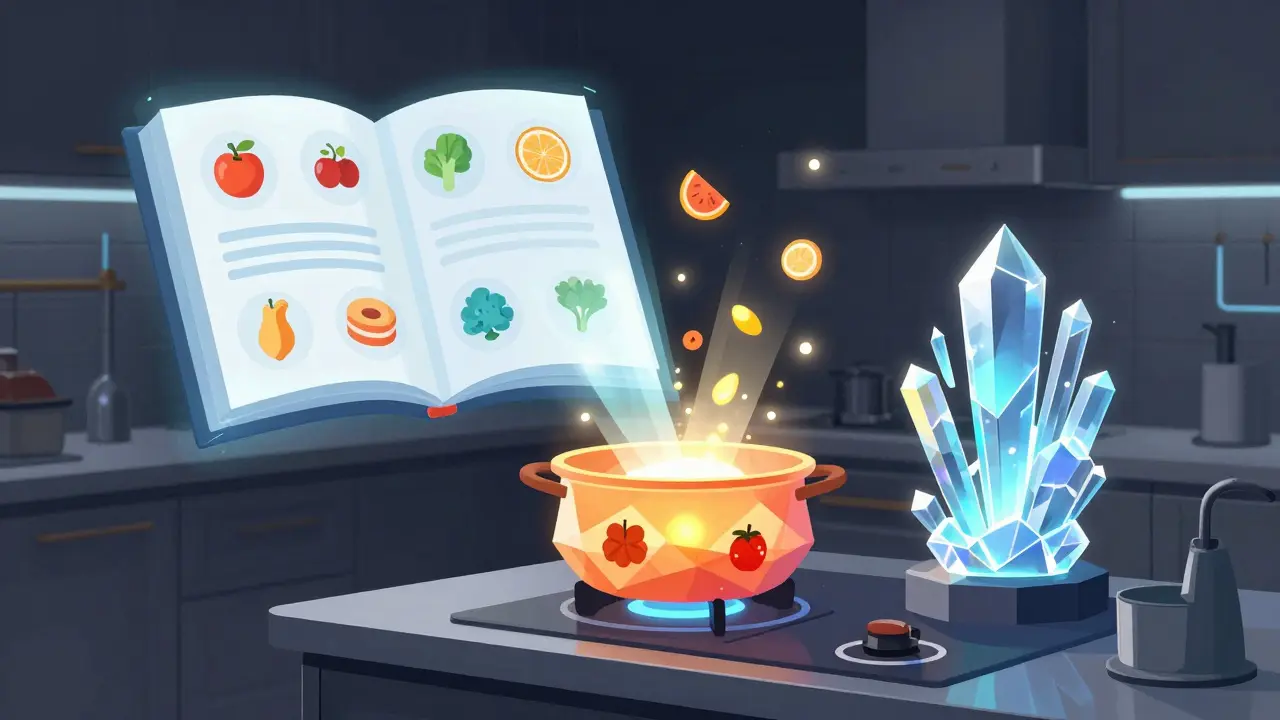
Then we have the Kitchen. This is where the actual "crafting" happens. You combine your Ingredient NFTs to mint a Dish NFT. Here is the catch: once you cook a dish, the ingredient NFTs are burned. They are gone forever. This creates a constant demand for more ingredients, preventing the market from becoming oversaturated.
Finally, there is the Playground. Think of this as the utility zone. You can take your minted Dish NFTs or raw Ingredients and use them in mini-games to win even more rewards, adding another layer of incentive to hold onto your assets rather than selling them immediately.
Dealing with Digital Disasters
One of the most interesting parts of the OneRare ecosystem is that it doesn't operate in a vacuum. The developers have introduced real-world agricultural risks into the code. This means your "airdrop" from the farming pools can be interrupted by simulated environmental crises.
Imagine you've staked a huge amount of tokens to get corn NFTs, and suddenly a "Pest Attack" or a "Drought" hits the Foodverse. In these scenarios, the farming of specific ingredients stops completely for a set duration. While this sounds like a nightmare for the farmer, it's a goldmine for the trader. When supply vanishes due to a tornado or global warming event in-game, the price of those specific Ingredient NFTs in the Farmer's Market usually skyrockets.
| Stage | Action | Outcome | Asset Status |
|---|---|---|---|
| Farming | Stake ORARE | Receive Random Ingredient NFT | New Asset Created |
| Trading | Market Exchange | Swap for needed recipe item | Asset Transferred |
| Cooking | Combine Ingredients | Mint Dish NFT | Ingredients Burned |
| Gaming | Use in Playground | Win rewards/tokens | Asset Retained |
The Role of Celebrity Chefs and Brands
OneRare isn't just building a game; they are building a culinary library. To give the NFTs actual prestige, they've partnered with world-class culinary talent. We're talking about Michelin star chef Anthony Sarpong and MasterChef Australia's Reynold Poernomo.
These partnerships matter because they introduce "Signature Dishes." When a celebrity chef collaborates with the platform, the resulting NFTs often require specific, high-tier ingredients that are harder to farm. This pushes players to engage more deeply with the staking pools and the marketplace to acquire the rare components needed to recreate a famous chef's masterpiece on the blockchain.
Technical Setup for New Players
Since OneRare is built on Polygon, you don't have to worry about the massive gas fees that usually plague Ethereum. However, if you've never touched Web3, the barrier can still feel high. You'll need a compatible wallet (like MetaMask) and a small amount of MATIC to cover the transactions.
The process is straightforward: connect your wallet, acquire ORARE tokens, and head to the Farm. The goal is to balance your portfolio between staking for new ingredients and holding enough ORARE to buy the "missing piece" of a recipe from another player. If you try to rely solely on the random drops from farming, you might find yourself with a warehouse full of onions and no way to make a single dish.
Is there a traditional free airdrop for OneRare Ingredient NFTs?
Generally, no. OneRare focuses on a "Proof of Stake" farming model. Instead of a one-time free drop, you earn Ingredient NFTs by staking ORARE tokens in themed pools, where NFTs are emitted at a fixed hourly rate based on your stake.
What happens to ingredients after I cook a dish?
When you combine ingredients in the Kitchen to mint a Dish NFT, the original Ingredient NFTs are burned. This means they are permanently removed from the supply, which helps maintain the economic value of the remaining ingredients in the ecosystem.
Why did my ingredient farming suddenly stop?
You likely encountered an environmental event. OneRare simulates real-world agricultural problems like droughts, pests, or tornadoes. These events can pause the production of specific crops for a period of time, affecting the overall supply and price in the marketplace.
Can I choose which ingredient I want to farm?
No, the ingredients in each farming pool are randomized. While the pool has a theme, you cannot target a specific vegetable or spice. You must farm and then trade in the Farmer's Market to get exactly what you need for a recipe.
Which blockchain does OneRare use?
OneRare operates on the Polygon blockchain. This choice allows for faster transaction speeds and significantly lower fees than the Ethereum mainnet, making it more accessible for players to trade small quantities of ingredient NFTs.
Next Steps for Foodverse Explorers
If you're just starting, don't dump all your tokens into one pool. Diversify your staking across different themed pools to see which ingredients you naturally accumulate. If you find yourself with a surplus of one item, head to the Farmer's Market immediately to trade while the supply is high.
For those looking for higher returns, keep an eye on the environmental news within the game. If a "Drought" is announced, the value of water-heavy crops usually goes up. If you already have those in your inventory, you're in a prime position to sell at a premium. Finally, check the Playground regularly-using your NFTs in mini-games is often a better long-term play than just hoarding them in your wallet.
Tony Gurley-Ward
April 23, 2026 AT 20:30The notion of burning assets to create value is a delightful little paradox isn't it
We spend our lives hoarding digital carrots just to set them on fire for a fancy plate of pixels. It's a kaleidoscopic dance of scarcity in a world of infinite copies. Pure poetic madness!
Eric Raines
April 25, 2026 AT 04:13Everyone knows the 'environmental disasters' are just a way for devs to manipulate the floor price when liquidity gets too high. It's basic market psychology 101. I've seen this play out in a dozen other Polygon projects already, and it always ends the same way.
Benjamin Forg
April 25, 2026 AT 13:50predictable control mechanisms
they call it a drought but it is actually a social engineering experiment to see how we react to artificial scarcity
who really benefits from the burn anyway probably the shadows behind the screen
Tara Aman
April 26, 2026 AT 15:13This sounds like such a fun way to get into Web3! I love the idea of a community kitchen where everyone helps each other find the missing ingredients. Let's all jump in and start farming!
Mary Tawfall
April 26, 2026 AT 22:41It is really wonderful to see a project that rewards active participation rather than just sitting on a wallet. That approach creates a much healthier ecosystem for everyone involved.
Lisa Camp
April 27, 2026 AT 20:55STOP WAITING AROUND! If you aren't staking your ORARE right now you are literally leaving money on the table! Get in the pools, get those ingredients, and dominate the market before the next disaster hits! GO GO GO!
Yvette P
April 29, 2026 AT 08:04Oh sure, because the 'synergistic integration' of celebrity chef IP into a tokenized utility framework is exactly what the world was missing. I'm sure the algorithmic emission rate of a digital onion is a truly revolutionary breakthrough in fiscal monetary policy and not just another layer of obfuscation to hide the lack of actual gameplay loop depth for the retail user base who doesn't understand how to hedge their positions against the simulated droughts. Absolute genius, really.
Hannah Rubia
April 29, 2026 AT 08:12I would like to offer some guidance for those concerned about the burning mechanism. It is a standard deflationary model designed to ensure that the assets retain their value over time. By removing the raw materials from the supply, the resulting Dish NFTs become significantly more scarce and, consequently, more desirable to collectors.
Liz Ariza
April 30, 2026 AT 07:23Keep pushing forward everyone! 🌟 The Farmer's Market is such a vibrant place to meet people! 🍎🥕 Just remember to be kind while trading your spices! ✨ Happy cooking!
Jason M
April 30, 2026 AT 23:46OH MY GOODNESS! The sheer audacity of combining a Michelin star chef with a blockchain-based garden is just breathtaking! Imagine the glory of minting a signature dish for the first time! I am absolutely electrified by the potential here! We are witnessing the birth of a digital culinary empire!
debashish sahu
May 1, 2026 AT 02:11The use of Polygon is a very wise decision for a project like this. In India, many of us appreciate low transaction costs because it makes the entry barrier much lower for students and young enthusiasts who want to explore the metaverse without spending too much on gas.
Mike Word
May 2, 2026 AT 23:50I wonder if the themed pools reflect actual global cuisine distributions or if they are just arbitrary categories. It would be interesting to see how the secondary market for specific regional ingredients develops as more players join from different parts of the world.