
Back in October 2021, thousands of crypto users got excited about a free token drop called OKFLY - also known as Okex Fly. Promised up to 30 million tokens for free, it showed up on CoinMarketCap’s airdrop page with flashy videos on YouTube and social media posts telling people to sign up fast. It looked like an easy win: just connect your wallet, follow a few social accounts, and get paid. But four years later, almost no one talks about it anymore. Why? Because the OKFLY airdrop didn’t lead to a real token. It led to a ghost.
What Was the OKFLY Airdrop Really About?
The OKFLY token was launched as an ERC-20 token on the Ethereum blockchain. Its contract address - 0x02f093513b7872cdfc518e51ed67f88f0e469592 - is still live, but it’s empty of value. The project claimed a maximum supply of 1 quadrillion tokens (1,000,000,000,000,000 OKFLY), which is an absurdly large number. That’s not a bug - it’s a tactic. Projects like this use huge supplies to make small amounts of tokens seem valuable. If you got 30 million OKFLY, it sounds like a lot… until you realize that’s just 0.003% of the total supply. And even then, nobody wanted it. The airdrop itself was simple. You had to have an Ethereum wallet, sign up on CoinMarketCap’s airdrop portal, and complete basic tasks: follow their Twitter, join their Telegram, maybe refer a friend. Nothing technical. No KYC. No deposit. Just free tokens. That’s what made it attractive. But free doesn’t mean valuable. And in crypto, if no exchange lists your token, it’s basically digital confetti.Why Did OKFLY Never Get Listed on Exchanges?
This is the real story. Most tokens that do well after an airdrop get listed on at least one major exchange - Binance, Coinbase, KuCoin, or a DEX like Uniswap. OKFLY never made it. Not even on a small DEX. As of 2026, CoinCarp and other trackers confirm: no centralized exchange, no decentralized exchange. Zero listings. That’s rare. Even failed projects usually get picked up by some niche DEX. But OKFLY? Dead silence. Why? Three reasons stand out:- No team transparency - No whitepaper, no GitHub, no LinkedIn profiles for developers. Just a logo and a Twitter account that went quiet in 2022.
- No utility - What was OKFLY for? Staking? Governance? NFTs? Nothing. It had no use case. Just supply and hype.
- No marketing after the airdrop - The YouTube videos stopped. The Telegram group died. No updates. No roadmap. No team announcements. It looked like a one-and-done scam.
What Was the Price of OKFLY? (Spoiler: It’s Worth Almost Nothing)
The highest price OKFLY ever hit was $0.00000729. That’s less than a tenth of a cent. And that was back in late 2021. By December 2023, the last recorded trade was at $0.0000000106 - almost zero. To put that in perspective: if you got 30 million OKFLY during the airdrop, your entire haul was worth about 30 cents at its peak. Today? It’s worth less than a penny. Even if you held onto it, you can’t sell it. No exchange will let you trade it. You can’t send it to a wallet and cash out. You can’t even find a buyer on OTC platforms because no one trusts it. The token exists on the blockchain, but it’s functionally worthless.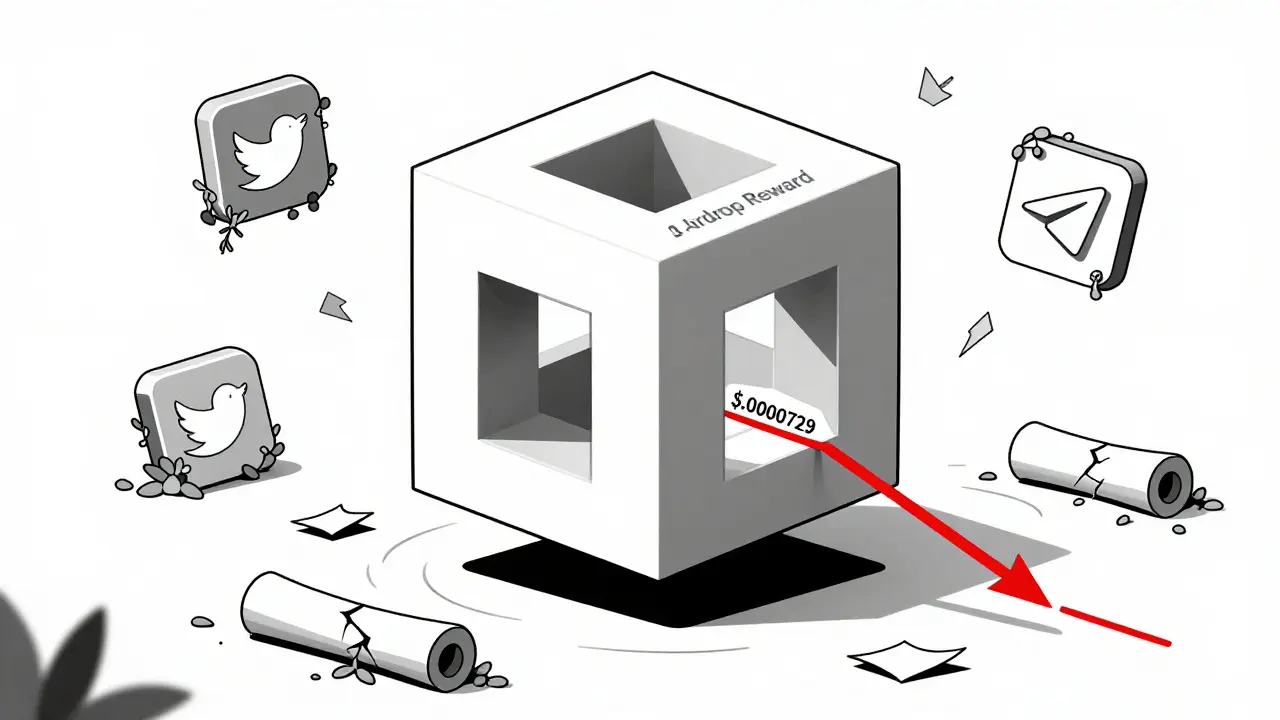
Is OKFLY a Scam?
Calling it a scam feels too strong - because there’s no evidence they stole money. No one paid to join. No one was asked for private keys. It was a true airdrop: free tokens, no cost. But that doesn’t make it legitimate. It’s what crypto folks call a “pump and dump” without the pump. A “hype and ghost.” The team used the airdrop to generate buzz, collect email addresses, and maybe build a fake community. Then they vanished. That’s not illegal - but it’s unethical. And it’s common. Thousands of tokens like OKFLY were launched in 2021, hoping to ride the airdrop wave. Most failed. OKFLY just did it with less effort than most.What Should You Do If You Still Have OKFLY Tokens?
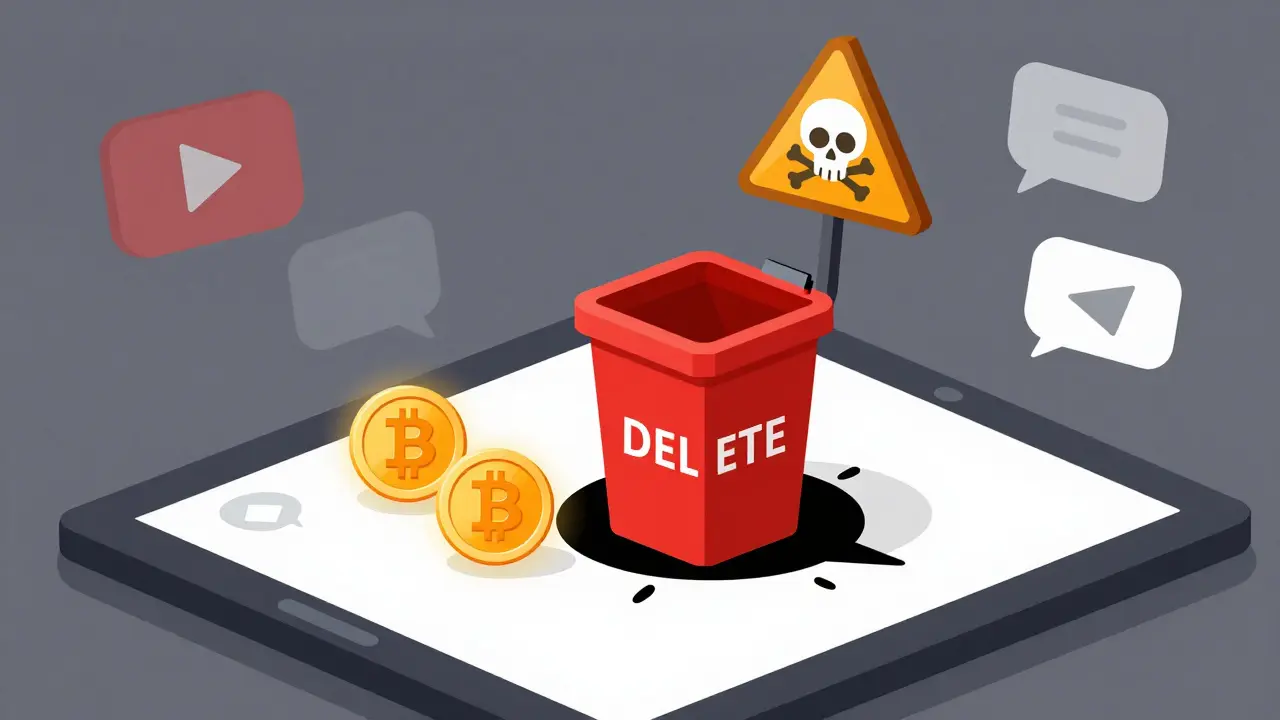
If you participated in the 2021 airdrop and still hold OKFLY in your wallet - delete it. Seriously. Don’t keep it. Don’t try to sell it. Don’t wait for it to “come back.” Here’s why:- It has no market value - you won’t get anything for it.
- It could be a phishing trap - some fake websites claim they can “recover” your OKFLY, but they’re just stealing your private keys.
- It clutters your wallet - wallets with hundreds of dead tokens can slow down apps or trigger false security alerts.
How to Spot a Future OKFLY Before It Happens
This isn’t just about OKFLY. It’s a lesson. Every year, dozens of new airdrops promise the moon. Most are worthless. Here’s how to avoid the next one:- Check for exchange listings - If it’s not on CoinGecko or CoinMarketCap with trading volume, it’s dead on arrival.
- Look for a real team - No LinkedIn? No GitHub? No Twitter activity? Red flag.
- Ask: What’s the use case? - If the project can’t explain what the token does in one sentence, it’s probably just a token.
- Check the token supply - If the supply is over 1 trillion, it’s likely designed to look valuable while being worthless.
- Wait 6 months - If a token hasn’t listed on any exchange within six months of its airdrop, it’s not coming back.
What Happened to the People Who Joined the Airdrop?
Most participants forgot about it. A few checked their wallets a month later and saw the tokens. A few tried to sell them. When they couldn’t, they moved on. A small group kept hoping - “Maybe it’ll rebound.” But crypto doesn’t work that way. If a project dies, the token dies with it. There are no success stories with OKFLY. No one turned 30 million tokens into a car, a house, or even a decent dinner. The only people who benefited were the ones behind the scenes - the ones who got early access to wallets, sold the hype, and vanished before the truth came out.Final Verdict: OKFLY Is a Dead Token
The OKFLY airdrop was a marketing stunt with no follow-through. It used the excitement of free crypto to grab attention, then disappeared. Four years later, it’s a footnote in crypto history - a cautionary tale about how easy it is to create a token that looks real but has no substance. Don’t chase the next OKFLY. Don’t fall for “free money” promises with no clear purpose. Real crypto projects don’t need to give away a quadrillion tokens to get noticed. They build tools, solve problems, and earn listings. OKFLY did none of that. If you still have OKFLY in your wallet - delete it. Move on. There’s nothing left to save.Was OKFLY a real cryptocurrency project?
OKFLY was a token launched via airdrop in 2021, but it never became a real project. It had no team, no whitepaper, no utility, and never listed on any exchange. It was a promotional stunt with no long-term development.
Can I still trade OKFLY tokens today?
No, you cannot trade OKFLY on any major or minor cryptocurrency exchange. It has no trading pairs on CEXs or DEXs. The last recorded trade was in December 2023 at a price of $0.0000000106. There is no active market for it.
How many OKFLY tokens were distributed in the airdrop?
Participants could receive up to 30,000,000 OKFLY tokens during the October 2021 airdrop. The total supply is 1 quadrillion tokens, so each participant received a tiny fraction of the overall supply.
Is OKFLY still listed on CoinMarketCap?
Yes, OKFLY still appears on CoinMarketCap as a listed token, but it shows zero trading volume and no exchange listings. Its market cap is effectively $0. Its presence there is purely archival - not an endorsement.
Should I keep OKFLY in my crypto wallet?
No. Keeping OKFLY in your wallet serves no purpose. It has no value, cannot be traded, and may trigger false security alerts. Remove it from your wallet’s token list to avoid clutter and potential phishing risks.
Mandy McDonald Hodge
January 4, 2026 AT 17:37omg i totally forgot i had okfly in my wallet 😅 i just deleted it after reading this-so many dead tokens cluttering my meta mask. thanks for the wake-up call!
Haritha Kusal
January 5, 2026 AT 21:11same here i got 30m okfly and thought i was rich lol. then i checked the price and realized i had less than a dollar. crypto is wild.
Rajappa Manohar
January 6, 2026 AT 11:06deleted it last week. no point keeping dead tokens. wallet cleaner = less stress.
Adam Hull
January 6, 2026 AT 20:32The entire OKFLY episode is a textbook case of crypto’s pathological obsession with vanity metrics. A quadrillion-token supply isn’t a feature-it’s a linguistic sleight of hand designed to manufacture the illusion of scarcity while guaranteeing absolute dilution. The fact that anyone still clings to the delusion that this was a ‘project’ speaks volumes about the intellectual bankruptcy of the 2021 airdrop culture. No team. No utility. No future. Just a digital ghost haunting wallets like a bad memory.
Antonio Snoddy
January 8, 2026 AT 17:54you know what’s sadder than OKFLY? The fact that people still believe in ‘free tokens.’ It’s not generosity-it’s extraction. They collect your attention, your social handles, your email, your wallet address… and then they vanish. It’s emotional labor disguised as opportunity. We were never meant to profit. We were meant to perform. And now we’re left holding the ghost of a promise that never existed. 🫠
Andy Reynolds
January 9, 2026 AT 08:01this is why i only do airdrops from projects with actual devs on github and a roadmap that doesn’t say ‘to the moon.’ if it feels too easy, it’s probably a trap. i’ve learned the hard way.
dayna prest
January 9, 2026 AT 18:32OKFLY wasn’t a scam-it was a *performance art piece*. The team didn’t steal money, they stole *hope*. And honestly? That’s way more devastating. You don’t miss what you never had… until you realize you gave your time, your excitement, your *belief* to a void. Now that’s tragic.
Amy Garrett
January 9, 2026 AT 19:19lol i still have okfly in my wallet like a bad tattoo. i keep checking it every week like maybe it’ll wake up. it wont. i need to delete it but im emotionally attached now??
Rick Hengehold
January 10, 2026 AT 16:26Just delete it. No excuses. No ‘maybe next year.’ It’s dead. Move on.
christopher charles
January 10, 2026 AT 16:43bro, i got 30 million okfly and thought i was gonna buy a new laptop… then i checked the price and realized i could’ve just saved the gas fees and bought a coffee instead. lol. thanks for the reminder-deleted it right now. wallet’s cleaner already.
Phil McGinnis
January 12, 2026 AT 12:37This is what happens when you let amateurs run crypto. America’s obsession with ‘free stuff’ created this mess. In China or Russia, you’d never see this. They build. They execute. They don’t hand out quadrillion-token illusions to gullible normies. This is why crypto is dying in the West.
Jacky Baltes
January 13, 2026 AT 12:26There’s a deeper lesson here about human psychology: we’re wired to chase the promise of easy reward. OKFLY didn’t fail because of bad code-it failed because it exposed how easily we trade our skepticism for the thrill of potential gain. We didn’t need a whitepaper. We needed to feel like insiders. And they gave us just enough to keep us hooked.
Willis Shane
January 14, 2026 AT 20:52As someone who worked in fintech compliance for over a decade, I can confirm that this type of token-lacking any identifiable team, utility, or regulatory compliance-would have been flagged immediately in any legitimate jurisdiction. The fact that it was ever listed on CoinMarketCap is a systemic failure. The platform should be held accountable for enabling these ghost assets to masquerade as legitimate investments. This isn’t just negligence-it’s complicity.
Ryan Husain
January 16, 2026 AT 00:31People need to stop treating airdrops like lottery tickets. If you didn’t do due diligence before claiming, you’re not a victim-you’re a participant in a system you chose not to understand. The real crime isn’t the scam-it’s the lack of personal responsibility. Learn. Adapt. Don’t repeat.
Bruce Morrison
January 17, 2026 AT 08:28Deleted OKFLY yesterday. Best decision I made all year. No regrets. No nostalgia. Just peace of mind.