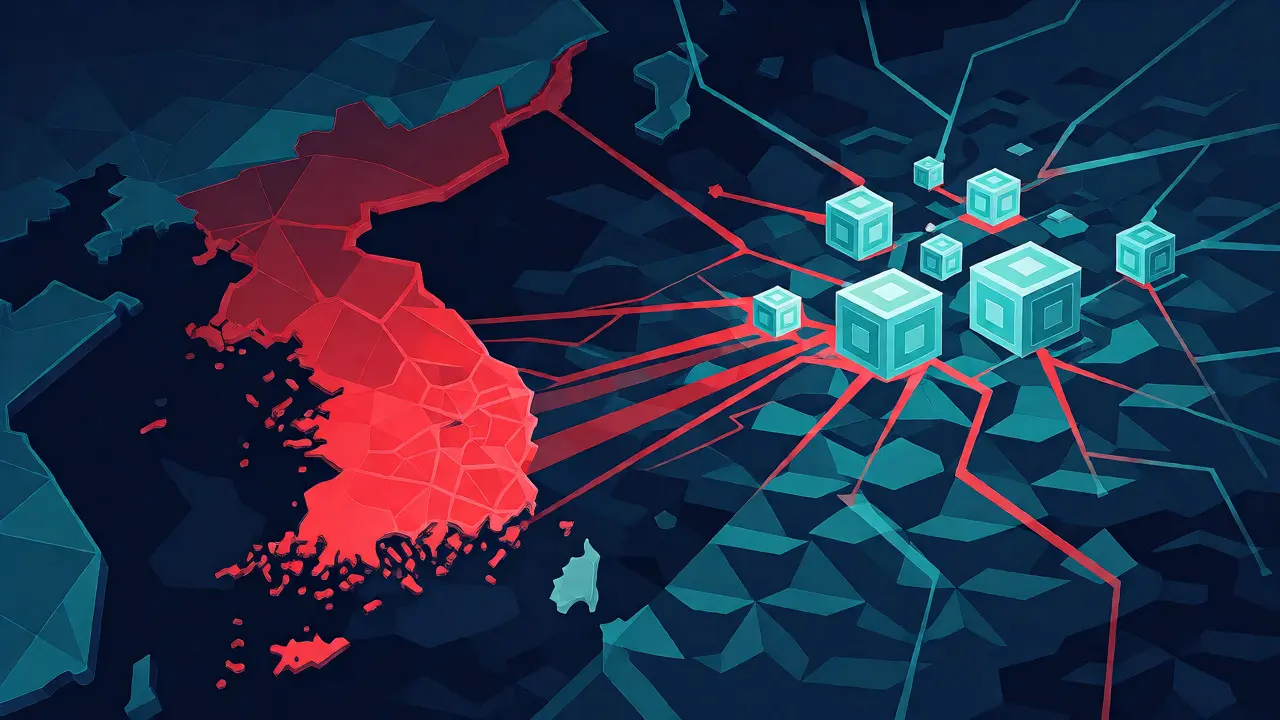
You might think the biggest financial crimes involve Wall Street suits or offshore tax havens. But some of the most sophisticated heists in history aren't happening in boardrooms. They're happening on blockchain ledgers, orchestrated by state-sponsored hackers from one of the world's most isolated nations. North Korea has quietly become the world's most prolific cryptocurrency thief, stealing an estimated $3 billion between 2017 and 2023. And that number is just the beginning.
If you hold Bitcoin or trade on exchanges, this isn't just a geopolitical curiosity. It affects your security, the stability of the platforms you use, and the global crypto market. Let's break down how Pyongyang pulls off these digital robberies, why they keep getting bigger, and what it means for the future of digital assets.
The Scale of the Theft Is Bigger Than You Think
When we talk about cybercrime, we often focus on individual hackers or small syndicates. North Korea operates differently. According to United Nations Security Council assessments, the Democratic People's Republic of Korea (DPRK) executed 58 separate cyberattacks over six years. The total haul? Approximately $3 billion. That’s not pocket change; it’s enough to fund significant portions of their weapons programs.
But here’s where it gets alarming. The pace has accelerated dramatically. In 2024 alone, North Korean groups stole $1.34 billion across 47 incidents. That represents a 102.88% increase from the previous year. Why the sudden spike? Sanctions are tightening, and traditional revenue streams like coal exports and labor contracts have dried up. Cryptocurrency offers a lifeline that’s hard to block, easy to move, and difficult to trace if you know the tricks.
| Year | Total Stolen | Number of Incidents | Avg. Per Incident |
|---|---|---|---|
| 2023 | $660.5 Million | 20 | $33.0 Million |
| 2024 | $1.34 Billion | 47 | $28.5 Million |
Notice the average theft size dropped slightly, but the frequency doubled. This suggests a shift from occasional massive hacks to a more consistent, industrialized approach to stealing digital assets.
Meet the Digital Thieves: Lazarus and Friends
These aren't random script kiddies guessing passwords. North Korea employs specialized units within its Reconnaissance General Bureau. The most famous is Lazarus Group, a state-sponsored hacking collective known for high-profile attacks like the Sony Pictures hack and the Bangladesh Bank robbery. But they’re not working alone anymore.
Recent investigations have identified other key players:
- TraderTraitor: Responsible for major 2023 hits, including the $100 million Atomic Wallet breach.
- Jade Sleet: A newer group linked to targeted phishing campaigns against exchange employees.
- Slow Pisces: Known for exploiting vulnerabilities in cross-chain bridges.
What makes these groups different is their patience. They don’t just smash and grab. They plan operations that span months. They study their targets, identify weak links in human security, and wait for the perfect moment to strike.
How They Do It: The LinkedIn Trap
So, how does a hacker in Pyongyang steal millions from a Japanese company? They don’t usually brute-force encryption keys. They target people. The most common tactic involves social engineering via professional networks like LinkedIn.
Take the DMM Heist in May 2024 as a prime example. Attackers posed as recruiters on LinkedIn. They contacted employees at Ginco, a wallet software provider for DMM. The bait? A "pre-employment test" hosted on GitHub. Sounds harmless, right? But this wasn’t a coding quiz. It was a malicious Python script.
Once the employee ran the script, the attackers gained access to their session cookies. This allowed them to impersonate the worker inside Ginco’s internal systems. For weeks, they watched. They learned how transactions were approved. Then, when a legitimate request came through, they manipulated it. The result: 4,502.9 BTC, worth $308 million, vanished into wallets controlled by North Korea.
This method-recruiter phishing-is effective because it exploits trust. People expect job offers. They rarely suspect that a friendly HR message contains malware designed to hijack their digital identity.

The Bybit Shock: A New Record
If you thought $308 million was big, wait until you hear about February 2025. Hackers targeted Bybit, a Dubai-based exchange, and made off with nearly $1.5 billion in Ether. Blockchain analysis firm Chainalysis called it the largest cryptocurrency theft in history. To put that in perspective, this single heist exceeded the combined value of all 47 crypto robberies in 2024.
Why did this happen? Bybit uses smart contract architectures that allow users to interact directly with decentralized applications. While efficient, these interfaces can be complex. Attackers exploited a vulnerability in how signatures were validated during transaction broadcasting. They didn’t need to break the private keys; they tricked the system into accepting fraudulent approvals.
Following the attack, the FBI noted that the hackers moved quickly. They converted large chunks of Ether into Bitcoin using decentralized exchanges (DEXs) and cross-chain bridges. This rapid movement makes tracing funds incredibly difficult. By the time investigators identify the initial address, the money has already been split across thousands of new wallets.
Where Does the Money Go?
It’s not just about hoarding cash. North Korea needs hard currency to import oil, food, and technology. More importantly, they need to fund their ballistic missile program. International sanctions restrict their ability to use traditional banking channels. Cryptocurrency bypasses these restrictions.
Here’s the typical laundering path:
- Mixing: Stolen coins pass through mixers (like Tornado Cash, before its regulatory crackdown) to obscure origins.
- Cross-Chain Swaps: Assets are moved from Ethereum to Solana, then to Bitcoin, breaking the direct trail.
- OTC Desks: Large blocks of crypto are sold to over-the-counter brokers who may not perform rigorous due diligence.
- Conversion: Final sale converts crypto into fiat currencies like USD, EUR, or CNY, which enter the global economy untraceably.
Estimates suggest that a significant portion of stolen funds ends up purchasing luxury goods for the elite or financing military R&D. It’s a closed loop: steal crypto, convert to cash, buy missiles.

Why Attribution Matters
Proving North Korea did it is harder than proving a bank robbed itself. Unlike physical theft, digital traces can be faked. However, organizations like the FBI, Japan’s National Police Agency, and private firms like TRM Labs have developed robust attribution methods. They look for:
- Code Fingerprints: Malware often shares unique code structures with known DPRK tools.
- Infrastructure Reuse: Servers used in one attack often appear in subsequent ones.
- Behavioral Patterns: The timing of attacks often aligns with specific operational cycles of North Korean intelligence units.
In 2024, Chainalysis revised its data multiple times. Some hacks previously blamed on North Korea turned out to be unrelated criminal gangs. Others, smaller incidents, were newly attributed to the DPRK. This highlights the complexity of the threat landscape. Not every big hack is political; sometimes, it’s just crime.
What This Means for You
If you’re a retail investor or trader, North Korean hackers pose a real risk. Exchanges are the primary targets because they hold user funds. When an exchange gets hacked, two things happen: price volatility spikes, and confidence drops.
However, the industry is adapting. Platforms are implementing stricter security measures:
- Multi-Signature Wallets: Requiring multiple approvals before releasing funds.
- Employee Training: Regular drills on phishing and social engineering.
- Real-Time Monitoring: AI-driven systems that flag unusual transaction patterns instantly.
Despite these defenses, the success rate of North Korean operations continues to rise. Their ability to adapt faster than defenders implement fixes remains their greatest advantage.
How much cryptocurrency has North Korea stolen in total?
Between 2017 and 2023, North Korean hackers stole approximately $3 billion. In 2024 alone, they added another $1.34 billion to this total. The February 2025 Bybit hack further increased this figure by nearly $1.5 billion, bringing cumulative losses to over $5 billion.
Which group is responsible for most North Korean crypto hacks?
The Lazarus Group is the most prominent actor, but recent years have seen the rise of specialized subgroups like TraderTraitor, Jade Sleet, and Slow Pisces. These groups often work under the broader umbrella of North Korean state intelligence agencies.
How do North Korean hackers typically gain access to exchanges?
They primarily use social engineering tactics, such as posing as recruiters on LinkedIn to deliver malware disguised as job tests. Once inside, they exploit internal network vulnerabilities and manipulate transaction approval processes.
Can stolen cryptocurrency be recovered?
Recovery is rare. Hackers use mixers, cross-chain bridges, and decentralized exchanges to fragment and launder funds quickly. While blockchain analysis can track movements, freezing assets requires cooperation from exchanges and regulators, which is difficult given the anonymity of many platforms.
Why does North Korea steal cryptocurrency?
International sanctions limit North Korea's access to global banking. Cryptocurrency provides a way to generate foreign currency, fund weapons of mass destruction programs, and purchase imports without relying on traditional financial institutions.