Imagine waking up to find that a single nation-state has stolen more digital assets in one year than most global banks lose in fraud over a decade. That is the reality of North Korea's state-sponsored cryptocurrency operations. While headlines often focus on market volatility or new regulations, a quieter, more dangerous war is being fought in the blockchain trenches. The Democratic People's Republic of Korea (DPRK) has transformed from a pariah state struggling with isolation into the world’s most prolific cyber-thief, funding its nuclear ambitions through sophisticated digital heists.
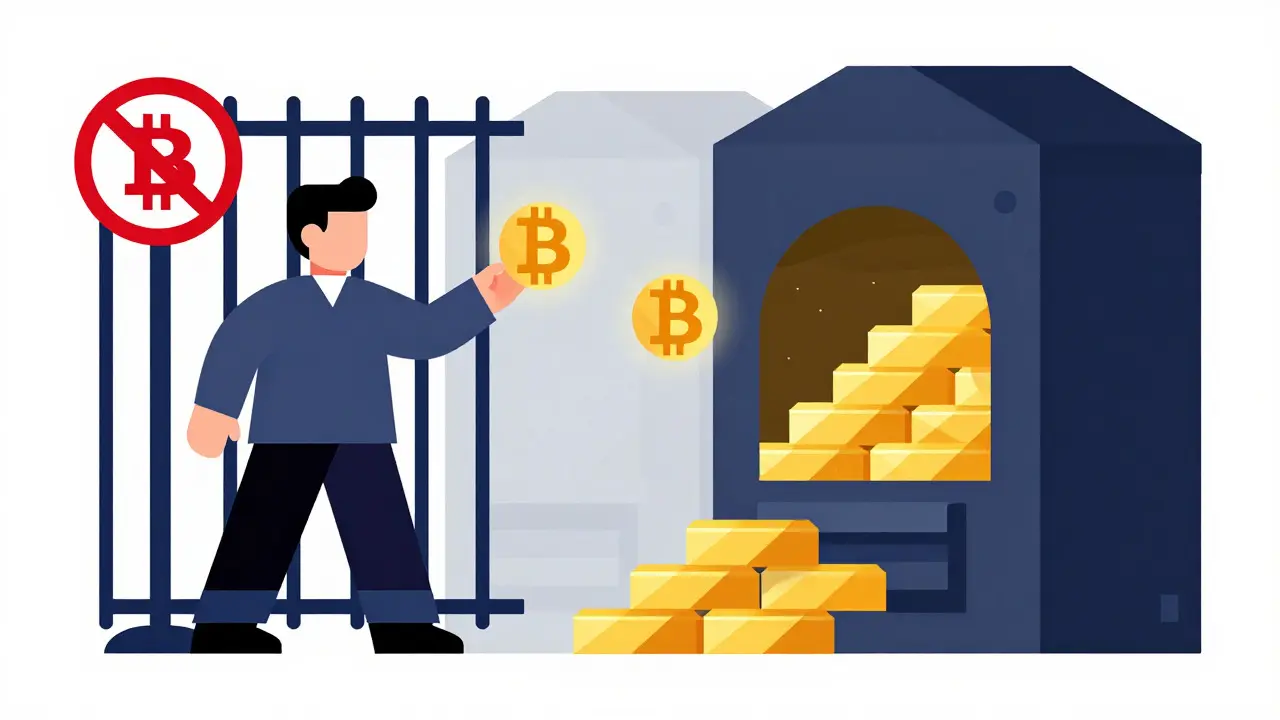
The scale is staggering. In 2025 alone, North Korean actors siphoned over $2.17 billion from cryptocurrency services. This isn't just petty crime; it is a strategic engine for regime survival. But here is the twist that confuses many observers: North Korea does not have a "crypto ban" in the way Western nations might expect. They don't ban Bitcoin because they hate it. They ban their own citizens from holding it while the state hoards it. Understanding this paradox is key to grasping why their hacking operations are so relentless and why international sanctions are failing to stop them.
The Paradox of the North Korean Crypto Ban
To understand the hacking, you first need to understand the domestic policy. North Korea officially prohibits its general population from using cryptocurrencies like Bitcoin or Ethereum. Why? Because decentralized money threatens the central authority of the Kim regime. If your citizens can store value outside the state-controlled Won, you lose control over the economy. So, for the average person in Pyongyang, crypto is contraband. Possession can lead to severe punishment.
However, at the state level, the story flips completely. The government actively accumulates cryptocurrency through illicit means. They view digital assets as a lifeline-a way to bypass the SWIFT banking system and evade US-led sanctions. So, while your neighbor in Bristol might buy Bitcoin on an app, a North Korean citizen risks prison for doing the same, all while the state quietly converts billions in stolen digital funds into hard currency for missile parts. This dual-track approach creates a unique environment where the state acts as both the regulator and the primary thief.
The Bybit Hack: A New Era of Sophistication
If you thought phishing emails were the biggest threat to crypto exchanges, think again. The defining event of 2025 was the Bybit exchange hack, confirmed by the FBI as the work of North Korean actors known as "TraderTraitor." On February 21, 2025, attackers stole approximately $1.5 billion in virtual assets. To put that in perspective, this single incident accounted for nearly 70% of all crypto theft that year.
What makes this attack terrifying for security experts is the target. They didn't just breach a hot wallet connected to the internet; they compromised a "cold" storage wallet. Cold wallets are hardware devices kept offline, traditionally considered impervious to remote attacks. Breaching one requires either physical access or a compromise of the signing process itself-likely involving advanced social engineering or malware introduced during the setup phase. This suggests that North Korea has moved beyond simple code exploits. They are now targeting the human element and the infrastructure supply chain with military-grade precision.
The Three-Pronged Revenue Strategy
Direct hacks are flashy, but they aren't the only tool in the DPRK arsenal. Intelligence reports reveal a three-pronged approach to generating revenue and laundering funds:
- Direct Exchange Heists: High-value targets like Bybit, Ronin Network, and others provide massive windfalls. These require elite teams of hackers who operate under strict deadlines and quotas.
- IT Worker Infiltration: The UN estimates that North Korea generates up to $600 million annually by dispatching IT workers abroad. These individuals use fake identities, often posing as developers from China, Russia, or Eastern Europe, to secure remote jobs with Western tech firms. They hide their location using VPNs and specialized software, sending their salaries back home in cryptocurrency.
- Laundering Networks: Stolen crypto is messy. It needs to be cleaned before it can buy missile components. This is where third-country hubs come in.
The infiltration strategy is particularly insidious. Companies hire what they think is a talented freelance developer in Berlin or San Francisco, unaware that the person is actually sitting in a monitored facility in Pyongyang. These workers contribute to critical software projects while simultaneously gathering intelligence on internal systems. It’s espionage wrapped in a job contract.
Cambodia and the Laundering Pipeline
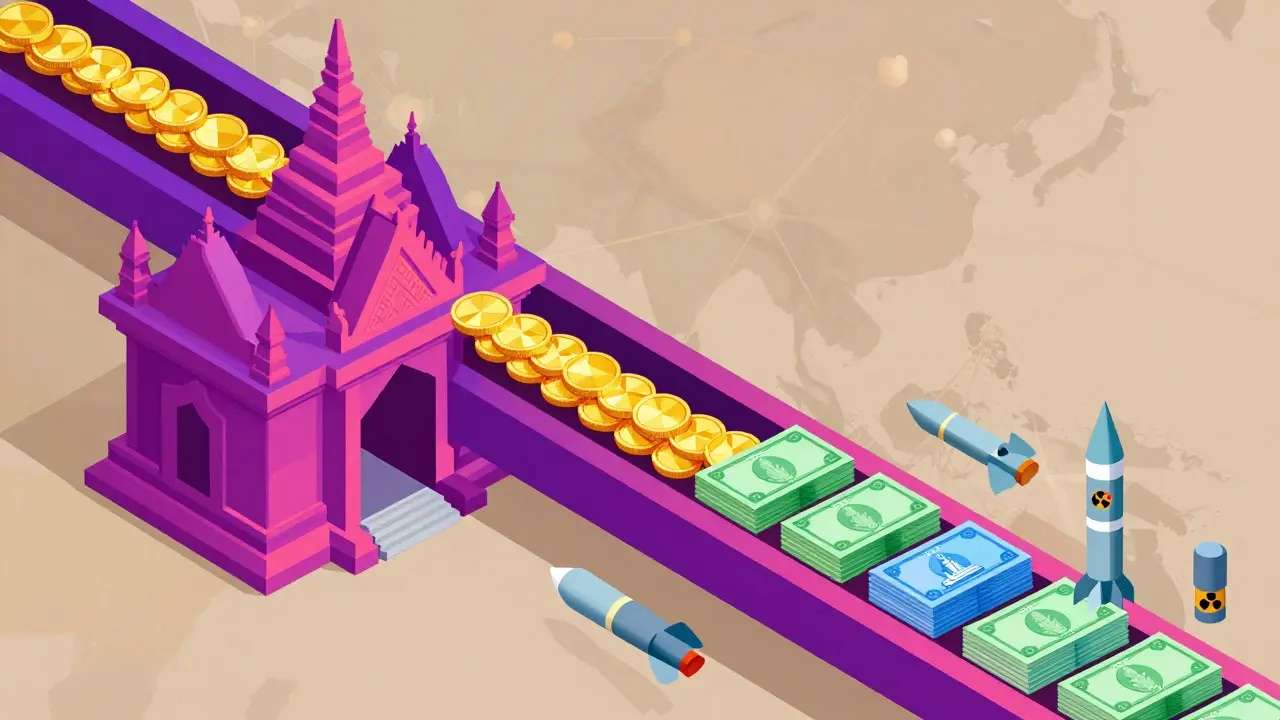
Once the money is stolen, it has to move. You can't just spend Bitcoin at a defense contractor. It needs to be converted into fiat currency or goods without triggering alarms. For years, Cambodia has been a primary hub for this activity. The loosely regulated financial and gambling sectors there provide perfect cover.
In May 2025, the U.S. Financial Crimes Enforcement Network (FinCEN) took significant action against the Huione Group, a Cambodia-based conglomerate identified as a major money laundering concern. FinCEN reported that between 2021 and 2025, roughly $37.6 million in North Korean-linked crypto flowed through Huione. Subsidiaries like Huione Guarantee provided the technical tools for scams, while Huione Crypto issued stablecoins that couldn't be easily frozen. This allowed North Korea to convert illicit proceeds into ostensibly legitimate assets, effectively washing the digital dirt off their hands.
International Response and Sanctions
The global response has been swift but reactive. The U.S. Treasury’s Office of Foreign Assets Control (OFAC) sanctioned entities like the Korea Sobaeksu Trading Company and specific individuals involved in these schemes. Simultaneously, the Department of Justice unsealed indictments against seven DPRK nationals. Reward offers ranging from $500,000 to $7 million are now on the table for information leading to arrests.
However, enforcement faces hurdles. Blockchain transparency is a double-edged sword. While every transaction is public, tracing the ultimate beneficiary across thousands of mixed addresses and cross-chain bridges remains complex. Senators Elizabeth Warren and Jack Reed have pressed the administration to do more, noting that current measures may not keep pace with North Korea’s evolving tactics. The challenge isn't just catching the thieves; it's stopping the flow of funds that keeps the regime solvent.
| Revenue Stream | Estimated Annual Value | Primary Method | Detection Difficulty |
|---|---|---|---|
| Exchange Hacks | $1.5B - $2.2B | Social Engineering & Code Exploits | Medium (On-chain traceable) |
| IT Worker Wages | ~$600M | Fake Identities & Remote Work | High (Looks like normal payroll) |
| Laundering Fees | Variable | Mixers & Third-Country Exchanges | Very High (Obfuscated layers) |
Why Traditional Sanctions Are Struggling
Sanctions rely on controlling the flow of money through traditional banking channels. North Korea bypasses this by operating almost entirely outside those channels. When a hacker steals Ethereum, no bank is involved. When an IT worker gets paid in USDT, no wire transfer crosses a border checkpoint. The system is designed to catch paper trails, but North Korea operates in the digital ether.
Furthermore, the partnership between North Korea and local criminal ecosystems in countries like Cambodia and China creates a buffer zone. These local partners handle the dirty work of conversion and placement, making it harder for Western agencies to pinpoint the final destination of the funds. Until regulators can effectively police decentralized finance (DeFi) protocols and non-custodial wallets, the leak will continue.
What This Means for Crypto Investors
You might wonder, "Does this affect my portfolio?" Absolutely. First, exchange security is no longer optional-it’s existential. The Bybit hack showed that even large, established platforms are vulnerable. Second, regulatory pressure on exchanges is likely to increase. Expect stricter Know Your Customer (KYC) rules and potential delistings of tokens associated with high-risk jurisdictions. Finally, insurance for digital assets may become more expensive or restrictive as insurers price in the risk of state-sponsored attacks.
For now, the cat-and-mouse game continues. North Korea adapts faster than bureaucracy can respond. As long as the demand for anonymity exists and the rewards for theft remain high, the DPRK will keep honing its craft. The question isn't whether they will steal again, but how much they can take before the global community builds a wall strong enough to hold.
Is cryptocurrency illegal in North Korea?
Yes, for ordinary citizens. The North Korean government bans its population from owning or trading cryptocurrencies to maintain control over the national currency. However, the state itself actively acquires and uses cryptocurrency, primarily through illicit activities like hacking and IT worker earnings.
How did North Korea steal $1.5 billion from Bybit?
The theft occurred in February 2025 via a sophisticated attack on a cold storage wallet. Attackers, identified by the FBI as the "TraderTraitor" group, likely used advanced social engineering or compromised the signing infrastructure to gain access to keys that were previously considered offline and secure.
What role do IT workers play in North Korea's crypto economy?
North Korean IT workers generate an estimated $600 million annually for the regime. They work remotely for foreign companies using fake identities and VPNs to hide their location. Their salaries are typically paid in cryptocurrency, which is then sent back to North Korea to fund state programs.
Why is Cambodia important for North Korean crypto laundering?
Cambodia serves as a key hub due to its less regulated financial and gambling sectors. Entities like the Huione Group have been designated by the US Treasury as money laundering concerns, facilitating the conversion of stolen crypto into usable funds for the North Korean regime.
Can international sanctions stop North Korean crypto theft?
Traditional sanctions struggle to stop crypto theft because transactions occur outside the traditional banking system. While OFAC can sanction addresses and entities, the decentralized nature of blockchain and the use of mixers make it difficult to fully block the flow of illicit funds without broader technological cooperation.