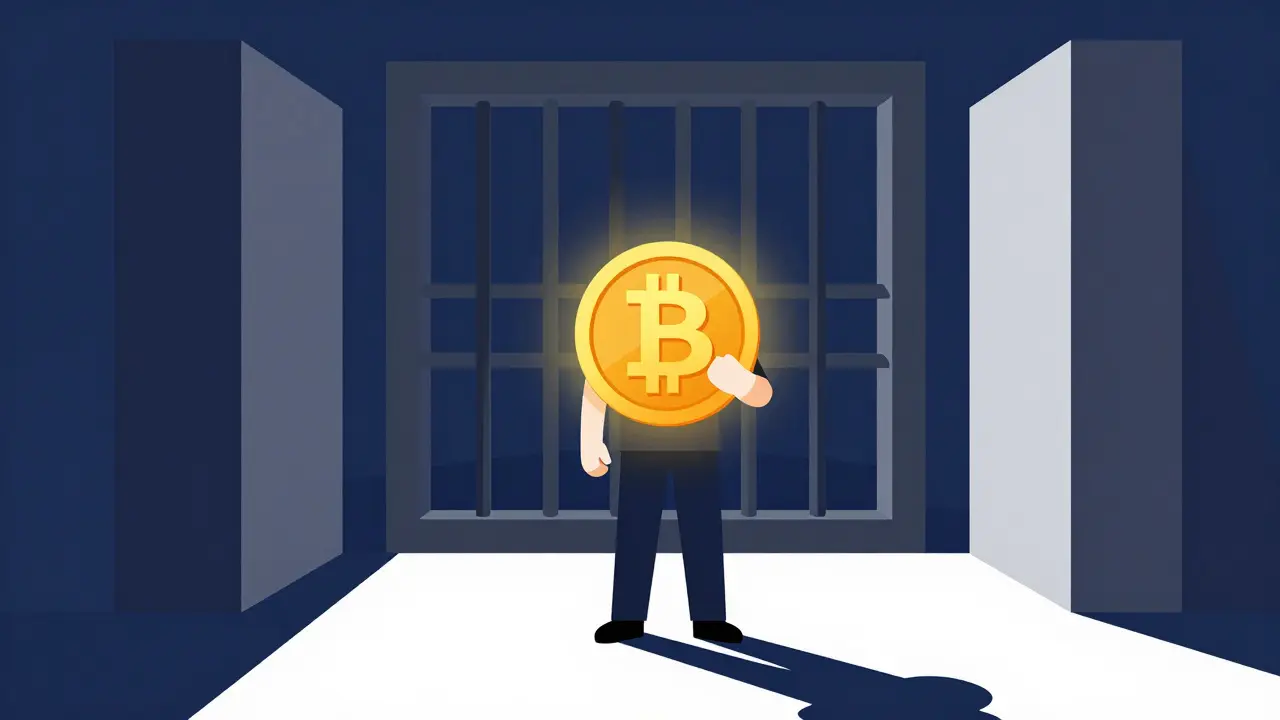
Imagine sending money to a relative abroad using Bitcoin, only to find out you’re facing up to three years in prison. For many Nepalis, this isn’t a hypothetical scenario-it’s a legal reality under the country’s strict cryptocurrency ban is a comprehensive prohibition enforced by the Nepal Rastra Bank that criminalizes trading, mining, and holding digital assets. The core issue revolves around a specific threshold: transactions exceeding 10 million Nepalese Rupees (NPR) trigger mandatory custodial sentences. But here’s the catch-enforcement often goes beyond this number, catching people with much smaller amounts. Understanding this legal landscape is critical if you live in Nepal, have family there, or deal with remittances through digital channels.
The Legal Framework Behind the Ban
Nepal’s stance on crypto isn’t just a policy preference; it’s codified in several overlapping laws. The primary driver is the Foreign Exchange (Regulation) Act, 1962 is the central legislation governing international money transfers and defining unauthorized forex activities as crimes. Specifically, Section 9(c) classifies cryptocurrency as an unauthorized foreign exchange instrument. When you violate this, Section 12 kicks in. This section states that if the transaction value is 10 million NPR or more, you face imprisonment of up to three years plus fines ranging from the amount involved to three times that amount.
It doesn’t stop there. The Nepal Rastra Bank Act, 2002 is the statute establishing the central bank's authority to regulate monetary policy and prohibit non-official currencies. The Central Bank, known locally as NRB, issued its first public notice against crypto on May 24, 2017. They argued that digital assets threatened financial stability and facilitated money laundering. Since then, they’ve reinforced these directives multiple times. If you fail to pay the fines, Section 12 also allows for additional imprisonment of up to four years based on the offense’s magnitude. It’s a layered system designed to leave little room for interpretation.
How Enforcement Actually Works
On paper, the 10 million NPR threshold sounds high-roughly $74,000 USD as of recent exchange rates. So why are so many people getting caught? The answer lies in how police interpret “transaction value” and which laws they choose to apply. The Nepal Police Central Investigation Bureau (CIB) actively prosecutes these cases. In practice, officers often seize digital devices immediately upon arrest. Forensic teams use tools like Cellebrite UFED to extract wallet credentials and analyze blockchain history. This technical process can take months, during which defendants may remain in pretrial detention.
A major point of confusion is the timing of valuation. In the notable Kalopul case from 2022, judges calculated the transaction value based on the price of Bitcoin at the time of seizure, not when the trade occurred. If the price dropped between the transaction and the arrest, the calculated total might fall below the 10 million NPR threshold. However, even if the amount is technically below the limit, prosecutors often invoke other statutes. For instance, the Electronic Transaction Act (ETA) of 2006 allows for charges related to unauthorized digital transactions, carrying penalties of up to three years imprisonment and fines up to NPR 100,000. This means you don’t necessarily need to hit the massive forex threshold to face jail time.

Real-World Cases and User Experiences
Legal theories aside, the impact on ordinary citizens is severe. Consider the case of 'CryptoLoverNP,' who was arrested in January 2022. He had sent $5,000 via Bitcoin-a sum far below the 10 million NPR mark. Yet, police seized his laptop containing 2.3 BTC (worth about $78,000 at the time). He faced 18 months of pretrial detention before any trial began. Similarly, in a 2023 case, a father received a two-year sentence for a 5.2 million NPR transaction. The judge cited “aggravating circumstances,” showing that discretion plays a huge role in sentencing.
These aren’t isolated incidents. A survey of 127 financial professionals found that 92% supported the ban, believing it deters systemic risk. However, critics argue the punishment is disproportionate. Dr. Prakash Kafle, a Constitutional Law Professor at Tribhuvan University, has stated that treating crypto like narcotics trafficking is unjust. The inconsistency is glaring: identical offenses are sometimes prosecuted under the Banking Act, other times under the NRB Act, and still others under the ETA. This “legal schizophrenia,” as the Nepal Bar Association calls it, creates uncertainty for both defendants and lawyers.
Nepal vs. Neighboring Countries
To understand why Nepal’s approach is unique, look at its neighbors. India, for example, permits crypto trading but imposes a flat 30% tax on gains. China banned exchanges but hasn’t criminalized individual holdings. Thailand and Singapore have established regulatory frameworks for licensed exchanges. Nepal stands out because it criminalizes the activity itself with mandatory imprisonment thresholds. According to comparative analyses, Nepal is one of only 12 countries globally that imposes criminal penalties specifically for crypto transactions. Its 10 million NPR trigger is lower than Bangladesh’s equivalent threshold, making it one of the stricter environments in Asia.
| Country | Legal Status | Key Penalty/Regulation | Primary Authority |
|---|---|---|---|
| Nepal | Banned/Criminalized | Up to 3 years imprisonment for >10M NPR | Nepal Rastra Bank (NRB) |
| India | Regulated/Taxed | 30% tax on gains + 1% TDS | Income Tax Department |
| China | Banned (Institutions) | No criminal penalty for individuals | People's Bank of China |
| Singapore | Licensed/Permitted | Licensing required for exchanges | Monetary Authority of Singapore |

Challenges in the Judicial Process
If you find yourself accused of a crypto crime in Nepal, the process is lengthy and complex. Phase one involves immediate device seizure and presentation before a court within 24 hours, per Article 89 of the Constitution. Phase two allows for investigative detention, which can extend to 90 days if linked to money laundering. During this time, forensic analysis is conducted. Phase three requires government attorneys to file charge sheets within 90 days, but delays are common. Data shows that 41% of cases face delays exceeding six months due to the complexity of blockchain analysis.
One significant hurdle is the lack of specialized legal representation. Reports indicate that 78% of defendants lack attorneys specializing in digital forensics. Without expert help, it’s difficult to challenge the valuation methods or argue for proportionality. Furthermore, the National Human Rights Commission has recently started applying “proportionality principles” in some cases, reducing sentences for sub-threshold transactions. This is a small win for defendants, but it hasn’t changed the overall strictness of the law.
Future Outlook and Current Developments
As of 2026, the ban remains firmly in place. The 2023-24 budget maintained all prohibitions, and NRB expanded penalties to include “any technology facilitating crypto transactions.” However, the Supreme Court is reviewing a constitutional challenge arguing that Section 12 violates Articles 26 and 27 of the Constitution. A ruling is expected soon, which could potentially reshape the legal landscape. Until then, enforcement continues. Recent operations by the CIB have arrested individuals for transactions well below the statutory threshold, charging them under the broad provisions of the Foreign Exchange Act.
Industry analysts suggest Nepal might eventually follow India’s taxation model, allowing regulated trading. But NRB Governor Maha Prasad Adhikari has stated that the three-year imprisonment provision will remain until “foolproof monitoring” is established. For now, the safest advice for anyone dealing with cross-border payments involving Nepali residents is to stick to traditional banking channels, despite the fees. The risk of criminal prosecution, asset seizure, and prolonged detention makes crypto a high-stakes gamble in Nepal.
What is the exact amount that triggers 3 years imprisonment in Nepal?
The statutory threshold is 10 million Nepalese Rupees (NPR). Under Section 12 of the Foreign Exchange (Regulation) Act, transactions equal to or exceeding this amount mandate imprisonment of up to three years. However, lower amounts can still lead to jail time if prosecuted under the Electronic Transaction Act or if deemed part of organized money laundering.
Can I be jailed for receiving crypto remittances in Nepal?
Yes. Receiving crypto is considered an unauthorized foreign exchange transaction. Several cases from 2022 and 2023 show individuals convicted for receiving remittances well below the 10 million NPR threshold, often facing sentences of 1-2 years depending on judicial discretion and aggravating factors.
How do police determine the value of my crypto transaction?
Police typically use the market price of the cryptocurrency at the time of seizure or investigation, rather than the exact moment of the transaction. This can result in higher or lower calculated totals depending on market volatility between the trade and the arrest. Forensic experts analyze blockchain data to trace the flow of funds.
Is mining cryptocurrency illegal in Nepal?
Yes. The Nepal Rastra Bank prohibits all cryptocurrency activities, including mining, trading, and payments. Mining is viewed as producing an unauthorized currency, subjecting miners to the same penalties as traders if caught handling significant volumes.
What happens to my crypto assets if I am arrested?
Assets are typically seized as evidence. Digital devices like laptops and phones are confiscated for forensic analysis. Wallets may be frozen or emptied during the investigation. In many cases, full wallet confiscation occurs regardless of whether the specific transaction met the 10 million NPR threshold.
Will Nepal change its crypto laws soon?
There is no immediate sign of a full reversal. While a Supreme Court case challenges the constitutionality of the penalties, NRB officials have stated the ban will continue until better monitoring systems are in place. Analysts predict a potential shift toward a taxation model similar to India’s in the future, but for now, the criminal penalties remain active.
Sarah Campbell
August 17, 2026 AT 16:17Wow just wow 😱 three years in prison for sending money to your cousin? That is absolutely insane and shows how backwards some countries still are! 🇺🇸 America would never do this, we value freedom and the right to choose our own financial tools! It makes you sick to think about all those poor people sitting in jail just because they wanted to use Bitcoin. We need to show them the light of liberty! 💪
Phelan Deihl
August 18, 2026 AT 12:16It really does feel like a lot of pressure on ordinary families who just want to help relatives abroad. The legal system seems so rigid that even small amounts can turn into a nightmare if the police decide to look closely.
Mohamed Shoaeb
August 19, 2026 AT 22:23from an indian perspective it is interesting because we have tax but no jail for individuals. nepal is definitely stricter. i hope they learn from us soon and just tax it instead of locking people up. the market will always find a way to flow around these bans anyway so regulation might be smarter than prohibition.
Sonia Gomez Gomez
August 21, 2026 AT 08:33You know what? These people probably deserve it anyway :P If you are breaking the law you should expect consequences. Why do they think they are above the rules? It is all about discipline and respecting the state's authority over their wallets. No excuses!
SHIV SHANKAR KANTA
August 22, 2026 AT 21:32the very concept of currency is a social construct designed to control the masses. by banning crypto they are trying to keep the old guard in power. it is not about money it is about freedom of thought. when they lock you up for holding a digital token they are locking up your soul too. wake up sheeple.
Darren Moon
August 24, 2026 AT 12:50One must observe that the regulatory framework in Kathmandu exhibits a rather peculiar form of legislative inertia. The conflation of unauthorized foreign exchange with digital asset holding creates a jurisprudential quagmire that stifles economic dynamism. It is, frankly, a bureaucratic abomination that fails to account for the technological paradigm shift currently underway in global finance. One wonders if the policymakers have even glanced at the whitepaper since 2017.
Quang Thai Tran
August 25, 2026 AT 00:07It is obvious that the central bank is working with the deep state to suppress the truth about fiat currency collapse. They fear decentralization because it threatens their monopoly on printing money. This ban is just another layer of the matrix to keep you compliant. Trust no one, especially not the NRB. The surveillance state is coming for your keys next.
Dianne Ritter
August 25, 2026 AT 19:05I mean... who actually sends $5,000 via Bitcoin to Nepal without knowing the local laws? Seems like basic due diligence is missing here. But I guess that is why they end up in court. It is quite the dramatic saga, almost like a movie plot where the hero gets trapped by the system. Very compelling, if a bit predictable.
Tasha Davis
August 26, 2026 AT 11:35This is so important to share! Let's all spread the word so nobody gets caught off guard! Imagine helping your family and then getting arrested? That is scary but also super motivating to learn more! We can make a difference by being informed! Keep going everyone! You got this! 💖🚀
Abigail Sparks
August 28, 2026 AT 08:16Here is the hard truth: if you live in or deal with Nepal, stop using crypto for remittances until the Supreme Court ruling comes down. The risk/reward ratio is terrible right now. Use SWIFT or Western Union, yes the fees are high, but you won't spend 18 months in pretrial detention. Smart money manages risk, it doesn't gamble on legal ambiguity.
OLIVER CHRISTIAN
August 29, 2026 AT 14:08its wild how the valuation timing works. if btc drops before they arrest you maybe you are safe? but if it goes up you are in trouble. its basically a lottery ticket based on market volatility. crazy stuff. i wonder if lawyers are teaching clients to time their arrests lol. just kidding... or am i? feels like there is a deeper strategy here that most people miss. the system is rigged against the little guy but sometimes chaos favors the bold.
Teri W
August 31, 2026 AT 09:33It is outrageous that the government gets to decide what money is valid and what isn't. Who gave them the right to imprison someone for holding assets? It is a total violation of personal liberty. These bureaucrats are out of touch with reality. Wake up citizens! Fight for your rights! Don't let them steal your freedom just because they don't understand technology!
Jay Johhnston
August 31, 2026 AT 21:09In my experience dealing with South Asian markets, the cultural attitude towards 'official' channels is very strong. People trust banks because they are seen as stable, even if the rates are bad. Crypto is seen as risky and unstable by the older generation. So the law just codifies what society already fears. It is a mix of tradition and modern panic.
Niall O'Rourke
September 2, 2026 AT 11:50actually its a good thing they ban it. why would anyone want to use a volatile asset when you can just use the rupee? stability is key. innovation is often just a fancy word for instability. better to play it safe and follow the rules. dont be a rebel for no reason.
Jillian Groskreutz
September 2, 2026 AT 16:17Let me educate you all, shall I? The nuance lies in Section 9(c) of the Foreign Exchange Act. It is not merely a 'ban'; it is a classification of the instrument itself as unauthorized. Furthermore, the interplay between the ETA and the NRB Act creates a dual-jurisdiction nightmare. Most people fail to grasp the statutory overlap, which is why they get prosecuted under multiple counts. Read the primary sources, not just the headlines. It is embarrassing how many people misunderstand the legal mechanics here.
Carmene Jackson
September 4, 2026 AT 05:59my cousin lives in kathmandu and he says its a total mess over there. everyone is scared to talk about it openly. you can see it in their eyes when they mention bitcoin. its like a secret club that could get you in trouble. pretty sad really. the whole vibe is just tense and paranoid.
Mike Baca
September 5, 2026 AT 10:10it really highlights how different legal systems handle the same tech. india taxes it, china bans exchanges, nepal jails people. its like watching a slow motion car crash in terms of policy making. i hope the supreme court case brings some clarity. otherwise its just going to stay this chaotic for years. the uncertainty is the biggest problem for anyone trying to operate legally. you cant build a business on sand.