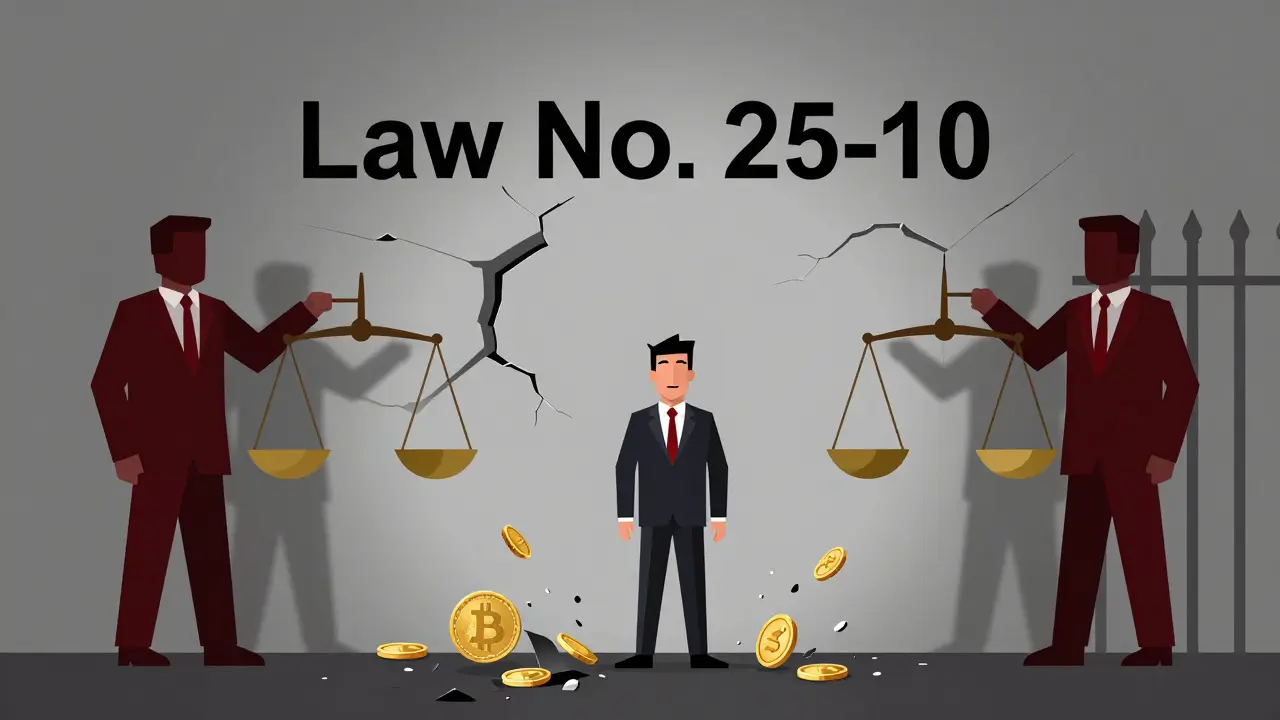
Algeria doesn’t just discourage cryptocurrency trading-it makes it a crime. Since July 2023, owning, buying, selling, or even promoting Bitcoin or Ethereum in Algeria can land you in jail or hit you with a heavy fine. This isn’t a gray area. It’s a hard line written into law, and enforcement is real.
What the Law Actually Says
Law No. 25-10, passed on July 24, 2023, is the strictest crypto ban in North Africa. It doesn’t just say "don’t use crypto." It says: any activity tied to digital assets is illegal. That includes holding Bitcoin in a wallet, mining Ethereum, running a crypto exchange, promoting crypto on social media, or even teaching a class about blockchain technology if it’s accessible in Algeria.The law defines cryptocurrencies as "virtual instruments used as means of exchange via a computer system, without support from a central bank." That’s broad enough to cover everything from Bitcoin to stablecoins like USDT. And it doesn’t matter if you’re an individual trader or a tech startup. If you’re involved, you’re breaking the law.
What Happens If You Get Caught?
The penalties aren’t warnings-they’re punishments. If you’re convicted of a crypto-related offense, you could face:- Two months to one year in prison
- Fines between 200,000 and 1,000,000 Algerian dinars (roughly $1,540 to $7,700 USD)
- Both jail time and the maximum fine, applied together
Repeat offenders face doubled fines-up to 2 million Algerian dinars ($14,700 USD). Courts don’t always lock people up. Often, they go for the fine. That’s because the prison term is short, and fines are easier to collect. But make no mistake: if you’re caught trading crypto, you’re risking your freedom and your savings.
And it’s not just about direct trading. The law targets anyone who enables crypto use. That means:
- Developers who build blockchain apps accessible in Algeria
- Influencers who post about crypto on YouTube or TikTok
- Website owners hosting crypto-related content
- Teachers giving lectures on decentralized finance
Even sharing a link to a crypto exchange on WhatsApp could be considered "promotion" under this law. There’s no clear line. That’s the point.
Why Did Algeria Do This?
Algeria’s government says it’s protecting the economy. Inflation has been rising. The dinar has weakened. Officials fear people are moving money out of the country using crypto, bypassing currency controls. They also worry crypto could be used for money laundering or funding terrorism.But here’s the twist: Algeria was one of the fastest-growing crypto markets in the Middle East and North Africa just two years ago. Chainalysis ranked it in the top five in 2022. Thousands of Algerians were trading peer-to-peer, using apps like Paxful and LocalBitcoins. They weren’t criminals-they were people trying to save money, send remittances, or invest when banks offered near-zero interest.
Instead of regulating crypto, Algeria chose to ban it. They didn’t create a licensing system like the UAE or Bahrain. They didn’t build a sandbox like Tunisia. They just shut it all down.
Who’s Being Targeted?
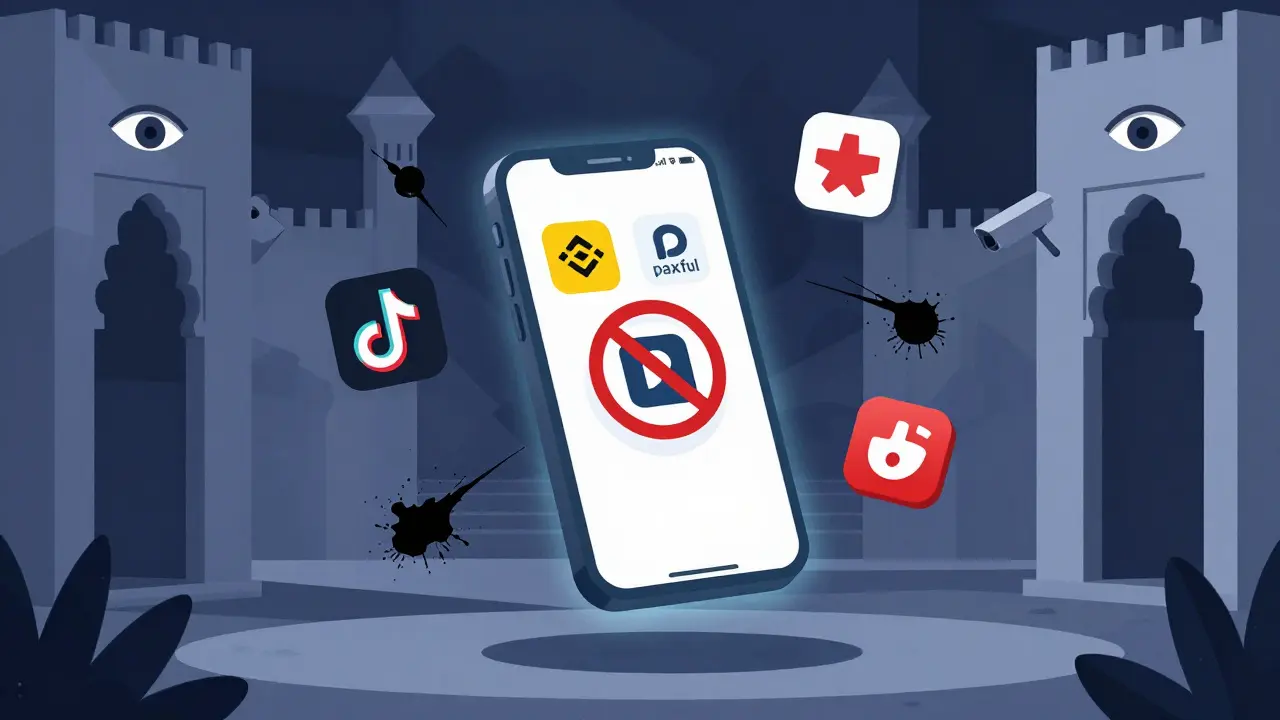
The National Agency for the Fight Against Money Laundering and the Financing of Terrorism (ANLCCFT) is now running a specialized unit to track crypto activity. They’re using blockchain analysis tools-similar to those used by the IRS-to trace transactions.But enforcement isn’t just about big traders. It’s about visibility. If you’re posting about crypto online, you’re a target. Reddit threads in r/CryptoAlgeria went dark after the law passed. Users deleted their accounts. One trader wrote: "After years of growing our community, we’ve had to disband all groups and delete content fearing prosecution."
Startups are fleeing. Several blockchain companies based in Algiers moved operations to Tunisia or Morocco. Students studying computer science at Algerian universities are now looking abroad for jobs. One professor told a local outlet: "We’re losing our best minds. They’re not waiting for permission to build the future. They’re leaving to build it elsewhere."
What About Foreign Crypto Platforms?
Algerians can still access Binance, Coinbase, or Kraken from their phones. The law doesn’t block websites-it punishes Algerians who use them. That means:- Using a VPN to trade crypto? Still illegal.
- Receiving crypto as payment for freelance work? Illegal.
- Buying crypto from a friend? Illegal.
There’s no exception for small amounts. There’s no "personal use" loophole. The law doesn’t care if you bought $50 worth of Bitcoin to send to your cousin. It’s still a crime.
How Is This Different From 2018?
Back in 2018, Algeria banned crypto transactions-but there were no real penalties. It was more of a warning than a law. People kept trading anyway. The 2023 law changed everything. Now, there’s teeth. Authorities have the power to freeze bank accounts, seize digital wallets, and prosecute individuals based on digital footprints.It’s not just about money anymore. It’s about control. The government wants to eliminate any financial system outside its reach. And crypto, by design, resists that.

What’s the Real Impact?
The ban has erased an estimated $200 million in annual crypto trading volume. That’s not just numbers-it’s livelihoods. Freelancers lost income. Small businesses lost payment options. Investors lost assets.And the brain drain is real. Bernstein analysts predict 30-40% of Algeria’s blockchain talent will leave within 18 months. That’s not just developers. It’s designers, marketers, educators, and entrepreneurs who saw opportunity in blockchain.
Meanwhile, Algeria’s neighbors are building crypto-friendly economies. The UAE has a full regulatory framework. Saudi Arabia is testing central bank digital currencies. Even Egypt is moving toward regulation. Algeria is going backward.
Is There Any Way Around It?
No. Not legally.Some people use peer-to-peer networks or cash-based trades. But those are riskier than ever. If you’re caught, the consequences are immediate. Banks are now required to flag suspicious transfers. ATMs and payment processors are under orders to report anything that looks like crypto-related activity.
The only safe option is to avoid crypto entirely while you’re in Algeria. If you’re an expat, a tourist, or a business visitor-don’t trade. Don’t hold. Don’t talk about it publicly. It’s not worth the risk.
What’s Next?
There’s no sign the government is softening. The law is still new, and enforcement is ramping up. International pressure hasn’t changed anything. Even the Financial Action Task Force (FATF), which Algeria claims to follow, encourages regulation-not total bans.Algeria’s approach is extreme. It’s not just out of step with the world-it’s out of step with its own people. The ban might stop crypto transactions on paper. But it won’t stop demand. It won’t stop innovation. It just pushes it underground, where it’s harder to monitor, and more dangerous for those caught in the crossfire.
If you’re an Algerian citizen, the message is clear: crypto is illegal. The penalties are real. And the cost of breaking the law isn’t just financial-it’s personal.
Is it illegal to hold Bitcoin in Algeria?
Yes. Holding Bitcoin or any other cryptocurrency is explicitly prohibited under Law No. 25-10. The law bans possession, not just trading. Even storing crypto in a wallet on your phone or computer is considered a criminal offense and can lead to fines or imprisonment.
Can I be fined for talking about crypto on social media?
Yes. The law defines "promotion" broadly. Posting about crypto, sharing links to exchanges, or even explaining how blockchain works in a public post can be interpreted as promoting illegal activity. Influencers, educators, and content creators have been warned to remove all crypto-related content to avoid prosecution.
What’s the maximum fine for crypto trading in Algeria?
The maximum fine is 2 million Algerian dinars (about $14,700 USD), applied for repeat offenses or cases involving large sums. For first-time offenders, fines typically range from 200,000 to 1 million dinars ($1,540-$7,700 USD), and courts may add jail time up to one year.
Are crypto mining operations illegal in Algeria?
Yes. Mining Bitcoin, Ethereum, or any other cryptocurrency is explicitly banned under Law No. 25-10. This includes using home computers, data centers, or even rented hardware to mine. Authorities actively monitor electricity usage patterns to detect suspicious mining activity.
Can Algerians use crypto for international remittances?
No. Sending or receiving crypto as a remittance is illegal. Even if the transaction is between family members abroad, it violates the law. Algerians are required to use official banking channels for cross-border transfers, which are slower and more expensive, but legally compliant.
Has anyone been imprisoned for crypto trading in Algeria?
As of late 2025, public records of prison sentences are limited due to lack of transparency. However, multiple cases have been reported by local media where individuals received fines and court orders to shut down crypto-related activities. While formal imprisonment cases are rare, the threat is real, and enforcement is increasing.
Is using a VPN to access crypto exchanges legal in Algeria?
No. Using a VPN to bypass the crypto ban is still a violation of Law No. 25-10. The law targets the user’s activity, not the method used. Authorities are aware of VPN usage and can trace transactions linked to Algerian IP addresses, even when masked. The act of trading remains illegal regardless of the tool used.
Can I open a crypto wallet in Algeria?
No. Opening or maintaining a crypto wallet-whether hardware, software, or paper-is prohibited under Algerian law. Financial institutions are required to report any digital asset-related activity. Even downloading a wallet app from an app store can be flagged as evidence of intent to violate the law.
Are NFTs and DeFi platforms also banned?
Yes. The law applies to all digital assets, including NFTs, stablecoins, and DeFi tokens. Trading, holding, or interacting with any blockchain-based asset that functions as a store of value or medium of exchange is illegal. There are no exceptions based on asset type.
Will Algeria ever legalize crypto in the future?
There is no indication the government plans to legalize crypto. The 2023 law was framed as a permanent measure to protect financial sovereignty. With no regulatory framework in development and no public consultation, reversal seems unlikely. The focus remains on enforcement, not reform.
Aaron Heaps
December 23, 2025 AT 21:13Helen Pieracacos
December 24, 2025 AT 19:30chris yusunas
December 25, 2025 AT 03:04Mmathapelo Ndlovu
December 26, 2025 AT 19:47Dustin Bright
December 27, 2025 AT 21:27Tristan Bertles
December 29, 2025 AT 12:15Charles Freitas
December 29, 2025 AT 17:14Sophia Wade
December 30, 2025 AT 03:33Ashley Lewis
December 30, 2025 AT 16:57Grace Simmons
December 30, 2025 AT 22:00Luke Steven
December 31, 2025 AT 12:53Shubham Singh
December 31, 2025 AT 16:27Naman Modi
January 1, 2026 AT 06:21Amit Kumar
January 1, 2026 AT 07:03Craig Fraser
January 2, 2026 AT 20:29Jacob Lawrenson
January 4, 2026 AT 13:11Rebecca F
January 6, 2026 AT 05:58