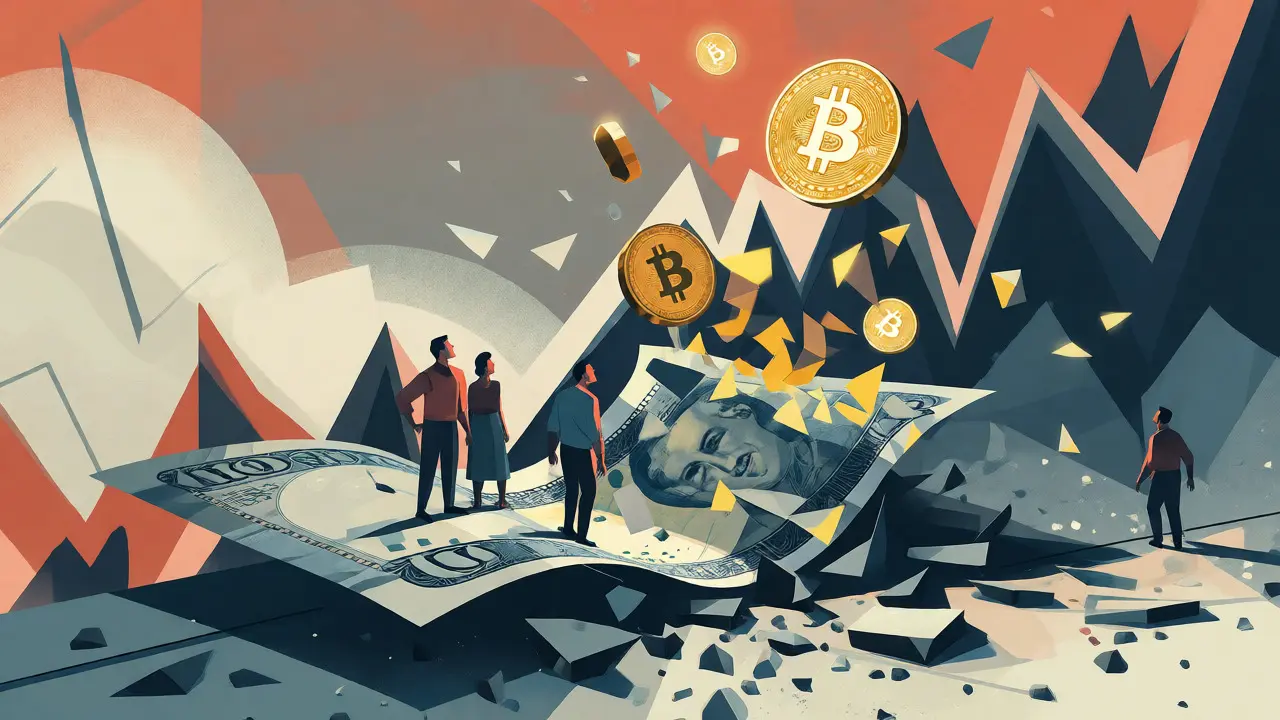
Imagine watching your savings evaporate by nearly 90% while the government insists everything is under control. That’s the reality for millions of Iranians. In 2024, a staggering $4.18 billion flowed out of Iran via cryptocurrency. This wasn’t just a blip; it was a 70% jump from the previous year. People weren’t trading for fun. They were running for their financial lives.
| Metric | Value/Detail | Context |
|---|---|---|
| Total Outflow Value | $4.18 Billion | Up 70% YoY (Chainalysis) |
| Rial Depreciation | ~90% since 2018 | Post-sanctions intensification |
| Inflation Rate | 40-50% | Persistent economic pressure |
| Share of Sanctioned Crypto Activity | ~26% | Of global $15.8B total |
| Dominant Asset | Bitcoin | Preferred over stablecoins during crises |
Why Ordinary Citizens Are Moving Money
You might assume this money movement was all about the state dodging rules. But the data tells a different story. According to Chainalysis, a blockchain analytics firm based in New York, these outflows were driven primarily by ordinary citizens. Think of it as an 'alternative financial system' born out of necessity. When the Iranian rial loses value that fast, holding cash feels like holding melting ice.
It’s not just inflation. It’s trust. Or rather, the lack of it. As geopolitical tensions rise, people look for assets they can control. Traditional banks are often restricted or unreliable. Cryptocurrency offers a way out. Small transactions-those under $1,000-saw the steepest decline in platform access, which signals retail investors leaving, not big institutions. These are teachers, students, and small business owners trying to protect what little they have.
The Geopolitical Trigger Effect
Crypto flows in Iran don’t happen in a vacuum. They spike when the news gets scary. Look at April 2024. The Israeli bombing of the Iranian Embassy in Damascus caused immediate panic. Blockchain records show massive capital movement on April 9th and 14th. Google Trends confirms this: searches for 'Iran Israel' peaked exactly when crypto outflows did.
This pattern repeated in late September and early October 2024 during escalated conflicts. It’s reactive behavior. People see a headline, check the parallel market rate of the rial, and then rush to convert local currency into Bitcoin. For them, Bitcoin isn’t speculative tech; it’s digital gold. It’s escape money. When borders feel shaky and bank transfers freeze, crypto moves instantly, no matter where you are.

How They Actually Do It
Getting money out of a sanctioned country isn’t easy. You can’t just walk into a bank and wire funds. Most international exchanges block Iranian IPs. So, users get creative. They rely heavily on VPN services and proxy connections to access platforms like Binance or Kraken. But even that’s getting harder. Between 2022 and 2024, exposure of international exchanges to Iranian services dropped by 23% due to stricter compliance checks.
Domestic exchanges like Nobitex, Wallex, and Ramzinex stepped up to fill the gap. Until late 2024, these local platforms facilitated huge volumes. But the government cracked down, demanding detailed transaction records and user data. This created a privacy nightmare for users who feared surveillance. Many shifted to peer-to-peer trades or decentralized platforms to avoid handing over personal info to the Central Bank.
- VPN Reliance: Essential for accessing global markets.
- Peer-to-Peer Trading: Popular for avoiding centralized exchange KYC.
- Telegram Communities: Over 100,000 users share tips on access methods.
- Learning Curve: Basic adoption takes 2-4 weeks; advanced strategies take months.

Not Just Evasion: A Survival Tool
Compare Iran to other sanctioned nations, and the difference is stark. North Korea uses crypto mostly for state-sponsored theft and hacking. Russia uses it for institutional circumvention. Iran? It’s grassroots. While Russia’s usage grew, Iran’s outflows were proportionally higher relative to its GDP. Venezuela offers the closest parallel with hyperinflation-driven adoption, but Iran’s 2024 numbers exceeded Venezuela’s peak periods significantly.
There’s also a dual-use aspect here. The Iranian government encourages mining operations to generate revenue, using electricity subsidies to attract miners. Yet, simultaneously, they restrict citizen access to international exchanges. It’s a contradictory policy: use crypto to earn dollars for the state, but limit how regular people use it to save themselves. This tension creates constant policy uncertainty, making long-term planning difficult for everyone involved.
The Future of Crypto in Sanctioned Economies
Will this stop? Probably not. The U.S. Treasury’s Office of Foreign Assets Control (OFAC) continues to tighten enforcement, specifically targeting Iranian-linked networks in their 2025 memorandums. Compliance costs for exchanges have risen 40-60% to handle this monitoring. But technology evolves faster than regulation. Privacy-focused coins and sophisticated routing techniques make tracking exact outflows increasingly challenging.
As long as sanctions persist and the rial remains unstable, crypto will remain the primary alternative for international transactions. The precedent set by Iran influences other sanctioned nations. We’re seeing a broader shift where traditional banking limitations drive digital asset adoption. For Iranians, this isn’t about ideology. It’s about keeping their wealth safe when every other door seems locked.
Why did Iran's crypto outflows increase so much in 2024?
The 70% increase was driven by a combination of severe economic instability, including 40-50% inflation and a 90% drop in the rial's value since 2018, alongside heightened geopolitical tensions. Citizens used crypto as a hedge against currency collapse and to preserve wealth amid fears of conflict.
Was the crypto outflow mainly from the government or individuals?
According to Chainalysis, the majority of outflows came from ordinary citizens, not state actors. Data showed steep declines in small transaction access (under $1,000), indicating a retail investor exodus rather than large institutional movements.
Which cryptocurrency was most popular for these outflows?
Bitcoin dominated the outflows, particularly during crisis periods. Its status as a store of value made it preferable to stablecoins for many Iranians seeking to protect their purchasing power against rapid local currency devaluation.
How do Iranians access international crypto exchanges?
Most users rely on VPN services and proxy connections to bypass IP blocks imposed by international exchanges. Domestic exchanges like Nobitex and Wallex also played a significant role until recent government restrictions tightened compliance requirements.
What impact did geopolitical events have on crypto flows?
Crypto outflows spiked sharply during specific geopolitical escalations, such as the April 2024 embassy bombing and the October 2024 conflicts. These events triggered immediate panic buying of Bitcoin as a safe haven asset.