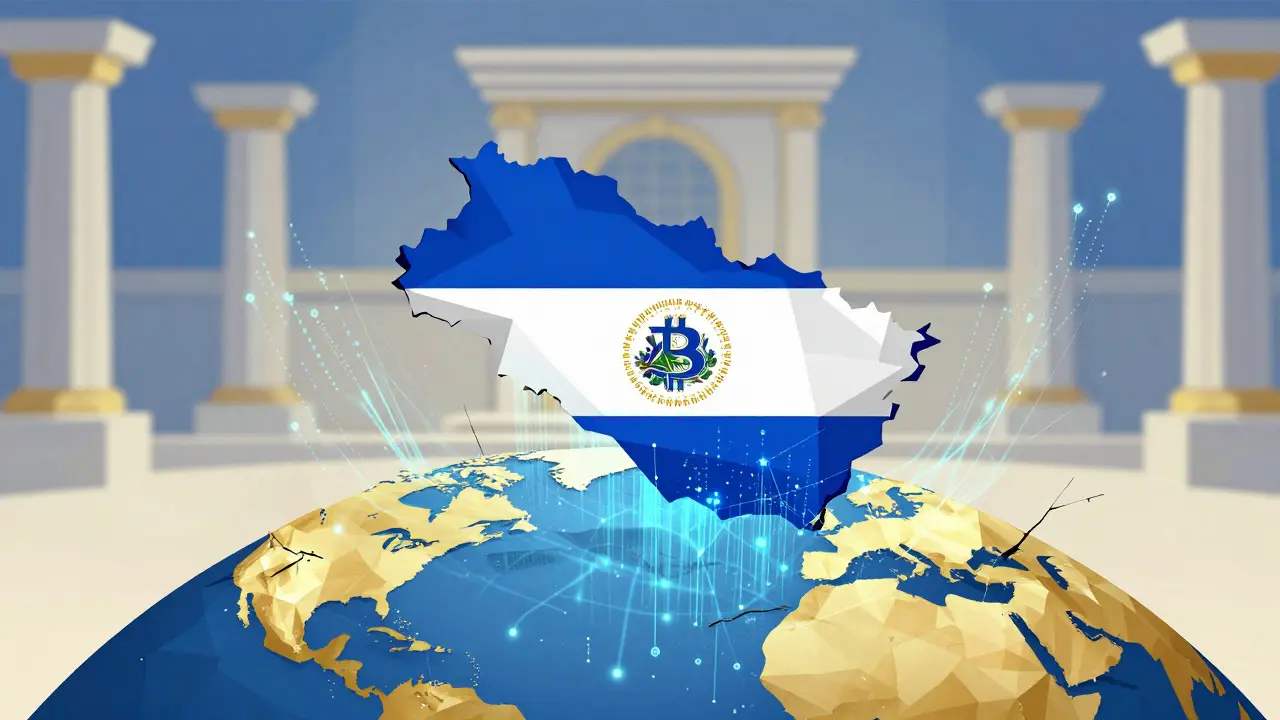
When El Salvador made Bitcoin the first cryptocurrency to become legal tender in a sovereign nation on September 7, 2021, it didn't just change local commerce; it sent shockwaves through the global financial system. The move was bold, controversial, and unprecedented. But what did the rest of the world think? The international response to this historic monetary policy shift has been anything but uniform. It ranges from outright condemnation by traditional financial institutions to cautious optimism from crypto advocates.
This article breaks down how different sectors-governments, central banks, legal experts, and the private sector-have reacted to El Salvador’s experiment. We’ll look at the real-world data, the legal debates, and what this means for the future of money globally.
The IMF and Traditional Financial Skepticism
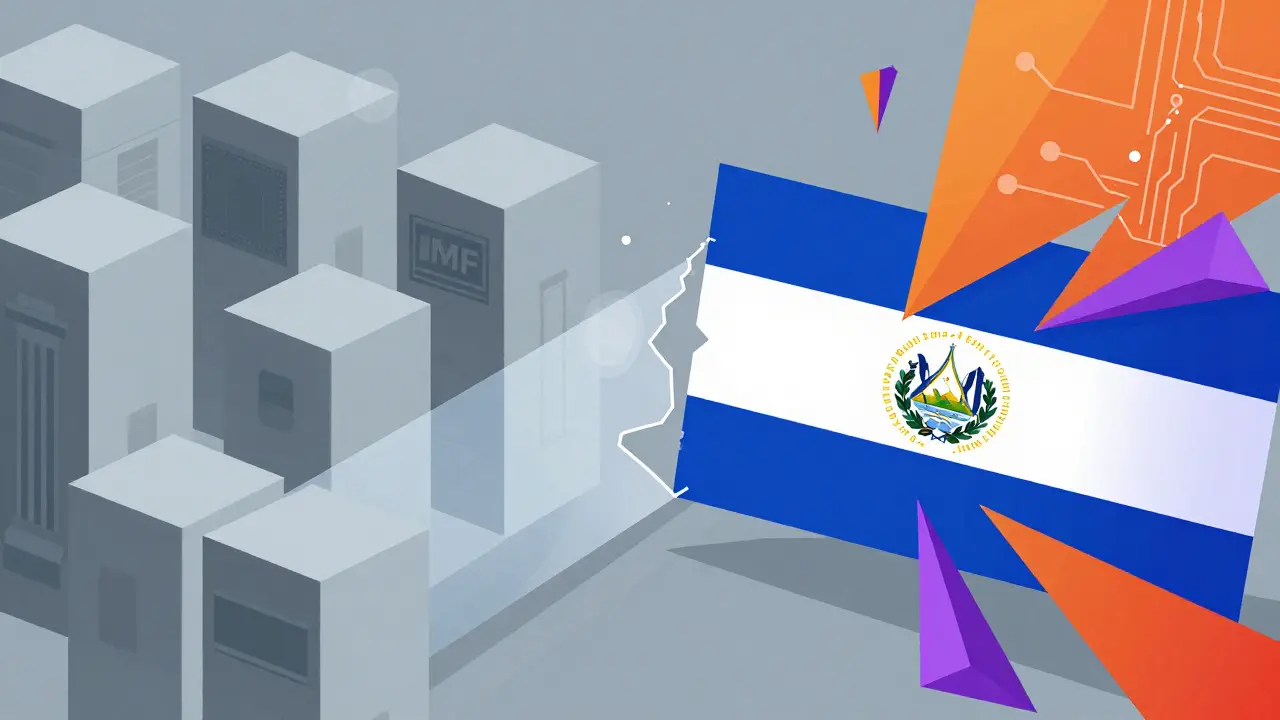
The most vocal critic of El Salvador’s Bitcoin adoption has been the International Monetary Fund (IMF) is the primary global lender and monitor of national economies. From day one, the IMF expressed deep concern. They argued that forcing citizens and businesses to accept Bitcoin created unnecessary risks for a small economy already vulnerable to external shocks.
In their Article IV consultations, the IMF highlighted several red flags:
- Fiscal Risk: The government’s direct exposure to Bitcoin price volatility could lead to significant losses if the asset’s value dropped sharply.
- Financial Stability: A lack of clear regulation for digital assets could undermine trust in the banking sector.
- Transparency: Initial concerns about opaque accounting practices regarding the country’s Bitcoin holdings.
Despite these warnings, El Salvador pressed ahead. This clash represents a fundamental ideological divide: the IMF favors stability and predictability, while El Salvador bet on innovation and inclusion. Other major institutions like the World Bank is an international financial institution providing loans and grants to governments have also urged caution, emphasizing the need for robust consumer protection frameworks before such policies are replicated elsewhere.
Legal Challenges: The Problem of Forced Tender
One of the most contentious aspects of the Bitcoin Law is Legislation making Bitcoin legal tender alongside the US dollar in El Salvador was Article 7, which mandated that all economic agents must accept Bitcoin as payment. This "forced tender" clause sparked intense debate among legal scholars worldwide.
Experts like Dror Goldberg, a specialist in compulsory tender law history, argued that this approach violates basic principles of freedom of contract. In most jurisdictions, including the United States, businesses can choose whether to accept cash or card payments. Forcing them to accept a volatile digital asset raises serious property rights questions.
| Jurisdiction | Currency Status | Mandatory Acceptance? | Business Freedom |
|---|---|---|---|
| United States | USD (Fiat) | No (except for debt discharge) | High (can refuse cash/card) |
| El Salvador | USD & BTC | Yes (for goods/services) | Low (must accept BTC if offered) |
| Eurozone | Euro (Fiat) | Varies by country | Medium (some limits on refusal) |
This legal friction has made other countries hesitant to follow suit. Most nations prefer voluntary adoption models where individuals can use crypto without being forced upon merchants.
Adoption Reality vs. Government Goals
El Salvador launched the Chivo Wallet is The official government-sponsored Bitcoin wallet app in El Salvador to facilitate transactions. The goal was ambitious: increase financial inclusion for the ~70% of the population lacking bank access and reduce remittance costs.
However, early data painted a mixed picture. Research published in NBER Working Paper 29968 revealed that while half of households downloaded the app initially, actual usage stalled quickly. Key findings include:
- Over 60% of early users made no transactions after spending their free $30 bonus.
- Only 20% of firms actively accepted Bitcoin payments despite the legal mandate.
- A staggering 88% of businesses immediately converted received Bitcoin into US dollars, indicating low confidence in holding BTC.
This behavior suggests that while the technology worked, the economic incentive to hold Bitcoin was weak. Merchants viewed it as a temporary payment method rather than a store of value. This reality check has influenced how other developing nations view similar proposals.
The CBDC Alternative: Why Others Chose Central Bank Digital Currencies
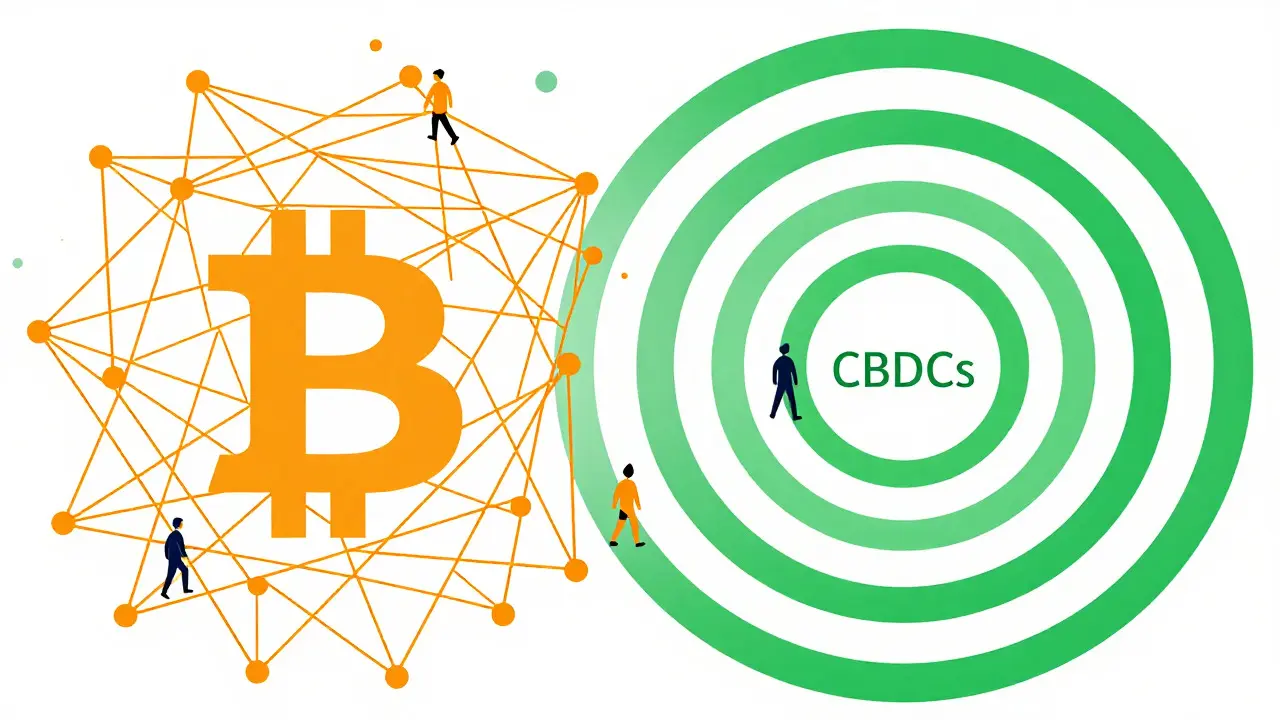
While El Salvador went decentralized, many other countries explored Central Bank Digital Currencies (CBDCs) are Digital forms of fiat currency issued by central banks. Unlike Bitcoin, CBDCs are backed by government reserves and offer stability.
Countries like the Bahamas (Sand Dollar), Jamaica (JAM-DEX), and Nigeria (eNaira) launched their own digital currencies. These projects aim to achieve similar goals as El Salvador-financial inclusion and efficiency-but without the volatility risk. The contrast highlights a strategic divergence: El Salvador embraced market-driven decentralization, while others opted for state-controlled digitization.
This difference matters because it shows there isn’t one single path to modernizing payments. El Salvador’s experiment serves as a case study in high-risk, high-reward policy, whereas CBDCs represent a safer, incremental evolution of existing systems.
Impact on Remittances and Financial Inclusion
Remittances make up over 20% of El Salvador’s GDP. The promise of cheaper, faster cross-border transfers via Bitcoin was a major selling point. Initially, transaction fees were lower than traditional services like Western Union. However, network congestion and exchange rate fluctuations sometimes negated these savings.
For the unbanked population, the impact has been limited. Studies show active Chivo users tend to be younger, educated, and already connected to formal banking. This demographic skew challenges the narrative that Bitcoin alone can solve financial exclusion. Without broader education and infrastructure improvements, digital currency adoption may bypass those who need it most.
Global Ripple Effects and Future Outlook
As of August 2026, El Salvador remains the only country with Bitcoin as legal tender. Yet, its influence extends far beyond its borders. Policymakers worldwide watch closely, analyzing both successes and failures. Some smaller nations facing hyperinflation still see potential in Bitcoin as a hedge against currency collapse.
The international response has evolved from initial alarm to nuanced observation. Regulators now focus more on integration strategies-how to blend crypto with existing financial rails-rather than outright bans. This shift indicates growing acceptance of digital assets as part of the broader economic landscape, even if full legal tender status remains rare.
Did the IMF support El Salvador's Bitcoin law?
No, the IMF was highly critical. They warned of fiscal risks, lack of transparency, and potential threats to financial stability due to Bitcoin's volatility.
Is it illegal to refuse Bitcoin in El Salvador?
Technically yes, under Article 7 of the Bitcoin Law, businesses must accept Bitcoin if offered. However, enforcement has been lax, and many merchants convert it to dollars instantly.
Why did most businesses convert Bitcoin to dollars immediately?
Due to Bitcoin's price volatility, businesses preferred the stability of the US dollar to avoid losing value between receiving payment and settling accounts.
How does El Salvador's model differ from CBDCs?
El Salvador adopted a decentralized cryptocurrency (Bitcoin) with no central authority, while CBDCs are centralized digital versions of fiat currencies controlled by national central banks.
Has any other country followed El Salvador's lead?
As of 2026, no other sovereign nation has made Bitcoin legal tender. Most countries have pursued CBDCs or regulatory frameworks for crypto instead.
Ed Wallace
August 14, 2026 AT 07:45The whole concept of legal tender is a fascinating philosophical paradox when you apply it to something as ephemeral as code. We are essentially trying to pin down the wind and call it currency. It makes you wonder if value is inherent or just a collective hallucination we agree to maintain for convenience.
Joshua Hofford
August 14, 2026 AT 13:22I think people are sleeping on the tourism angle honestly. Look at those volcanoes with the bitcoin logos, that is pure marketing genius. Even if the economy is shaky, the brand recognition is sky high now. Innovation requires risk and they took the leap.
Subhash Kashyap Dm
August 15, 2026 AT 00:09you guys are missing the macro picture completely the IMF is just a puppet master for the central bank cartel trying to suppress decentralized monetary sovereignty because they lose control over inflation metrics when fiat isn't the only game in town the data manipulation is obvious if you look at the reserve requirements
Ed Mitchell
August 15, 2026 AT 03:52It is quite evident that this entire endeavor serves as a distraction from the impending collapse of the traditional banking infrastructure which has been engineered to fail so that digital surveillance can be implemented under the guise of financial inclusion.
Michael Mostyn
August 16, 2026 AT 10:55One must consider the historical precedents of currency debasement throughout human history. El Salvador appears to be an outlier in attempting to hedge against this via a non-sovereign asset. The question remains whether market forces can truly stabilize a national economy without state intervention.
Marcia Albert
August 18, 2026 AT 05:08it feels like watching a car crash in slow motion but also kind of beautiful how they tried to break the mold instead of just following the herd like everyone else does with their boring old dollars and euros
Emma Smith
August 19, 2026 AT 05:12the paradigm shift is happening faster than the elites want us to believe its not about money its about energy transfer and consciousness expansion through blockchain technology they cant stop the flow of information any more than they can stop the tide
Ken G
August 19, 2026 AT 20:41its just another way for the rich to launder money while the poor get screwed by volatility its morally bankrupt policy making driven by greed rather than actual humanitarian concern for the citizens who have no idea what they are signing up for
Erica Johnson
August 21, 2026 AT 07:38actually if you read the white paper carefully you will see that the forced acceptance clause was never strictly enforced due to constitutional challenges so your premise is flawed :)
Amor Jordan
August 21, 2026 AT 07:48I really appreciate the optimism here but we have to acknowledge the real pain points for small business owners who were confused and scared during the transition period it wasn't just abstract economics it was daily survival for many families
Eric Zehr
August 23, 2026 AT 07:10The long-term viability depends entirely on whether the technological infrastructure can scale to meet the demands of a developing nation's population without significant latency issues or security breaches.
Billy Cunningham
August 24, 2026 AT 07:51boring 😐
Lorraine Surringer
August 26, 2026 AT 06:17i feel like we are judging them too harshly without understanding the deep systemic corruption they were trying to escape its brave even if it looks messy from the outside 🙃