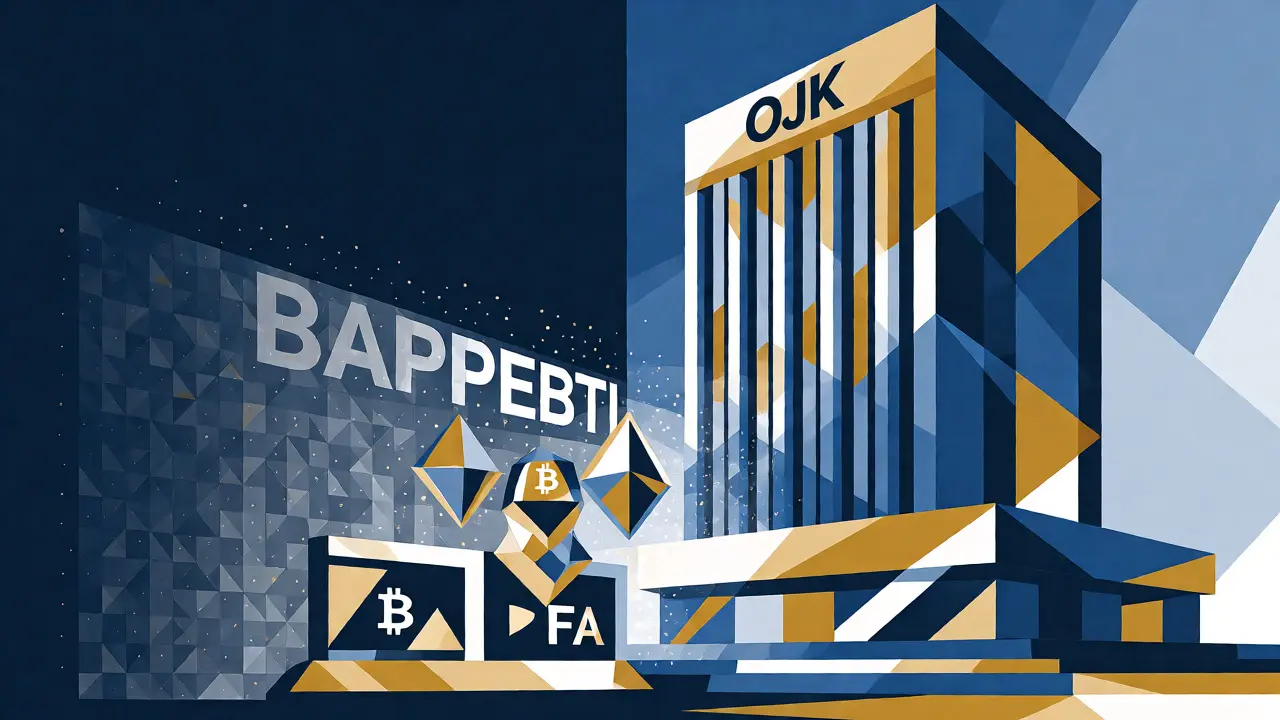
Thinking about launching a crypto platform in Southeast Asia? You might be looking at Vietnam or Thailand, but let's talk about Indonesia. It’s the biggest economy in the region, sure, but getting a license there is no walk in the park. If you’re an operator or investor trying to figure out the Indonesian crypto exchange licensing landscape, things have changed dramatically since early 2025. The old guard, BAPPEBTI, has stepped aside, and the Otoritas Jasa Keuangan (OJK) is now calling the shots. This isn't just a name swap; it’s a complete overhaul of how digital assets are regulated, taxed, and monitored.
If you missed the memo on January 10, 2025, when the regulatory torch was passed, you’re already behind. The new Digital Financial Assets (DFA) framework under POJK 27/2024 sets a high bar. We’re talking strict capital requirements, rigorous compliance checks, and a whole new taxation model that kicked in this August. Whether you’re a startup founder or a compliance officer, understanding these rules is the difference between operating legally and facing fines-or worse.
The Big Shift: From BAPPEBTI to OJK
For years, BAPPEBTI handled crypto oversight. They were the gatekeepers for futures and commodity trading, which included crypto. But as digital assets grew beyond simple commodities, the government decided they needed a financial regulator with more muscle. Enter the OJK. This transition wasn't just administrative; it signaled that crypto is now treated as a serious financial instrument, akin to stocks or bonds, rather than just speculative goods.
Under the new regime, platforms aren't just "exchanges" anymore. They are classified as Digital Financial Asset Trading Providers. This distinction matters because it changes who oversees what. While individual platforms trade assets, a separate entity known as the DFA Exchange Authority handles the listing of tradable assets. Think of it like the stock market: your broker executes trades, but the exchange determines which stocks are eligible for trading. In Indonesia, the DFA Exchange Authority decides which coins make the cut, issuing lists quarterly. The first list under this new system dropped in April 2025 with 1,444 assets-a massive jump from the previous limit of 851. This expansion shows OJK wants growth, but on their terms.
Here’s the kicker: if you were licensed under BAPPEBTI, you didn’t lose your status overnight. You were automatically recognized as a licensed DFA Trading Provider. But there was a catch. You had to reapply and fully comply with the new standards by July 2025. Missed that deadline? You’re out of business until you sort it out. This grace period was tight, forcing many smaller players to scramble for capital or partnerships.
Capital Requirements: The Wallet Check
Let’s talk money. How much cash do you need in the bank to play in this sandbox? The numbers are steep, designed to weed out fly-by-night operators. To get a full license, your company needs a minimum paid-up capital of 100 billion rupiah. That’s roughly US$6 million. On top of that, you must maintain a minimum equity of 50 billion rupiah, or about US$3 million.
Why so high? It’s about stability. Crypto markets are volatile. If a major player fails, it can ripple through the entire financial system. By demanding substantial equity, OJK ensures that these platforms have enough buffer to handle crashes, liquidity crunches, or operational mishaps without immediately going bust. For startups, this is often the biggest hurdle. Many have had to seek venture capital or form joint ventures with larger Indonesian conglomerates just to meet these thresholds.
| Metric | Requirement | Purpose |
|---|---|---|
| Minimum Paid-Up Capital | 100 Billion IDR (~US$6M) | Ensures initial solvency and operational capacity |
| Minimum Equity | 50 Billion IDR (~US$3M) | Maintains long-term financial health and risk absorption |
| Regulatory Body | Otoritas Jasa Keuangan (OJK) | Primary supervisor replacing BAPPEBTI |
| Asset Listing Authority | DFA Exchange Authority | Curates the whitelist of tradable digital assets |
| Tax Rate (Income) | 0.21% Final Tax | Simplifies tax collection on transactions |

The Licensing Process: Five Steps to Legitimacy
So, how do you actually get the license? It’s not a quick online form submission. The process is bureaucratic and thorough, typically taking several months. Here’s the roadmap:
- Company Registration: First, you need a legal entity in Indonesia. Most foreign investors use the PT PMA (Penanaman Modal Asing) structure, which allows foreign ownership. You register this through the Ministry of Investments website.
- Document Collection: Gather everything. Beneficial owner details, statutes, governance frameworks, and proof of capital. Every document must be translated into Indonesian and legally authenticated. No English-only paperwork here.
- Application Submission: Submit your full dossier to OJK. This includes technical specs, security protocols, and business plans.
- Regulatory Inspection: OJK doesn’t just read your papers; they inspect them. They scrutinize the reputation of beneficial owners and check if your operational scope matches reality.
- License Issuance: If you pass, you get your DFA Trading Provider license. If you fail, you get feedback and have to start over or appeal.
One critical part of this application is the technical schema. You can’t just say "we use SSL." You need to detail your cryptographic protocols, algorithms, and specifically how your Know Your Customer (KYC) and Anti-Money Laundering (AML) systems work. OJK wants to see that you can identify users and track suspicious activity in real-time.
Compliance: AML, KYC, and Real-Time Monitoring
Once you’re licensed, the hard work starts. Compliance under SEOJK No. 20 of 2024 is non-negotiable. You are required to report suspicious transactions to PPATK, Indonesia’s Financial Transaction Reports and Analysis Center. This creates a direct line between your platform and the country’s financial intelligence unit.
Real-time transaction monitoring is mandatory. OJK uses this data to detect fraud, market abuse, and money laundering patterns. If your system flags a weird spike in volume from a single wallet, you need to investigate and report it. Failure to do so can lead to severe consequences: license revocation, heavy fines, delisting of assets, and even criminal charges for management. It’s not just about ticking boxes; it’s about active surveillance.
Also, remember the asset list. Just because a coin exists doesn’t mean you can trade it. The DFA Exchange Authority reviews the list quarterly. If OJK decides a specific token poses too much risk-maybe due to lack of utility or excessive volatility-they can prohibit its trading. Your platform must cease trading those assets immediately upon notification. Keeping up with these quarterly updates is a key operational task.

Taxation Changes: Good News for Traders?
On August 1, 2025, MOF Regulation No. 50/2025 came into effect, changing how crypto is taxed. Previously, crypto transactions were often treated like sales of goods, subject to Value Added Tax (VAT). That’s gone. Now, crypto is recognized as a digital financial instrument.
The new rule imposes a final income tax rate of 0.21% on crypto transactions. This applies to both sellers and buyers in certain contexts, effectively simplifying the tax code. For traders, this is a win-it removes the complexity of VAT calculations and provides legal certainty. For exchanges, it means integrating automated tax reporting features to ensure users remain compliant. The goal here is clarity. The government wants to capture revenue efficiently without stifling innovation with complex accounting rules.
Market Impact and Future Outlook
As of March 2025, only one DFA Exchange license had been issued, while over 20 platforms operated under the transitional recognition from BAPPEBTI. Major names like Indodax, Tokocrypto, Pintu, and Reku are leading the pack. These established players had the capital and infrastructure to adapt quickly. Smaller competitors struggled, leading to consolidation. Some merged, others exited the market.
What does this mean for you? If you’re an investor, you benefit from safer platforms. OJK’s supervision means less risk of rug pulls and better consumer protection. If you’re a business, the barrier to entry is high, but the potential reward is access to 270 million people. Indonesia is positioning itself as a regional hub, balancing strict oversight with openness to innovation. The regulatory sandbox offered by OJK allows licensed operators to test new tech, like DeFi integrations, within a controlled environment.
Looking ahead, expect further refinements. OJK will likely adjust capital requirements or compliance procedures based on market feedback and international standards. The collaboration between OJK, Bank Indonesia, and PPATK creates a robust ecosystem. It’s tough, yes, but it’s also stable. For those willing to navigate the red tape, Indonesia offers a mature, regulated market that could serve as a gateway to broader Asian adoption.
Who regulates cryptocurrency exchanges in Indonesia now?
The Otoritas Jasa Keuangan (OJK) is the primary regulator as of January 2025, having replaced BAPPEBTI. They oversee the Digital Financial Assets (DFA) framework and issue licenses to trading providers.
What is the minimum capital required for a crypto exchange license?
Exchanges need a minimum paid-up capital of 100 billion rupiah (approx. US$6 million) and must maintain a minimum equity of 50 billion rupiah (approx. US$3 million).
How are crypto taxes calculated in Indonesia?
Since August 2025, VAT on crypto transactions has been eliminated. Instead, a final income tax rate of 0.21% applies to crypto transactions, simplifying compliance for traders and platforms.
Can I trade any cryptocurrency on licensed Indonesian exchanges?
No. Only assets listed on the official DFA list issued by the DFA Exchange Authority can be traded. This list is reviewed quarterly, and OJK retains the right to prohibit specific assets.
Do existing BAPPEBTI licenses still work?
Yes, but only temporarily. Existing licenses were recognized under the new framework, but holders had to reapply and demonstrate compliance with new OJK standards by July 2025 to retain their status.