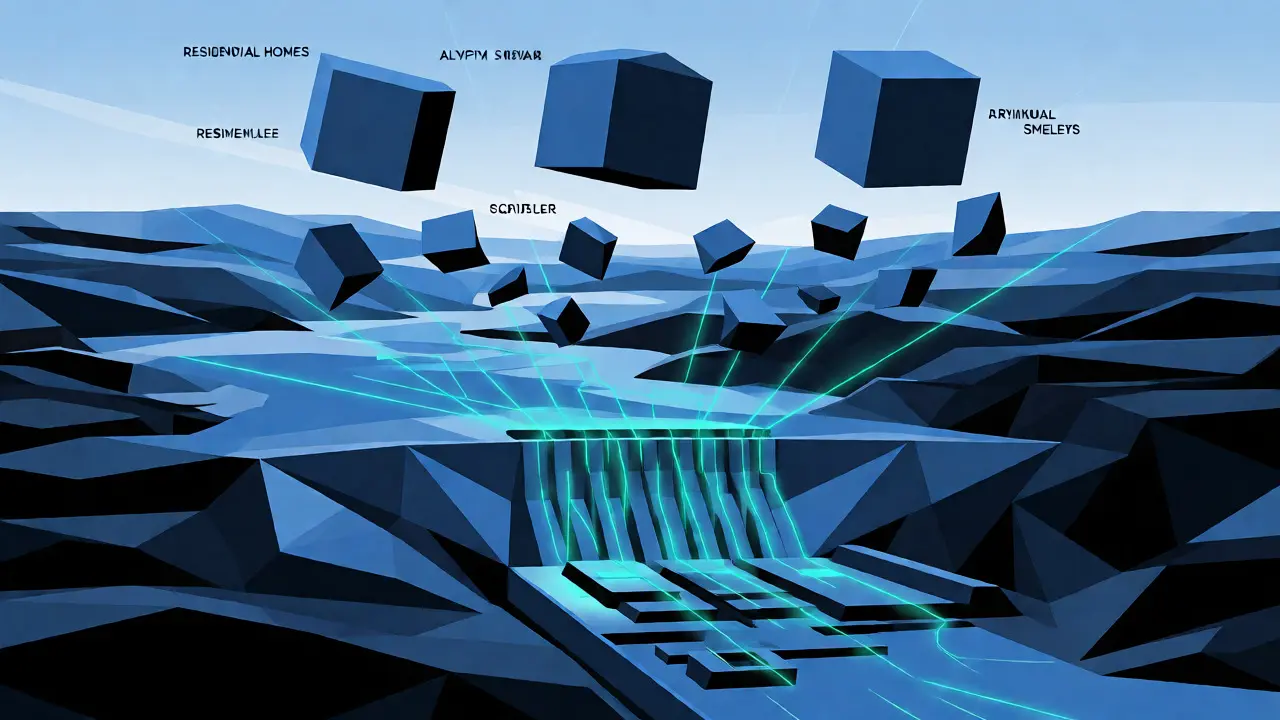
Imagine running a business where the lights flicker not because of a storm, but because your neighbors are solving complex math problems at record speed. That is the reality in Iceland, where cryptocurrency mining has grown so large that it competes directly with residential heating and industrial manufacturing for electricity. For years, this island nation was the holy grail for miners-cheap, green, cold air. But as we stand in late 2026, the party is facing a hangover. The primary gatekeeper isn't just the government; it's Landsvirkjun, the national power company responsible for over 70% of Iceland's electricity production.
If you are wondering why new mining rigs aren't popping up in Reykjavik like mushrooms after rain, or why some existing farms have throttled their hash rates, you need to understand the relationship between the grid operator and the miners. It’s not a simple ban. It’s a complex web of power allocation contracts, environmental caps, and strategic shifts by the state-owned utility. This article breaks down exactly how Landsvirkjun restricts crypto mining, what those rules mean for your operations, and where the industry is heading next.
The Energy Bottleneck: Why Landsvirkjun Says No
Let’s cut to the chase: Iceland doesn’t have infinite power. While the country generates nearly 100% of its electricity from renewable sources (hydro and geothermal), the infrastructure to deliver that power to specific locations is finite. In 2017, data centers consumed about 90% of all electricity used by data centers in Iceland, which sounds impressive until you realize those data centers were almost exclusively Bitcoin miners.
Landsvirkjun operates on a principle of "use it or lose it" combined with strict priority tiers. Residential homes come first. Aluminum smelters, which are the backbone of Iceland’s export economy, come second. Crypto miners? They are often treated as interruptible loads. This means if the grid gets stressed, Landsvirkjun can reduce power to mining facilities before they touch a household’s heater.
| Consumer Tier | Typical Load Type | Restriction Level | Contract Flexibility |
|---|---|---|---|
| Tier 1 | Residential & Healthcare | Zero restriction | Fixed baseline |
| Tier 2 | Aluminum Smelting (e.g., Rio Tinto) | Low restriction | Long-term fixed contracts |
| Tier 3 | Heavy Industry & Data Centers | Moderate restriction | Negotiable load shedding |
| Tier 4 | Crypto Mining Farms | High restriction | Interruptible / Spot market |
This hierarchy explains why new connections are so hard to get. Landsvirkjun has implemented a de facto moratorium on new high-capacity connections in certain regions. If you try to plug in a 50-megawatt mining facility today, you might wait five to seven years for grid upgrades. And even then, the contract will likely include clauses allowing Landsvirkjun to curtail your power during peak winter demand without penalty.
Specific Restrictions Imposed by the National Utility
Unlike countries that impose outright bans, Landsvirkjun uses economic and contractual levers. Here are the three main mechanisms they use to control crypto mining.
- Power Allocation Caps: New mining companies cannot simply request unlimited power. Landsvirkjun assesses the regional grid capacity. In areas like Reykjanes or North Iceland, where hydro and geothermal plants are already maxed out, new allocations are minimal or non-existent. You must prove your project won’t destabilize the local substation.
- Interruptible Contracts: Most mining deals are structured as "interruptible." This means Landsvirkjun can shut off your power for hours or days at a time. For a miner, this is risky. Your hardware stays hot, but your revenue drops. To mitigate this, miners often pay a premium for more stable supply, but that erodes profit margins.
- Grid Connection Fees: Connecting to the transmission grid isn’t free. Landsvirkjun charges significant fees for new connections, especially if infrastructure upgrades are needed. These costs have risen sharply as the utility prioritizes capital investment for residential and industrial stability over speculative crypto growth.
A recent shift in policy, influenced by Prime Minister Katrín Jakobsdóttir’s statements in 2024, has tightened these screws further. The government wants to ensure that cheap green energy benefits Icelandic citizens and traditional industries, not just foreign speculators. Consequently, Landsvirkjun has become much stricter about vetting the long-term viability of mining projects. If your business model relies on Bitcoin staying above $100,000 forever, they might view you as too volatile for a long-term contract.
The Geothermal Advantage vs. Environmental Scrutiny
You might think, "But Iceland is green! Why restrict clean energy users?" The answer lies in local impact versus global benefit. While Bitcoin mining reduces carbon emissions compared to coal-powered mining in China or Kazakhstan, it still has a footprint.
Landsvirkjun and other producers like HS Orka face pressure regarding land use and water consumption. Geothermal plants require drilling and water injection. Large-scale mining operations increase demand for this water. Furthermore, the heat generated by mining rigs is currently wasted. There are pilot projects trying to capture this waste heat to warm greenhouses or swimming pools, but adoption is slow.
Environmental groups argue that using pristine geothermal resources for a digital asset that consumes more electricity than the entire population of Iceland is inefficient. Landsvirkjun responds by requiring Environmental Impact Assessments (EIAs) for any new major connection. If your project fails to demonstrate how it minimizes local disruption, your application gets rejected.
Who Is Still Operating? The Big Players Adapt
Despite the restrictions, big names like Hive Blockchain Technologies and Genesis Mining remain active. How do they survive?
They secured their positions early. Many of these companies signed long-term power purchase agreements (PPAs) before the current tightening phase. Their contracts often include grandfather clauses that protect them from immediate price hikes or curtailment penalties applied to newer entrants.
However, even these giants are adapting. We are seeing a trend toward "flexible mining." Companies are installing software that automatically lowers hash rate when Landsvirkjun signals grid stress. They also diversify into AI computing, which offers higher value per watt than pure Bitcoin mining. By pivoting to AI, they justify their energy consumption to regulators as essential technological infrastructure rather than speculative gambling.
Implications for Miners Looking to Enter Iceland
If you are eyeing Iceland for your next mining venture, here is the brutal truth: the era of easy entry is over. You cannot just rent a warehouse and plug in rigs. You need a strategy.
- Secure Land Early: Finding a location with existing grid access is crucial. Look for former industrial sites or data centers that already have connections. Building new transmission lines is prohibitively expensive and time-consuming.
- Negotiate Interruptibility: Accept that you will have downtime. Build financial models that account for 10-15% annual downtime due to grid curtailment. If your break-even point assumes 24/7 uptime, you will fail.
- Diversify Revenue Streams: Don’t rely solely on Bitcoin. Consider hybrid setups that can switch between mining BTC and processing AI workloads. This makes you a more attractive partner to Landsvirkjun, who prefers stable, high-value industrial users.
- Engage Local Stakeholders: Community buy-in matters. If locals see your farm as a nuisance rather than an employer, political pressure will force stricter regulations. Invest in community projects or waste-heat recovery systems to improve public perception.
The Future: From Mining Hub to Blockchain Service Provider
Iceland is slowly shifting its identity. Instead of being just a place to burn electrons, it aims to be a hub for blockchain services and sustainable tech. The Central Bank of Iceland is exploring a Central Bank Digital Currency (CBDC), which could eventually change how mining interacts with the financial system.
Landsvirkjun’s restrictions are part of this broader vision. They want to attract businesses that add value to the Icelandic economy through jobs and innovation, not just energy consumption. For miners, this means the bar is rising. You need to show that you are a responsible, flexible, and integrated part of the energy ecosystem.
Is Iceland still worth it? Yes, but only for sophisticated operators who understand grid dynamics. The cheap energy advantage remains, but it comes with strings attached. If you ignore the restrictions imposed by the national power company, you risk stranded assets and regulatory headaches. If you respect them, you can still tap into one of the world’s most reliable renewable grids.
Does Iceland have an outright ban on cryptocurrency mining?
No, there is no legal ban. However, practical restrictions exist. The national power company, Landsvirkjun, controls grid access and can refuse new connections or curtail existing ones based on grid capacity and priority tiers. This effectively limits expansion without needing a legislative ban.
Why does Landsvirkjun restrict crypto mining specifically?
Crypto mining is viewed as a volatile, interruptible load. Landsvirkjun prioritizes residential heating and aluminum smelting, which are critical for social stability and the national economy. Mining is placed lower in the hierarchy, allowing the utility to cut power to miners during peak demand or infrastructure constraints.
Can new mining companies easily connect to the grid in Iceland?
It is difficult. New connections require extensive feasibility studies and may take years to approve due to grid congestion. Applicants must prove their project won't strain local substations and often face high connection fees. In saturated regions, new connections may be denied entirely.
What happens if my mining rig loses power due to restrictions?
Under interruptible contracts, you receive reduced rates in exchange for accepting downtime. Landsvirkjun can shut off power for hours or days. Miners must design operations to handle this variability, often by lowering hash rates automatically or switching to backup generators if economically viable.
Are there environmental reasons for these restrictions?
Yes. While the energy is renewable, the scale of mining impacts local resources like water and land. Public concern about resource allocation for a digital asset versus local needs has pressured both the government and Landsvirkjun to enforce stricter environmental assessments and prioritize sustainable, high-value industrial uses.