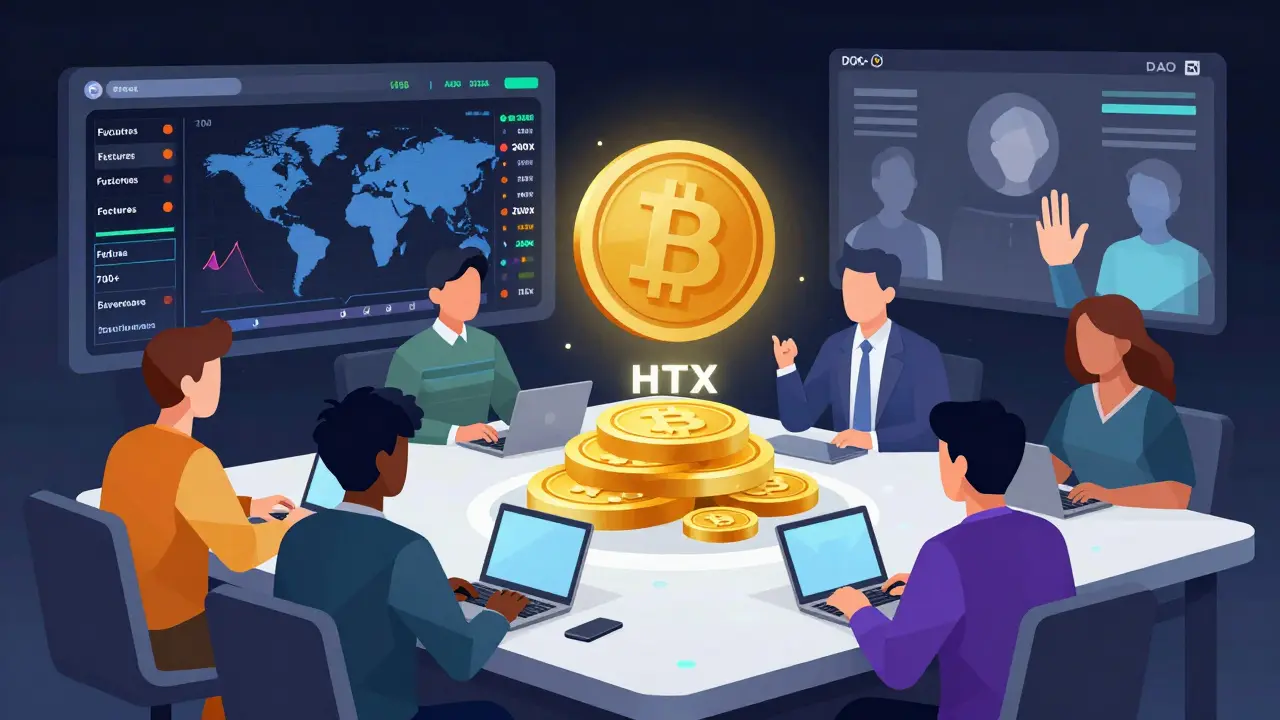
When you’re looking for a crypto exchange that offers more than just Bitcoin and Ethereum, HTX stands out - but not without caveats. Launched in 2013 as Huobi and rebranded to HTX in 2023, this platform has grown into one of the world’s largest digital asset hubs, serving over 50 million users and managing more than $6.4 billion in assets. It’s not the easiest exchange to start with, but if you’re serious about trading altcoins, using leverage, or earning passive income, HTX has tools most competitors don’t offer - and some serious friction you should know about before depositing a dime.
What HTX Actually Offers
HTX isn’t just a spot trading platform. It’s a full crypto ecosystem. You can trade over 700 cryptocurrencies, including obscure tokens you won’t find on Binance or Coinbase. Beyond spot trading, HTX supports futures contracts with up to 200x leverage, staking for over 100 Proof-of-Stake coins, an NFT marketplace, P2P trading, and even automated trading bots. The integration with TradingView gives advanced traders professional-grade charting without switching platforms. For users who want to earn without trading, there’s dual-reward staking, node staking, and yield products that pay out in multiple assets.
What makes HTX different is its shift toward decentralization. The platform now operates under a DAO (Decentralized Autonomous Organization) governance model, meaning token holders can vote on platform upgrades, fee structures, and new listings. This isn’t just marketing - it’s built into the backend. While most exchanges make top-down decisions, HTX lets users influence what happens next.
Fees: Competitive, But Not Always Transparent
Spot trading fees on HTX are flat at 0.2% for both makers and takers. That’s standard industry fare. But here’s where it gets tricky: futures trading fees are much lower - 0.02% for makers and 0.05% for takers. That’s attractive for active traders. The real catch? Withdrawal fees vary wildly by coin. Withdrawing Bitcoin might cost $5, while withdrawing a lesser-known altcoin could run $15 or more. There’s no public fee schedule for withdrawals - you only see the cost when you try to send funds.
P2P trading is free, which is great if you’re buying crypto with bank transfers or local payment methods. But if you’re a casual trader who only buys a little BTC every few months, the 0.2% fee adds up fast. HTX doesn’t offer fee discounts for high-volume traders like some competitors do. You’re paying the same rate whether you trade $100 or $100,000.
Security: Solid Infrastructure, Questionable Past
HTX uses multi-factor authentication, cold storage for 95% of user funds, and publishes regular proof-of-reserves reports. These are industry-standard practices - and HTX does them consistently. The platform has never suffered a major hack since its rebranding. But its history isn’t clean. Before becoming HTX, Huobi was involved in two notable security incidents: a 2018 wallet breach and a 2020 phishing attack that cost users millions. The rebrand was partly about distancing from that past.
Today, HTX’s security team is active and transparent. They’ve added real-time anomaly detection and AI-driven fraud monitoring. Still, if you’re risk-averse, you might want to consider exchanges with cleaner track records - especially if you’re in the U.S., where HTX is banned outright.
User Experience: Easy to Use? Not Exactly
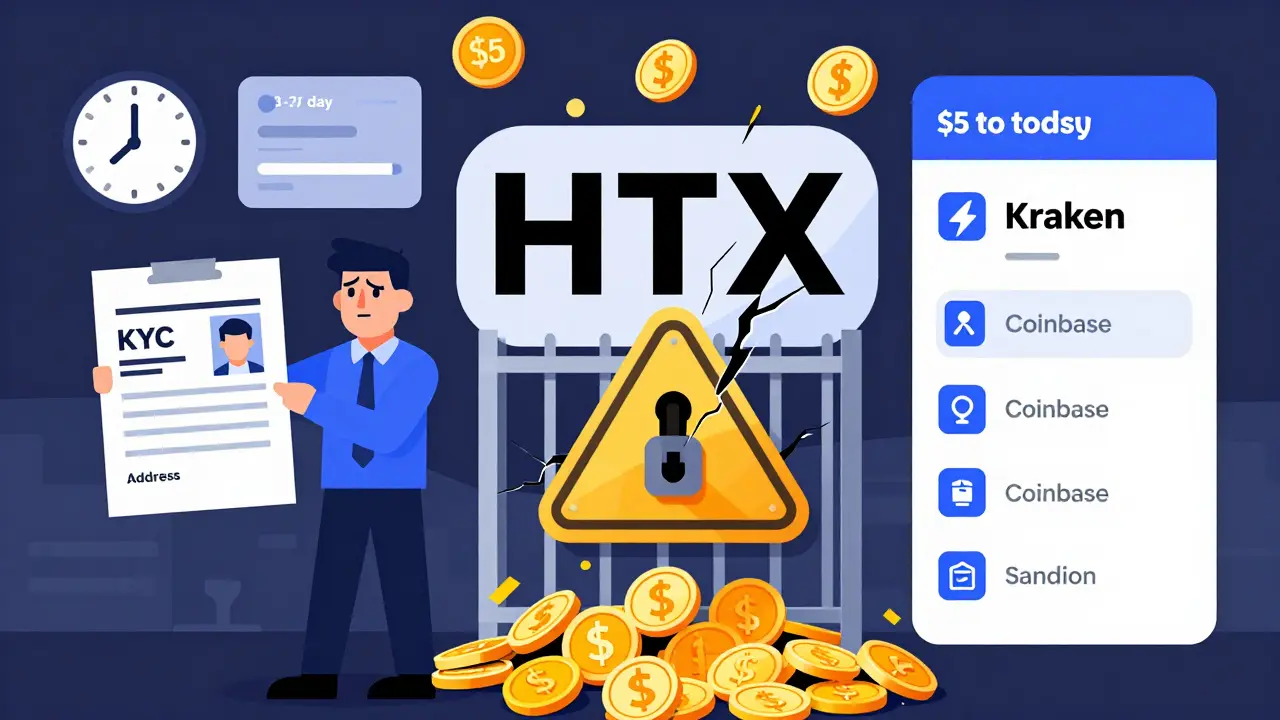
The app and website look modern. The interface is clean, multilingual (including Russian, Turkish, and Spanish), and responsive. But getting started? That’s where most users get stuck. The KYC verification process has three levels:
- L1 (Basic): Just email and phone - lets you trade up to 2 BTC/day.
- L2 (Standard): ID card + selfie - unlocks higher limits and futures trading.
- L3 (Advanced): Proof of address + live video verification - required for large withdrawals and staking rewards.
Users report L2 and L3 verification can take 3-7 business days. Support often doesn’t respond to follow-ups. One trader from Brazil told me he submitted his documents on a Monday and didn’t get approved until the following Friday. Meanwhile, he missed a price spike on a new altcoin because he couldn’t access futures.
Customer support is available 24/7 via live chat and email. But response times are inconsistent. On average, you’ll wait 12-24 hours for a reply - compared to 2-4 hours on Kraken or Binance. If you need help during a market crash, that delay could cost you money.
Who Should Use HTX - And Who Should Avoid It
HTX is ideal for:
- Experienced traders who want access to 700+ coins
- Users who want to trade futures with up to 200x leverage
- Those looking for staking rewards on lesser-known Proof-of-Stake tokens
- People in emerging markets where fiat on-ramps are limited
HTX is NOT ideal for:
- New users who want a simple, fast onboarding process
- Traders in the U.S., Canada, Singapore, Hong Kong, or China (all banned)
- Anyone who values quick customer support
- Casual investors who only buy Bitcoin once in a while
If you’re in Europe, Latin America, Southeast Asia, or Africa - and you’re not afraid of a learning curve - HTX can be one of the most powerful tools in your crypto arsenal. But if you’re looking for a hassle-free experience, you’re better off with something like Kraken or Coinbase.
How HTX Compares to the Big Players
| Feature | HTX | Binance | Kraken | Coinbase |
|---|---|---|---|---|
| Cryptocurrencies Available | 700+ | 500+ | 200+ | 100+ |
| Spot Trading Fee | 0.2% | 0.1% (VIP discounts) | 0.16% | 0.5% |
| Futures Leverage | 200x | 125x | 50x | 20x |
| Staking Options | 100+ coins | 80+ coins | 40+ coins | 20+ coins |
| Fiat On-Ramps | Limited | Strong | Strong | Excellent |
| Regulatory Access (U.S.) | Blocked | Blocked | Available | Available |
| Customer Support Speed | 12-24 hrs | 6-12 hrs | 4-8 hrs | 2-4 hrs |
HTX wins on asset variety and leverage. Binance wins on volume and speed. Kraken wins on security and U.S. access. Coinbase wins on simplicity and fiat ease. HTX fills a niche: it’s the go-to for traders who want deep market access outside the mainstream.
The Bottom Line
HTX is not a beginner’s exchange. It’s a power tool for experienced traders who want access to obscure altcoins, high-leverage futures, and passive income options most platforms don’t offer. The platform has matured significantly since its rebranding, with better security, a stronger user base, and real community governance. But it still struggles with slow verification, unclear withdrawal fees, and patchy customer support.
If you’re outside the U.S. and ready to dig into advanced trading, HTX is worth a look. Just don’t expect it to be easy. Start small. Test the withdrawal process with $10 before depositing more. Watch how long support takes to reply. If you’re okay with that - HTX can give you access to crypto markets few others can match.
Is HTX safe to use in 2026?
Yes, HTX is currently secure. It uses cold storage, multi-factor authentication, and publishes proof-of-reserves. Its security team is active and transparent. However, its past includes two major breaches before rebranding. If you’re risk-averse, consider exchanges with cleaner histories. Always enable 2FA and never store large amounts long-term.
Can I use HTX if I live in the United States?
No. HTX is officially blocked in the U.S., along with several other countries including China, Singapore, Hong Kong, and Iran. If you try to sign up from a U.S. IP address, you’ll be blocked. Using a VPN to access HTX violates its terms and could result in account suspension and loss of funds.
How long does HTX verification take?
Basic verification (L1) is instant. Standard (L2) takes 1-3 days. Advanced (L3) can take up to 7 days, especially if your documents aren’t clear or if support is backed up. Many users report delays during weekends or holidays. To speed it up, submit clear, unexpired ID documents and avoid blurry selfies.
What are HTX’s trading fees?
Spot trading: 0.2% for both makers and takers. Futures trading: 0.02% for makers, 0.05% for takers. P2P trading is free. Withdrawal fees vary by coin - from $1 for stablecoins to $15+ for obscure tokens. There’s no public fee schedule, so always check the withdrawal screen before confirming.
Does HTX offer staking rewards?
Yes. HTX offers staking for over 100 Proof-of-Stake coins, including Ethereum, Solana, Cardano, and dozens of smaller tokens. Rewards are paid daily and can be claimed automatically. Some staking products offer dual rewards - for example, earning both the native token and HTX’s platform token. Annual yields range from 2% to 18%, depending on the asset.
Is HTX better than Binance?
It depends on your needs. HTX offers more altcoins and higher leverage (200x vs. Binance’s 125x). Binance has lower spot fees, better fiat options, faster support, and a more polished app. If you trade obscure tokens or want maximum leverage, HTX wins. If you want simplicity, speed, and reliability, Binance is still the better choice for most users.
Nikki Howard
February 18, 2026 AT 18:35Tarun Krishnakumar
February 20, 2026 AT 03:31jennifer jean
February 20, 2026 AT 06:26Sasha Wynnters
February 20, 2026 AT 15:27Rajib Hossaim
February 21, 2026 AT 00:08Jenn Estes
February 22, 2026 AT 13:20AJITH AERO
February 23, 2026 AT 15:33Chris Thomas
February 25, 2026 AT 02:35Lisa Parker
February 25, 2026 AT 02:42Kyle Tully
February 25, 2026 AT 09:38