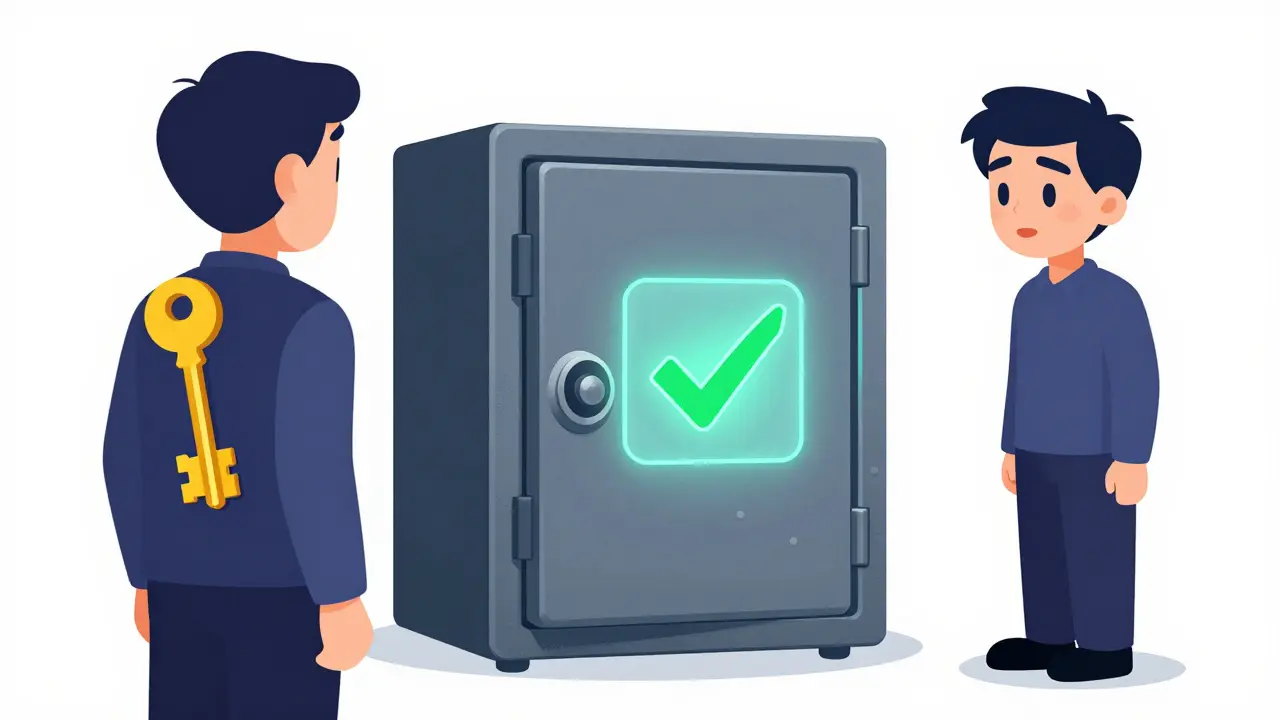
For most of us, blockchain is synonymous with transparency. If you look at a public ledger, you can see every single transaction. While that's great for auditing, it's terrible for privacy. Who wants their entire spending history available for the world to see? This is where zero-knowledge proofs come in. They break the trade-off between transparency and privacy, allowing a network to verify that a transaction is valid without knowing who sent it, who received it, or how much was moved.
The Breakdown: What Exactly is a zk-SNARK?
To understand how these work, we have to decode the name. zk-SNARK stands for Zero-Knowledge Succinct Non-Interactive Argument of Knowledge. It sounds like a mouthful, but each part tells us something critical about how it functions:
- Zero-Knowledge: The verifier learns nothing other than the fact that the statement is true.
- Succinct: The proofs are tiny. Even if the computation being proven is massive, the proof itself remains small and can be verified in milliseconds.
- Non-Interactive: Unlike older proof systems where the prover and verifier had to go back and forth in a "conversation," a SNARK is a single message. You send the proof, and the other side checks it.
- Argument of Knowledge: It's a mathematical proof that the prover actually possesses the secret (the "witness"), not just that the secret exists.
This system was formally introduced around 2012 by cryptographers like Nir Bitansky and Ran Canetti. It shifted the goalposts of cryptography by allowing us to verify complex computational statements with far less effort than actually running the computation ourselves.
How it Works: From Secrets to Math
You don't need a PhD in mathematics to get the gist of the process, but it helps to know that zk-SNARKs turn a computational problem into a polynomial equation. The process generally follows three big steps.
First, there is arithmetization. The computer takes a program-like a rule that says "the sender must have enough balance to send 5 coins"-and turns it into a mathematical circuit. Think of this as a series of additions and multiplications. If the input is correct, the equation balances.
Next, the system builds an information-theoretic proof. This is where the prover uses their secret data to satisfy the equation. Instead of sending the data, they use Elliptic Curve Cryptography to "hide" the values while still proving the mathematical relationship between them holds true.
Finally, the proof is compiled into a practical format. The verifier doesn't need to know the original inputs; they only need to check the final proof against a public key. Because the proof is succinct, this check happens almost instantly, regardless of how complex the original transaction was.
| Feature | zk-SNARKs | zk-STARKs |
|---|---|---|
| Proof Size | Very Small (Compact) | Larger |
| Verification Speed | Extremely Fast | Fast |
| Trusted Setup | Usually Required | Not Required (Transparent) |
| Quantum Resistance | Generally Not Resistant | Post-Quantum Secure |
The "Trusted Setup" Problem
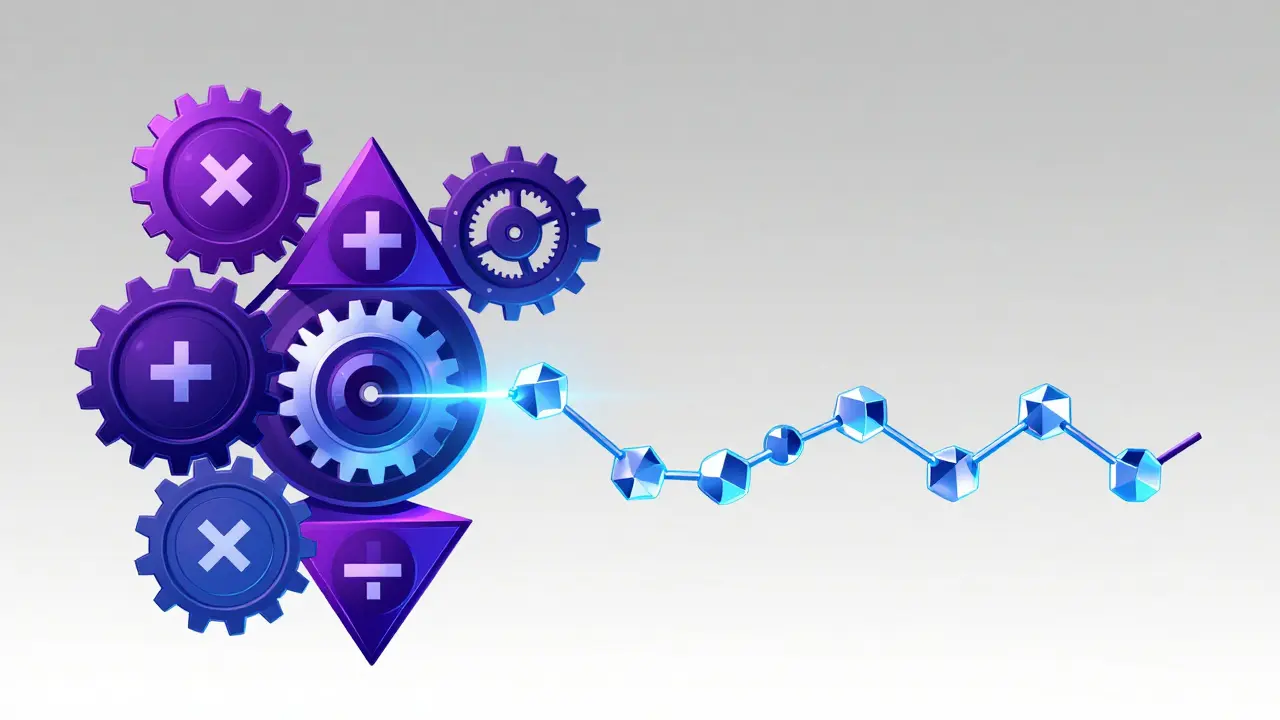
One of the most debated parts of zk-SNARKs is the trusted setup. For many versions of SNARKs to work, they need an initial set of cryptographic parameters. This is like creating a master key to the system. If the people performing this ceremony keep a copy of the "toxic waste" (the random numbers used to create the keys), they could theoretically forge proofs and create money out of thin air.
To fix this, projects often use "Multi-Party Computation" (MPC) ceremonies. If at least one person in a group of 100 destroys their part of the secret, the whole system is secure. However, the industry is moving toward "transparent" setups. For instance, Halo 2, introduced by Zcash in 2022, manages to eliminate the need for a trusted setup entirely while keeping the proofs efficient.
Real-World Applications in Blockchain
Knowing the math is one thing, but where does this actually help us? The most famous example is Zcash. It uses zk-SNARKs to create "shielded transactions." In a typical Bitcoin transaction, everyone knows the amount and the addresses. In Zcash, the SNARK proves that the transaction is valid-meaning the coins weren't spent twice and the amount is correct-without revealing any of the sensitive details.
Beyond privacy, we are seeing a massive shift toward scalability. This is where zk-Rollups come into play. Instead of the main Ethereum chain processing every single transaction, a rollup bundles thousands of transactions together off-chain. It then generates a single zk-SNARK proof that says, "I processed these 1,000 transactions correctly; here is the proof." The main chain only needs to verify that one tiny proof rather than 1,000 individual transactions, which drastically lowers gas fees and increases speed.
Other use cases include:
- Identity Verification: Proving you are over 18 without sharing your birth date or full ID.
- Confidential Voting: Proving you are a registered voter and your vote was counted without revealing who you voted for.
- Interoperability: Using SNARKs to allow one blockchain to verify the state of another blockchain without downloading the entire history.
The Developer's Challenge
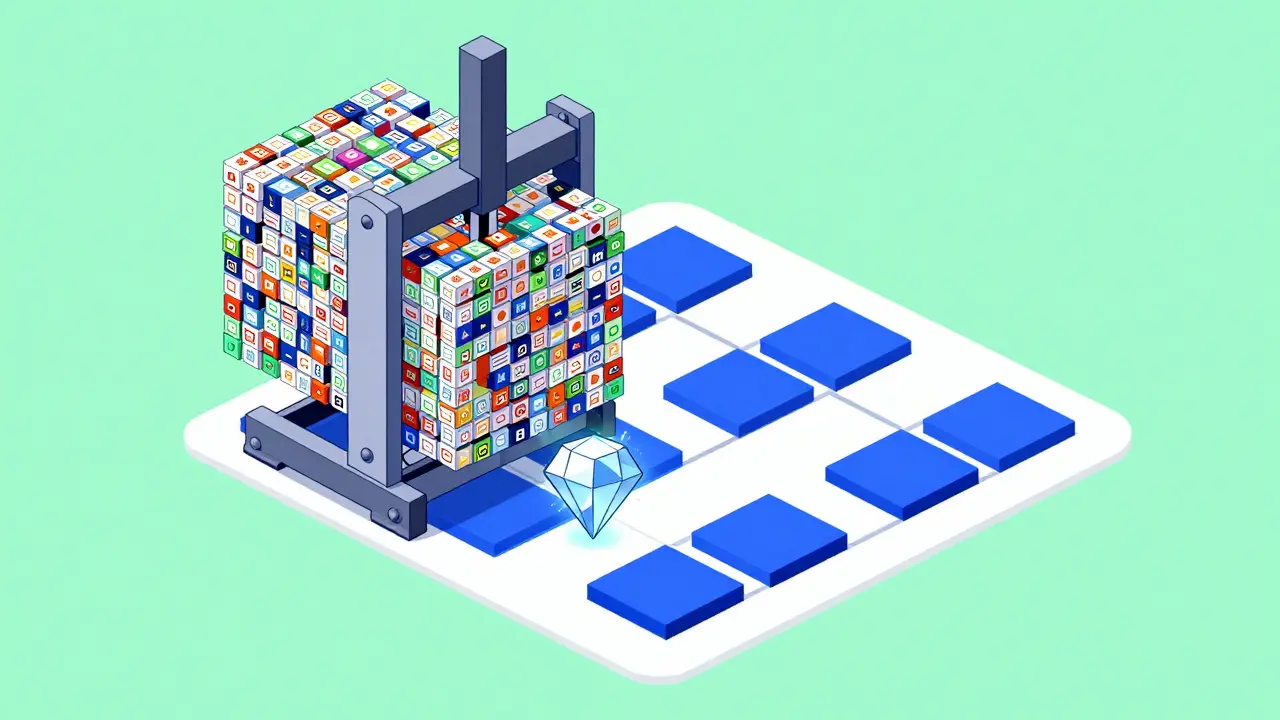
If you're a developer, you can't just "turn on" zk-SNARKs. It requires a steep learning curve. You have to design circuits-logic gates that define what the proof is actually verifying. Tools like Circom are used to write these circuits, and libraries like snarkjs help integrate them into JavaScript applications.
The hardest part is optimization. Generating a proof is computationally heavy. While verifying a proof takes milliseconds, creating it can take seconds or even minutes depending on the complexity. Developers spend a lot of time trying to reduce the number of constraints in their circuits to make the prover's job faster.
Can zk-SNARKs be hacked?
The math itself is considered extremely secure. However, the "trusted setup" is a potential point of failure. If the setup is compromised, a malicious actor could forge proofs. This is why newer versions like Halo 2 are popular-they remove the trusted setup entirely. Additionally, bugs in the circuit code (the logic) can lead to vulnerabilities, but this is a coding error, not a failure of the cryptography.
What is the difference between a SNARK and a STARK?
The main differences are proof size and trust. SNARKs produce much smaller proofs and are faster to verify, but they often require a trusted setup. STARKs (Scalable Transparent Arguments of Knowledge) are "transparent," meaning no trusted setup is needed. STARKs are also quantum-resistant, whereas most SNARKs are not. The trade-off is that STARK proofs are significantly larger, which can increase on-chain storage costs.
Do zk-SNARKs slow down the blockchain?
Actually, they do the opposite for the network. While the individual prover (the person sending the transaction) has to do more work, the verifier (the blockchain nodes) does much less work. By replacing thousands of transactions with one succinct proof, zk-SNARKs enable technologies like zk-Rollups that actually speed up the network and lower fees.
Are zk-SNARKs used in Ethereum?
Ethereum itself doesn't use them for its base layer transactions, but the ecosystem relies on them heavily through Layer 2 solutions. zk-Rollups (like zkSync or Starknet, though Starknet uses STARKs) use these proofs to settle transactions on Ethereum securely and cheaply.
Is it possible to recover funds if I lose my Zcash viewing key?
In a zk-SNARK system like Zcash, if you lose your private keys, the funds are generally gone. The very privacy that makes the system secure also means there is no central authority or "backdoor" to recover the funds. The mathematical proofs only work if you possess the secret witness (your key).
Where to Go From Here
If you're just starting out, don't get bogged down in the polynomial math right away. Start by exploring how zk-Rollups are changing the way we use Ethereum. If you are a developer, try playing with Circom to build a simple circuit-like a proof that you know two numbers that multiply to equal a specific result. The jump from "understanding the concept" to "implementing the code" is the biggest hurdle, but it's where the real value is created.
Erica Mahmood
April 5, 2026 AT 10:03the trade-off between proof size and trusted setup is basically the crux of the current meta in l2 scaling. if you're looking at the provers side the computational overhead for generating the witness is still the main bottleneck even with recursive snarks
Alexandra Lance
April 6, 2026 AT 18:49Oh honey, thinking a "trusted setup" is actually trusted is just precious 🙄💅. Who do you think is actually running these MPC ceremonies? The same elites who want to track every single cent you spend. It's basically a backdoor for the globalists to print fake coins while we all clap for "privacy" 🕵️♀️🤡
Sonya Bowen
April 7, 2026 AT 18:21The move toward transparent setups like Halo 2 is a significant leap. It removes the central point of failure and aligns better with the core ethos of decentralization.
Manisha Sharma
April 8, 2026 AT 19:09Typicall western attempt to simplfy complex math. The indian developers are already lightyears ahead in implementin these circuits for real world scale and you guys just now talkin bout basics. Absolutey pathetic how you try to claim this tech as some "modern discovery" when the logic is universal and we mastery it better
Lauren Gilbert
April 10, 2026 AT 01:00It's quite fascinating to consider the philosophical implications of a world where we can prove truth without revealing the underlying reality, because it almost suggests that the most valuable thing we possess isn't the information itself but the ability to validate it without exposure, which leads me to wonder if this technological shift will actually make us more trusting of the system or more detached from the human element of trust that has historically held societies together for thousands of years.
Sharhonda Walker
April 10, 2026 AT 04:52I tried using Circom last week and it took me forvever to get the constraints right. Just a tip for anyone startin: double check your signals or the whole thing just fails without a clear error message lol
Bruce Micciulla Agency
April 12, 2026 AT 01:06the claim that this scales ethereum is just a fancy way of saying we're pushing the complexity to a different layer where the average user has zero visibility into the actual state transitions and just trusts a succinct proof which is essentially trust by another name since the prover is still a centralized entity in most current rollups anyway
Carol Prates
April 14, 2026 AT 00:48Honestly this is so exciting! I love how we can finally hide our spending from nosy people while still keeping the network honest. It's literally the dream for anyone who hates the public nature of Bitcoin!
Krystal Moore
April 14, 2026 AT 04:19Wait, so we're just okay with the fact that if you lose your key, your money is just gone forever? That is absolutely immoral. How can a system call itself a financial solution when it has zero safety nets for human error? It's basically a trap for the elderly and the non-tech savvy. Absolute madness!
gladys christine
April 15, 2026 AT 15:14YAAAAS!! Finally some real talk about privacy!! This is exactly what we need to bring everyone into the fold and make the internet safe again!! WE ARE ALL GOING TO BE SO SECURE!!!