
Imagine trying to buy Bitcoin while your bank account screams that digital assets aren't legal tender. For years, this was the daily reality for millions of Vietnamese traders. But by mid-2026, the landscape has shifted dramatically. The days of relying solely on shady peer-to-peer (P2P) deals or offshore accounts are fading, replaced by a structured, albeit tightly controlled, ecosystem. With over 21 million people holding digital assets, Vietnam is no longer just a participant in the global crypto wave; it is one of its biggest drivers.
The core question isn't if you can trade crypto in Vietnam anymore-it's how you do it safely and efficiently under the new rules. Whether you are a beginner looking to dip your toes into spot trading or an experienced trader eyeing futures, understanding the current infrastructure is critical. This guide breaks down exactly how Vietnamese users access these platforms today, navigating the mix of global giants and emerging local licenses.
The Regulatory Shift: From Gray Area to Pilot Program
To understand how you access exchanges now, you have to look at what changed in early 2025. For over a decade, the State Bank of Vietnam declared cryptocurrencies "not legal tender," creating a legal gray area. Trading wasn't explicitly banned, but banks were wary, and users operated without protection. That ambiguity ended with Resolution 05/2025, passed in January 2025. This resolution launched a five-year pilot program for cryptocurrency trading platforms, bringing the industry out of the shadows and into government oversight.
This shift means two things for you as a trader. First, transactions must be conducted using the Vietnamese dong (VND). You cannot use USD or other foreign currencies directly on licensed platforms. Second, the market is highly selective. The Ministry of Finance limited the initial pilot to just five licenses. These licenses come with massive barriers to entry: a charter capital requirement of VND 10 trillion (roughly US$380 million), with 65% coming from institutional investors. This effectively blocks most small startups, handing the reins to major financial players like SSI Digital Corporation and Techcom Securities' TCEX platform.
However, because only five licenses exist and the rollout is gradual, the majority of retail traders still rely on global centralized exchanges (CEXs). These platforms have adapted quickly to the new environment, offering localized features that make them accessible despite not being fully "licensed" domestic entities yet. They operate in a hybrid space, complying with KYC (Know Your Customer) standards while providing the liquidity that local platforms haven't yet matched.
Top Platforms for Vietnamese Traders
So, which platforms are actually usable? Based on market share, liquidity, and user feedback from late 2025 through early 2026, a few names dominate. Here is how they compare:
| Platform | Key Strength | VND Support | Fee Structure (Spot) | Best For |
|---|---|---|---|---|
| Binance | Highest Liquidity | Direct Bank Transfer & P2P | 0.1% | Most users seeking ease of use |
| Bybit | Futures/Derivatives | P2P & E-Wallets | 0.1% / 0.08% Futures | Advanced traders & leveraged positions |
| OKX | Transparency (Proof-of-Reserves) | P2P Only | 0.08% | Security-conscious investors |
| MEXC | New Token Listings | P2P Only | 0.02% - 0.05% | Altcoin hunters & low fees |
| Remitano | Simplicity | Direct VND Buy/Sell | ~0.5% + Spread | Absolute beginners |
Binance remains the heavyweight champion here, capturing about 45% of the market share among Vietnamese users. Its integration with 28 local banks allows for direct VND deposits via API connections to Vietnam's National Payment Corporation (NAPAS). This means you can move money from your Vietcombank or Techcombank account directly into your exchange wallet in 2-5 minutes. Bybit follows closely, particularly popular among those trading perpetual futures, which accounted for 68% of its volume from Vietnamese users in late 2025.
If you prioritize security over speed, OKX has gained traction due to its monthly proof-of-reserves audits. However, it lacks the deep VND liquidity of Binance, meaning you might face wider spreads when converting large amounts. For those who want the absolute lowest fees and access to obscure altcoins, MEXC is a strong contender, though its customer support is less localized than its competitors.
How to Fund Your Account: VND On-Ramps
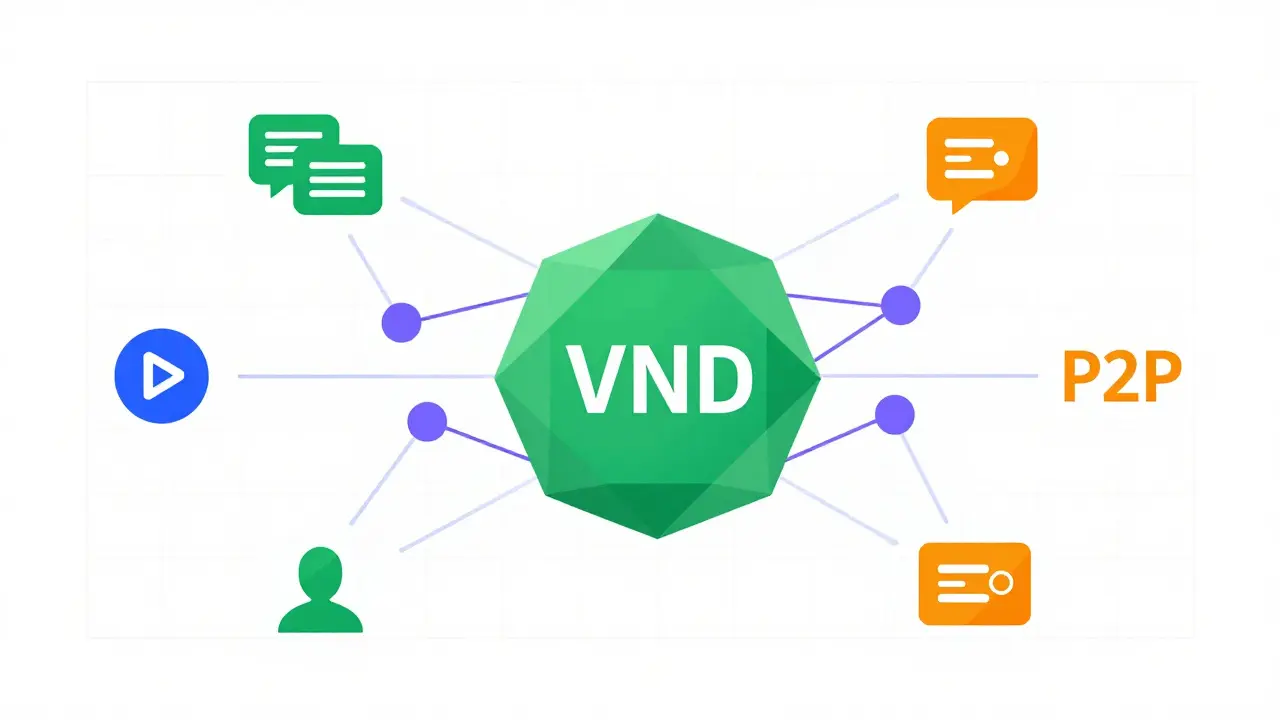
The biggest hurdle for any Vietnamese trader is getting fiat currency onto the exchange. Since direct bank transfers to crypto companies were historically blocked, the ecosystem developed creative workarounds that are now semi-formalized. There are three main ways to fund your account:
- Bank Transfers (Direct Integration): Platforms like Binance and Bitget now offer direct VND deposit options. When you select "Deposit VND," the system provides you with a specific bank account number belonging to a licensed payment partner. You transfer the funds via your banking app, and the crypto appears in your wallet shortly after. This method is fast and relatively safe, but keep transactions under VND 100 million ($4,000) per transfer to avoid triggering anti-money laundering (AML) flags from your bank.
- E-Wallets: Integrations with MoMo, ZaloPay, and VNPay have become standard. These are excellent for smaller, frequent trades. The processing time is nearly instant, and the interface is familiar to anyone who uses these apps for daily purchases. However, transaction limits are lower, and fees can be slightly higher than direct bank transfers.
- Peer-to-Peer (P2P) Trading: This remains the most flexible option, especially for larger sums or if your bank restricts direct crypto-related transfers. In P2P, you buy crypto directly from another user. The exchange acts as an escrow service. You send VND to their bank account, and once they confirm receipt, the exchange releases the crypto to you. While effective, this carries risk. Scams involving fake payment screenshots or chargebacks are common. Always stick to merchants with high completion rates (95%+) and thousands of orders.
A pro tip from veteran traders: never mention "crypto" or "Bitcoin" in the transfer description field when sending VND via P2P. Just leave it blank or write "Payment for goods." Banks are increasingly monitoring keywords, and flagging yourself can lead to frozen accounts.
Navigating KYC and Identity Verification
You cannot trade significantly without completing Know Your Customer (KYC) procedures. Under the new regulatory framework, anonymity is largely dead for serious trading. All major platforms require identity verification to prevent fraud and comply with international standards.
The process typically involves uploading a photo of your National ID card (CMND/CCCD) and performing a facial recognition scan. The system matches your face against Vietnam's citizen database to ensure authenticity. According to recent data, the average verification time is 24-48 hours, though Binance and Bybit often approve accounts within 18 hours.
Be prepared for occasional glitches. Some users report issues where the OCR (Optical Character Recognition) fails to read older-style ID cards. If this happens, take clear, well-lit photos with high contrast. Also, ensure the name on your ID matches the name on your bank account exactly. Mismatches are the leading cause of failed withdrawals later on.
Looking ahead to Q1 2026, expect changes. The Ministry of Information and Communications issued Circular 18/2025/TT-BTTTT, mandating integration with Vietnam's National Digital Identity system. This will streamline KYC, allowing you to verify your identity instantly through the VNeID app, reducing friction and improving security.
Tax Implications and Compliance Risks
Let's address the elephant in the room: taxes. As of 2026, Vietnam imposes a 22% capital gains tax on cryptocurrency profits. Unlike traditional stock markets, there is no automated withholding tax at the source. This means you are responsible for tracking your gains and declaring them annually.
Most exchanges do not provide tax reports tailored to Vietnamese law. You will need to maintain your own records of every buy, sell, and transfer. Tools like Koinly or CoinTracking can help, but you must manually input your VND deposit sources to calculate accurate cost bases. Failure to declare can result in significant penalties during tax audits, which are becoming more common as the government tightens oversight.
Beyond taxes, be aware of the AML requirements. Draft Circular 15/2025/TT-BTC proposes mandatory reporting for transactions over VND 200 million ($8,000). If you are moving large sums, expect scrutiny. Keep invoices or proof of legitimate income sources handy. The goal is to show that your crypto activity is part of a transparent financial history, not money laundering.
Common Pitfalls and How to Avoid Them
Even with better regulation, risks remain. Here are the most common problems Vietnamese traders face and how to sidestep them:
- Bank Account Freezes: About 31% of users reported temporary freezes in late 2025. This usually happens after a sudden large deposit. To avoid this, spread your deposits over several days and use multiple bank accounts if possible. Never funnel all your savings through one single transaction.
- P2P Fraud: With 4,200 reported cases in Q3 2025 alone, scams are real. Never release crypto before confirming the money is in your bank account-not just in the app balance, but confirmed by your bank statement. Beware of "fake check" scams where a sender shows a screenshot of a sent payment, but the funds never arrive.
- High Volatility Withdrawals: During extreme market swings, some exchanges impose withdrawal limits to protect liquidity. Bybit users, for instance, complained about delays during high volatility periods. Plan ahead; don't wait until you need emergency cash to try withdrawing large amounts.
- Phishing Attacks: Scammers create fake versions of popular exchanges. Always type the URL manually or use bookmarked links. Never click links from SMS or Telegram messages claiming to be from Binance or Bybit support.
The Future: Local vs. Global
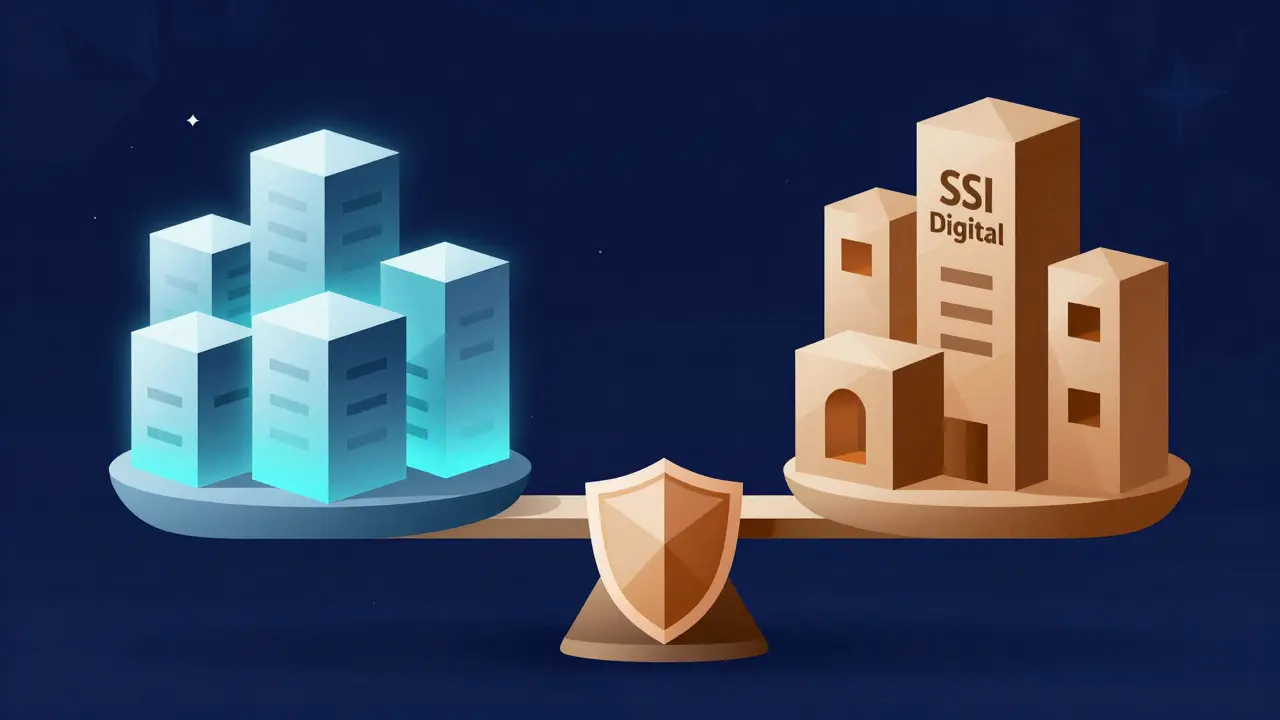
Where is this heading? The next few years will see a tug-of-war between global giants and local incumbents. On one side, you have Binance and Bybit, offering superior technology, liquidity, and user experience. On the other, you have newly licensed local platforms like SSI Digital and TCEX, backed by powerful financial institutions.
Analysts predict that by 2027, local platforms could capture up to 15% of the market, driven by trust and regulatory compliance. However, global exchanges are likely to retain dominance due to their established ecosystems and deeper order books. For most traders, the strategy will be hybrid: use global exchanges for active trading and liquidity, and perhaps move long-term holdings to local, regulated custodians for peace of mind regarding tax compliance and asset protection.
The key takeaway is that accessibility has improved, but responsibility has increased. You have more tools than ever, but you also need to be more diligent about security, taxes, and compliance. The era of reckless speculation is over; the era of informed, regulated participation has begun.
Is it legal to trade cryptocurrency in Vietnam in 2026?
Yes, trading is legal under the framework of Resolution 05/2025, which established a pilot program for crypto exchanges. However, cryptocurrencies are still not considered legal tender. You must use VND for transactions and comply with tax obligations, including a 22% capital gains tax on profits.
Which crypto exchange is best for beginners in Vietnam?
Binance is generally recommended for beginners due to its extensive Vietnamese-language support, user-friendly interface, and robust VND on-ramp options via bank transfers and e-wallets. Remitano is another option for those who prefer simple P2P buying, though it has fewer features.
How do I deposit VND into Binance?
You can deposit VND via direct bank transfer using integrated partners like MoMo, ZaloPay, or VNPay. Alternatively, use the P2P trading section to buy USDT or BTC directly with VND from verified merchants. Ensure your bank account name matches your KYC details to avoid issues.
What are the fees for trading crypto in Vietnam?
Fees vary by platform. Binance charges 0.1% for spot trades, while Bybit offers competitive rates for futures. P2P transactions may have implicit costs through price spreads. Additionally, remember the 22% capital gains tax on profits, which is separate from exchange fees.
Will my bank block me for crypto transactions?
Banks are cautious but not uniformly restrictive. Large or suspicious transfers can trigger AML checks. To minimize risk, avoid mentioning "crypto" in transfer descriptions, keep individual transactions under VND 100 million, and maintain clear records of your financial activities.
Are local Vietnamese crypto exchanges available?
Yes, platforms like SSI Digital Corporation and Techcom's TCEX have launched under the new licensing framework. However, they currently hold a small market share compared to global giants like Binance and Bybit, primarily due to lower liquidity and newer infrastructure.
Do I need to pay tax on crypto profits?
Yes, Vietnam imposes a 22% capital gains tax on cryptocurrency profits. Exchanges do not withhold this tax automatically, so you are responsible for tracking your gains and declaring them in your annual tax return.
Is P2P trading safe in Vietnam?
P2P trading can be safe if you follow best practices: use only high-rated merchants, communicate within the exchange's chat system, and never release crypto before confirming funds in your bank account. Be vigilant against phishing scams and fake payment proofs.