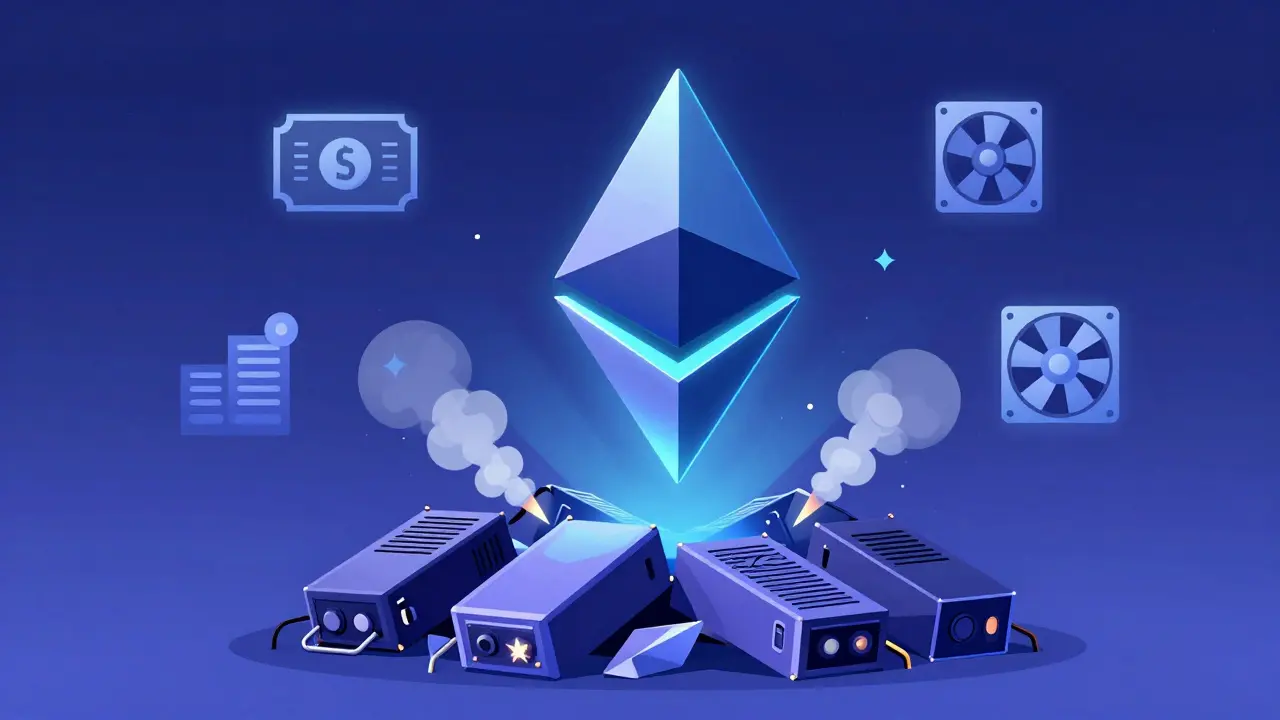
Before 2022, if you wanted to help secure a blockchain like Ethereum, you had to buy expensive computers, plug them in 24/7, and pay for the electricity to run them. That was mining. Today, you can do the same job by simply holding cryptocurrency in a wallet and locking it up. No loud fans. No power bills. Just your coins doing the work. This shift-from mining to staking-isn’t just a technical upgrade. It’s a complete rewrite of how blockchains stay secure.
What Mining Actually Did
Mining was the original way blockchains like Bitcoin and early Ethereum confirmed transactions. Miners competed to solve complex math puzzles using powerful hardware. The first one to solve it got to add the next block of transactions and was rewarded with new cryptocurrency. It was like a digital lottery, but you needed thousands of dollars in gear and hundreds of dollars in electricity each month just to have a shot. The problem? It was wasteful. Bitcoin’s annual electricity use rivals that of entire countries. Mining rigs generated heat, noise, and e-waste. And as the network grew, only those with access to cheap power and bulk hardware could compete. Small miners got squeezed out. Centralization crept in-not because of bad actors, but because of physics and cost.How Staking Works Instead
Staking replaces competition with commitment. Instead of solving puzzles, you lock up your coins as collateral. The network picks validators based on how much you’ve staked and how long you’ve held it. The more you stake, the higher your chances of being chosen to validate the next block. When you’re picked, you check transactions, sign them off, and get rewarded with more cryptocurrency. No GPUs. No cooling systems. No power surge at 3 a.m. Just your wallet connected to the internet. Ethereum’s switch to staking in September 2022 cut its energy use by over 99.9%. That’s not a small improvement-it’s a revolution.The Validator Selection Process
Staking doesn’t just pick the richest person. It uses a mix of stake size and randomness. If you stake 100 ETH, you have more chances than someone staking 10 ETH-but it’s not guaranteed. The system avoids predictability so no one can game it. On Ethereum, you need exactly 32 ETH to run your own validator node. That’s about $100,000 at current prices. But you don’t need that much. Most people join staking pools. You can put in 1 ETH, or even 0.1 ETH, and still earn rewards. The pool combines everyone’s stake, runs the validator, and splits the rewards. Platforms like Coinbase, Kraken, and Lido handle the tech side. You just deposit and earn.
Security: Slashing Instead of Hashrate
In mining, you’d need 51% of the network’s computing power to launch an attack. That’s expensive-but possible for big mining farms. In staking, you’d need 51% of all the coins locked up. That’s not just expensive-it’s self-defeating. If you control half the network, you’re also holding half the value. If you try to cheat, the network slashes your stake. You lose part or all of your coins. That’s a huge deterrent. Why destroy your own wealth? Slashing also punishes downtime. If your validator goes offline too often, you get penalized. That keeps the network running smoothly. It’s not about who has the fastest computer. It’s about who has the most to lose.Rewards: Passive Income Without the Hardware
Miners earned block rewards plus transaction fees. Stakers earn the same-but without the overhead. Ethereum validators now earn roughly 3-5% annual returns, depending on total staked ETH. That’s not a guaranteed dividend, but it’s steady. And you’re not paying for electricity, cooling, or hardware upgrades. You also earn transaction fees. Every time someone sends ETH, a small fee goes to the validator who included that transaction. Over time, these fees add up. In fact, as Ethereum usage grows, fees are becoming a bigger part of validator income than the base reward.Who Can Participate Now?
Mining was a barrier to entry. You needed tech skills, hardware, space, and a power plan. Staking? You need a wallet and some ETH (or other PoS coins). If you’re a beginner, you can stake through exchanges. No setup. No maintenance. Just click “Stake” and forget it. If you’re more technical, you can run your own node. You’ll need a computer, a stable internet connection, and the discipline to keep it online. But you’ll earn more-because you’re not sharing rewards with a pool. Cardano, Polkadot, and Solana all work the same way. Even newer blockchains skip mining entirely. They launch with staking from day one. Why? Because it’s cheaper, cleaner, and easier to scale.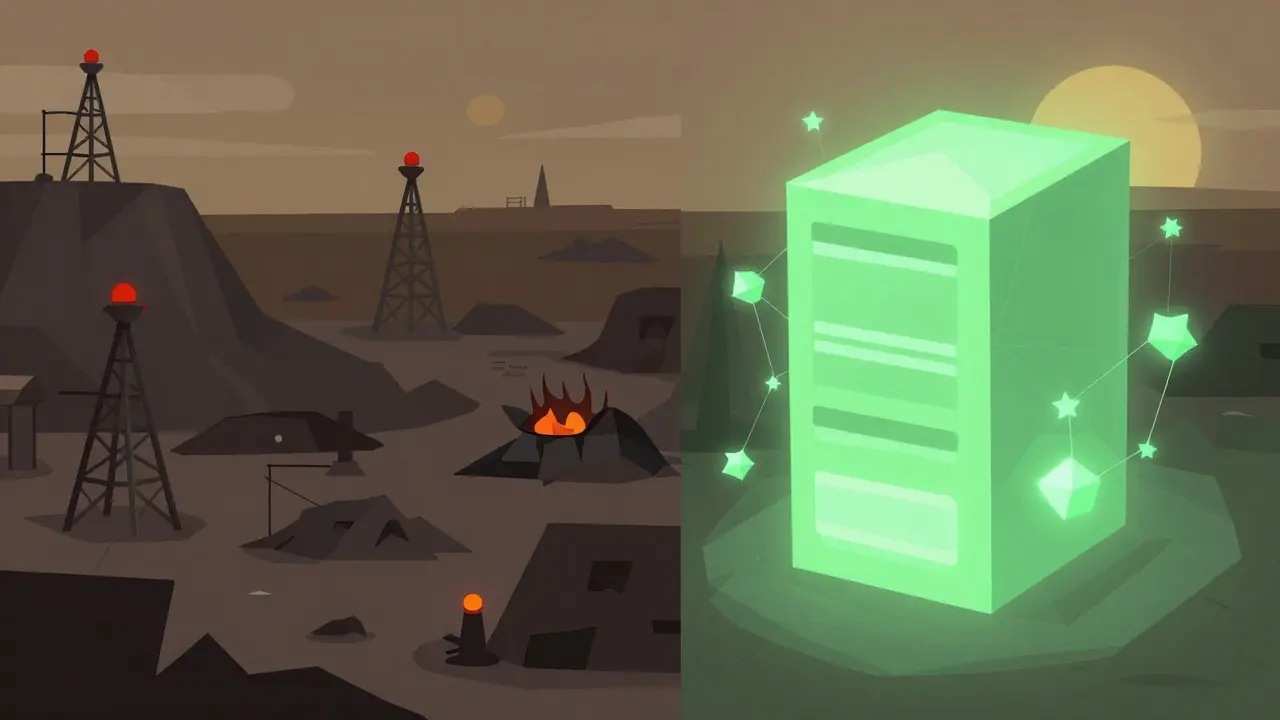
The Trade-Offs
Staking isn’t perfect. Locked-up coins can’t be traded. That reduces liquidity. If the market crashes, you’re stuck holding coins you can’t sell. Some people call this “illiquidity risk.” There’s also centralization risk. Big holders with millions in ETH can afford to run multiple validators. Smaller players rely on pools, which means power shifts to big operators. That’s a concern-but it’s different from mining centralization. In mining, control came from hardware and energy access. In staking, it comes from wealth. Both can lead to concentration, but staking gives more people a seat at the table. And yes, staking isn’t risk-free. If you run your own node and mess up, you can lose coins. But for most people using exchanges, the risk is low. The exchange handles the tech. You just get rewards.Why This Matters Beyond Crypto
This isn’t just about coins. It’s about how we build digital infrastructure. Proof of Stake shows that security doesn’t have to mean waste. We don’t need to burn electricity to prove trust. We can use economics instead. Governments, banks, and institutions are watching. If a $300 billion network like Ethereum can run on staking, why can’t other systems? The idea of “economic proof” is spreading. It’s being tested in digital identity, supply chains, and even voting systems. Staking didn’t just replace mining. It proved that blockchains could be sustainable. And that’s the real win.What’s Next?
The next phase is refinement. Validators will get smarter rewards. Slashing rules will get more precise. Staking pools will offer better insurance against downtime. Some chains are even testing “liquid staking,” where you can trade your staked tokens as a derivative-so you earn rewards without locking up your assets. One thing’s clear: mining is fading. New projects won’t even consider it. Even legacy chains are migrating. Ethereum did it. Others will follow. The future of blockchain isn’t about how hard you can compute. It’s about how much you’re willing to put at stake.Can I stake any cryptocurrency?
No. Only blockchains that use Proof of Stake allow staking. Popular ones include Ethereum, Cardano, Polkadot, Solana, and Tezos. Bitcoin and Litecoin still use mining, so you can’t stake them. Always check if a coin supports staking before buying.
Do I need to be technical to stake?
Not at all. If you use an exchange like Coinbase or Kraken, you can stake with a few clicks. You don’t need to run software or manage servers. If you want to run your own validator, then yes-you’ll need some tech skills. But most people don’t. The exchanges handle the complexity.
How much can I earn from staking?
Ethereum staking currently offers between 3% and 5% annual returns, depending on how much ETH is staked across the whole network. Other chains like Cardano or Polkadot offer higher yields-sometimes 5% to 8%. But higher yields often come with higher risk. Always check the network’s official docs before staking.
Is staking safe?
It’s safer than mining, but not risk-free. If you stake through a trusted exchange, your risk is low. The exchange handles security and uptime. If you run your own node, you risk losing part of your stake if your validator goes offline or acts maliciously. This is called slashing. Always read the terms before staking.
What happens if the price of ETH drops while I’m staking?
You still earn rewards in ETH, but the dollar value of those rewards goes down if ETH’s price falls. Your staked ETH is locked, so you can’t sell it until you unstake-which can take days or weeks. Staking is a long-term commitment. Don’t stake money you might need quickly.
Can I unstake my coins anytime?
On Ethereum, you can request to unstake anytime, but there’s a waiting period. As of 2025, it takes about 18-24 hours to exit the validator queue, and another 4-7 days to withdraw your full balance. Other chains have different rules. Always check the unstaking timeline before you stake.
Why did Ethereum switch from mining to staking?
Ethereum switched to reduce its massive energy use. Mining consumed as much electricity as a small country. Staking cut that by over 99%. It also made the network more accessible. Anyone with ETH could help secure it-not just those with mining farms. The upgrade was called "The Merge," and it was one of the biggest changes in crypto history.
Is staking better than mining?
For most people, yes. Staking is cheaper, cleaner, and easier. You don’t need to buy hardware or pay for electricity. You get rewards just by holding coins. Mining is only better if you have access to free or ultra-cheap power and know how to manage hardware. For everyone else, staking is the clear winner.
Dustin Bright
December 22, 2025 AT 11:50Naman Modi
December 24, 2025 AT 08:31Megan O'Brien
December 26, 2025 AT 05:13Melissa Black
December 27, 2025 AT 19:52Mmathapelo Ndlovu
December 29, 2025 AT 13:28Jacob Lawrenson
December 29, 2025 AT 23:17Ashley Lewis
December 31, 2025 AT 00:45Luke Steven
January 1, 2026 AT 06:39Ellen Sales
January 2, 2026 AT 14:47Zavier McGuire
January 3, 2026 AT 10:24Cathy Bounchareune
January 3, 2026 AT 19:52Tyler Porter
January 5, 2026 AT 12:37Rebecca F
January 6, 2026 AT 06:03