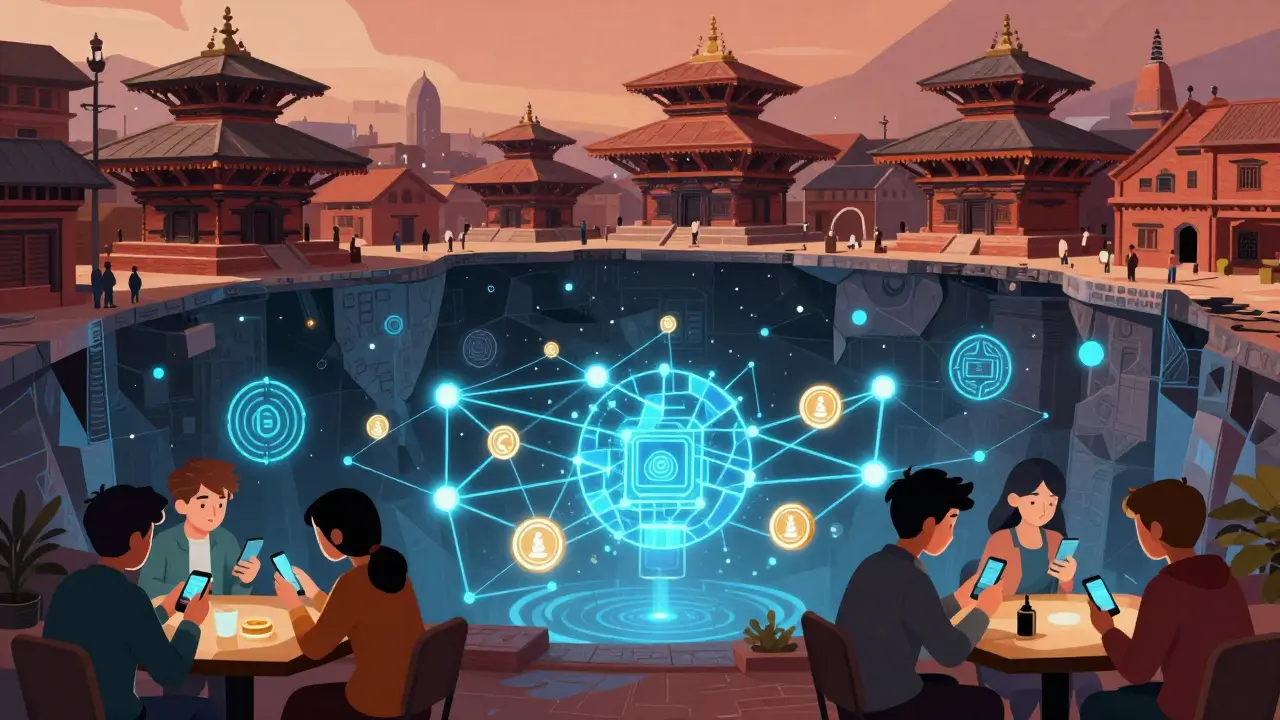
Imagine waking up to find that owning a digital wallet is as illegal as smuggling contraband across a border. In Nepal, that isn't a dystopian movie plot-it's the law. For years, the government has maintained an absolute prohibition on digital assets, yet if you walk through the cafes of Kathmandu or talk to freelancers in Pokhara, you'll find a thriving, hidden world of cryptocurrency in Nepal. People aren't doing this because they want to break the law; they're doing it because the traditional financial system is often too slow, too expensive, or too rigid for the modern world.
The Iron Fist: Understanding the Legal Ban
To get why this is so risky, you have to look at who is calling the shots. The Nepal Rastra Bank is the central bank of Nepal and the primary regulatory body overseeing the country's monetary policy and financial system (NRB). They aren't just "discouraging" crypto; they've made it a criminal offense. Under the Foreign Exchange Regulation Act is a legislative framework that controls the flow of foreign currency into and out of Nepal to maintain economic stability , any activity involving trading, mining, or payments in digital coins is completely outlawed.
The penalties are designed to terrify. We're talking about up to three years in prison. If you're caught, the government can slap you with a fine three times the value of the transaction. They can also seize your physical assets and your digital wallets. On top of that, the Electronic Transaction Act is a law intended to regulate electronic records and digital signatures while penalizing cybercrimes is often used to bring cybercrime charges against those caught in the crypto web. Why so harsh? The NRB is terrified of money laundering, the rise of Ponzi schemes, and the loss of control over the national currency's value.
Why Nepalis Risk Everything for Crypto
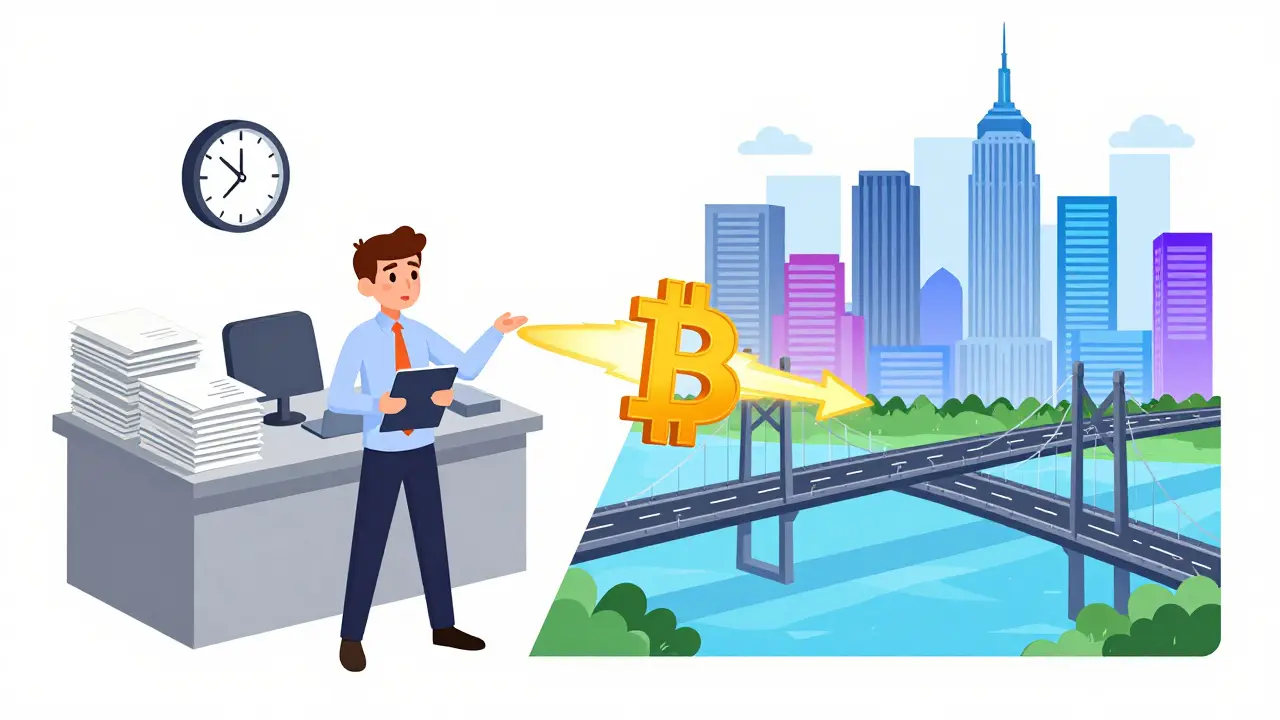
If the risks are so high, why do people still do it? It mostly comes down to one thing: Cross-border remittances are funds transferred by foreigners working abroad back to their home country . Nepal's economy relies heavily on money sent home by workers in the Gulf states, Malaysia, and the West. Traditional banks are slow, and the fees can eat a significant chunk of a worker's hard-earned salary.
For a young freelancer in Kathmandu working for a client in New York, getting paid via a traditional bank can be a nightmare of paperwork and delays. Cryptocurrency offers a way to move value instantly. By using stablecoins or Bitcoin, they can bypass the bureaucratic hurdles of the banking system. It’s not about speculation or "getting rich quick" for most; it's about survival and efficiency in a global digital economy.
| Feature | Traditional Banking | Underground Crypto |
|---|---|---|
| Legal Status | Fully Legal / Regulated | Illegal / Criminal Offense |
| Transaction Speed | Days (for international) | Minutes |
| Fees | High (intermediary banks) | Low to Moderate |
| Security | Government Guaranteed | Zero Legal Recourse |
The Mechanics of the Underground Economy
Since you can't just open a Coinbase or Binance account with a Nepali ID and a local bank card, the community has had to get creative. The underground economy operates on trust and P2P (peer-to-peer) networks. Instead of using an exchange that requires KYC (Know Your Customer) verification from a banned jurisdiction, many users turn to decentralized platforms or private Telegram groups.
The process usually looks like this: a user finds a trusted seller via a social network, transfers Nepali Rupees (NPR) through a local digital wallet or bank transfer, and receives the crypto in a private wallet. This "shadow market" allows the flow of assets to continue, but it's incredibly dangerous. Because these trades happen outside any legal framework, there is no one to call if the seller disappears with the money. You are essentially betting your savings on the honesty of a stranger on the internet.
The Generational Divide and Tech Stifling
This ban has created a weird rift in Nepali society. On one side, you have the government and the older generation who trust the physical bank branch and the printed note. On the other, you have tech-savvy Gen Z and Millennials who see Blockchain is a distributed ledger technology that allows data to be stored globally across multiple computers as the future of the internet.
The tragedy here is the loss of innovation. Nepal has some of the brightest coders in South Asia. Instead of building the next big DeFi (Decentralized Finance) protocol or a supply-chain solution for Himalayan tea, these developers are forced to work in secret or move abroad. By banning the asset, the government has effectively banned the technology, pushing a whole generation of talent into the shadows or out of the country entirely.
The Government's Alternative: The CBDC Path
The NRB isn't totally blind to the digital revolution; they just want to own it. This is why they are pushing for a Central Bank Digital Currency (CBDC) which is a digital form of a country's sovereign currency, issued and regulated by the central bank . The plan is to launch a digital version of the Nepali Rupee within the next couple of years.
Here is the catch: a CBDC is not cryptocurrency. While Bitcoin is decentralized (no one is in charge), a CBDC is the opposite. It gives the government *more* visibility into every single transaction you make. For those using crypto to avoid government delays or restrictions, a CBDC doesn't solve the problem-it just digitizes the existing bureaucracy. It's an attempt to provide the "convenience" of digital payments without giving up the "control" of the central bank.

The Risks of Living in the Grey Market
Operating in a ban isn't just about the fear of police. There are systemic risks that the NRB warns about, and they are actually valid. Without regulation, users are prime targets for scams. In recent years, several "investment schemes" appeared in Nepal, promising 10% monthly returns on crypto. Most of these were classic Ponzi schemes that wiped out the savings of thousands of people who had no legal way to report the fraud.
Furthermore, the lack of an exit ramp (a way to turn crypto back into cash legally) means users often rely on high-risk P2P trades. If a bank notices a series of suspicious transfers to an unknown individual, they may freeze the account, triggering a government investigation into whether the user is involved in illegal crypto trading. One wrong move, and a simple attempt to get paid for a freelance project can lead to a courtroom.
Is it really illegal to own Bitcoin in Nepal?
Yes, it is. The Nepal Rastra Bank and the government have issued multiple notices stating that all cryptocurrency-related activities, including holding, trading, and mining, are completely illegal. Doing so can lead to imprisonment and heavy fines.
Why does the government ban crypto if people still use it?
The government is primarily concerned about money laundering and the instability of the financial system. They believe that unregulated digital assets could facilitate fraud and make it harder for the central bank to control the flow of foreign exchange.
How do Nepalis move money using crypto?
Most use peer-to-peer (P2P) networks. They find a buyer or seller through social media or private groups, send local currency via a bank or mobile wallet, and receive the crypto in a private wallet. This avoids the need for an official exchange.
What is the difference between a CBDC and cryptocurrency?
Cryptocurrencies like Bitcoin are decentralized and operate on a public ledger without a central authority. A CBDC (Central Bank Digital Currency) is a government-issued digital currency that is fully controlled and monitored by the central bank.
What happens if I am caught trading crypto in Nepal?
You could face up to three years in prison and fines that are three times the amount of the transaction. The government also has the power to seize your assets and charge you under the Electronic Transaction Act for cybercrimes.
What's Next for Nepal's Digital Future?
The current situation is a stalemate. The government continues to double down on the ban, while the demand for digital assets grows alongside the tech-literate youth. If the government continues to ignore the demand for decentralized finance and only offers a state-controlled CBDC, the underground economy will likely only grow more sophisticated.
For those currently operating in the grey market, the best move is extreme caution. Avoid large, traceable bank transfers and be wary of anyone promising guaranteed returns. Until the laws change, the "freedom" of cryptocurrency in Nepal comes with a very heavy price tag: the risk of losing everything to either a scammer or the state.
Siddharth Bhandari
April 7, 2026 AT 18:46Living in the region, I can tell you the P2P market is way more volatile than the post suggests. Most people use Telegram groups, but the scams are rampant because there is zero recourse. If you get rugged, you can't exactly go to the police to report that your illegal Bitcoin was stolen.
Susan Wright
April 8, 2026 AT 14:59It's wild how the NRB thinks a CBDC is the answer. A digital rupee is just a fancy way for the government to track every single cent you spend in real-time. If you're trying to avoid a rigid system, adding more surveillance isn't the move.
Erica Mahmood
April 9, 2026 AT 14:15basically just a classic case of regulatory arbitrage meeting a liquidity crunch. the p2p rails are the only way since on-ramps and off-ramps are totally nuked. non-custodial wallets are the only real play here to avoid seizure risk
Arlen Medina
April 9, 2026 AT 15:18This is why you stay in the US! We actually have systems that work without having to hide in some basement in Kathmandu. Imagine needing a secret Telegram group just to get paid for a job. Pathetic!
Carmelita Gonzales
April 9, 2026 AT 21:49it is so heartbreaking that young developers have to leave their homes just to work with the tech they love. the brain drain is real when the laws don't keep up with the times
Deepak Prusty
April 11, 2026 AT 16:28The author fails to mention that the Foreign Exchange Regulation Act isn't just about crypto; it is a systemic tool to prevent capital flight. The NRB is simply doing its job to protect the NPR from hyperinflation caused by speculative outflows.
Earnest Mudzengi
April 13, 2026 AT 00:20Wake up people!!! This isn't about "stability," it's about the Globalist agenda. The CBDC is the endgame for total financial surveillance. They ban the decentralized stuff so they can force you into a programmable currency where they can literally turn off your money if you say the wrong thing. Follow the money, man!
Emma Pease-Byron
April 14, 2026 AT 12:43The romanticization of "underground economies" is truly quaint. It is essentially just a group of people gambling their meager savings on the hope that a random person on a messaging app isn't a fraudster. Truly a peak intellectual pursuit.
Sharhonda Walker
April 16, 2026 AT 00:29I think its realy brave that ppl are still trying to use this tech. The goverment is just tryin to stop progress because they dont understand how it works. Hope things get better soon for the freelance community thier!
Matthew Wright
April 16, 2026 AT 02:34Interesting read... I wonder if the use of Monero is more prevalent there than Bitcoin due to the privacy features?? It would make a lot of sense given the prison risks!!!
Nicholas Whooley
April 17, 2026 AT 01:05It is quite inspiring to see the resilience of the youth in Nepal. I am certain that with a bit more openness and mentorship, the country could become a hub for blockchain innovation in Asia.
alex rodea
April 17, 2026 AT 18:21Just keep going guys!
Arwyn Keast
April 18, 2026 AT 11:41Typical developing nation chaos. The regulatory capture is obvious here, and the reliance on P2P is just a recipe for a massive systemic collapse. Honestly, the British system is far more refined in handling digital assets without resorting to such primitive bans.
Taylor Meadows
April 20, 2026 AT 01:33I feel a deep sense of sadness for these people. They are chasing a digital mirage while their souls remain tethered to a bankrupt system. You cannot find freedom in a coin; you find it in the silence of the mind.
Krystal Moore
April 20, 2026 AT 10:52Three years in prison just for having a wallet?! That is literally insane! I can't even imagine the stress of waking up and wondering if the police are coming for your Bitcoin today. Absolute nightmare!
Adriana Gurau
April 22, 2026 AT 02:03The irony of a government promoting a CBDC while banning the actual tech that makes it possible is just... chef's kiss 🙄. So predictable.
Evan Borisoff
April 23, 2026 AT 07:20The sheer audacity of the NRB to think they can stifle the global tide of decentralized finance through the Foreign Exchange Regulation Act is laughable when you consider the systemic inertia of the US dollar's hegemony and how these emerging markets are merely trying to find a hedge against their own failing fiat currencies which are plagued by devaluation and inefficient monetary policy execution across the board.
akash temgire
April 23, 2026 AT 10:17The comparison between banking and crypto in the table is overly simplified. It ignores the critical issue of liquidity. In a banned market, the spread on P2P trades is often exorbitant, making the "low fees" argument largely irrelevant for small-scale users.