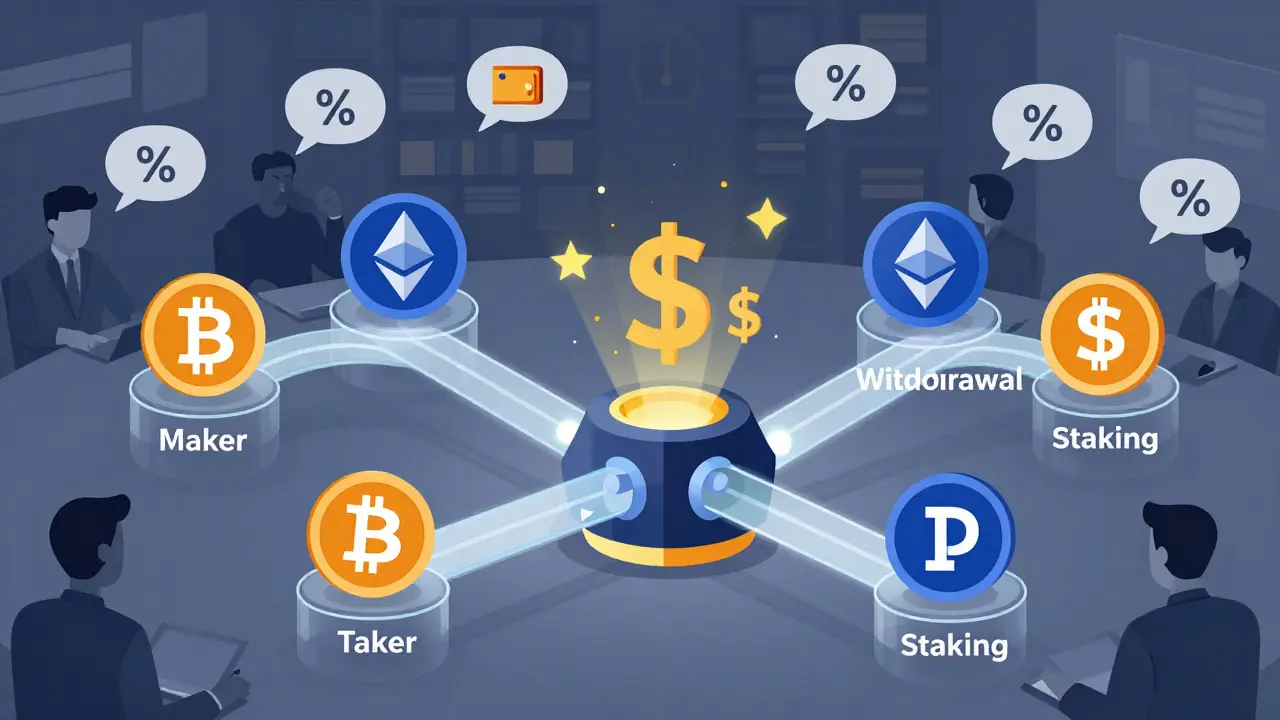
When you buy Bitcoin on Coinbase or trade Ethereum on Binance, you think you’re just swapping one coin for another. But behind the scenes, the exchange is making money - often in ways you don’t even notice. Cryptocurrency exchanges aren’t just digital marketplaces; they’re sophisticated financial engines with multiple ways to earn revenue. And if you’re trading, holding, or staking crypto, you’re probably paying for it - even if you didn’t realize it.
Trading Fees: The Core Engine
At the heart of every crypto exchange’s business model is the trading fee. Every time you buy or sell a cryptocurrency, the exchange takes a small cut. This is the most obvious revenue stream, but it’s also the most nuanced. Most exchanges charge two types of fees: maker and taker fees.
A maker fee applies when you place a limit order that doesn’t immediately match - it adds liquidity to the order book. A taker fee is charged when you place a market order that immediately matches with an existing order - it removes liquidity. On Binance, as of Q4 2025, both fees are 0.10% for standard users. But if you trade over $1 billion a month, that drops to 0.02%. Coinbase, by contrast, charges 0.99% for spot trades and adds a hidden spread fee of up to 0.50%, which can make a $10,000 trade cost $15.99 instead of $10.
High-frequency traders and institutional players negotiate custom rates, but for most retail users, the fee structure is fixed. And while 0.1% might seem small, it adds up fast. A trader making 100 trades a month at $5,000 each pays $50 in fees - that’s $600 a year, just on trading. Multiply that by millions of users, and you get billions.
Withdrawal Fees: The Silent Tax
Have you ever sent Bitcoin from an exchange to your personal wallet? You probably paid a fee. These aren’t optional. Withdrawal fees cover blockchain network costs - miner tips, gas fees, and congestion charges. But exchanges often pad these fees to turn them into profit.
Kraken charges between 0.0005 BTC and 0.001 BTC for Bitcoin withdrawals. At $60,000 per BTC, that’s $30 to $60 per withdrawal. On Ethereum, fees can jump to $10 or more during peak times. Some exchanges, like Binance, absorb network costs for small withdrawals but charge extra for large ones. Reddit users report paying $15-$20 monthly just in withdrawal fees, especially if they move assets between platforms or rebalance portfolios.
Unlike trading fees, withdrawal fees aren’t transparent in the interface. You see the amount deducted - but rarely a breakdown of what portion goes to the network versus the exchange. This lack of clarity makes it easy for exchanges to inflate these costs without backlash.
Listing Fees: Selling Access to Your Platform
When a new cryptocurrency project wants to be listed on Binance or Coinbase, they don’t just ask nicely. They pay. Listing fees range from $50,000 to $2 million, depending on the exchange’s size and the token’s potential. In Q3 2025, major exchanges charged an average of $400,000 for a standard listing.
Why do projects pay so much? Because being listed means exposure to millions of users. A single listing can trigger a 200-500% price surge. Binance Launchpad, for example, charges either a flat $500,000-$2 million fee or takes 5-15% of the token allocation from the project. In 2024, the BTT and CELR token launches on Binance generated over $80 million in raised capital - and Binance took millions in fees and tokens.
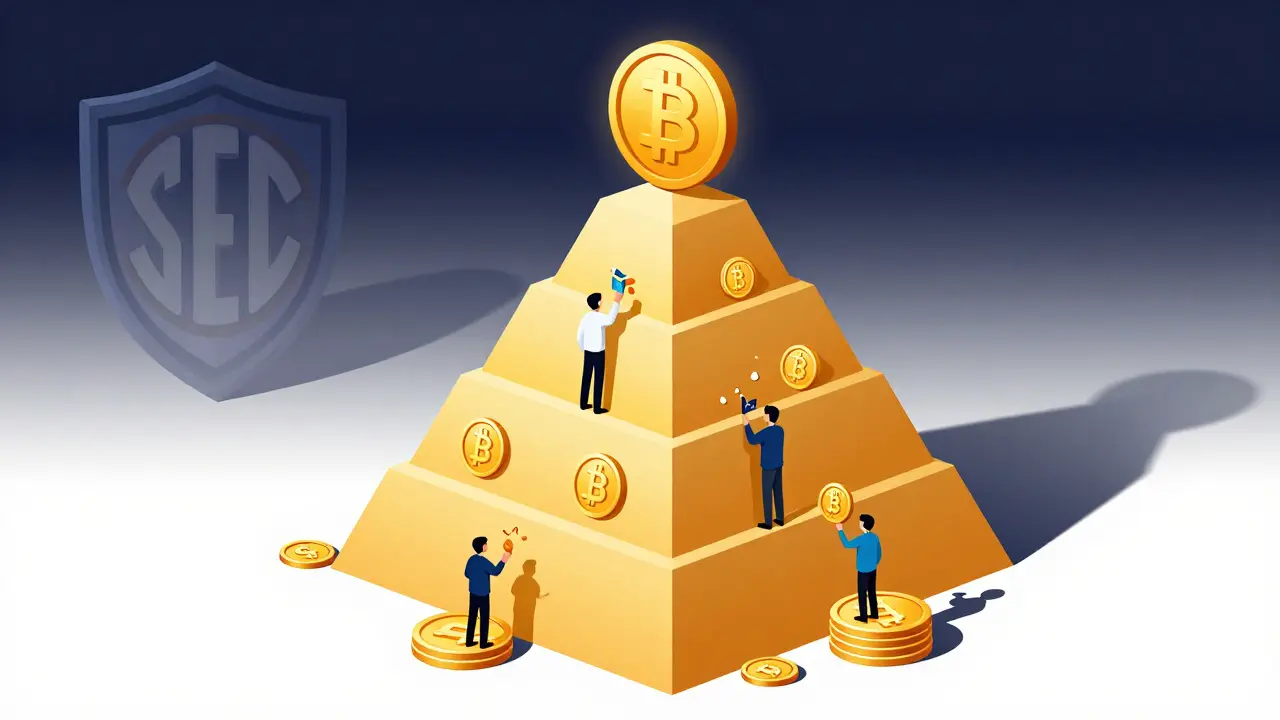
But there’s a conflict here. Exchanges have an incentive to list tokens that pay the most, not necessarily the best ones. Regulators like the SEC have flagged this as a risk to retail investors, and some exchanges now disclose listing fee amounts - though rarely in detail.
Staking and Lending: Turning Your Crypto Into Their Cash
Staking lets you earn interest by locking up your crypto to support blockchain networks like Ethereum or Solana. But here’s the twist: when you stake through an exchange, you’re not staking directly. You’re giving the exchange your coins, and they stake them on your behalf - and keep a cut.
Coinbase paid out $214.9 million in staking rewards to users in Q2 2025. But they earned over $300 million by staking the same coins themselves and keeping the difference. That’s a 40% profit margin on staking alone. Binance offers up to 10% annual interest on stablecoins like USDT - but only 3-5% actually goes to you. The rest stays with the exchange.
Lending works the same way. If you lend your Bitcoin or Ethereum through an exchange, they lend it out to traders, hedge funds, or DeFi protocols at higher rates - often 8-12% - and pocket the spread. This is essentially fractional reserve banking with crypto. And unlike banks, there’s no FDIC insurance. If the exchange loses the lent assets, you lose everything.
Derivatives and Futures: Betting on Price Moves
Derivatives trading - like futures, options, and perpetual contracts - is where exchanges make their biggest margins. Binance Futures charges 0.02% for makers and 0.04% for takers on perpetual contracts. That’s double the rate of spot trading. Why? Because derivatives are riskier, more volatile, and more frequently traded.
Most retail users don’t understand leverage. A 10x leveraged trade means you’re borrowing money from the exchange to amplify your position. If the market moves against you, the exchange collects your margin. If it moves in your favor, they still collect fees. And if you get liquidated? The exchange keeps your collateral. In 2025, Binance’s derivatives division generated over $1.8 billion in revenue - nearly 15% of its total income.
Native Tokens and Token Burns
Binance Coin (BNB), Coinbase’s CBDC-like token (CBT), and KuCoin’s KCS aren’t just utility tokens - they’re revenue multipliers. Exchanges require users to pay fees in these native tokens to get discounts. Binance gives a 25% fee discount if you pay in BNB. That means users buy more BNB to save money - increasing demand and price.
But the real magic is in token burns. Binance burns BNB quarterly - destroying a portion of the supply to make it scarcer. In Q4 2025 alone, they burned 2,059,788 BNB tokens worth $1.1 billion. This doesn’t just boost BNB’s price - it makes users feel like they’re part of a growing ecosystem. And as BNB rises, so does the value of the exchange’s own holdings.
IEOs and Launchpads: The New IPO Model
Initial Exchange Offerings (IEOs) let projects raise money by selling tokens directly through an exchange. Binance Launchpad, KuCoin Spotlight, and Coinbase Prime have all used this model. Projects pay upfront fees - sometimes millions - and give the exchange a cut of the tokens sold.
These aren’t charity events. They’re marketing campaigns disguised as fundraising. In 2024, Binance’s IEOs generated over $1.2 billion in token sales. The exchange took 5-15% of the tokens sold - and held them. Many of these tokens later surged 10x, 20x, or more. The exchange didn’t just collect fees - they got free equity.
But this creates a dangerous incentive. Exchanges are more likely to promote tokens that pay the most - not those with real utility. The SEC has started investigating this, calling it a “conflict of interest masquerading as innovation.”
Regional Differences and Regulatory Impact
Not all exchanges make money the same way. In Europe, MiCA regulations have capped trading fees and forced transparency. As a result, Bitstamp and Kraken now earn 20% of revenue from institutional custody services - charging banks and hedge funds to store their crypto securely.
In Asia, Huobi makes 25% of its income from over-the-counter (OTC) trading - helping large investors buy $10 million worth of Bitcoin without moving the market. In the U.S., Coinbase’s revenue is 78% from trading fees and 12% from subscription services like Coinbase One, which offers free trades and crypto-backed credit cards.
Regulation isn’t just a cost - it’s a differentiator. Binance, banned in the U.S., lost 15% of its revenue after SEC lawsuits. Coinbase, fully compliant, pays more in legal fees but keeps its U.S. customers. That trade-off shapes their entire business model.
The Future: From Exchanges to Financial Platforms
The most successful exchanges aren’t stopping at trading. Binance now offers crypto-backed loans, insurance products, and even a crypto retirement account. Coinbase has expanded into traditional securities trading. By 2028, Gartner predicts 65% of exchange revenue will come from financial services - not trading.
This shift is inevitable. Trading fees alone can’t sustain growth. Market downturns wipe out volume. Regulatory crackdowns shut down IEOs. But if an exchange becomes a full-service financial hub - offering loans, savings, insurance, and asset management - they can keep earning even when crypto prices drop.
But there’s a catch. The more services they offer, the more they become like banks - and the more regulators will treat them like them. That means stricter rules, higher capital requirements, and less profit.
The winners? The ones who balance innovation with compliance. The losers? The ones who rely too heavily on trading fees, hidden spreads, or risky lending.
What This Means for You
If you’re a casual holder, you’re paying more than you think. Withdrawal fees, hidden spreads, staking cuts, and mandatory token usage all add up. If you’re an active trader, your fee structure matters. Compare Binance’s 0.10% with Coinbase’s 0.99% + spread - the difference is 5x.
Use native tokens for discounts. Avoid withdrawing too often. Don’t lend crypto unless you trust the exchange’s solvency. And never assume that because a token is listed, it’s safe.
Crypto exchanges make money by turning every interaction - buying, selling, staking, withdrawing - into a revenue opportunity. The key is knowing where the fees hide - and how to minimize them.
Do cryptocurrency exchanges make money from user losses?
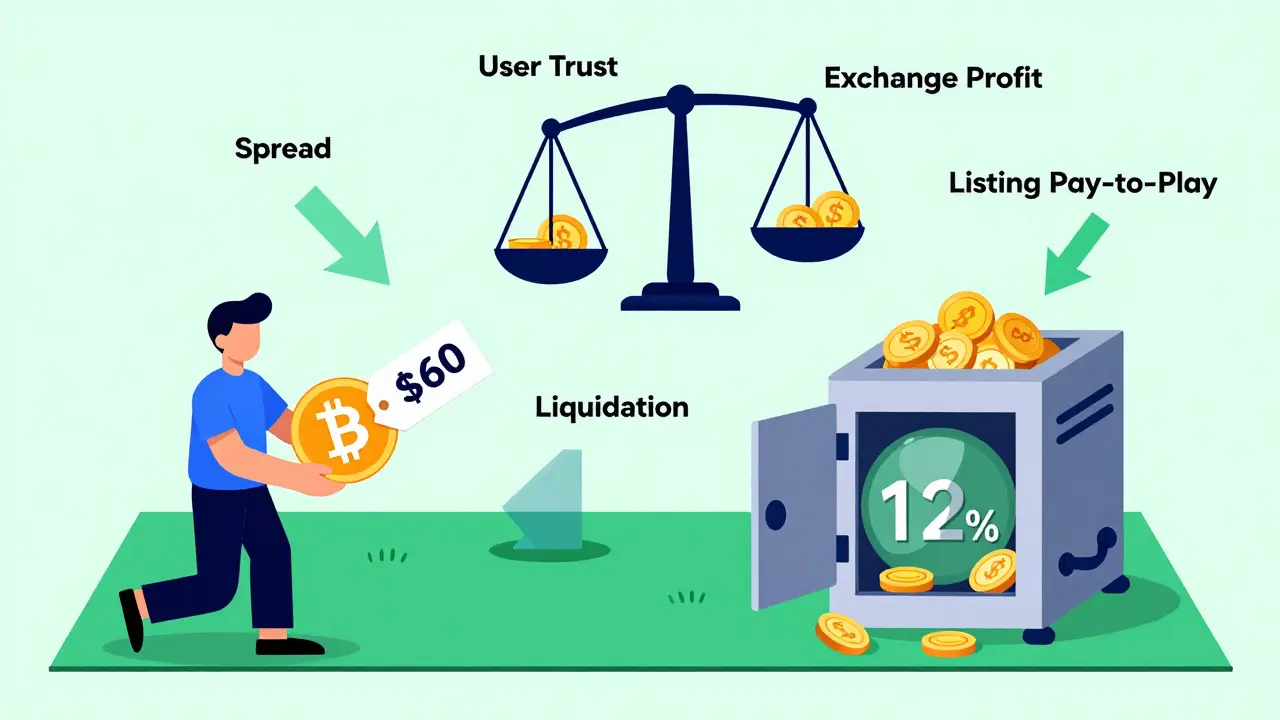
Yes - indirectly. When users trade with leverage and get liquidated, the exchange keeps their collateral as profit. This is especially common in futures and margin trading. While exchanges don’t intentionally cause losses, their business models benefit when traders fail. That’s why platforms like Binance Futures and Bybit design their systems to maximize liquidations - including setting liquidation prices just below key support levels. This isn’t fraud - it’s built into the contract terms - but it’s not always obvious to new traders.
Are trading fees the same across all exchanges?
No. Binance charges as low as 0.02% for high-volume traders, while Coinbase charges up to 0.99% plus a hidden spread of 0.50%. Kraken sits in the middle at 0.16%. Withdrawal fees also vary: Bitcoin withdrawals on Kraken cost $30-$60, while on Binance they’re often free for small amounts. Always check the fee schedule - and look for hidden costs like spread fees or network surcharges.
Why do exchanges charge so much for listing new coins?
Listing fees are essentially a pay-to-play system. Projects pay because being listed gives them instant access to millions of users - and often triggers a price surge. For exchanges, it’s a low-effort, high-margin business. A single listing can generate millions in trading volume, and the fee is paid upfront. The problem? Exchanges have no incentive to vet projects. Some have listed scams that later crashed, but the exchange already got paid. That’s why regulators are stepping in.
Is staking through an exchange safe?
It’s convenient - but risky. When you stake through an exchange, you give up control of your private keys. The exchange holds your coins and stakes them on your behalf. If the exchange gets hacked, goes bankrupt, or freezes withdrawals, you lose access. Self-custody staking (using a wallet like Ledger or Trust Wallet) is safer but more complex. Only stake through exchanges you trust - and never stake more than you can afford to lose.
How do exchanges make money from stablecoins?
Stablecoins are the engine of crypto finance. Exchanges earn by lending them out at 8-12% interest to traders and DeFi protocols, while paying users only 3-6%. The spread is pure profit. They also charge fees to swap between stablecoins and fiat currencies - sometimes up to 3.99%. And because stablecoins are used as collateral for loans and derivatives, exchanges earn multiple fees from the same asset. USDT and USDC are among the most profitable coins on any exchange.
Richard Cooper
March 1, 2026 AT 18:05Sony Sebastian
March 3, 2026 AT 02:08Brian Lemke
March 3, 2026 AT 16:21Dee Resin
March 4, 2026 AT 23:05Reggie Fifty
March 5, 2026 AT 18:09Deborah Robinson
March 7, 2026 AT 01:23Also, don't use exchange wallets. Ever. Seriously.
Michelle Mitchell
March 8, 2026 AT 09:08Vishakha Singh
March 9, 2026 AT 20:45Leslie Cox
March 11, 2026 AT 18:18Fiona Monroe
March 13, 2026 AT 15:09Molley Spencer
March 15, 2026 AT 01:02John Fuller
March 15, 2026 AT 17:51Dana Sikand
March 16, 2026 AT 12:16It’s not about being an expert. It’s about being aware. You’re not getting rich on crypto-you’re paying for the privilege of playing.
Shannon Black
March 16, 2026 AT 16:39Derek Sasser
March 16, 2026 AT 17:49Sriharsha Majety
March 18, 2026 AT 03:12Tabitha Davis
March 18, 2026 AT 10:19Kaitlyn Clark
March 18, 2026 AT 12:40now i use trust wallet + binance smart chain for swaps and i save like 90% 🤯
also staking on coinbase = bad idea. i moved to lido and earned 2x more.
you dont need an exchange to do crypto. you just need to be lazy. lol
Lucy Simmonds
March 18, 2026 AT 14:30lori sims
March 19, 2026 AT 03:19