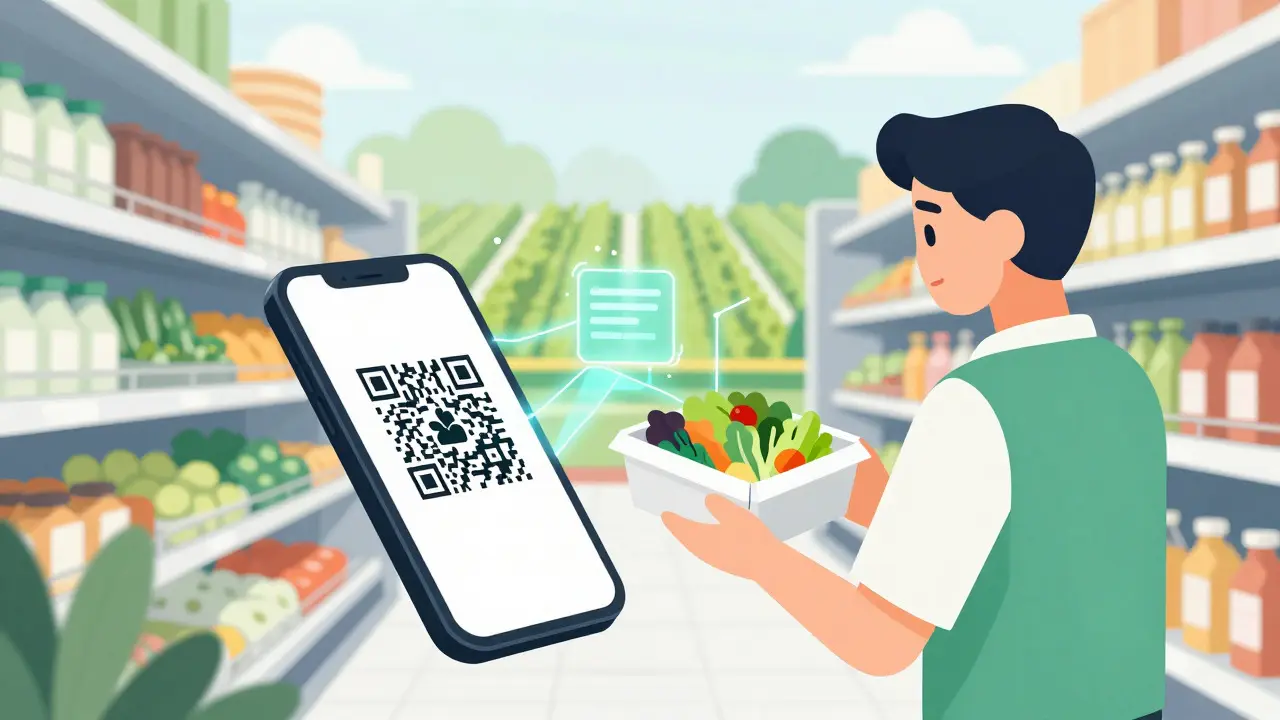
Imagine picking up a box of salad at your local supermarket. In seconds, you could scan a code and see exactly which farm the lettuce came from, when it was harvested, how it was transported, and even the temperature logs during shipping. This isn’t science fiction; it is becoming reality through blockchain food traceability, a system that uses distributed ledger technology to create an immutable record of a product's journey. For decades, tracking contaminated food meant days of frantic phone calls, paper trail digging, and widespread recalls that wasted tons of safe produce while sick consumers waited for answers. Now, that process takes seconds.
The Problem with Traditional Food Tracking
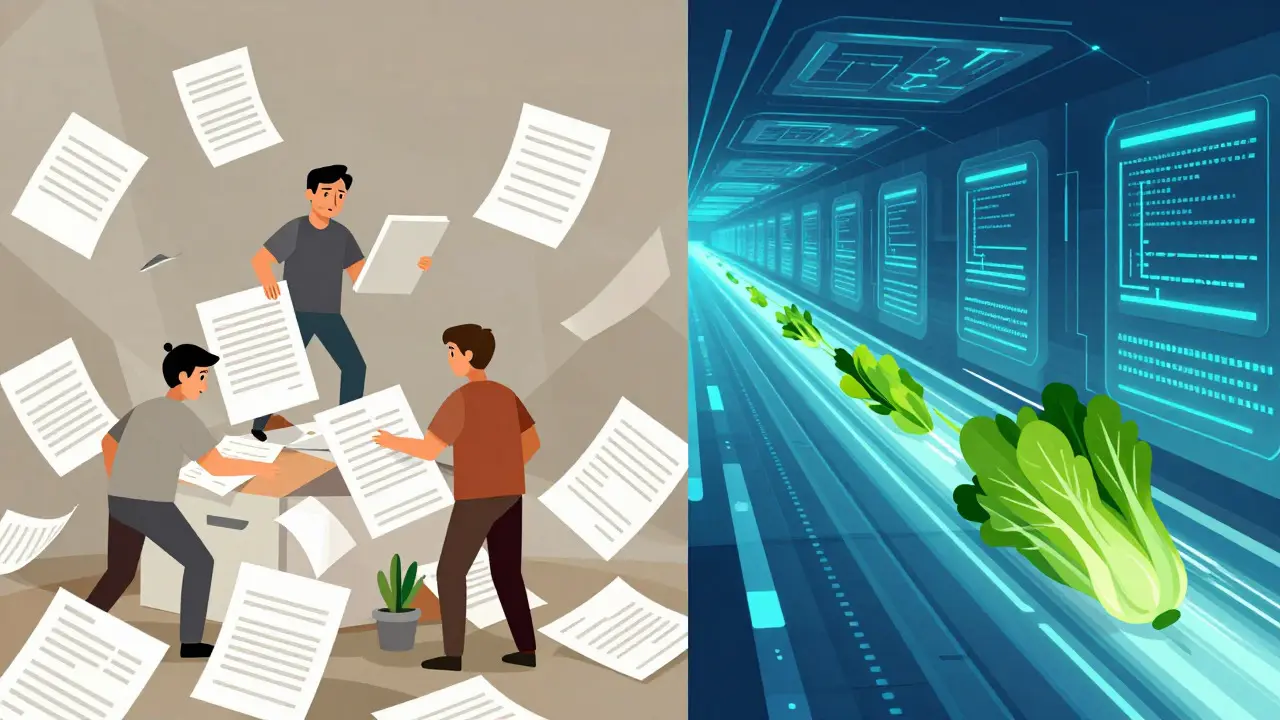
Before we look at the solution, let’s understand why the old way failed us. Traditional food supply chains rely on fragmented, paper-based records or isolated digital databases. When a supplier sends goods to a processor, who then ships to a distributor, and finally to a retailer, each step adds a layer of opacity. Data is siloed. If a batch of spinach tests positive for E. coli, retailers like Walmart might pull all spinach off shelves because they cannot quickly identify which specific farm or batch is tainted. This "spray and pray" approach costs billions in wasted food and damages consumer trust.
The core issues are simple but devastating:
- Data Fragmentation: No single source of truth exists across different companies.
- Lack of Transparency: Consumers and regulators cannot verify claims about origin or handling.
- Slow Response Times: Tracing a contamination source can take weeks, allowing illnesses to spread.
- Tampering Risks: Paper records can be lost, altered, or forged without detection.
How Blockchain Solves These Issues
Blockchain technology, originally created by Satoshi Nakamoto as the backbone for Bitcoin in 2009, has evolved far beyond cryptocurrency. At its heart, blockchain is a decentralized digital ledger. Instead of one company controlling the data, multiple parties (farmers, processors, shippers, retailers) share access to a single, synchronized record. Once data is entered, it is cryptographically sealed into a "block" and linked to previous blocks. This makes it nearly impossible to alter past records without everyone noticing.
In the context of food safety, this means every transaction-from planting to packaging-is recorded permanently. Key data points include:
- Product Identification: Using standards like GTIN-14 (Global Trade Item Number) to uniquely identify each item.
- Lot and Batch Codes: Grouping products for efficient tracking.
- Timestamps: Exact dates and times for harvesting, processing, and shipping.
- Location Data: GPS coordinates and facility IDs where handling occurred.
This creates a transparent "chain of custody" that anyone with permission can audit. The result? Instant visibility into the entire supply chain.
Real-World Success: Walmart and IBM Food Trust
You don’t have to take tech experts’ word for it. Major industry players have already proven this works. Walmart became a pioneer in this space, launching a pilot program in China to track pork supplies. But the real breakthrough came in 2018 when Walmart partnered with IBM to launch the IBM Food Trust network. This platform allows multiple stakeholders to share data securely without revealing proprietary secrets.
The results were staggering. Before blockchain, tracing the origin of a package of mangoes took Walmart nearly seven days. After implementing the system, that same trace took just 2.2 seconds. Think about that. During a foodborne illness outbreak, those missing days could mean the difference between a contained incident and a national crisis.
By September 2018, Walmart had successfully traced over 25 products from five suppliers, including leafy greens, strawberries, dairy, and baby food. The success led to mandates requiring fresh leafy green suppliers to join the blockchain network. Other giants like Kroger, Nestlé, Tyson Foods, and Unilever joined the initiative, recognizing that speed saves lives.
Technical Standards: GS1 and EPCIS
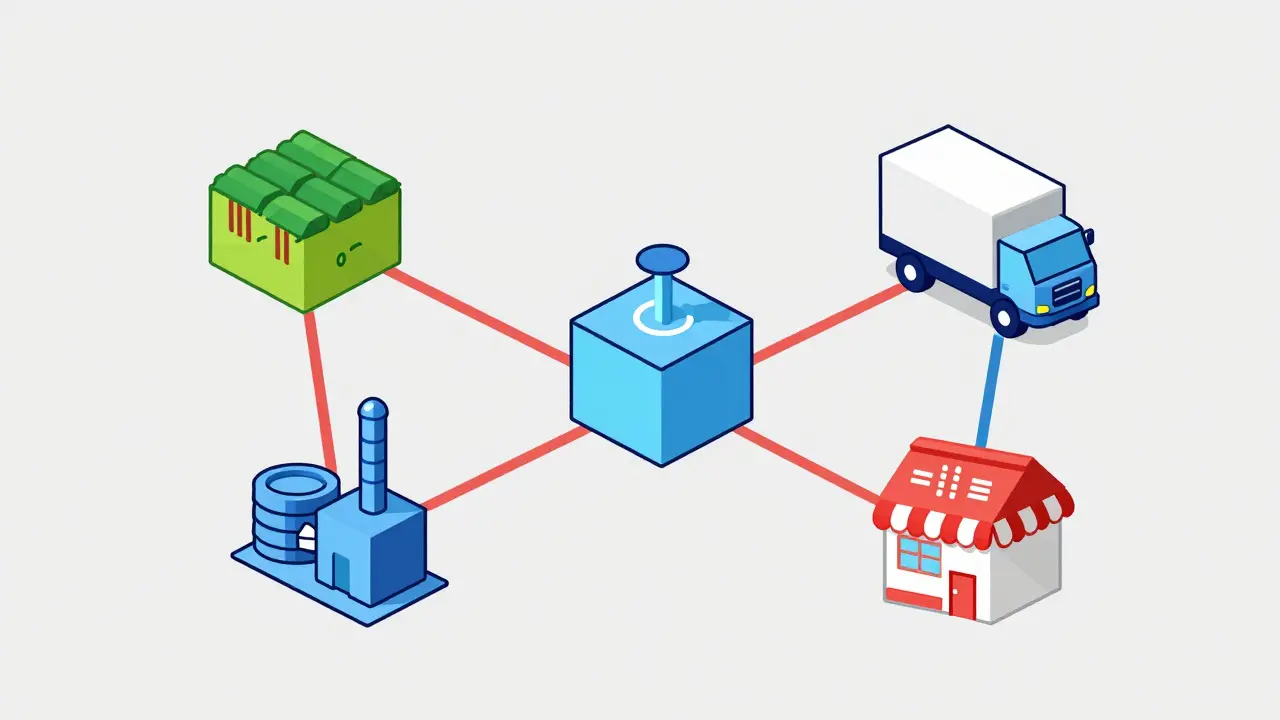
For blockchain to work across different companies, everyone needs to speak the same language. That’s where GS1 standards come in. GS1 provides globally recognized identification keys (like barcodes) and communication protocols. Specifically, the EPCIS (Electronic Product Code Information Services) standard ensures that data captured by one company’s system can be understood by another’s.
Without these standards, blockchain would just be another isolated database. With them, it becomes a universal translator for supply chains. When a farmer scans a QR code to log harvest data, that information flows seamlessly into the processor’s system, then the shipper’s, and finally the retailer’s-all verified on the blockchain.
Benefits Beyond Speed: Waste Reduction and Fair Compensation
Faster recalls are just the beginning. Blockchain also tackles two massive global problems: food waste and unfair pricing.
Reducing Waste: Because retailers know exactly which batches are safe, they don’t need to discard entire categories of food during a recall. Only the contaminated items are removed. This precision saves millions of pounds of edible food from landfills every year.
Fairer Markets: Small-scale farmers often struggle to prove the quality or origin of their products, leading to lower prices. With blockchain, a farmer can provide verifiable proof of organic practices, fair labor conditions, or sustainable farming methods. Consumers willing to pay more for ethical products get transparency, and farmers get fair compensation for their efforts.
Challenges and Adoption Barriers
Despite the benefits, adoption isn’t effortless. Several hurdles remain:
- Initial Investment: Setting up IoT sensors, scanners, and blockchain infrastructure requires capital. Small farms may struggle with upfront costs.
- Data Entry Accuracy: Blockchain guarantees data integrity once entered, but it doesn’t prevent human error at the source. If a worker mislabels a batch, the blockchain will faithfully record the wrong information. This is known as the "garbage in, garbage out" problem.
- Interoperability: While GS1 helps, not all systems are fully compatible yet. Companies using different blockchain platforms (e.g., Hyperledger Fabric vs. Ethereum) may face integration challenges.
- Privacy Concerns: Suppliers worry about competitors seeing sensitive data. Solutions like zero-knowledge proofs are emerging to allow verification without revealing raw data, but this technology is still maturing.
The Future of Food Traceability
As of 2026, blockchain food traceability is moving from pilot programs to standard practice. Regulatory bodies in the EU and US are increasingly mandating digital traceability for high-risk foods. The World Economic Forum has highlighted blockchain as critical for building resilient food systems capable of withstanding climate shocks and pandemics.
We’re also seeing convergence with other technologies. Artificial Intelligence analyzes blockchain data to predict spoilage risks before they happen. Internet of Things (IoT) sensors automatically log temperature and humidity, removing human error from the equation. Together, these tools create a self-correcting, highly efficient food ecosystem.
| Feature | Traditional Systems | Blockchain-Based Systems |
|---|---|---|
| Trace Time | Days to Weeks | Seconds to Minutes |
| Data Integrity | Vulnerable to Tampering | Immutable & Cryptographically Secured |
| Transparency | Siloed, Limited Visibility | Shared, Real-Time Access |
| Recall Precision | Broad Category Pulls | Specific Batch Targeting |
| Standards Used | Varied, Often Proprietary | GS1/EPCIS Compliant |
Getting Started: A Practical Guide for Businesses
If you’re a business leader considering blockchain for food traceability, here’s a realistic roadmap:
- Audit Your Supply Chain: Identify key risk points where data loss or delays occur.
- Choose a Platform: Evaluate enterprise solutions like IBM Food Trust or VeChain. Consider cost, scalability, and existing integrations.
- Adopt GS1 Standards: Ensure all partners use consistent GTINs and EPCIS protocols.
- Pilot with High-Risk Items: Start with perishable or high-liability products (e.g., leafy greens, meat).
- Train Staff: Invest in training for accurate data entry and device usage.
- Expand Gradually: Scale to more suppliers and product lines as confidence grows.
Conclusion: Trust Through Technology
Food safety is no longer just about hygiene; it’s about data integrity. Blockchain transforms opaque supply chains into transparent networks where trust is built on code, not promises. As consumers demand to know what’s in their food and regulators tighten requirements, early adopters will gain a competitive edge through efficiency, reduced waste, and enhanced brand reputation. The technology is mature enough now. The question isn’t if you should adopt it, but how quickly you can integrate it.
What is blockchain food traceability?
It is a system that uses distributed ledger technology to record every step of a food product’s journey from farm to consumer. This creates an immutable, transparent record that prevents tampering and allows instant tracking of origins, handling, and logistics data.
How does blockchain improve food safety compared to traditional methods?
Traditional methods rely on fragmented paper or digital records, making trace-back slow and error-prone. Blockchain provides a shared, real-time ledger that reduces trace time from days to seconds, enabling precise recalls that minimize waste and protect public health.
Which major companies are using blockchain for food traceability?
Major players include Walmart, Kroger, Nestlé, Tyson Foods, Unilever, and Dole. They primarily use the IBM Food Trust platform, which leverages blockchain to connect suppliers, manufacturers, and retailers in a secure network.
What role do GS1 standards play in blockchain food tracking?
GS1 standards, particularly GTIN-14 for product identification and EPCIS for data exchange, ensure interoperability. They allow different companies’ systems to communicate seamlessly, ensuring that data entered by a farmer is readable and usable by a retailer thousands of miles away.
Can blockchain prevent food fraud?
Yes, by providing an immutable record of origin and handling. If a supplier claims a product is organic or locally sourced, blockchain data can verify these claims against sensor logs and transaction history, making it difficult to falsify information without detection.
Is blockchain food traceability expensive to implement?
Initial setup costs can be significant due to hardware (scanners, IoT sensors) and software integration. However, long-term savings from reduced waste, faster recalls, and improved operational efficiency often offset these costs. Many enterprises offer subscription-based models to lower entry barriers.
What are the limitations of blockchain in food supply chains?
The main limitation is data accuracy at the source. Blockchain secures data once entered, but if incorrect data is input manually, the error persists. Additionally, small suppliers may lack resources to adopt the necessary technology, creating potential gaps in the chain.