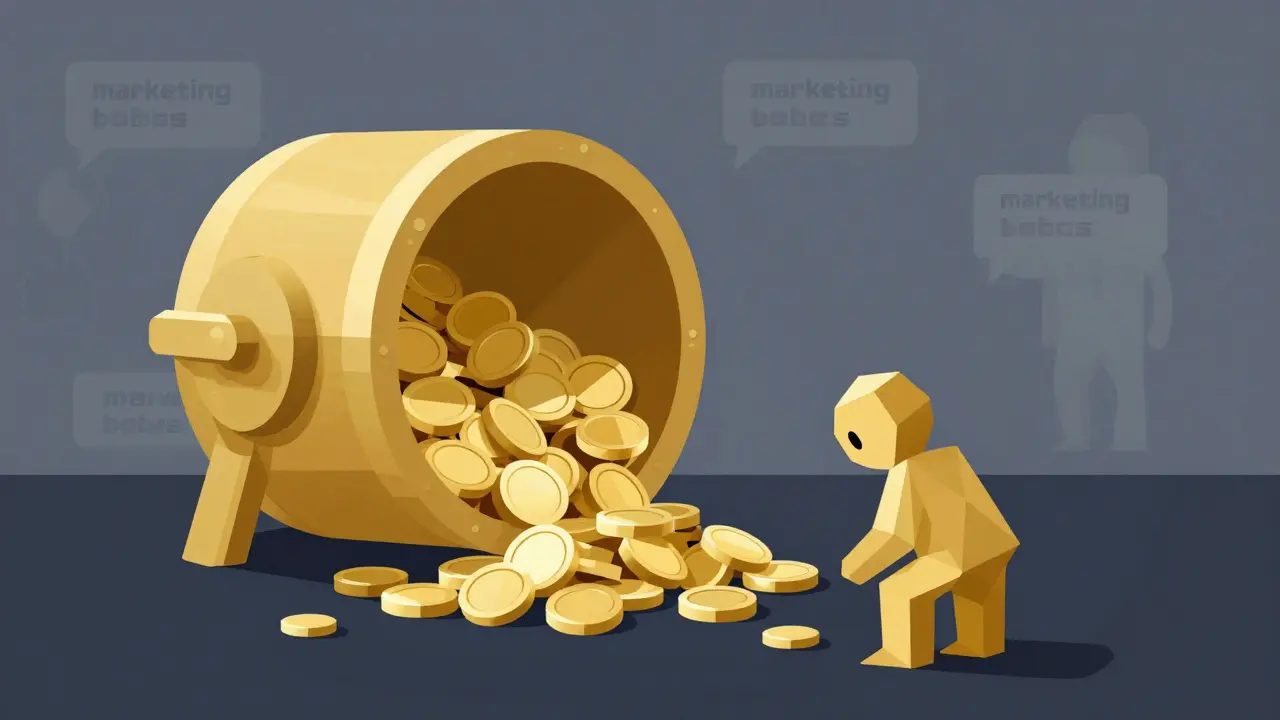
You’ve probably seen the hype. Maybe you clicked a link promising free Golden Doge (GDOGE) is a Binance Smart Chain meme token featuring a 'Golden Vault' redistribution mechanism. tokens, or you noticed it sitting on CoinMarketCap and wondered if there’s still a chance to get rich quick. The short answer? It’s complicated, and mostly not in your favor.
By mid-2026, GDOGE has largely faded from active trading. While it remains listed on major trackers like CoinMarketCap, the reality on the ground tells a different story. This isn’t just another meme coin guide; it’s a look at what actually happened to this project, why the airdrop didn’t deliver what many expected, and what you should watch out for before putting any time-or money-into similar tokens.
The Reality Behind the GDOGE Airdrop
Let’s start with the big promise: the airdrop. When GDOGE launched, the team allocated 5% of its massive supply-yes, that’s 5 quadrillion tokens-to community airdrops. On paper, giving away half a percent of the total supply sounds generous. In practice, it was a marketing tactic designed to create artificial volume and holder count.
Here’s the catch. With a total supply of 100 quadrillion (100P) tokens, even receiving billions of GDOGE in an airdrop meant very little in real value. Most users who participated found themselves holding tokens worth fractions of a penny. More importantly, the airdrop wasn’t just about distribution; it was about seeding liquidity pools and creating the illusion of demand. Many early participants later realized they were essentially paying gas fees on the Binance Smart Chain to claim tokens that had no immediate exit strategy.
If you’re looking back at this now, ask yourself: did you hold onto those tokens hoping for a moonshot? If so, you’re likely disappointed. The token price has remained stagnant for years, and the promised utility never materialized.
CoinMarketCap Listing: What It Really Means
Seeing a token on CoinMarketCap often gives newcomers a false sense of security. People assume that if it’s listed, it must be legitimate or at least vetted. But here’s the truth: CoinMarketCap lists thousands of tokens, including many that are inactive, low-volume, or outright scams.
GDOGE’s listing falls into what the platform calls Tier 4-the lowest tier for new listings. This means it met only the bare minimum requirements to appear on the site. There’s no rigorous audit, no proof of ongoing development, and no guarantee of liquidity. As of late 2025, CoinMarketCap itself included disclaimers next to GDOGE’s page, noting it as a “preview” entry subject to review criteria.
So, while the CoinMarketCap badge might have looked impressive in promotional materials, it doesn’t mean much in terms of trust or long-term viability. Always check the listing tier and read the fine print before assuming a token is safe because it appears on a major aggregator.
The “Golden Vault” Mechanism: Promise vs. Performance
One of GDOGE’s main selling points was its “Golden Vault.” The idea was simple: every transaction incurred a 10% fee (5% on buys, 5% on sells), which went into a smart contract vault. Holders could then claim their share of accumulated BNB rewards daily, proportional to their holdings.
In theory, this creates passive income. In practice, it requires significant trading volume to generate meaningful rewards. And here’s where GDOGE failed. Trading volume collapsed almost immediately after launch. By October 2025, daily volume was under $10. At that rate, even large holders earned less than a fraction of a cent per day in BNB rewards-nowhere near enough to cover the gas costs of claiming them.
This mechanism works best in high-activity ecosystems. Without consistent buy-and-sell pressure, the vault stays empty. Users reported spending more on network fees trying to claim rewards than they ever received back. It’s a classic case of good design undermined by poor execution and lack of user engagement.
Why GDOGE Lost Momentum
Several factors contributed to GDOGE’s decline. First, the sheer size of its token supply made price appreciation nearly impossible. Even at extremely low prices, the market cap would need to grow exponentially for holders to see gains. Compare this to tokens like Shiba Inu or Floki Inu, which implemented burn mechanisms to reduce supply over time. GDOGE had no such deflationary model.
Second, the development team went silent. Social media accounts stopped posting, GitHub repositories saw no updates, and community channels became ghost towns filled with bot messages. No new features were released. The planned play-to-earn NFT game and lottery system never launched. Without innovation or communication, interest evaporated.
Third, competition in the meme coin space intensified. Newer projects offered better utilities, stronger communities, and actual partnerships. GDOGE couldn’t keep up. Its unique selling point-the redistribution model-was copied by dozens of other tokens, but none succeeded without sustained marketing and ecosystem growth.
Red Flags to Watch For in Similar Projects
If you’re exploring other meme coins or airdrops, learn from GDOGE’s mistakes. Here are some red flags that signal potential trouble:
- Massive token supplies: Tokens with quadrillions in circulation rarely appreciate significantly unless there’s a strong burn mechanism.
- No clear roadmap: Vague promises of future games, swaps, or lotteries without concrete timelines usually lead nowhere.
- Silent developers: If the team disappears after launch, expect nothing but abandonment.
- Low liquidity: Check DEXs like PancakeSwap. If you can’t sell your tokens easily, you’re stuck.
- Overpromising rewards: Redistribution models sound great until you realize how little volume supports them.
These aren’t just theoretical risks-they’re lessons learned from real projects like GDOGE. Being aware of these patterns helps you avoid wasting time and money on dead-end investments.
Comparing GDOGE to Other Meme Coins
| Token | Total Supply | Daily Volume (Oct 2025) | Development Activity | Utility Features |
|---|---|---|---|---|
| GDOGE | 100 Quadrillion | $8.28 | Inactive since 2023 | None functional |
| Dogecoin (DOGE) | Infinite (capped annually) | $1.8 Billion | Active | Tipping, payments |
| Shiba Inu (SHIB) | 1 Quadrillion (burned) | $4.2 Billion | Active | Shibaswap, Shibarium |
| Floki Inu (FLOKI) | 10 Trillion | $150 Million | Active | NFTs, DeFi, gaming |
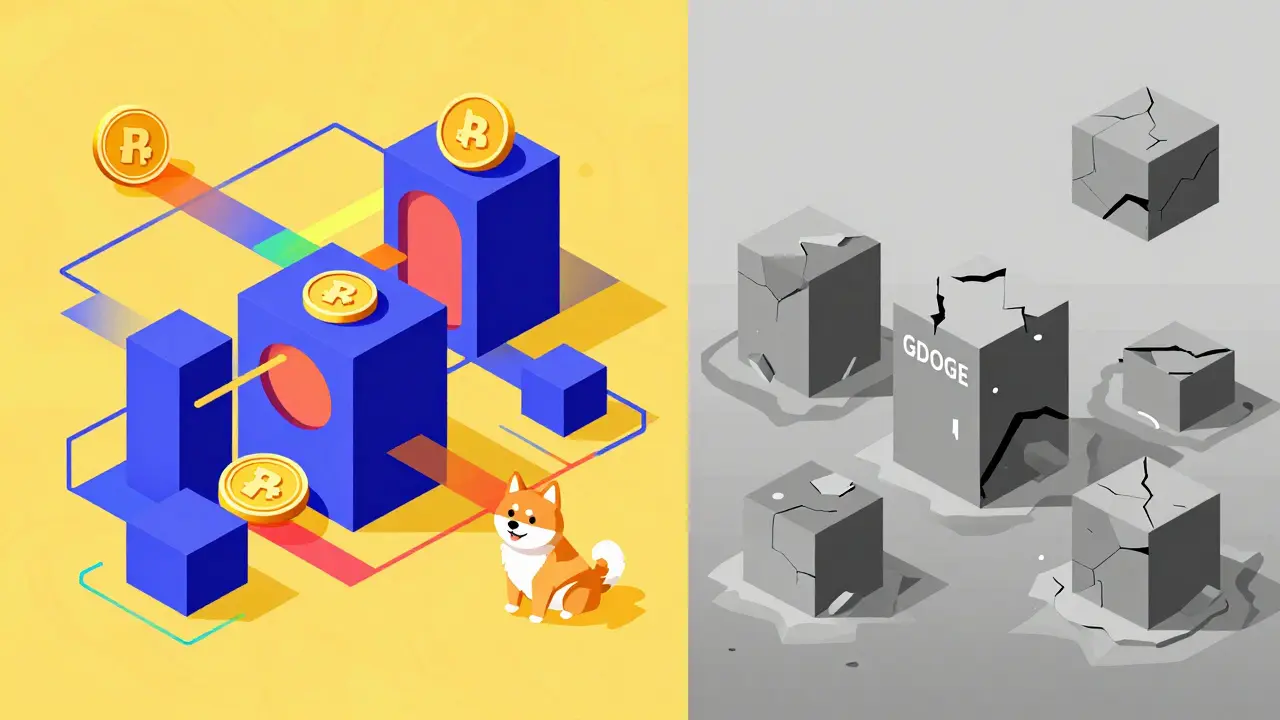
As you can see, GDOGE lags behind in every measurable category. Its supply is astronomically higher, volume is negligible, development has stalled, and utility features remain unfulfilled. Meanwhile, competitors continue to innovate and attract users.
What Should You Do Now?
If you still hold GDOGE tokens, consider whether keeping them makes sense. Given the lack of activity and zero prospects for recovery, selling-even at a loss-might be preferable to waiting indefinitely. However, be cautious: attempting to sell large amounts may fail due to insufficient liquidity on decentralized exchanges.
For those considering future airdrops or meme coin investments, take these steps:
- Research thoroughly: Don’t rely solely on social media hype. Look for verified audits, active GitHub repos, and transparent teams.
- Check liquidity: Use tools like DexScreener to verify if you can actually trade the token.
- Evaluate utility: Does the project offer something beyond speculation? Real use cases drive long-term value.
- Monitor developer activity: Regular updates indicate commitment. Silence suggests abandonment.
- Start small: Never invest more than you can afford to lose, especially in volatile meme coins.
Remember, the crypto space moves fast. What looks exciting today could vanish tomorrow. Stay informed, stay skeptical, and always prioritize safety over FOMO.
Final Thoughts on GDOGE and Future Opportunities
GDOGE serves as a cautionary tale. It showed us how easily hype can mask fundamental flaws. The combination of excessive supply, weak mechanics, and abandoned development led to its current state-a zombie token lingering on charts with no real purpose.
But don’t let this discourage you entirely. The crypto world offers countless opportunities. The key is distinguishing between genuine innovation and empty promises. Focus on projects with strong fundamentals, active communities, and realistic goals. Avoid chasing quick riches through dubious airdrops or mysterious tokens.
Your journey in crypto should be built on knowledge, patience, and discipline-not impulse. Learn from stories like GDOGE’s, apply those lessons, and move forward confidently. After all, the best investment you can make is in your own understanding.
Is GDOGE still tradable in 2026?
Technically yes, but practically no. GDOGE trades exclusively on PancakeSwap with extremely low liquidity. Daily volumes hover around $8, making it difficult to execute meaningful buys or sells without significant slippage.
Did the GDOGE airdrop provide any real value?
Most recipients found minimal value. Due to the enormous token supply and lack of demand, airdropped tokens were worth fractions of a cent. Many users spent more on gas fees claiming rewards than they ever gained.
Why does GDOGE appear on CoinMarketCap if it’s inactive?
CoinMarketCap lists tokens meeting basic technical criteria, regardless of activity level. GDOGE holds a Tier 4 listing, indicating minimal oversight. Presence on the platform doesn’t imply endorsement or viability.
Can I recover losses from GDOGE?
Unlikely. With no development progress, stagnant prices, and vanishing liquidity, there’s little hope for recovery. Selling now minimizes further loss compared to holding indefinitely.
Are there safer alternatives to GDOGE?
Yes. Established meme coins like Dogecoin and Shiba Inu offer greater stability, higher liquidity, and active development. Always research thoroughly before investing in lesser-known tokens.
Brad Semp
July 10, 2026 AT 18:28It is truly disheartening to observe the sheer lack of due diligence that permeates this sector. The article correctly identifies the fundamental flaws, yet one must wonder why retail investors continue to fall prey to such elementary scams. The concept of a 'Golden Vault' with negligible volume is not merely a failure of execution; it is a failure of basic economic understanding. When liquidity dries up, the mechanism becomes irrelevant, and holders are left with digital confetti. This serves as a stark reminder that without rigorous audit trails and transparent development roadmaps, any project is destined for obsolescence.
Korn Arrieta
July 11, 2026 AT 20:14The author presents a rather pedestrian analysis of what should have been obvious from day one. You do not need a lengthy breakdown to realize that a token with 100 quadrillion supply and zero utility is worthless. It is insulting to suggest that people need to be warned about red flags like silent developers. If you cannot spot a rug pull waiting to happen, perhaps crypto is not for you. The data in the table is accurate but redundant. GDOGE is dead. Move on.
John Harman
July 12, 2026 AT 15:06Look, I’ve seen this movie before. Every meme coin thinks it’s the next Doge or Shiba until the devs ghost. The 'Golden Vault' was just a fancy way to drain gas fees while promising BNB rewards that never materialized because there was no volume. People are still holding these bags thinking something will change. It won’t. The smart money exited months ago. If you’re still checking CoinMarketCap for Tier 4 listings hoping for a miracle, you’re part of the problem. Just burn the tokens and save yourself the headache.
Kim Kay
July 14, 2026 AT 12:59i totally get why ppl fell for this tho.. its hard when u see everyone talking abt it online. i lost some coins too bc i thought the vault thing was legit. but yeah now i know better. thanks for sharing this info so others dont make the same mistake. we gotta look out for each other in this space cause its super tricky sometimes
Sophie Nakasako
July 14, 2026 AT 21:37This is a fantastic deep dive into the mechanics of failed meme coins. It really highlights the importance of community engagement and consistent development updates. I appreciate how you broke down the 'Golden Vault' mechanism because it shows that even complex smart contracts cannot save a project without genuine user interest. Have you noticed if any newer projects are attempting similar redistribution models with better transparency? It would be interesting to see if the market has learned from GDOGE's mistakes or if the cycle continues.
Nick G
July 16, 2026 AT 14:51I find myself reflecting deeply on the broader implications of such projects within our global financial ecosystem, which often prioritizes rapid speculation over sustainable value creation. It is quite poignant to consider how individuals, driven by the universal human desire for security and prosperity, might inadvertently place their trust in mechanisms that are fundamentally flawed from inception. The silence of the development team is not merely an operational failure but a profound breach of the social contract between creators and participants, leaving many feeling abandoned and disillusioned. We must cultivate a culture of patience and thorough inquiry, recognizing that true wealth is rarely generated through impulsive actions fueled by artificial hype. Let us instead focus on fostering communities that value integrity and long-term growth, thereby ensuring that future endeavors are built upon a foundation of mutual respect and shared understanding.
Kristy Morrow
July 17, 2026 AT 08:50everyone says check the roadmap but roadmaps are lies anyway. the real test is if the devs are actually coding or just posting memes. gdoge had neither. also why does cmc list trash like this? they should be ashamed. tier 4 means nothing. just ignore it all
Ruth Williams
July 17, 2026 AT 10:23One cannot help but feel a sense of disdain for those who continue to engage with such subpar assets. The listing on CoinMarketCap is frequently misinterpreted as an endorsement, when in reality, it is merely a bureaucratic formality for tokens meeting the barest minimum criteria. It is imperative that investors elevate their standards and cease participating in markets characterized by such egregious lack of oversight. The comparison table provided is adequate, yet it fails to capture the utter futility of holding a token with no functional utility. Discernment is key, and unfortunately, it appears to be in short supply among the general populace.
Nick Wengel
July 18, 2026 AT 22:54Yeah this makes sense. I remember seeing ads for this back in the day. The numbers were crazy high but the price never went up. Good to see someone write about what happened. I think most people just move on to the next new coin after a few months. Its pretty wild how fast things die here.
Antony Lopez
July 19, 2026 AT 04:14American investors need to wake up and stop buying foreign garbage chains. BSC is full of scams like this. Stick to ETH or BTC if you want real value. This GDOGE stuff is just another example of why we need stricter regulations on these offshore entities preying on naive citizens. The fact that it’s still listed anywhere is a joke. Get your money out and support domestic tech instead of chasing these international rugs.