If you are still waiting for Folgory to come back online, we have bad news. The website has been completely dark since April 18, 2025, and there is no sign of recovery. For anyone holding assets on this platform, the situation looks dire. This review isn't just a standard feature breakdown; it is a necessary autopsy of why this platform failed so spectacularly.
As of early 2026, the Folgory Cryptocurrency Exchange is a now-defunct centralized trading platform that faced serious allegations of fraud and operational collapse. The exchange was once marketed as a gateway for digital asset trading but ultimately vanished, leaving users stranded. We need to look at what went wrong and how you can avoid similar traps in the volatile world of Cryptocurrency Exchanges which facilitate the buying and selling of digital assets.
The Sudden Disappearance
Imagine logging into your trading dashboard to check your Bitcoin balance, only to find a dead link. That is exactly what happened on April 18, 2025. The domain folgory.com stopped resolving. It wasn't a maintenance update or a scheduled server migration. It was a hard cut. As we approach mid-2026, nearly a full year later, the site remains inaccessible. In the fast-paced ecosystem of blockchain finance, a gap of twelve months without communication is practically permanent.
This outage is critical because Folgory wasn't a small, experimental project. It operated as a centralized exchange, meaning it held custody over users' funds. Unlike non-custodial platforms where you hold your own keys, a centralized exchange acts as a vault. If the vault locks and nobody has the key, those funds are effectively lost. The lack of updates since the disappearance suggests total operational abandonment.
A Tale of Two Locations
Before it shut down, one of the most puzzling aspects of Folgory was its geographical identity. Legitimate financial institutions pride themselves on transparency regarding their jurisdiction. They know they need to follow specific laws in specific places. Folgory confused this issue from day one.
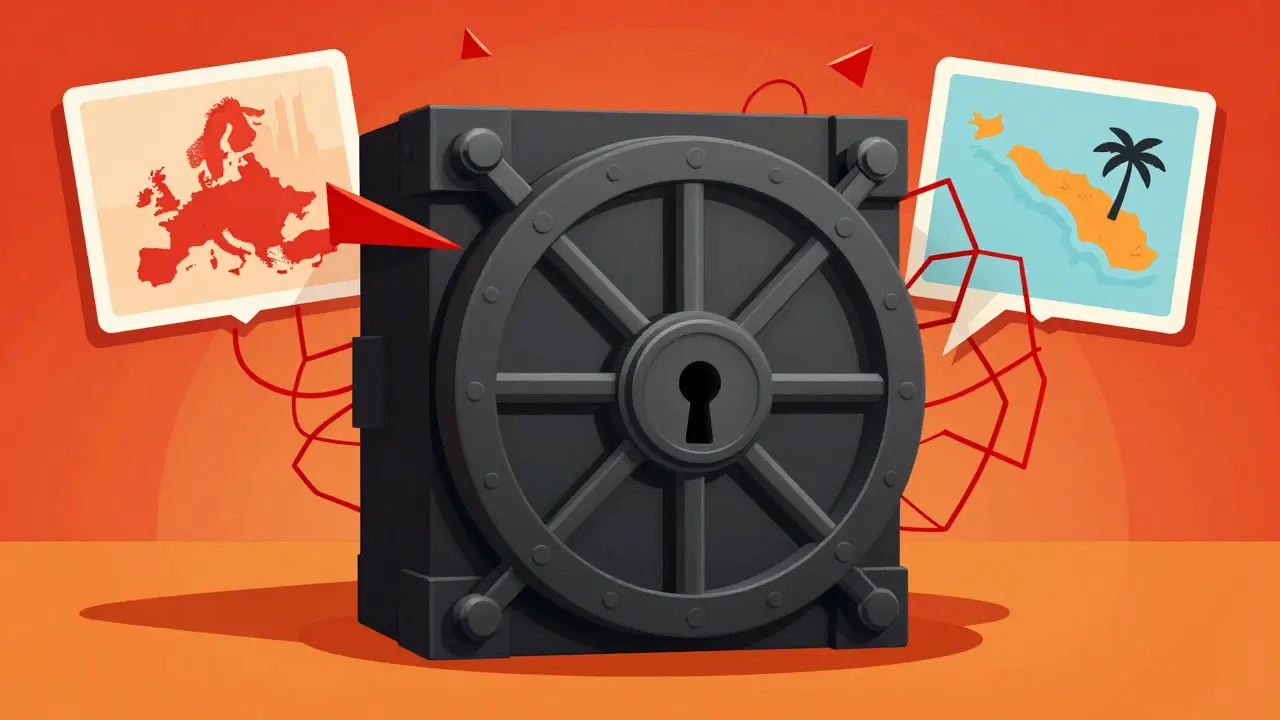
The platform frequently described itself as being based in Estonia, a country known for having strict regulations under the European Union framework. They claimed to hold licenses for crypto-to-fiat trading there. Yet, other parts of their documentation pointed to operations out of the Seychelles, an offshore jurisdiction often used for easier tax structures and looser oversight.
Why does this matter? Because Estonia requires rigorous auditing and licensing. If a company claims to operate under Estonian law, regulators expect compliance. Claiming both locations simultaneously often signals regulatory arbitrage-trying to pick the rules that suit them while avoiding the ones that don't. When an exchange cannot pin down exactly which government oversees it, trust evaporates.
Features Promised vs. Reality
When Folgory was active, it looked attractive on paper. It offered a suite of services designed to compete with giants like Binance and Coinbase, two of the largest global cryptocurrency exchanges. Their brochure listed:
- Fiat gateways accepting USD, EUR, and GBP credit card purchases
- Margin and leverage trading features
- A launchpad for new tokens, including its native Folgory Token (FLG) intended for blockchain utility
- Over-the-counter (OTC) desks for large volume trades
- Mobile applications for iOS and Android
While these features sound comprehensive, their implementation raised eyebrows. For example, offering margin trading requires immense liquidity and risk management systems. Most smaller platforms crash when volatility spikes because they cannot cover the spreads. Furthermore, the claim of a "native token" economy often serves more as a marketing gimmick than a functional tool. Once the exchange went offline, the value of any FLG token plummeted to zero immediately, confirming it had little intrinsic worth outside the closed ecosystem.
Red Flags You Should Have Seen
We often hear people say they didn't notice the warning signs until it was too late. But in hindsight, the indicators were clear. The community feedback started appearing on forums like Reddit and the Bitcoin Talk Forum around early 2025. Users reported delayed withdrawals and vague responses from customer support. These aren't minor glitches; they are classic symptoms of a solvency crisis.
| Platform Integrity Checks | |
|---|---|
| Jurisdiction Clarity | Folgory: Conflicting info (Estonia vs. Seychelles) Legit Exchange: Clear license number, registered office address |
| Website Stability | Folgory: Went offline permanently Legit Exchange: Downtime only for rare maintenance with prior notice |
| User Reviews | Folgory: Reports of scams and theft Legit Exchange: Generally positive or neutral, responsive complaints |
| Asset Audits | Folgory: No public proof of reserves Legit Exchange: Regular monthly attestations from accountants |
The Impact on Users
For the individuals who deposited funds, the fallout was catastrophic. Without access to the withdrawal portal, users essentially lost custody of their Bitcoin, Ethereum, XRP, and Litecoin, widely traded cryptocurrencies available on major markets. While some may try to sue or report to authorities, recovering funds from a shell company based in an offshore haven is notoriously difficult and expensive.
The narrative shifted quickly from "delayed service" to "scam." A prominent review labeled it "the worst scam exchange," highlighting hidden tricks designed to trap deposits. In crypto, reputation travels fast. Once a label like "exit scam" attaches to a brand, it rarely comes off.

How to Protect Yourself
Learning from Folgory means learning to audit any exchange you consider using. Do not rely on the flashy interface or the promises of high returns. Look at the fundamentals. Always check if the company is physically present in a major financial hub. Verify the name of the regulator on the official government registry, not just a certificate PDF on their 'About' page.
Also, remember the golden rule: Not your keys, not your coins. While convenience exchanges offer easy fiat on-ramps, never leave long-term savings on a third-party platform. Hardware wallets and self-custody solutions keep your assets under your control. Even if an exchange goes bankrupt, your wallet on the blockchains remains secure.
Final Verdict
Folgory is currently categorized as a failed venture with high-risk characteristics. It transitioned from a promising startup in 2019 to a cautionary tale by 2025. There is no reason to open an account today, as the doors are locked forever. Stick to platforms with years of verified uptime, transparent legal standing, and a track record of surviving market crashes without vanishing.
Frequently Asked Questions
Is Folgory.com currently working?
No. The website has been offline continuously since April 18, 2025, and remains inaccessible as of 2026. There is no indication of a planned return.
Can I recover my funds from Folgory?
Recovery is highly unlikely. With no website access and conflicting information about the company's legal registration (Estonia vs. Seychelles), legal recourse is extremely difficult for average users.
What was the Folgory token (FLG)?
FLG was the proprietary token created for the platform, intended for utility within the exchange. Now that the exchange is defunct, the token holds no market value or functionality.
Was Folgory licensed in Estonia?
They claimed to be licensed in Estonia, but also listed Seychelles. Investigations suggest this dual-location strategy was likely used to confuse regulatory requirements, making verification impossible.
Should I buy the Folgory coin now?
You absolutely should not. The exchange is dead. Buying any remaining tokens on secondary markets would be a financial loss, as there is no underlying product to support the asset.
Sharhonda Walker
April 1, 2026 AT 22:04I remmeber using follgory back in the day before everything went south. It looked like a legit place til they vanished completly. Now I just see red flags everywhere I look. This news is really bad for anyone still holding FLG. Hope people learned from the mistake.
david head
April 3, 2026 AT 03:17yeah totally same here 😱😢 I thought it was fine until april 2025. now its dead 💀💀👋
Carmelita Gonzales
April 4, 2026 AT 03:30it hurts to hear how many lost money so hard. We should support each other during times like this. Trust is broken easily now.
Susan Payne
April 4, 2026 AT 11:36It is disheartening to observe the sheer negligence displayed by such operators. Regulatory bodies in Estonia ought to investigate these discrepancies more thoroughly. Many individuals lost their life savings due to greed. We must learn from this tragedy moving forward. The dual jurisdiction claim was clearly a tactic to evade oversight. Financial transparency remains the cornerstone of trust. Without audits, users are essentially gambling on faith. Faith is insufficient when dealing with custodial services. One would expect better standards from a platform promising utility tokens. The disappearance without notice is unacceptable conduct. Recovery options are nonexistent for most victims in this situation. Legal action against offshore entities proves futile often. Users must prioritize self-custody solutions immediately. Third-party platforms will always pose inherent risks. Vigilance is required before depositing any capital again. This incident serves as a stark warning to the entire community.
Siddharth Bhandari
April 4, 2026 AT 15:24The regulatory arbitrage mentioned here is a common tactic in failed exchanges. Verifying jurisdiction is the first step due diligence should take. Estonia requires strict compliance unlike Seychelles. Always cross reference the license number on official registries. It helps avoid future pitfalls completely.
akash temgire
April 6, 2026 AT 15:23The lack of proof of reserves confirms the insolvency prior to the shutdown.
Erica Mahmood
April 7, 2026 AT 10:23custody risk is real dont leave your coins on CEX. cold storage is the only way to stay safe. HODL in hardware wallet not exchange. liquidity issues kill small platforms fast. NFA but YOLO on your own hardware
Krystal Moore
April 7, 2026 AT 14:11This absolute nightmare keeps happening over and over again. How do these criminals keep getting away with it. The stress families face is unimaginable to endure. Just terrible what human beings do to each other.
Taylor Meadows
April 8, 2026 AT 15:25You really should have read the terms of service before investing blindly. Ignorance is not an excuse when you lose thousands online. People need to stop trusting unverified websites so easily.
vijendra pal
April 10, 2026 AT 14:18totally true bro u shud check licenses first 🤦♂️😅 lots of scms out there nowadays 🚫💸
Alexandra Lance
April 11, 2026 AT 13:26They knew exactly what they were doing from day one. These centralized exchanges work hand in hand with shadow banking systems. You never really own your assets even if the blockchain says otherwise. The deep state loves liquidating retail investors for profit. Everything points to a coordinated effort rather than incompetence. They want to force everyone into regulated wallets eventually. Folgory was just the latest sacrifice in this grand scheme. Wake up to the manipulation happening right under your nose.