Imagine finding a crypto exchange that promises high leverage, zero identity checks, and instant withdrawals. It sounds like the dream for anyone who values privacy or wants to trade without bureaucracy. But what if that dream is actually a trap? That is exactly the situation with Meeks Tony's latest investigation into EasiCoin. After digging through the data, user reports, and regulatory records, the verdict is stark: EasiCoin displays almost every red flag associated with fraudulent trading platforms.
If you are looking at EasiCoin because you want an easy way to buy Bitcoin or Ethereum, stop. The platform lacks the basic transparency required to trust it with your money. This review breaks down why EasiCoin is likely a scam, compares it to legitimate alternatives, and explains how to spot these traps before they drain your wallet.
What Is EasiCoin?
EasiCoin markets itself as a beginner-friendly digital asset trading platform designed for ease of use, security, and performance. On paper, the website easicoin.io claims to be a "next-generation" exchange backed by strong financial support. It offers features like Spot Trading, Perpetual Futures with up to 150x leverage, and Copy Trading.
However, look closer, and the picture changes. The domain was registered in March 2023, which is very recent for a platform claiming to have a "top reputation." Legitimate exchanges usually have a longer track record. For context, Binance, founded in 2017, serves over 150 million users. EasiCoin, by contrast, has fewer than 100 downloads on the Google Play Store. A real exchange serving global liquidity would have millions of users, not dozens.
Major Red Flags: Why Experts Warn Against EasiCoin
When evaluating any financial service, you need proof of legitimacy. EasiCoin fails this test on multiple fronts. Here are the specific issues that raise alarms among cybersecurity experts and regulators.
- No Regulatory Compliance: The Crypto Regulatory Alliance (CRA) placed EasiCoin on its "Emerging Risk Watchlist" in September 2023 due to the absence of verifiable licenses in major jurisdictions like the EU or US.
- Fake Non-Custodial Claims: EasiCoin claims to be "non-custodial," meaning you control your keys. Yet, it offers centralized features like customer support and account verification. True non-custodial platforms like Uniswap publish smart contract addresses; EasiCoin publishes nothing.
- Minimal Security Proof: There are no third-party audits, no proof-of-reserves, and no published security certifications. Dr. Jane Chen from the Blockchain Security Institute noted that platforms claiming non-custodial status without audits should be treated as high-risk.
- Suspicious Technical Footprint: Reddit users analyzing the platform’s server infrastructure found a "suspiciously minimal" setup that cannot support the "deep liquidity" advertised in their marketing materials.
Financial analyst Michael Zhang from Bloomberg Crypto described the combination of ultra-high leverage (150x), non-KYC claims, and low app downloads as a "classic scam profile" similar to previous shutdowns like Thodex.
User Reviews and Withdrawal Issues
The most telling sign of a bad exchange is what real users say. EasiCoin’s reputation among traders is poor. On the Google Play Store, the app holds a rating of just 2.1 stars out of 5 based on only 10 reviews. While the sample size is small, the comments are damning.
"Withdrawal never processed after depositing $200." - User 'CryptoNewbie2023'
"App disappeared after I tried to verify account." - User 'SafeTrader88'
On Reddit’s r/Scams forum, moderators documented at least 12 verified complaints of funds disappearing after deposits. Customer support appears non-existent, with contact forms returning 404 errors. Compare this to Coinbase, which maintains over 35,000 Trustpilot reviews with a 4.1/5 average. The difference in community trust is massive.
EasiCoin vs. Legitimate Exchanges
To understand why EasiCoin is risky, compare it to established players. The table below highlights key differences in transparency, security, and user base.
| Feature | EasiCoin | Binance | Coinbase |
|---|---|---|---|
| Founded | 2023 | 2017 | 2012 |
| Regulatory Status | None / Unknown | Licensed in multiple regions | SEC Registered |
| User Base | <100 (Play Store) | 150M+ | 100M+ |
| Security Audits | None Published | Regular Third-Party Audits | Regular Third-Party Audits |
| KYC Requirement | Claims Non-KYC (Contradictory) | Required | Required |
| Daily Volume | Unverified / Negligible | $43 Billion+ | $2 Billion+ |
The gap is clear. Binance and Coinbase operate under strict regulations, publish regular security reports, and serve hundreds of millions of users. EasiCoin operates in the shadows, with no verifiable volume and no accountability.
The Danger of "Non-KYC" and High Leverage
EasiCoin advertises itself as a "Non-KYC Crypto Exchange." KYC stands for Know Your Customer, a standard process where you upload ID to prevent fraud and money laundering. While some traders dislike KYC for privacy reasons, avoiding it entirely on a centralized platform is dangerous.
Without KYC, there is no legal recourse if the platform steals your funds. Regulators like the Financial Action Task Force (FATF) warned in June 2023 that anonymous platforms facilitating high-leverage trading pose significant money laundering risks. Furthermore, offering 150x leverage on a platform with no proven liquidity is a recipe for disaster. In legitimate markets, such high leverage is restricted to professional traders on audited platforms like MCDEX. On EasiCoin, it is likely a lure to get beginners to take excessive risk, making them easier to liquidate or defraud.
Is EasiCoin Still Operational in 2026?
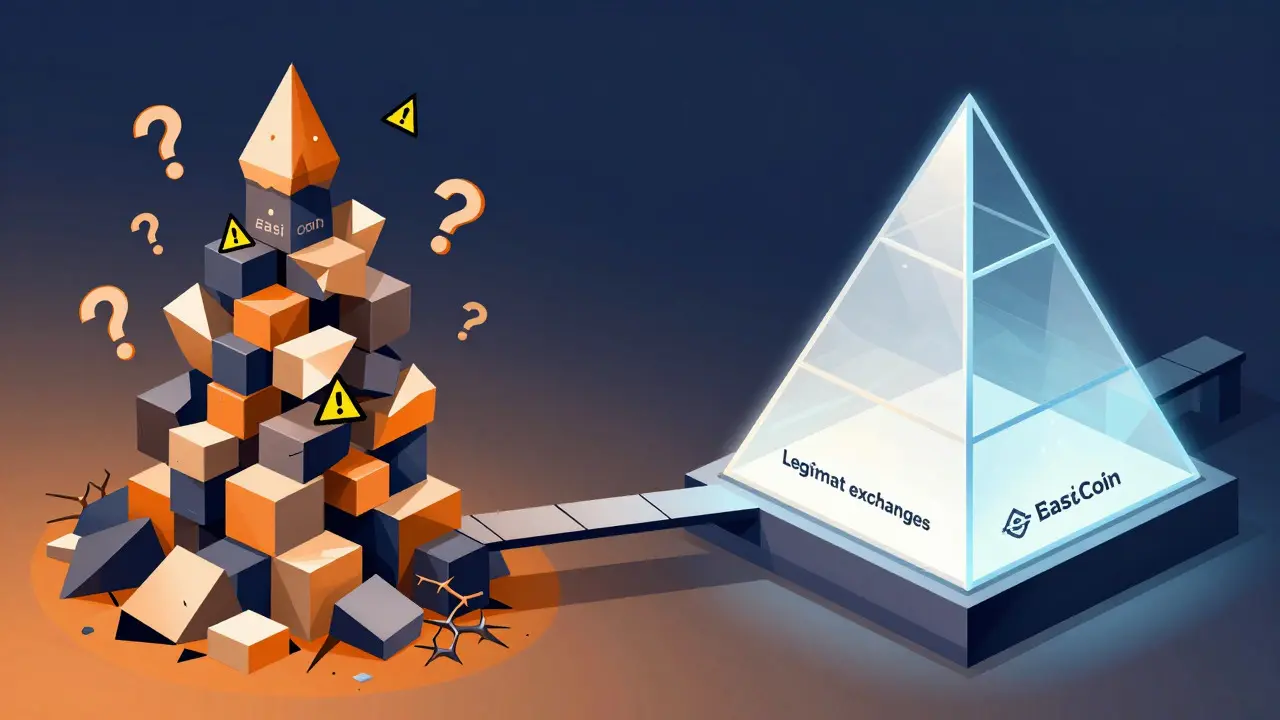
As of mid-2026, EasiCoin appears to remain technically accessible, but its viability is questionable. The domain shows no updates beyond initial placeholder content since 2023. The Cambridge Centre for Alternative Finance reported increasing regulatory scrutiny of unlicensed exchanges, making business models like EasiCoin's increasingly untenable.
The Blockchain Risk Assessment Consortium rated EasiCoin "Category D (Critical Risk)" in 2023, and cybersecurity firm CipherTrace included it in its "Emerging Scam Platforms" report. These assessments suggest the platform is either preparing for an exit scam or operating as a long-con fraud. With no new development, no educational resources, and broken contact channels, the likelihood of safe withdrawal is low.
Safe Alternatives for Beginners
If you want to trade crypto safely, stick to regulated, transparent exchanges. Here are three reliable options:
- Coinbase: Best for absolute beginners. Publicly traded, fully regulated in the US, and offers a simple interface. Fees start at 0.05% for makers.
- Binance: Best for advanced traders. Offers deep liquidity, hundreds of coins, and robust security. Note that Binance.US is separate from the global platform.
- Kraken: Best for security-focused users. Founded in 2011, Kraken publishes comprehensive security reports and undergoes regular audits.
All three require KYC, but this requirement protects your funds and ensures the exchange complies with anti-money laundering laws. You can also explore decentralized exchanges (DEXs) like Uniswap if you truly want non-custodial trading, but remember that you must manage your own private keys.
How to Protect Yourself from Crypto Scams
Avoiding scams like EasiCoin requires vigilance. Follow these steps before trusting any new platform:
- Check Domain Age: Use WHOIS tools to see when the site was created. New domains (under 1 year old) are higher risk.
- Verify Regulation: Look for license numbers on the website and cross-check them with official regulator databases (e.g., FCA in the UK, SEC in the US).
- Read Independent Reviews: Ignore reviews on the exchange’s own site. Check Trustpilot, Reddit, and CoinMarketCap forums for user complaints.
- Test Small Amounts: Never deposit large sums initially. Try withdrawing a small amount first to ensure the process works.
- Enable 2FA: Always use two-factor authentication, preferably with an authenticator app, not SMS.
Remember, if an offer sounds too good to be true-like high leverage with no ID checks-it probably is.
Is EasiCoin a legitimate exchange?
No, EasiCoin is widely considered illegitimate. It lacks regulatory licenses, has no verifiable trading volume, and has numerous user complaints about failed withdrawals. Experts classify it as a high-risk or potential scam platform.
Can I withdraw money from EasiCoin?
Many users report being unable to withdraw funds. Reviews mention deposits being accepted but withdrawals being delayed indefinitely or rejected without reason. Proceed with extreme caution.
Does EasiCoin require KYC?
EasiCoin claims to be a "Non-KYC" exchange, but user reports indicate contradictory experiences where verification was requested or accounts were blocked. This inconsistency is a common tactic used by fraudulent platforms.
What are safer alternatives to EasiCoin?
Safer alternatives include regulated exchanges like Coinbase, Binance, and Kraken. These platforms have millions of users, transparent fee structures, and regular security audits.
Why is EasiCoin rated poorly on Google Play?
EasiCoin has a 2.1-star rating on Google Play due to user complaints about lost funds, unresponsive support, and technical glitches. The low number of downloads also suggests it is not a popular or trusted choice.
Tawny Holmes
July 26, 2026 AT 10:18It's not even close. The lack of audits is the smoking gun right there.
Ran Tao
July 27, 2026 AT 16:55You people are so gullible it hurts my soul to watch you walk into these traps 🙄. EasiCoin is obviously a pump-and-dump scheme for the elites who know how the game works. We don't need 'regulations' we need freedom from the banking cartel that controls Binance and Coinbase! They want your KYC data to sell to advertisers while pretending to protect you. I've made more money in a week on unregulated offshore platforms than you have in a year trading Bitcoin like a sheep 🐑💸. Wake up sheeple!
Kristine Lawson
July 29, 2026 AT 02:50While the general consensus appears to be that this platform is fraudulent, one must consider the possibility that regulatory bodies are merely obstructing innovation. Is it not conceivable that a new entrant could operate with greater efficiency by bypassing bureaucratic hurdles? Furthermore, the assertion that low download numbers equate to illegitimacy is logically flawed; exclusivity often correlates with higher quality control in other sectors. Perhaps EasiCoin is simply catering to a niche demographic that values privacy over public validation. One should exercise caution before dismissing an entity solely based on its lack of mainstream adoption or adherence to traditional financial norms.
Heather Austin
July 30, 2026 AT 20:09i mean look at the google play reviews dude. 2 stars is basically dead on arrival. plus no proof of reserves? thats just asking for trouble. i stick to kraken cause they actually show their work every month. dont be stupid and put money somewhere you cant get it out of later. its basic risk management really.
Deep Rahman
July 31, 2026 AT 07:58I have been thinking about this for a long time and I think the problem is not just the company but the whole system of trust we have built around these digital assets which are supposed to be decentralized yet we keep putting our money into centralized places that act like banks but without the safety nets of banks which is a contradiction in terms because if it acts like a duck and quacks like a duck it should be regulated like a bank otherwise why do we have regulations in the first place if everyone can just start a website and take peoples money without any oversight or accountability or transparency which leads to situations like this where people lose everything because they trusted a brand name that was invented yesterday by someone who might be hiding behind a proxy server in a country with weak laws.
Lisa Chong
August 1, 2026 AT 00:04The globalist agenda is clear they want to track every penny you spend through CBDCs so they push KYC as 'safety' but its really control. EasiCoin is being targeted because it threatens their monopoly on surveillance capitalism. The 'scam' narrative is propaganda spread by the same institutions that crashed the economy in 2008. Trust the people not the suits. The domain age is irrelevant when the technology is revolutionary. They are afraid of true financial sovereignty.
Ella Collinson
August 1, 2026 AT 00:20The liquidity depth metrics are statistically insignificant compared to established venues. The absence of third-party smart contract audits creates a systemic counterparty risk exposure that exceeds acceptable thresholds for institutional-grade capital allocation. Furthermore, the discrepancy between advertised leverage capabilities and backend infrastructure capacity suggests a high probability of slippage-induced liquidation events engineered by the platform operators. This is classic adverse selection dynamics.
Ray Arney
August 1, 2026 AT 09:44Yeah, definitely sounds sketchy. I'd probably just stick to Coinbase for now until things settle down a bit.
Tuan Nguyen
August 3, 2026 AT 07:39Precisely. The amateur hour displayed by retail investors is pathetic. If you cannot distinguish between a registered SEC entity and a fly-by-night operation hosted on a subdomain, you deserve to lose your capital. It is natural selection in action.
Tawny Holmes
August 5, 2026 AT 00:20Agreed. Basic due diligence is required.
Melissa Beckwith
August 6, 2026 AT 12:18It is interesting to note that the psychological profile of the typical victim in these scenarios often includes a desire for quick gains combined with a distrust of authority figures which makes them susceptible to narratives that promise freedom from regulation while simultaneously offering the convenience of a centralized service which is an oxymoron in itself because centralization inherently requires some form of governance or control mechanism whether it is transparent or opaque and the opacity here is what drives the fear among informed observers who understand that without verifiable data the only thing backing the value is faith in the integrity of anonymous developers who have no skin in the game other than the initial funding round which has likely already been distributed to early insiders.
Hazel Fruitman
August 7, 2026 AT 05:20its so sad watching ppl get scammed again and again. like learn from history guys. thodex was the same deal. just use a wallet you own. why give keys to strangers?
Autumn Story
August 7, 2026 AT 14:43Thank you for this detailed breakdown!! It’s so helpful to see the comparison table clearly laid out. I was actually considering trying EasiCoin because of the non-KYC claim, but reading about the withdrawal issues makes me very nervous. I’ll stick to Kraken for now since security seems more important than anonymity for my small portfolio. Stay safe everyone!!!
Mark Tuason
August 9, 2026 AT 02:49This analysis provides a comprehensive overview of the risks associated with unregulated exchanges. It would be prudent for potential users to verify the regulatory status of any platform prior to depositing funds, as suggested in the article. The comparison with established entities such as Binance and Coinbase serves as a useful benchmark for assessing legitimacy.
John Curry
August 10, 2026 AT 10:21In the grand tapestry of human endeavor, the pursuit of wealth through digital means is merely a modern reflection of ancient desires for autonomy and prosperity. Yet, as we stand upon the precipice of this technological revolution, we must ask ourselves: what is the cost of convenience? When we surrender our keys to faceless corporations, do we gain ease, or do we lose our souls? EasiCoin represents not just a financial risk, but a philosophical dilemma. Are we truly free if our transactions are monitored? Or are we slaves to a system that demands our identity in exchange for its services? The answer lies not in the code, but in the heart of the trader.