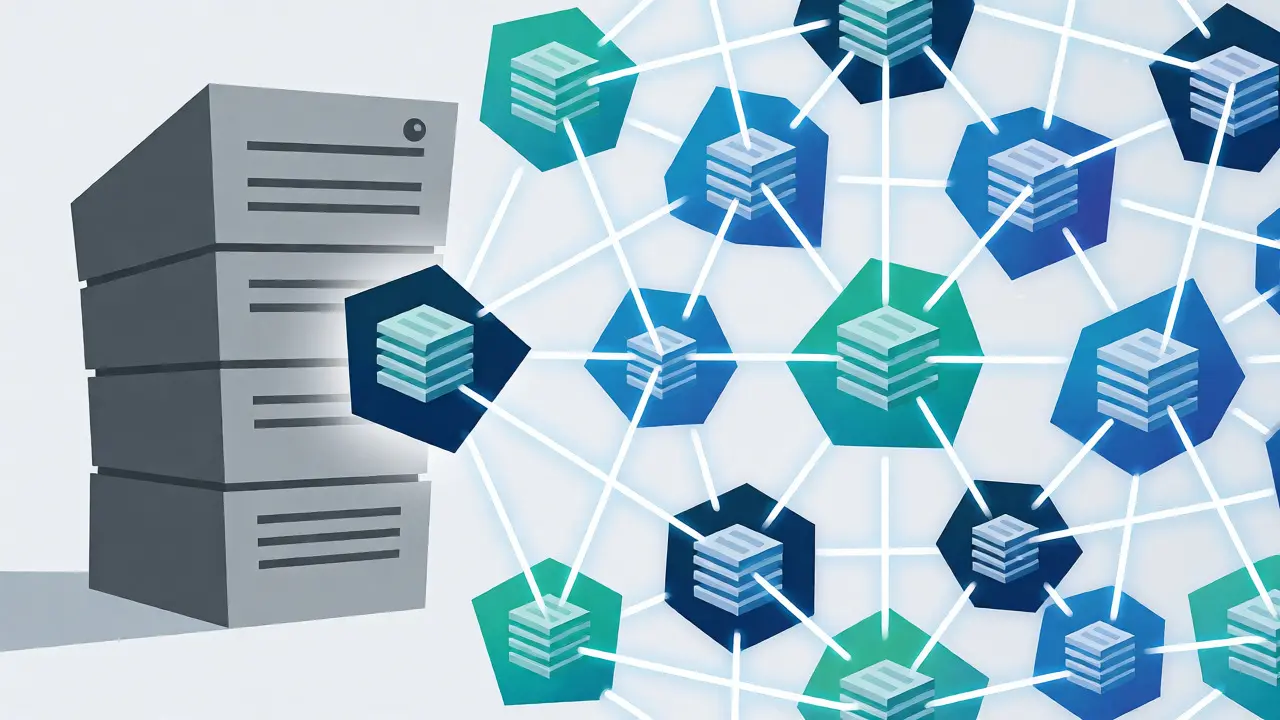
You probably think of blockchain as the tech behind Bitcoin. But if you look at what’s happening inside major banks and payment networks right now, that view is outdated. The real shift isn’t just about crypto prices; it’s about Distributed Ledger Technology (DLT) becoming the plumbing for global finance. We are past the hype cycle. In 2026, institutions aren’t just experimenting; they are running production systems where multiple computers hold identical copies of transaction records, eliminating the need for a single central authority to verify every swap.
Why does this matter to you? Because it changes how fast your money moves, how much it costs to trade assets, and who holds the risk when things go wrong. Traditional finance relies on trust in intermediaries-banks, clearinghouses, custodians. DLT replaces that trust with code and cryptography. It’s not magic, but it is a fundamental upgrade to infrastructure that hasn’t changed much since the mainframe era. Let’s break down exactly where this technology is working today, not in theory, but in live financial markets.
The Core Shift: From Centralized Trust to Cryptographic Proof
To understand the use cases, you have to grasp the mechanism. A traditional database is like a spreadsheet owned by one person. If that person makes a mistake or gets hacked, the data is compromised. A Distributed Ledger is different. It’s a shared spreadsheet where everyone has a copy, and no single person can change history without everyone else agreeing. This agreement happens through consensus mechanisms.
In public networks like Bitcoin, this requires massive computing power (Proof-of-Work), which is energy-intensive. But finance rarely uses those public chains for core operations. Instead, they use permissioned ledgers. Here, participants are known entities-banks, insurers, regulators. They use lighter consensus methods like Proof-of-Stake or practical Byzantine fault tolerance. These systems are faster, cheaper to run, and compliant with privacy laws because only authorized nodes see sensitive data. The result? You get the security of decentralization without the chaos of anonymous trading.
Settlement and Clearing: Killing the T+2 Wait
This is arguably the biggest win for DLT in finance. Today, when you buy a stock, the trade doesn’t settle instantly. It takes two days (T+2) for the cash and securities to actually change hands. During those two days, there is counterparty risk. What if the other party goes bankrupt before delivery? That gap requires billions in collateral to sit idle.
Smart Contracts solve this. These are self-executing codes stored on the ledger. When conditions are met-say, buyer sends cash, seller sends asset-the contract executes both transfers simultaneously. This is called Delivery-versus-Payment (DvP). By moving settlement to near-instantaneous times, DLT frees up capital. Banks don’t need to park as much cash in reserves because the risk window shrinks from days to seconds. For high-frequency trading firms and institutional investors, this efficiency translates directly into higher returns on equity.
Cross-Border Payments: Beyond the Wire Transfer
Sending money internationally is still painfully slow and expensive. You might wait three to five days for a wire transfer, paying fees at every hop along the correspondent banking chain. Each bank checks its own books, leading to reconciliation nightmares.
Enter the Swift Network. Historically, Swift was just a messaging system-it sent instructions but didn’t move value. On September 29, 2025, Swift announced a major pivot: adding a blockchain-based shared ledger to its stack. This isn’t just a message anymore; it’s a record of value movement. Financial institutions across 16 countries are already testing this. The goal is to let regulated digital assets move seamlessly between different digital ecosystems. Imagine sending funds from a New York bank account to a London fintech wallet in real-time, with all compliance checks baked into the ledger itself. No more waiting for SWIFT MT messages to be manually processed.
Tokenization of Real-World Assets
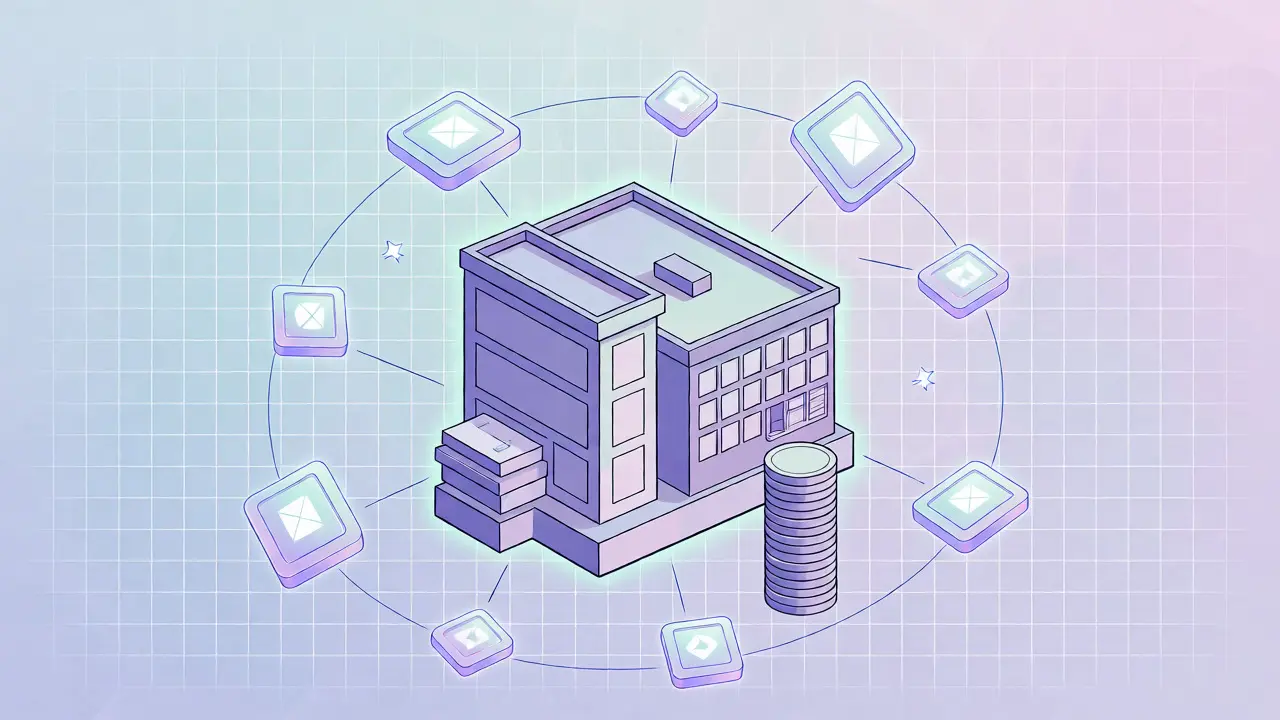
What if you could buy a fraction of a commercial building in downtown Chicago or a slice of a private equity fund with the same ease as buying a share of Apple? That’s the promise of tokenization. DLT allows physical and financial assets to be represented as digital tokens.
These tokens carry metadata-ownership rights, dividend schedules, voting powers. Because the ledger is immutable, proving ownership is instant. There’s no need for a paper trail or a lawyer to verify title deeds. Major banks are using platforms like R3 Corda for this. Corda is designed specifically for regulated industries. Unlike public blockchains, it doesn’t broadcast every transaction to the whole world. Only the parties involved in a syndicated loan or a bond issuance see the details. This privacy feature is critical for institutions handling sensitive client data while still benefiting from the transparency of a shared source of truth.

Trade Finance: Fixing the Paper Trail
Global trade runs on paperwork. Letters of credit, bills of lading, invoices-all often printed, signed, and couriered. This process is slow, prone to fraud, and expensive. A single letter of credit can involve dozens of documents and take weeks to process.
DLT digitizes this entire workflow. When a shipment leaves a port, sensors (IoT devices) can update the ledger automatically. Smart contracts then trigger payments once goods arrive and pass inspection. This reduces the time from order to payment from weeks to days. It also cuts out middlemen who charge fees just to handle paper. Small and medium-sized enterprises (SMEs), which often struggle with cash flow due to these delays, benefit significantly. Faster access to working capital means they can take on more orders and grow quicker.
Regulatory Compliance and KYC/AML
Know Your Customer (KYC) and Anti-Money Laundering (AML) checks are a bureaucratic burden. Every time you open an account with a new bank, you submit the same passport scan and utility bill. The bank verifies it, stores it, and charges you for the privilege.
With DLT, your verified identity can become a reusable digital credential. Once a trusted entity verifies you, that verification is recorded on the ledger. Other institutions can check the ledger to confirm your status without asking for your documents again. This streamlines onboarding and reduces operational costs for banks. Moreover, because the ledger is auditable, regulators can monitor transactions in real-time rather than waiting for quarterly reports. This shifts compliance from a reactive, backward-looking chore to a proactive, continuous process.
Comparing Leading DLT Platforms in Finance
Not all ledgers are created equal. Choosing the right platform depends on whether you need public transparency or private confidentiality. Here’s how the major players stack up for financial use cases:
| Platform | Primary Focus | Consensus Mechanism | Best For | Privacy Level |
|---|---|---|---|---|
| R3 Corda | Banking, Insurance, Capital Markets | Notary-based / Point-to-point | Syndicated loans, CBDCs, Trade Finance | High (Private channels) |
| Hyperledger Fabric | Enterprise Supply Chain & Finance | Pluggable (Raft, Kafka) | Clearing/Settlement, KYC/AML | Modular (Channel-based) |
| Ethereum (L2s) | DeFi, Tokenization, Public Apps | Proof-of-Stake | Stablecoins, NFTs, Public DeFi | Low (Public visibility) |
| Swift Shared Ledger | Global Cross-Border Payments | Proprietary Hybrid | Interbank Settlement, Digital Assets | Medium (Network-level) |
The Oracle Problem: Why Data Integrity Matters
A blockchain can only know what happens on the blockchain. If a smart contract says "pay the supplier when the goods arrive," how does the blockchain know the goods arrived? This is the oracle problem. Garbage in, garbage out. If the data fed into the ledger is wrong, the automated execution will be wrong too.
This was a major blocker for enterprise adoption. However, collaborations like DZ BANK’s work with Google Cloud show progress. They developed solutions to securely receive market data, ensuring that the inputs triggering smart contracts are tamper-proof. Solving the oracle problem is what moves DLT from pilot projects to production environments where millions of dollars change hands based on external events.
Challenges Still Standing in the Way
Despite the progress, we aren’t at full saturation. Interoperability remains a hurdle. Different banks might use different ledgers (one on Corda, another on Fabric). Getting these systems to talk to each other seamlessly is complex. Standards bodies are working on it, but fragmentation persists.
There’s also the skill gap. Running a permissioned blockchain requires specialized technical expertise that many traditional IT departments lack. Furthermore, regulatory clarity varies by jurisdiction. While frameworks are stabilizing, cross-border legal recognition of digital assets is still uneven. A token recognized as a security in the US might be treated differently in Europe or Asia, complicating global deployments.
Final Thoughts: Infrastructure, Not Just Innovation
Distributed Ledger Technology in finance isn’t about replacing banks entirely. It’s about upgrading their backend. The winners won’t necessarily be the most disruptive startups, but the incumbents who successfully integrate DLT into their existing workflows. As we move deeper into 2026, expect to see less talk about "crypto" and more talk about "digital settlement layers." The technology is mature enough to handle scale, and the competitive pressure is forcing adoption. If you’re in finance, ignoring DLT is no longer an option-it’s a strategic risk.
Is Distributed Ledger Technology the same as Blockchain?
No, but they are related. Blockchain is a specific type of distributed ledger where data is grouped into blocks and chained together cryptographically. Distributed Ledger Technology (DLT) is the broader category that includes blockchains but also other structures like Directed Acyclic Graphs (DAGs) or simple replicated databases. In finance, permissioned DLTs often don't use traditional block structures, focusing instead on speed and privacy.
Why do banks prefer permissioned ledgers over public ones?
Banks prioritize privacy, speed, and control. Public ledgers like Bitcoin expose transaction details to anyone and can be slow due to mining requirements. Permissioned ledgers restrict access to known, vetted participants (like banks and regulators). This ensures compliance with data protection laws (like GDPR), allows for faster transaction finality, and prevents unauthorized actors from joining the network.
How does DLT reduce settlement times?
DLT enables atomic swaps and smart contracts. In traditional finance, settlement involves separate steps for payment and delivery, taking days. With DLT, a smart contract can execute both simultaneously once conditions are met. This removes the need for intermediaries to reconcile accounts later, reducing the settlement period from T+2 (two days) to near-instantaneous real-time settlement.
What is the role of R3 Corda in finance?
R3 Corda is a popular enterprise-grade DLT platform designed specifically for regulated industries like banking and insurance. Unlike general-purpose blockchains, Corda focuses on privacy and complex business logic. It allows only the parties involved in a transaction to see the data, making it ideal for syndicated lending, trade finance, and issuing digital bonds where confidentiality is paramount.
Can DLT completely replace traditional banking systems?
Unlikely in the short term. Most experts view DLT as a complementary layer that improves efficiency within existing systems rather than a total replacement. Banks are integrating DLT into their back-office operations for settlement and compliance while keeping customer-facing interfaces familiar. Full replacement would require a complete overhaul of legal frameworks and consumer habits, which takes decades.